
Title
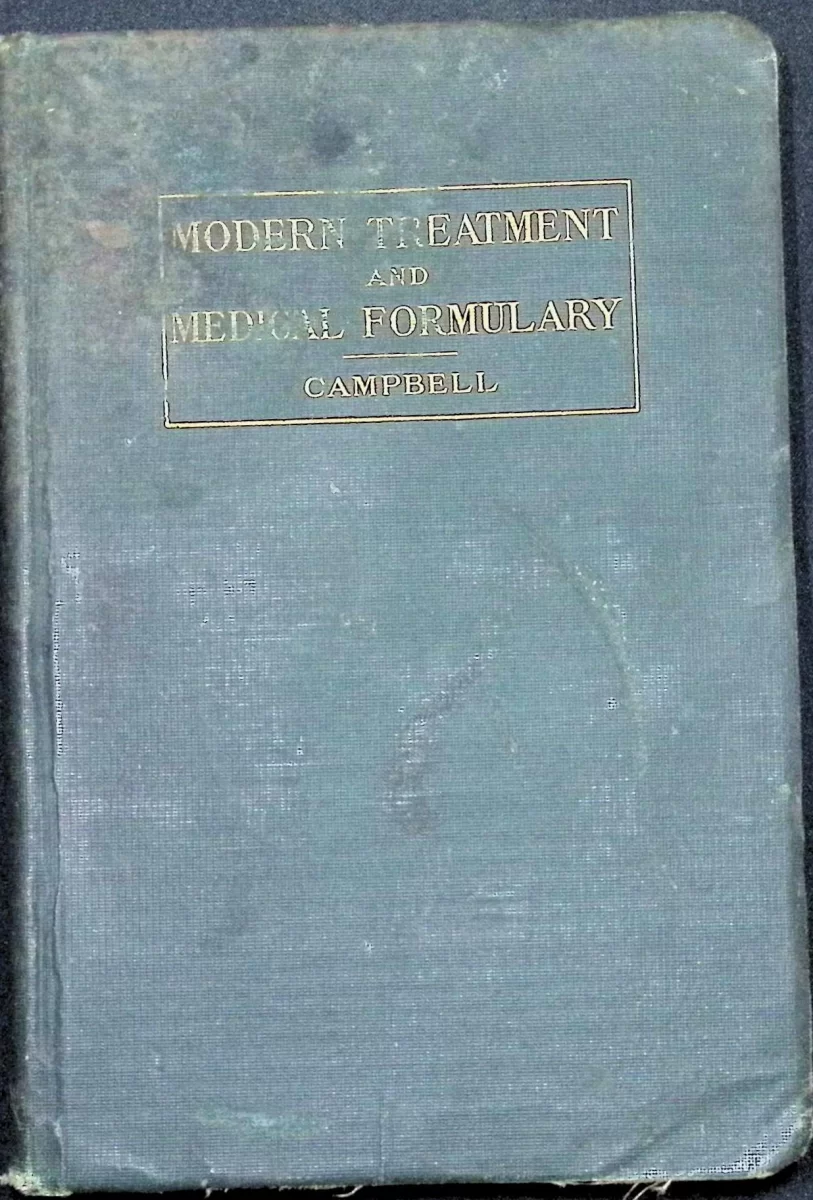
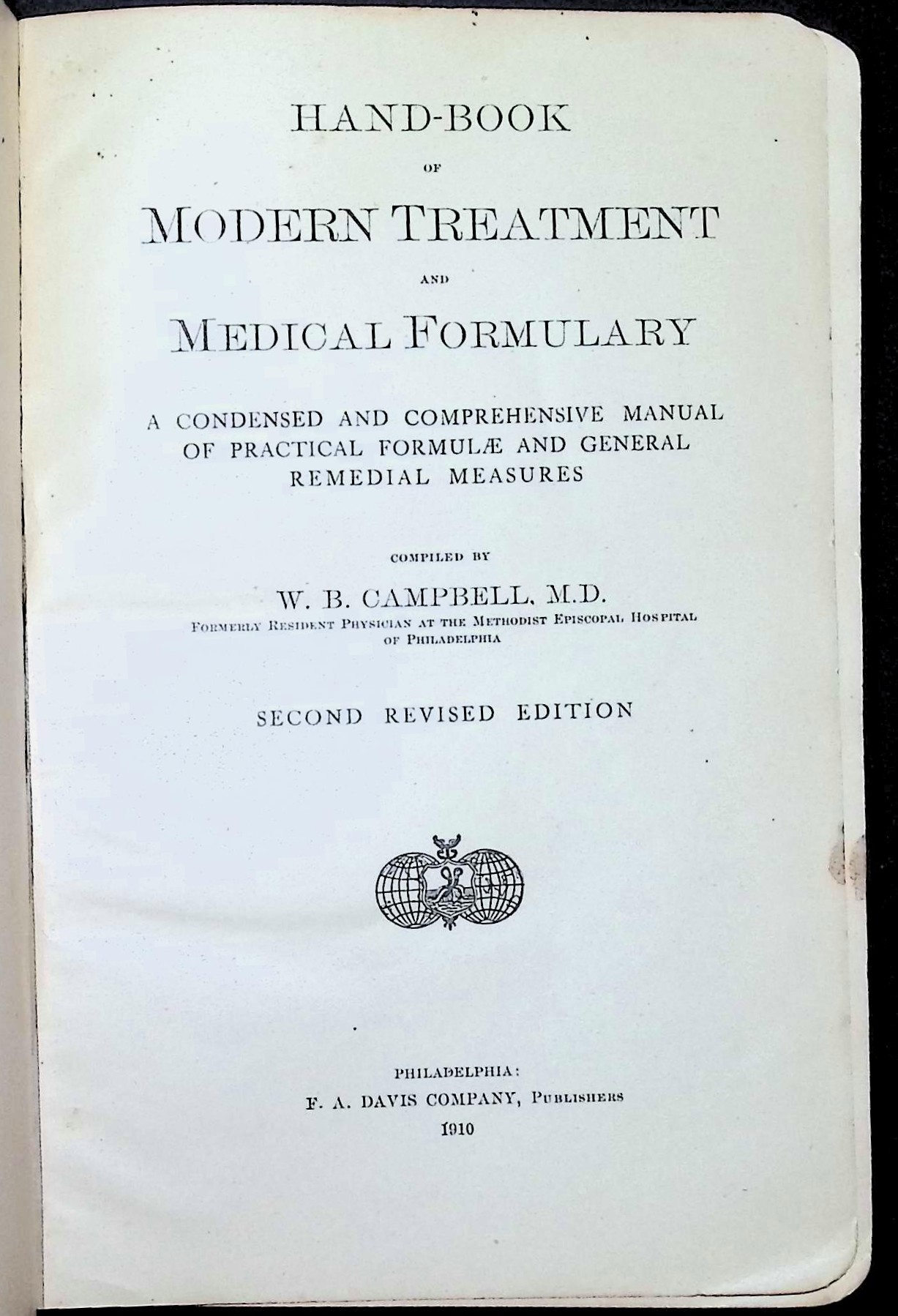
Hand-Book of Modern Treatment and Medical Formulary
Author
W. B. Campbell, M.D.
Published by F. A. Davis Company, Philadelphia, 1910 (Second Revised Edition)
Image
Description
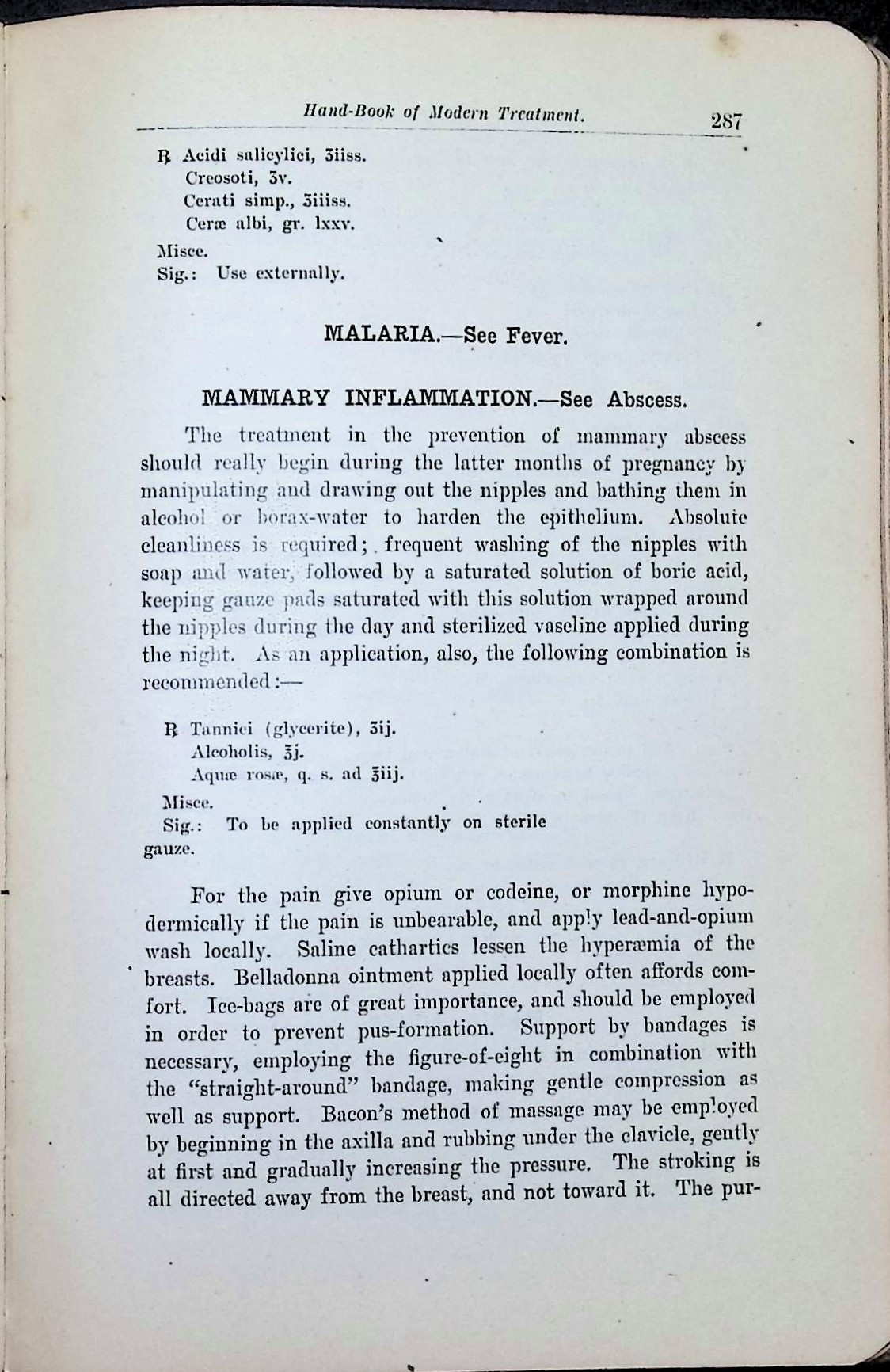
This compact 1910 reference by Dr. W. B. Campbell served as both a therapeutic guide and formulary for practicing physicians of the early 20th century. The book provides concise treatment methods across a wide spectrum of medical conditions, paired with pharmaceutical recipes. It represents the transitional period between traditional remedies and increasingly standardized modern medicine, reflecting both the practical needs of physicians and the pharmaceutical practices of the day.
Condition
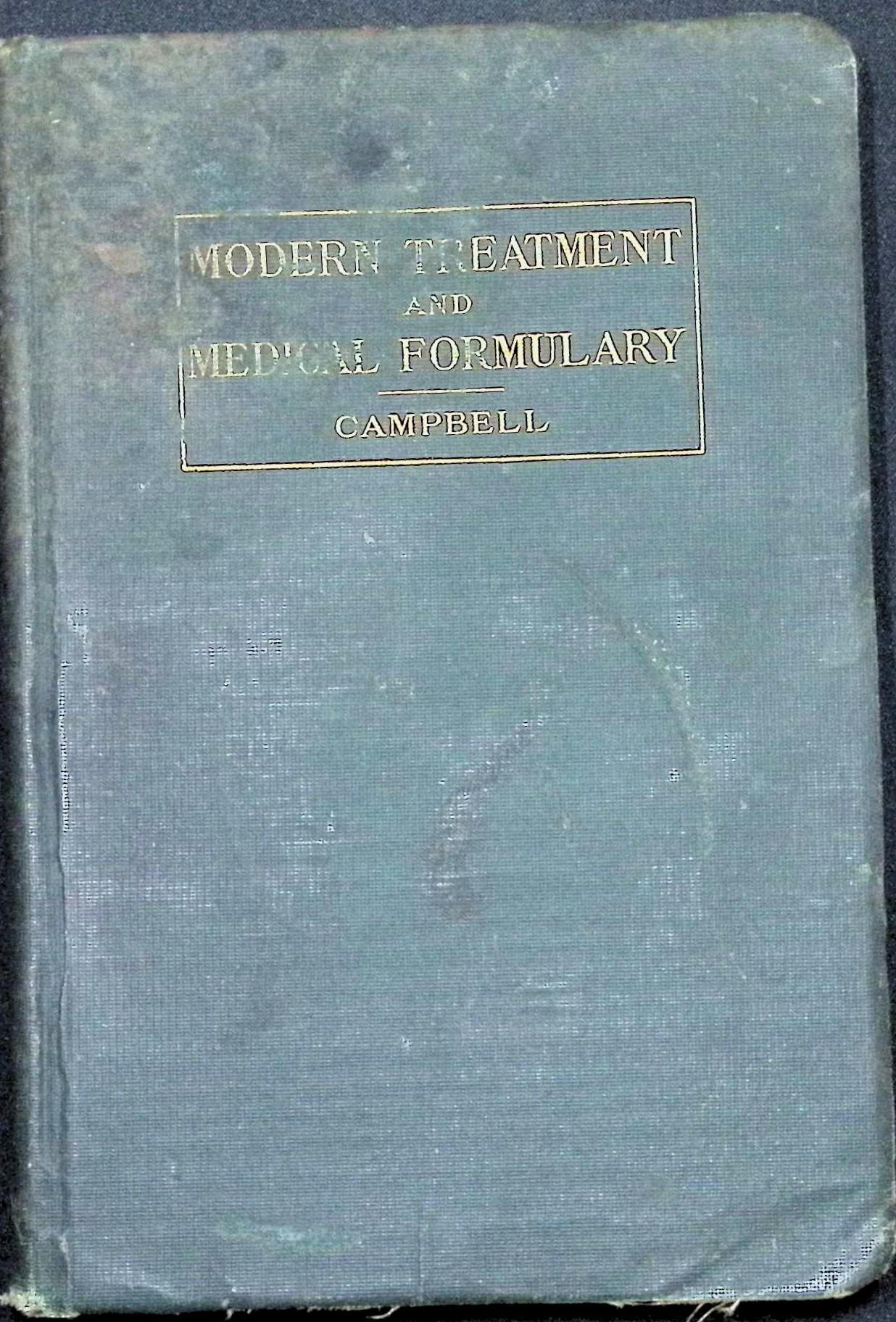
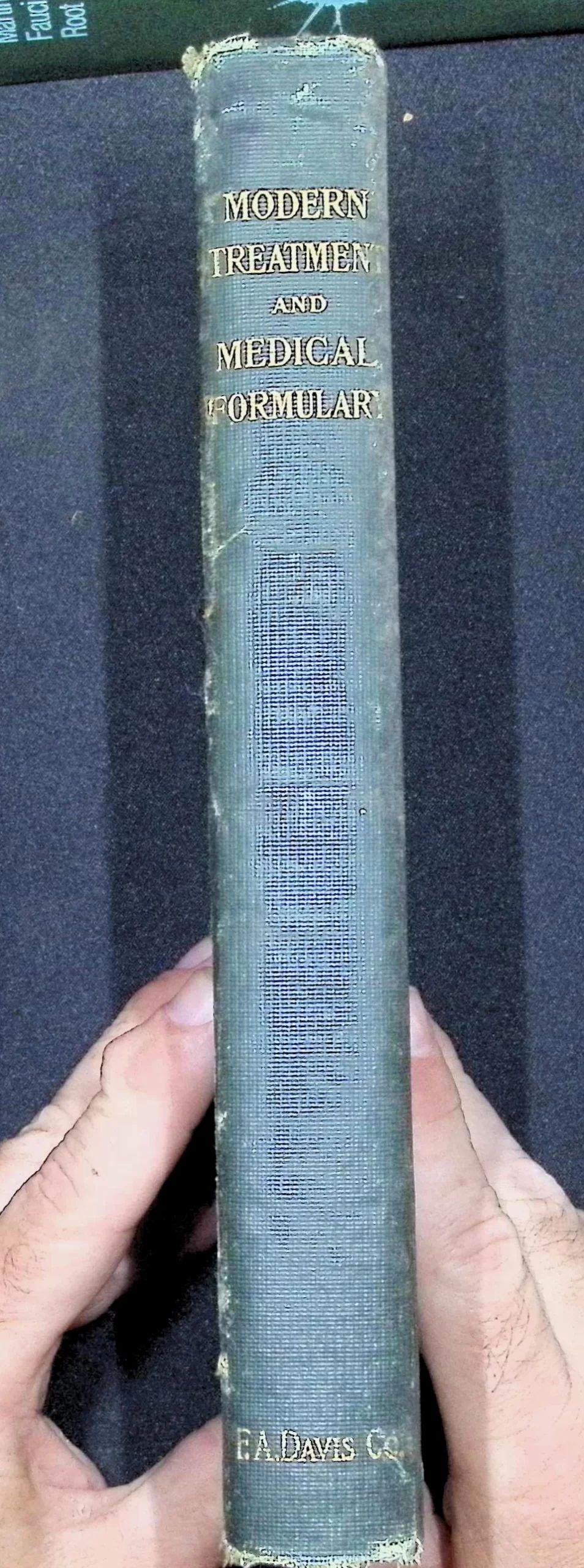
The book shows general wear consistent with age. The cover remains intact, the spine is stable, and the pages are complete with some toning and edge wear. No major damage noted.
Gallery
Historical context
Formularies like Campbell’s were invaluable to doctors practicing in the early 1900s, when many still relied on personally compounding medicines. Published by F. A. Davis Company — a major American medical publisher based in Philadelphia — this volume is part of the broader movement to professionalize and codify treatment standards in the pre-antibiotic era.
Curious Facts, Ephemera, and Trivia
Some treatments described in the book, such as the use of strychnine and mercury compounds, are now recognized as dangerous.
Campbell’s text emphasizes both general therapies and detailed prescriptions, bridging “bedside practice” with pharmaceutical reference.
The publisher, F. A. Davis, also produced many enduring medical texts, including works on surgery, pathology, and obstetrics.
Excerpt
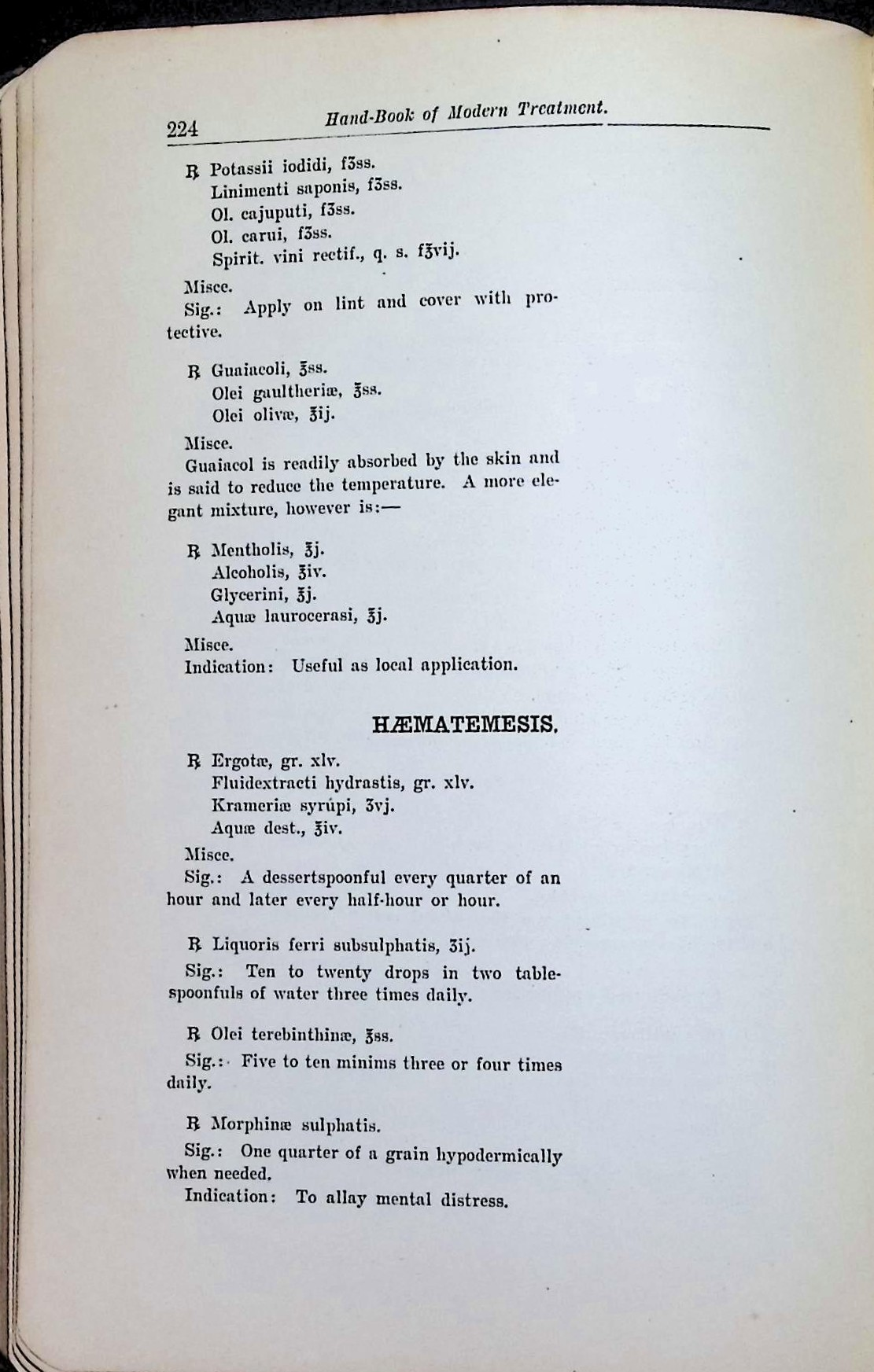
From the section on “Hematemesis”:
“Ice, internally and externally, absolute rest, opium, ergot, acetate of lead, gallic acid, perchloride of iron, turpentine, etc., are the remedies most frequently employed.”
Why it is in the Cabinet
This book was added to the Cabinet as an authentic example of how physicians a century ago balanced therapeutic practice with pharmaceutical knowledge. It illustrates the shift from empirical treatments toward more systematic approaches, while also highlighting how many remedies of the time would later be abandoned for safety reasons.
Support Dr. Bebout’s Cabinet of Medical Curiosities
If you enjoy the history, the oddities, and the effort, help keep this cabinet open. Every little bit helps preserve and share the strange wonders of medicine's past.
Buy Me a Ko-fi ☕ Buy Me a Coffee ☕ Tip via PayPal 💵