
Title
Ol. Gaulther. – Oil of Wintergreen Apothecary Bottle
Author
N/A (pharmaceutical container)
Image
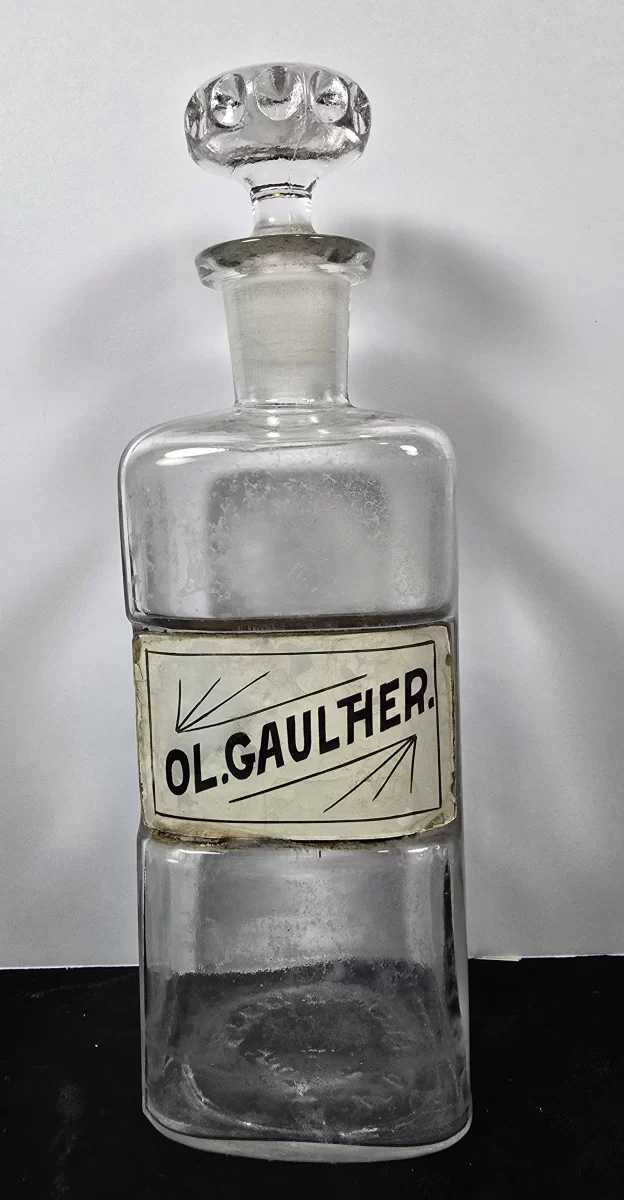
Description
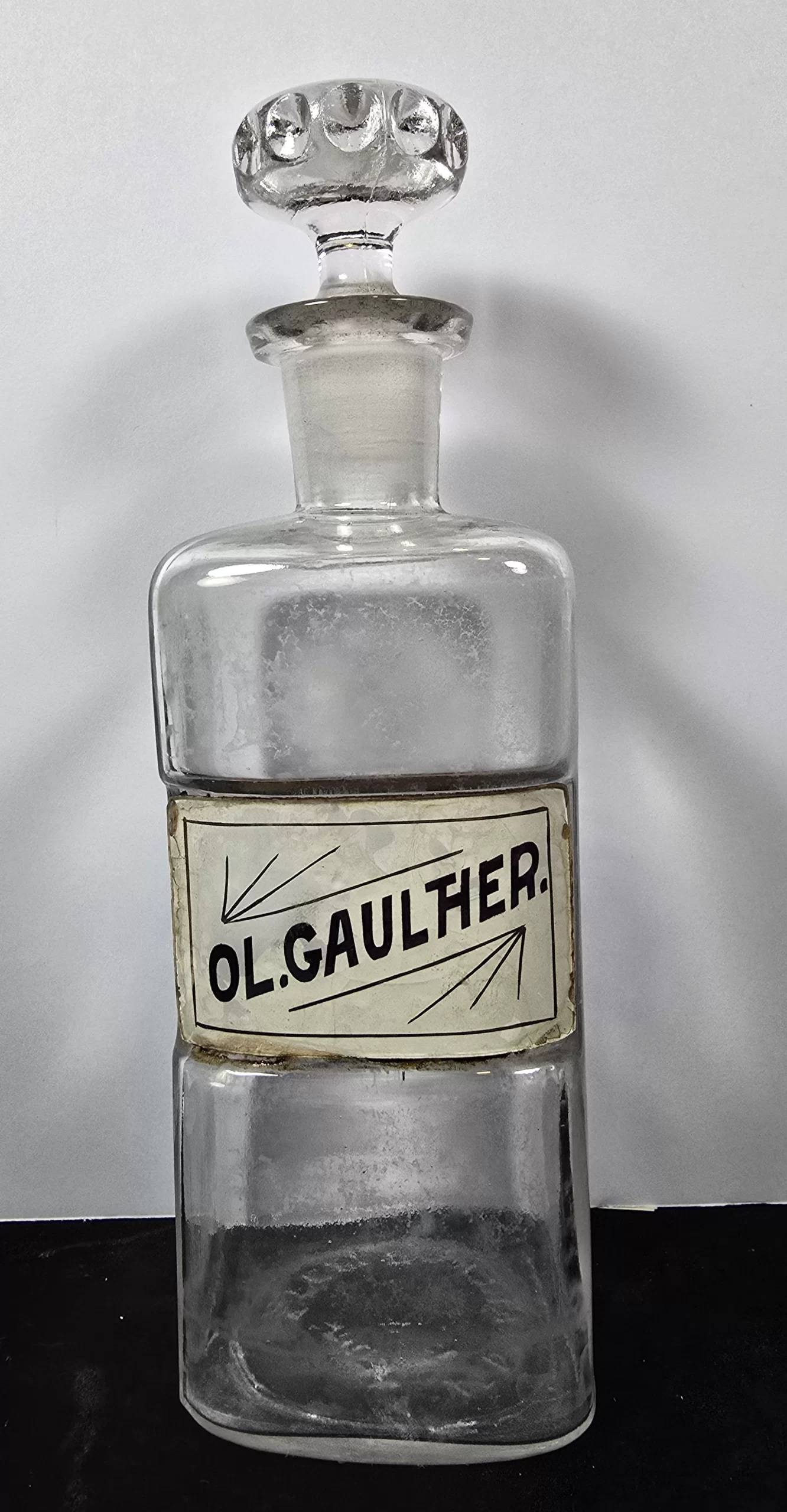
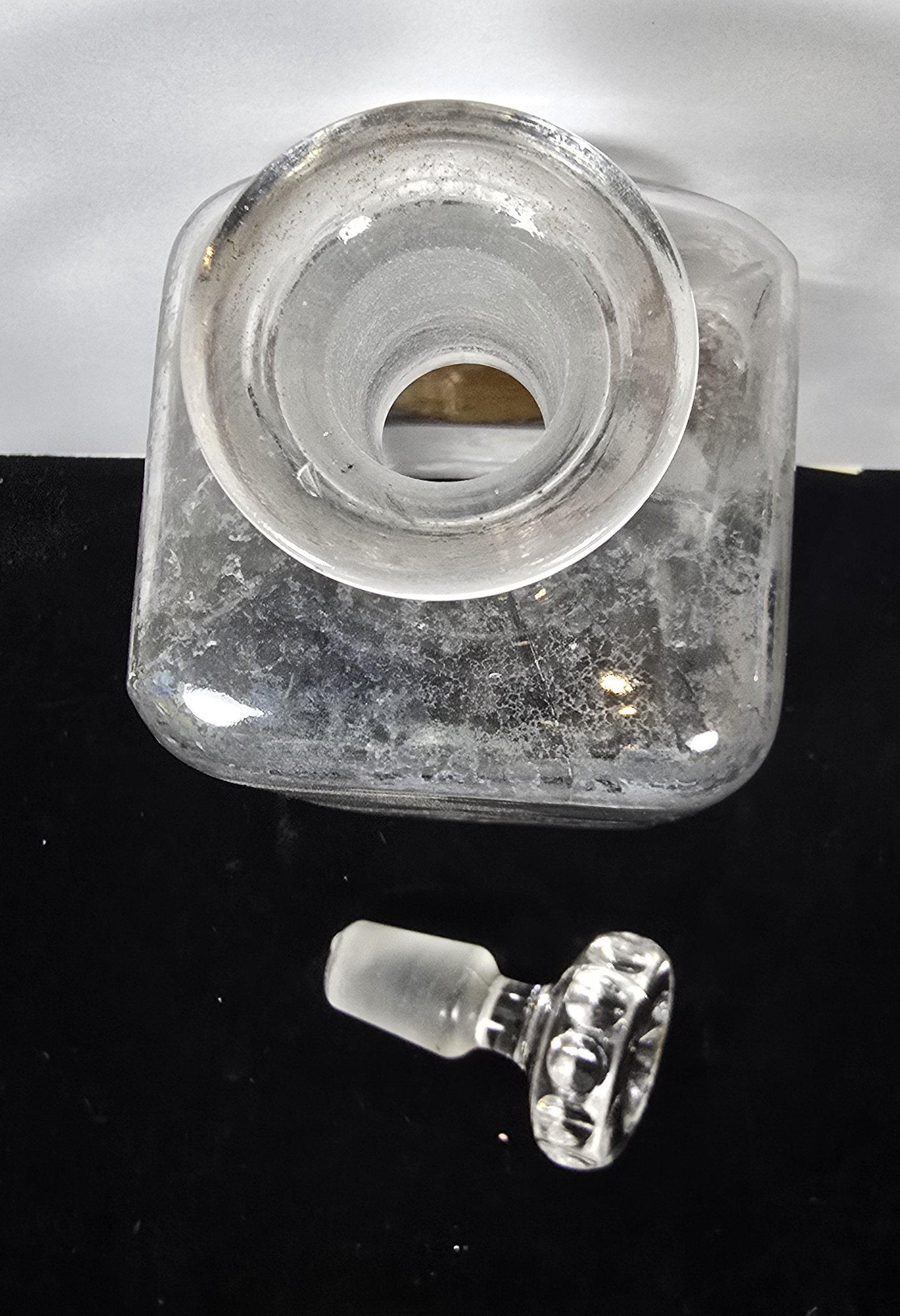
This is a clear glass apothecary bottle with ground glass stopper, labeled “Ol. Gaulther.” in bold black lettering on a white field with angled black line decoration. The abbreviation refers to Oleum Gaultheriae, commonly known as Oil of Wintergreen. The bottle would have originally contained this aromatic essential oil, widely used in 19th and early 20th-century pharmacies.
Oil of Wintergreen contains methyl salicylate, a natural compound with pain-relieving and anti-inflammatory properties, often applied for muscle aches and rheumatism. Apothecaries dispensed it carefully, as the oil is potent and toxic in higher doses.
Condition
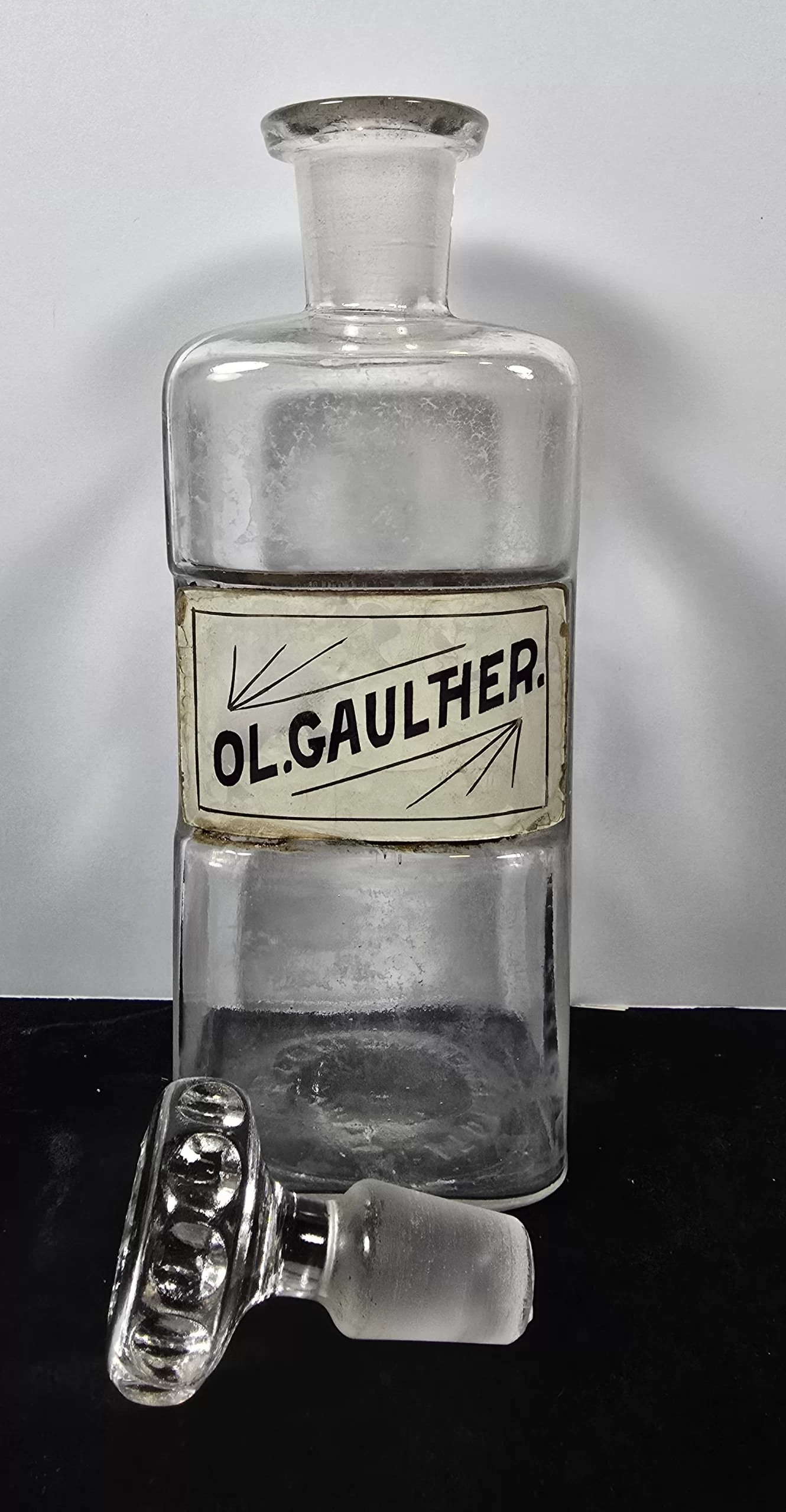
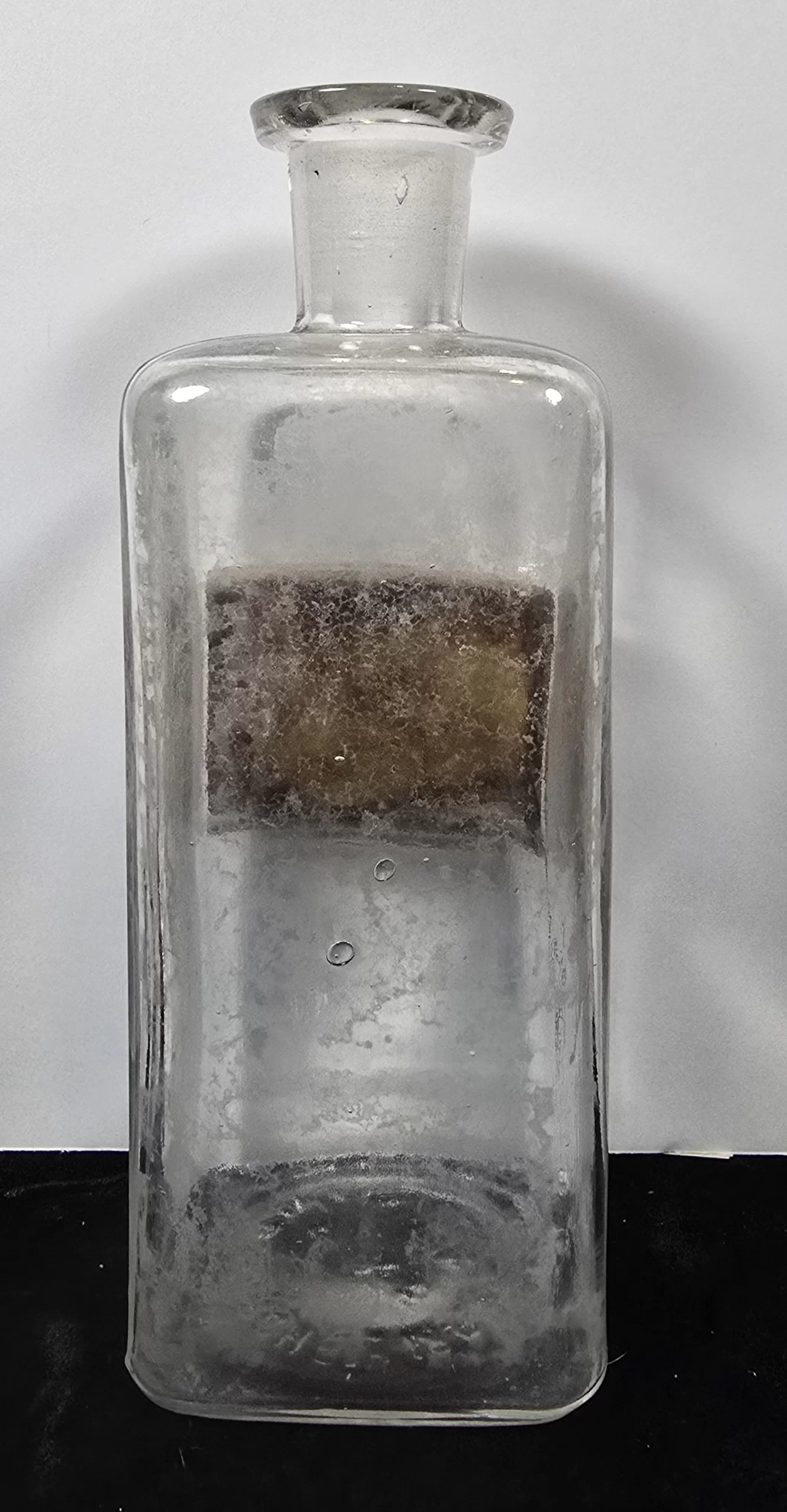
The bottle is in good antique condition with original glass stopper intact. The applied label shows age toning, edge wear, and light discoloration. Glass exhibits interior haze from long-term storage. No major chips or cracks are present.
Gallery
Historical context
Oil of Wintergreen was a common ingredient in liniments, rubs, and patent medicines of the 19th century. It served as both a therapeutic and flavoring agent. Apothecary bottles like this one were often displayed prominently on pharmacy shelves, their bold labels allowing quick identification.
Curious Facts, Ephemera, and Trivia
A teaspoon of wintergreen oil is equivalent to about 21 adult aspirin tablets in terms of salicylate content.
It was once used in root beer flavoring but later replaced due to toxicity concerns.
The distinctive aroma of “liniment” in old doctor’s offices often came from wintergreen.
Excerpt
From The Dispensatory of the United States of America (19th century editions):
“Gaultheria oil is highly stimulating, and when applied externally, it relieves the pain of rheumatism and neuralgia.”
Why it is in the Cabinet
This bottle represents the classic apothecary shop aesthetic with bold, decorated labeling and heavy glass stopper. It highlights how pharmacists once stored and dispensed potent remedies that were both useful and hazardous.
Support Dr. Bebout’s Cabinet of Medical Curiosities
If you enjoy the history, the oddities, and the effort, help keep this cabinet open. Every little bit helps preserve and share the strange wonders of medicine's past.
Buy Me a Ko-fi ☕ Buy Me a Coffee ☕ Tip via PayPal 💵