
Title
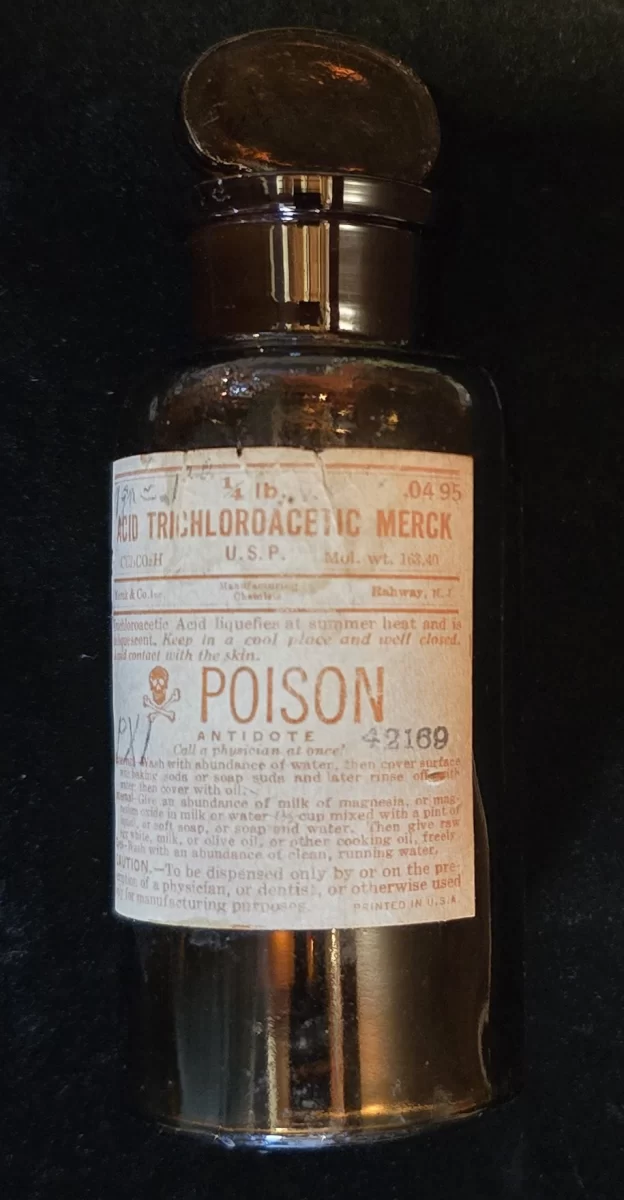
Merck Trichloroacetic Acid Poison Bottle
Author
Merck & Co., Rahway, New Jersey
Image
Description
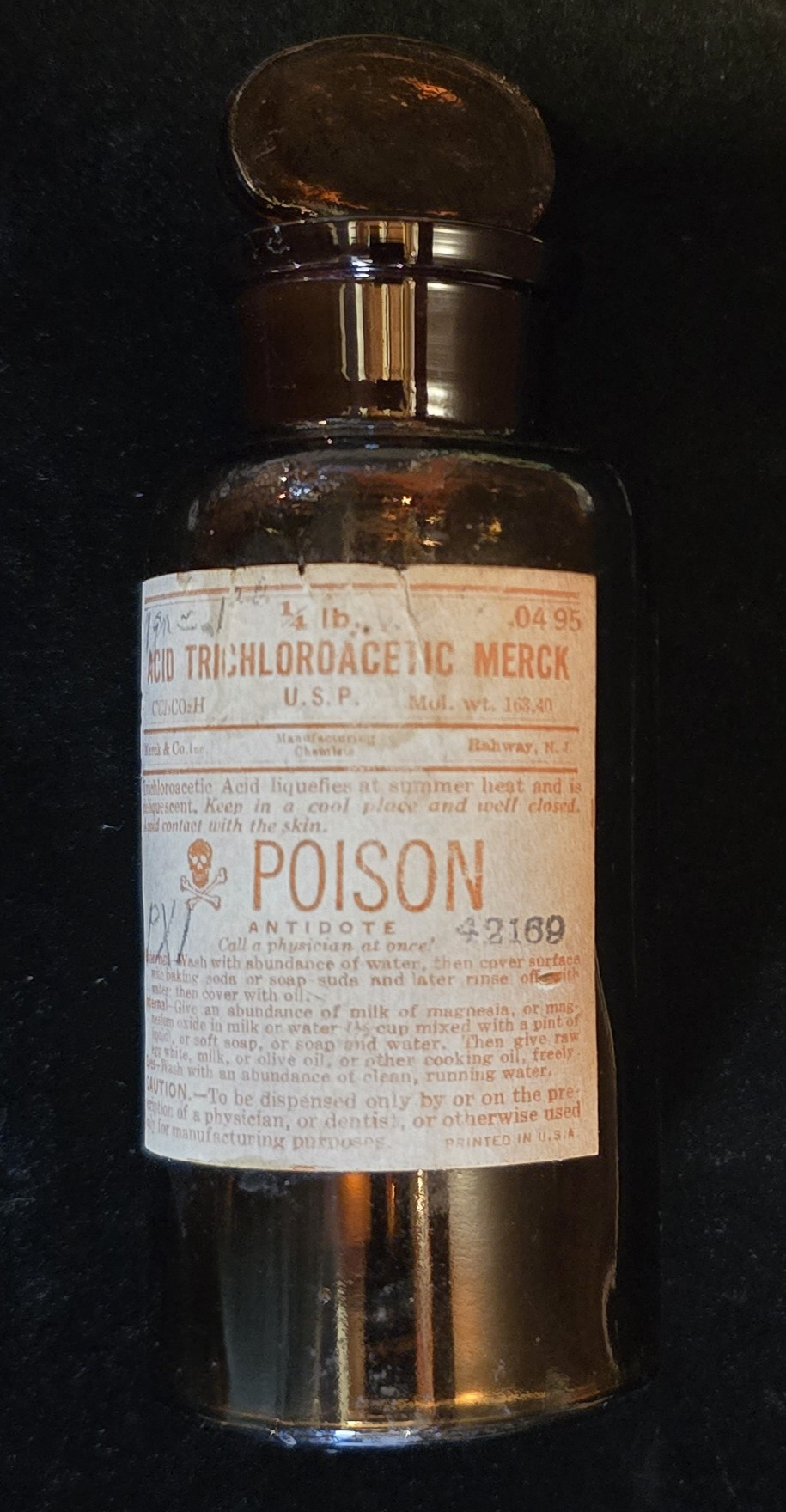
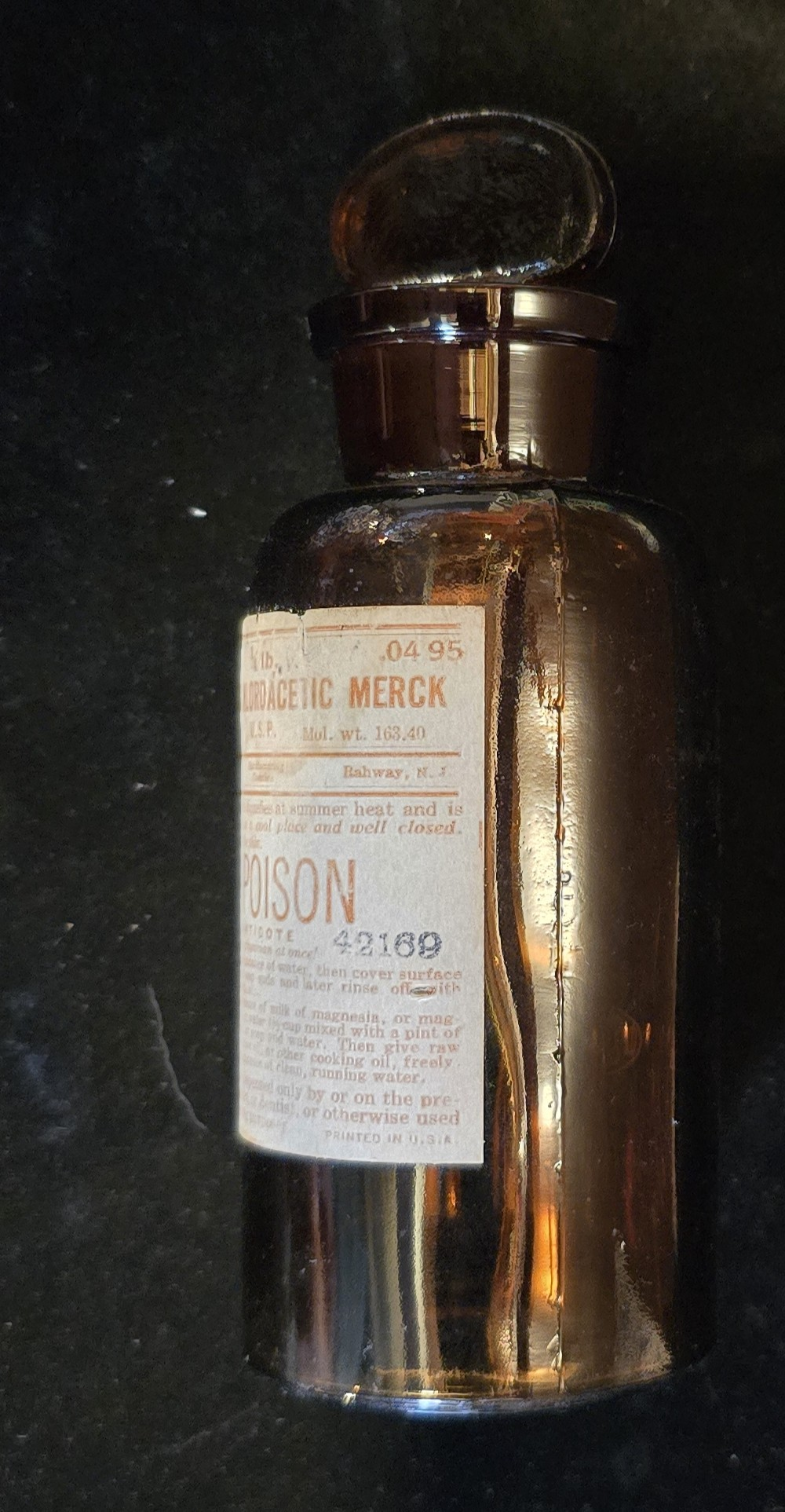
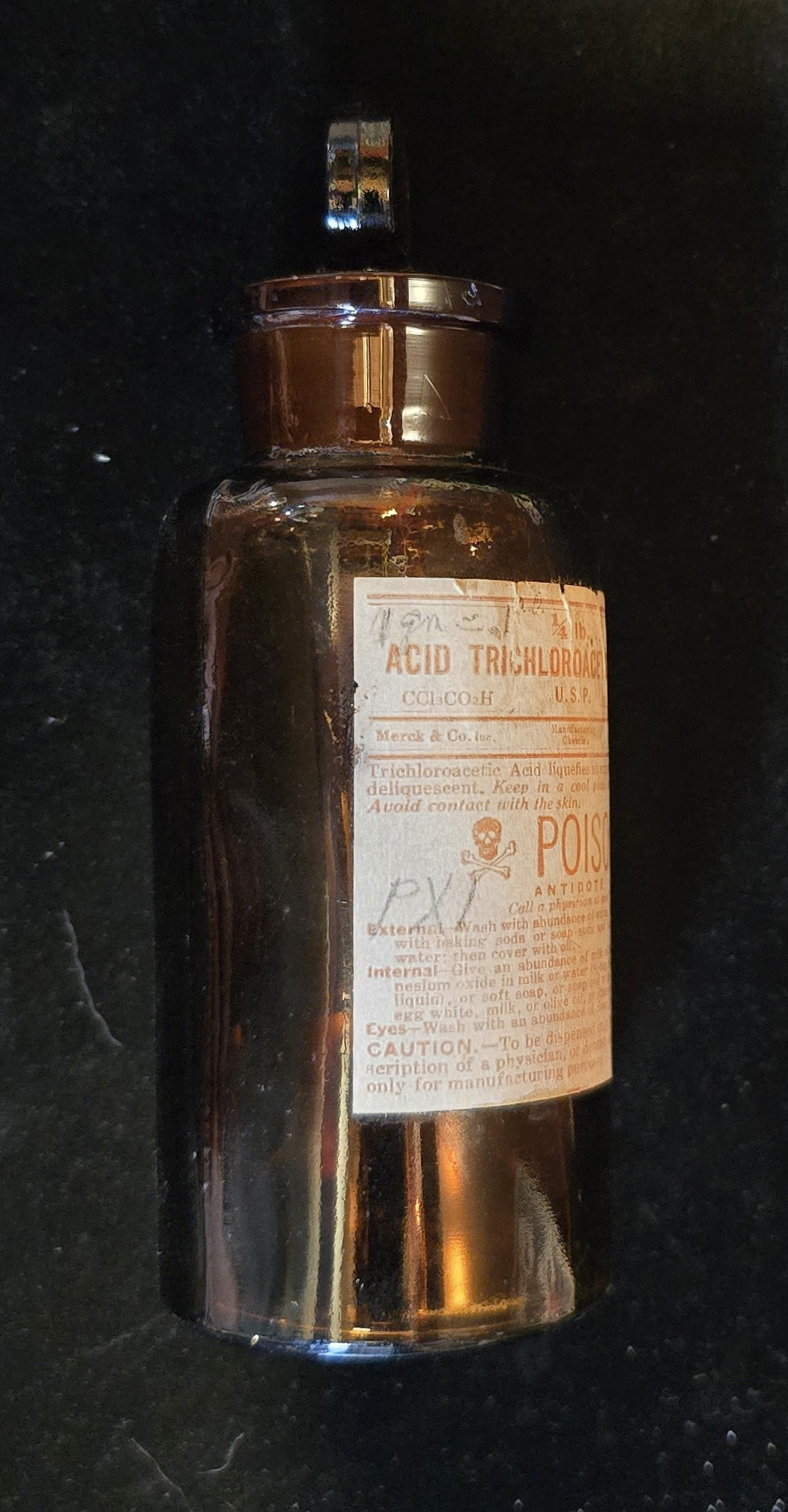
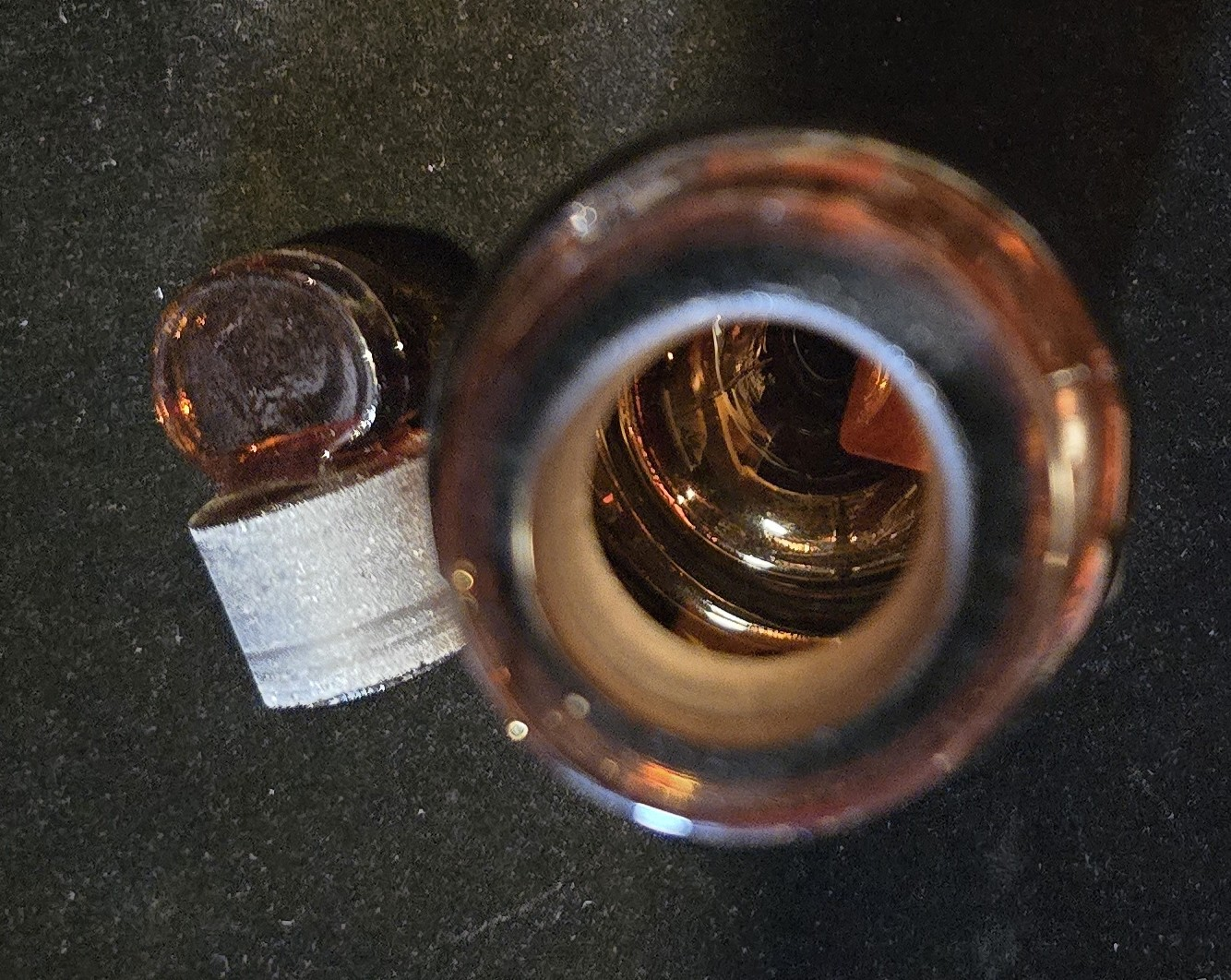
This amber glass poison bottle, labeled “Acid Trichloroacetic U.S.P. – Merck”, was manufactured by Merck & Co. of Rahway, New Jersey. The bottle features a ground glass stopper and distinct poison warning design. Trichloroacetic acid (TCA) was commonly used in medicine and laboratories during the late 19th and early 20th centuries for chemical cauterization, wart removal, and protein precipitation in research. Its caustic nature required it to be clearly marked as poisonous.
Condition
Bottle remains intact with no major cracks or chips. Label is partially preserved with visible text. Stopper is present and fits securely. Minor surface wear consistent with age.
Gallery
Historical context
Trichloroacetic acid was first prepared in the 19th century and became widely available for laboratory and therapeutic purposes by the early 20th century. It was included in the U.S. Pharmacopeia (U.S.P.) and supplied by pharmaceutical firms like Merck. In medical practice, it was employed as a chemical cauterant, particularly for removing warts, polyps, and small skin lesions. Laboratory uses included protein precipitation and nucleic acid extraction.
Curious Facts, Ephemera, and Trivia
Poison bottles often featured embossed warnings, colored glass, or labels with bold typography to prevent accidental ingestion.
TCA remains in use today in dermatology for chemical peels and wart removal, though under controlled medical settings.
Early 20th-century pharmacies were required to mark hazardous chemicals clearly; Merck’s poison line often used amber or cobalt bottles.
Excerpt
From the 1918 edition of the Merck Index:
“Trichloroacetic Acid – colorless crystals, soluble in water, employed in medicine as a caustic and in analysis as a precipitant.”
Why it is in the Cabinet
This bottle illustrates the dual role of chemistry in medicine — both as a therapeutic tool and as a potential danger. Its bold poison labeling reflects the era’s growing awareness of laboratory and household hazards. It serves as a striking artifact of pharmaceutical history and Merck’s role in early chemical supply.
Support Dr. Bebout’s Cabinet of Medical Curiosities
If you enjoy the history, the oddities, and the effort, help keep this cabinet open. Every little bit helps preserve and share the strange wonders of medicine's past.
Buy Me a Ko-fi ☕ Buy Me a Coffee ☕ Tip via PayPal 💵