
Title
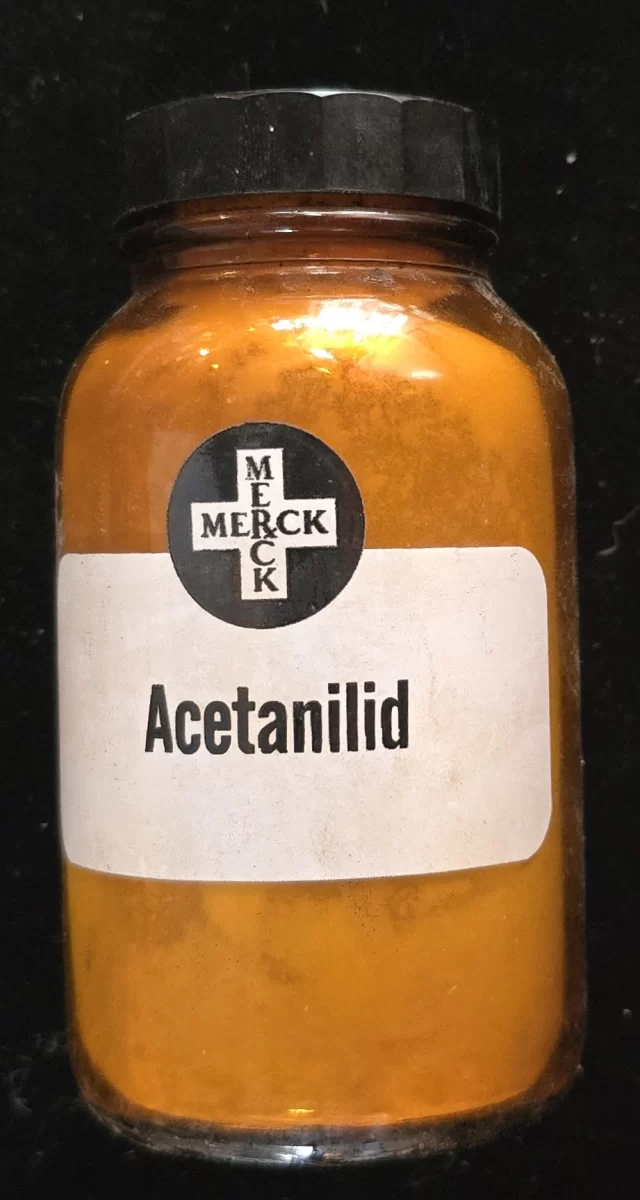
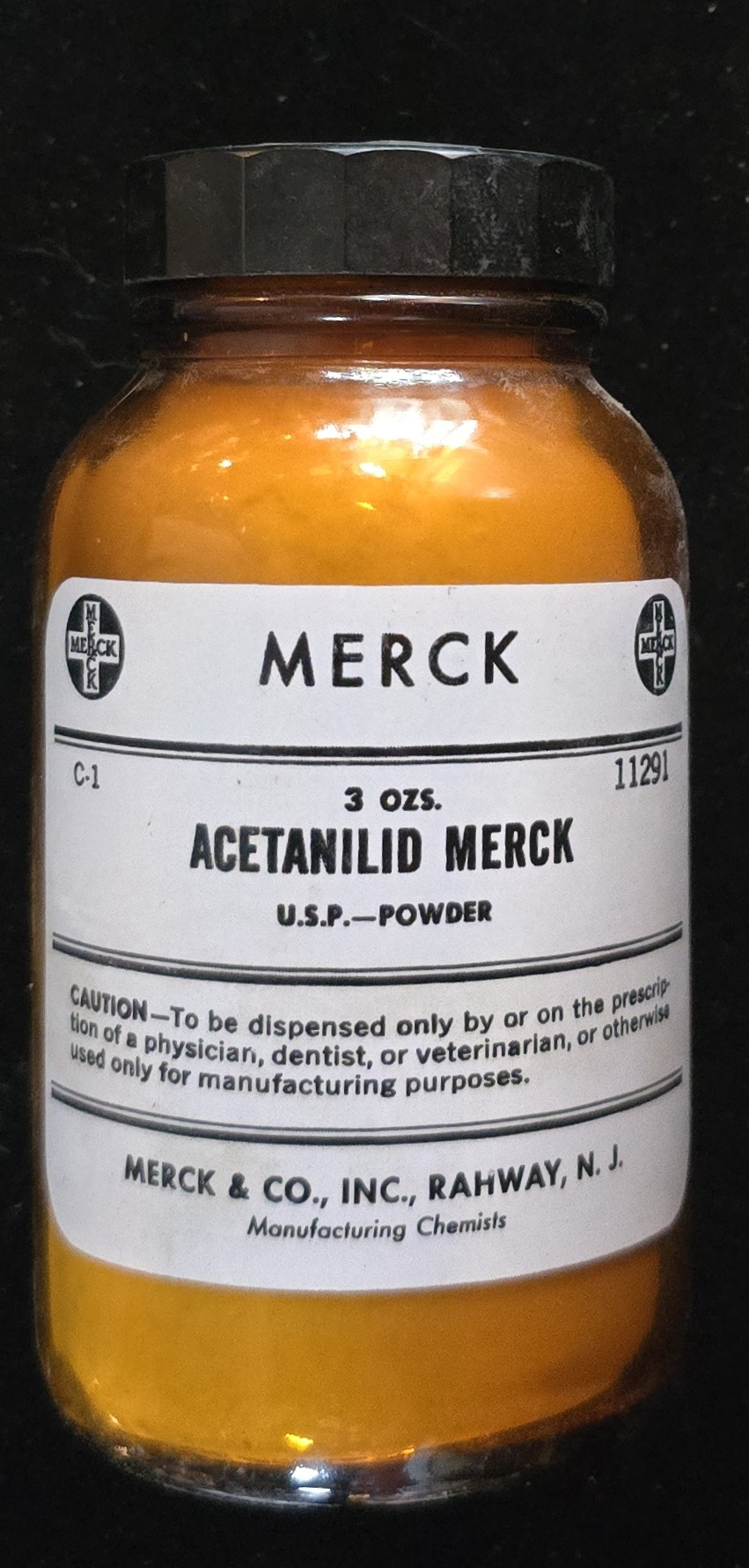
Acetanilid (Merck, U.S.P.—Powder, 3 oz.)
Author
Merck
Image
Description
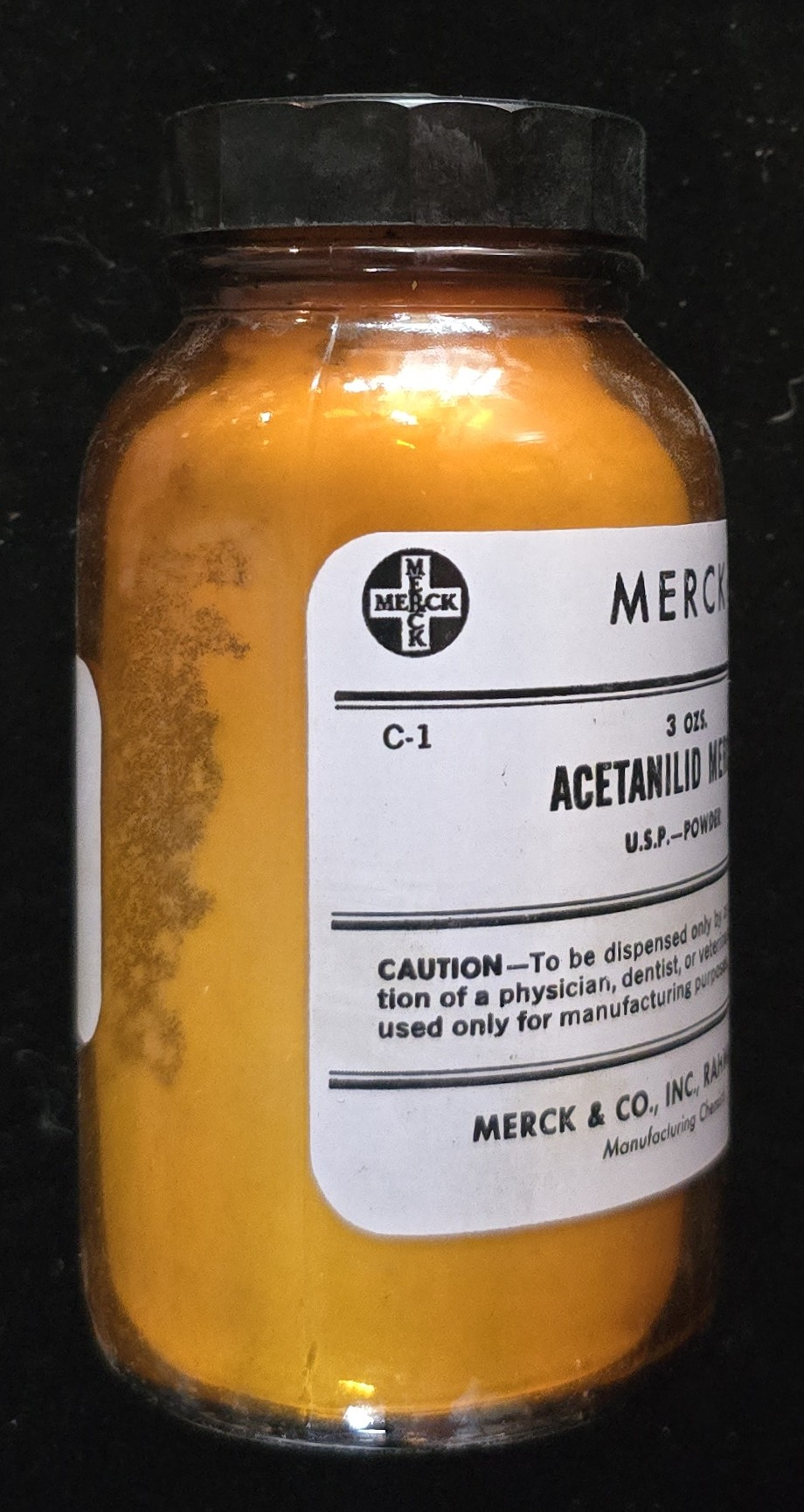
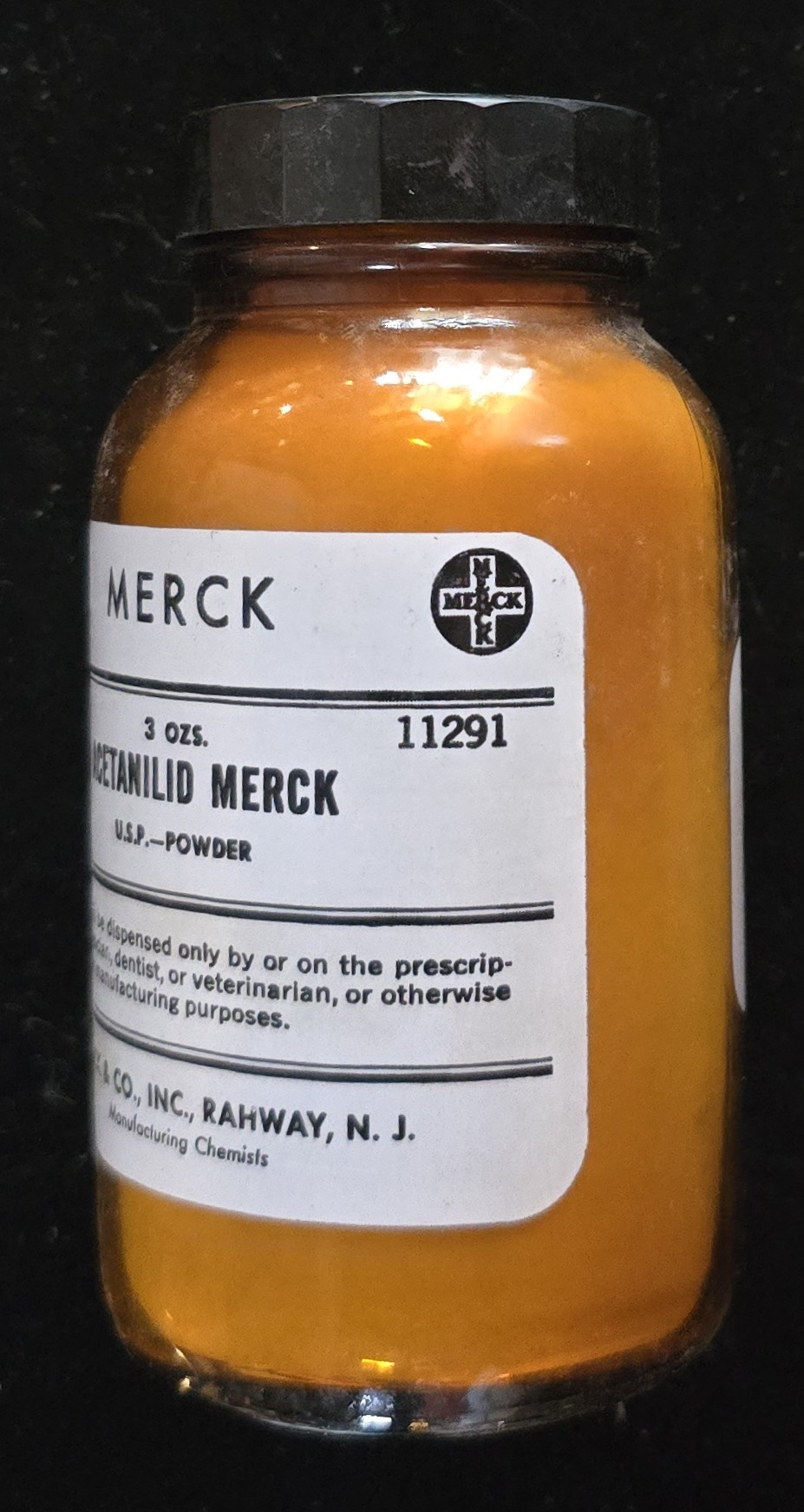
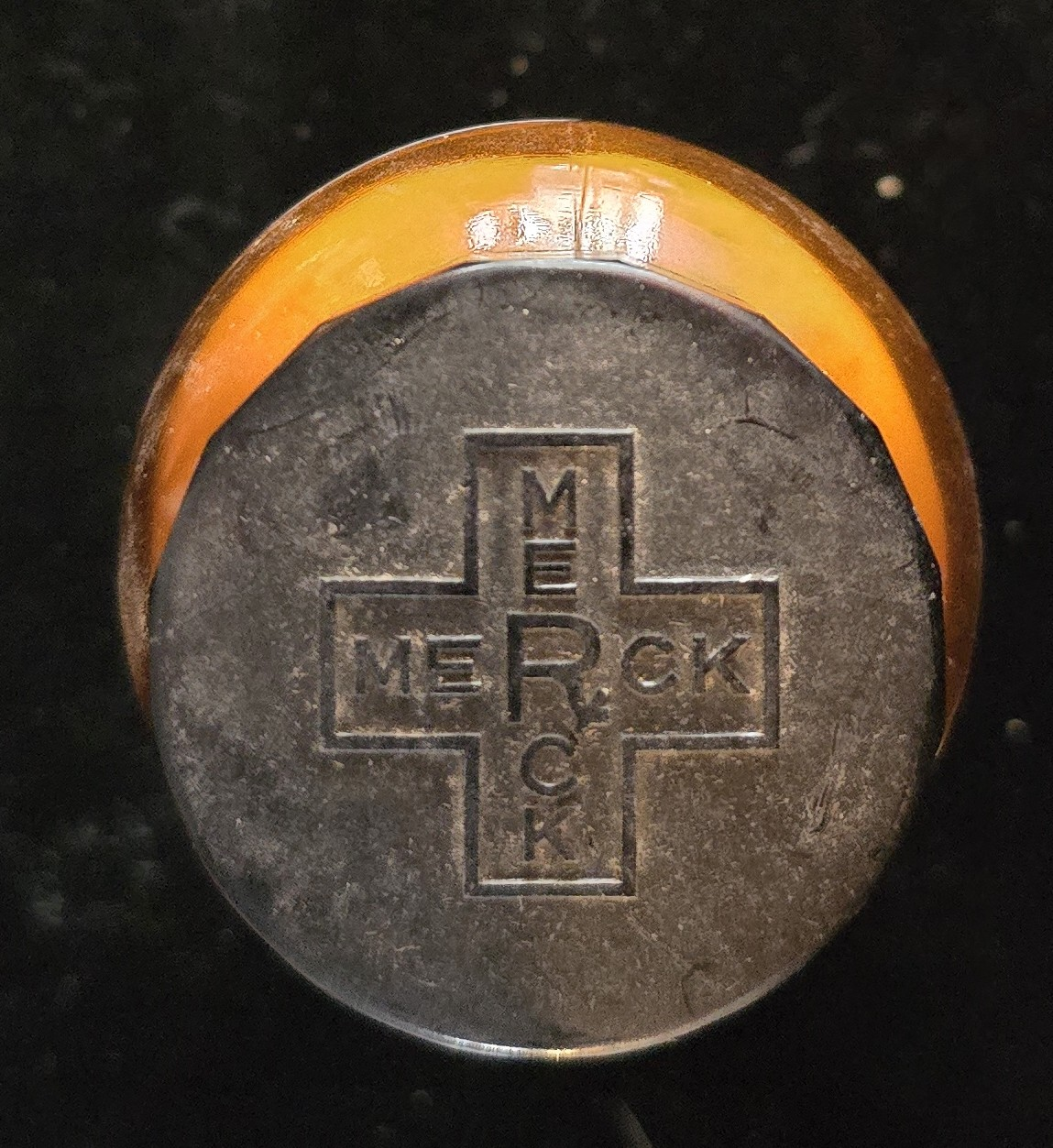
Amber Merck bottle labeled “ACETANILID MERCK, U.S.P.—POWDER”, 3 oz., Rahway, N.J. A once-standard coal-tar analgesic and antipyretic, later abandoned for toxicity (notably methemoglobinemia and cyanosis). Mid-20th century laboratory or pharmacy compounding stock with Merck’s cross-logo black cap.
Condition
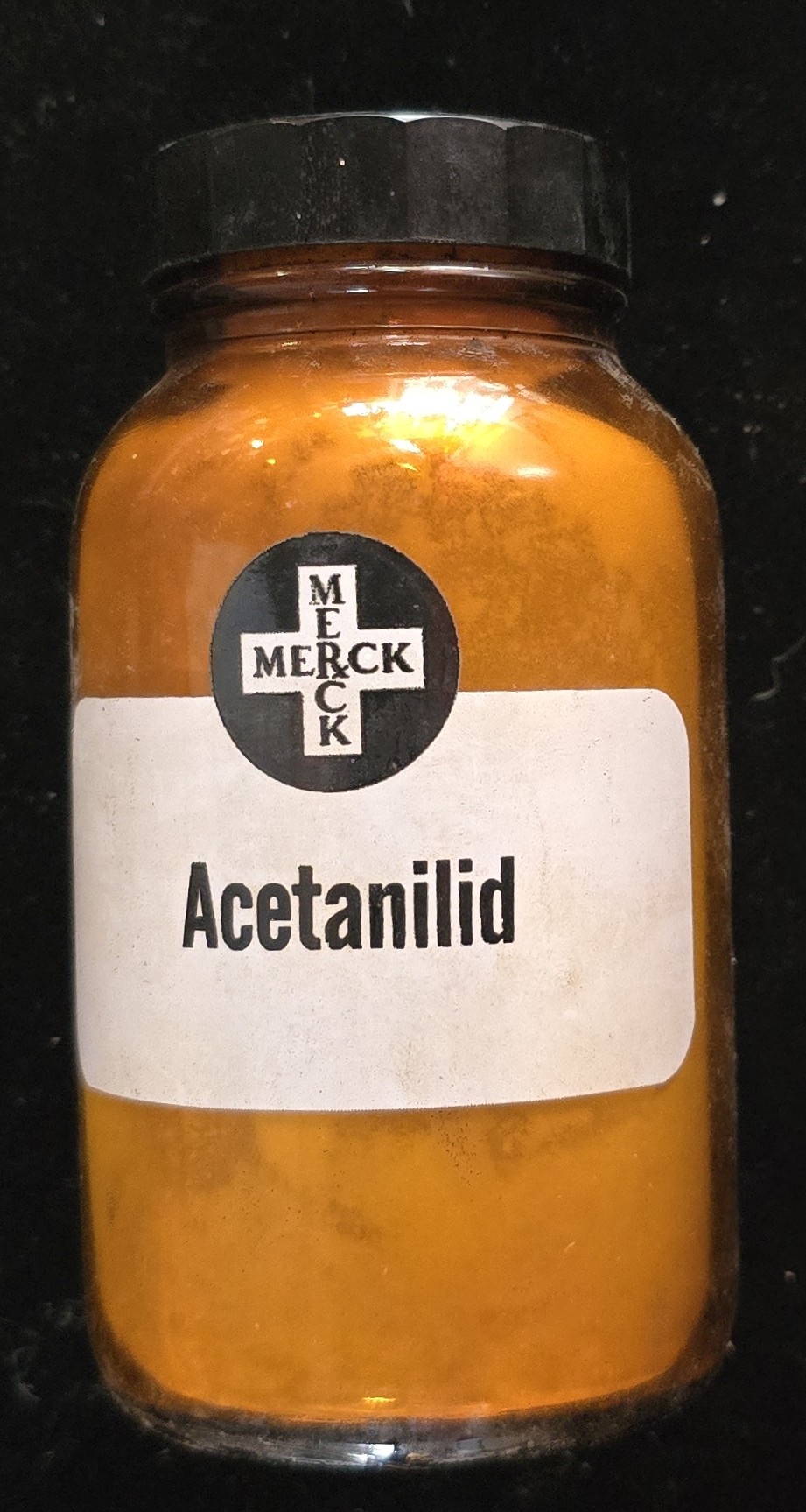
Amber glass intact. Label complete with mild toning and edge wear; cap shows age patina. Contents remain inside, though caked and discolored. Overall: Good condition, strong shelf presence for display.
Gallery
Historical context
First introduced in 1886 under the trade name Antifebrin, acetanilid was among the earliest synthetic fever reducers and painkillers derived from coal-tar chemistry. Though effective, it soon became notorious for causing methemoglobinemia — a condition where hemoglobin could not carry oxygen effectively, turning patients cyanotic (blue).
By the early 20th century, physicians shifted to phenacetin (another aniline derivative) and, ultimately, acetaminophen (paracetamol), which is the main active metabolite responsible for the beneficial effects without the same risks. This bottle represents a transitional stage between dangerous experimental chemistry and the safer mainstream medications we rely on today.
Curious Facts, Ephemera, and Trivia
Chemically, acetanilide is the anilide of acetic acid; pure crystals appear snow-white but darken with age.
Frequently compounded into headache powders and combination pain remedies.
Side effects were severe enough that cyanosis became a recognized “coal-tar drug” phenomenon.
The U.S.P.—POWDER designation and lot number mark this as bulk supply for pharmacists, not a consumer product.
Merck’s Rahway, N.J. cross-logo cap is a classic identifier of mid-century Merck chemical stock.
Excerpt
Early coal-tar pain and fever reducer that worked — but sometimes left patients blue. This Merck U.S.P. bottle shows the hazardous path from acetanilid to modern acetaminophen.
Why it is in the Cabinet
This jar perfectly illustrates the double-edged nature of medical progress: a real therapeutic leap forward, shadowed by dangerous side effects. It is also a direct link in the chain from 19th-century experimental drugs to the acetaminophen (Tylenol) bottle sitting in nearly every home today.
Support Dr. Bebout’s Cabinet of Medical Curiosities
If you enjoy the history, the oddities, and the effort, help keep this cabinet open. Every little bit helps preserve and share the strange wonders of medicine's past.
Buy Me a Ko-fi ☕ Buy Me a Coffee ☕ Tip via PayPal 💵