
Title
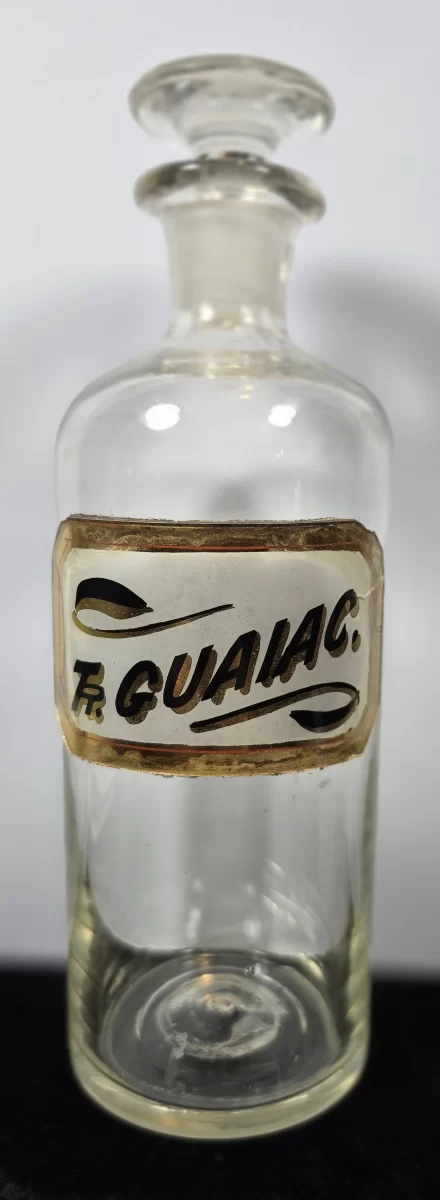
Fr. Guaïac. – Guaiacum Apothecary Bottle
Image
Description
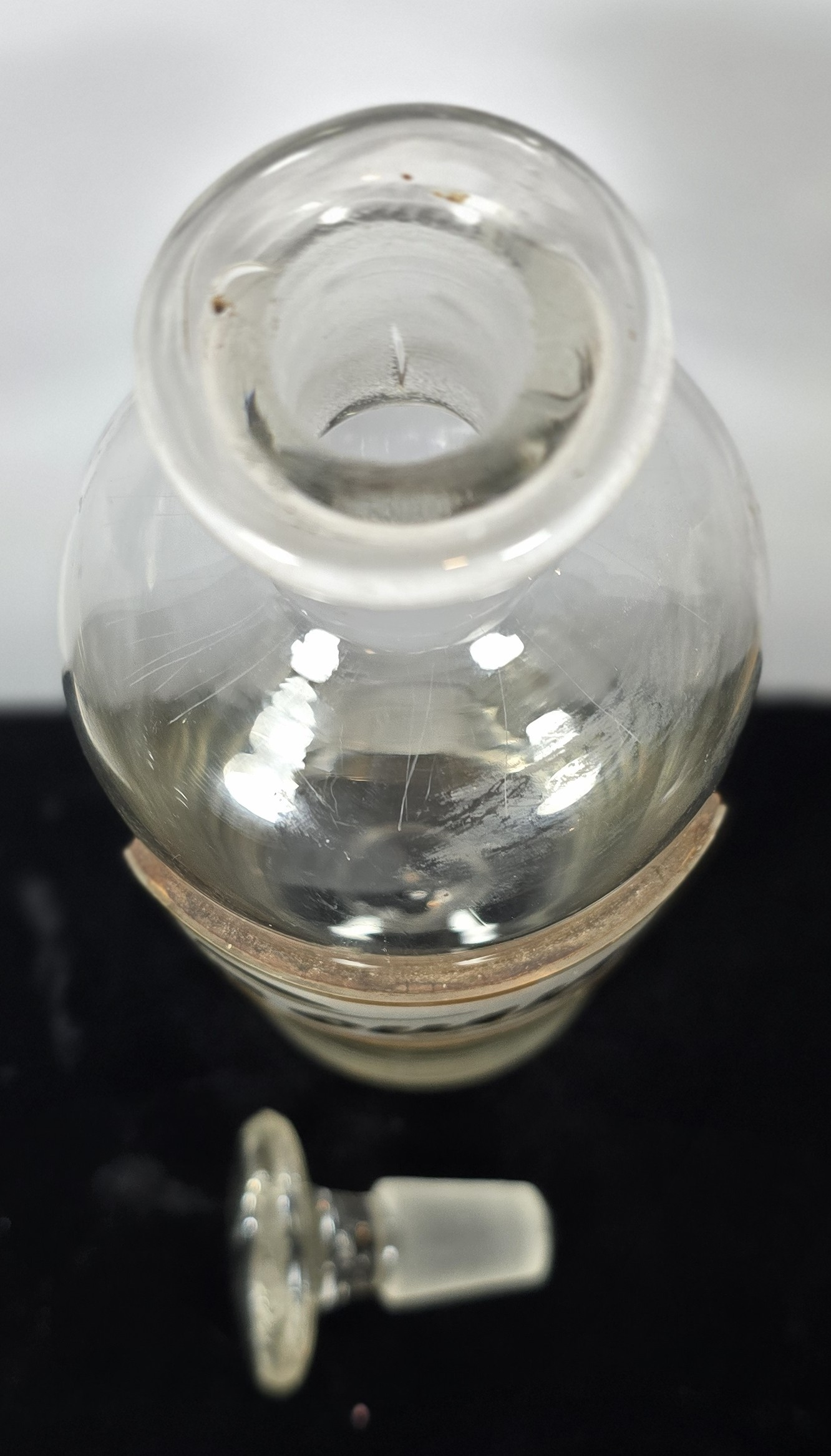
This clear glass apothecary bottle with a ground glass stopper carries the painted label “Fr. Guaïac.”, an abbreviation for Fructus Guaiaci or Resina Guaiaci (Guaiac resin). Guaiacum resin was derived from the wood of the lignum vitae tree (Guaiacum officinale), a Caribbean hardwood long used in early medicine.
Guaiac was promoted from the 16th century onward as a cure for syphilis, gout, rheumatism, and other chronic ailments. The resin was also used in tinctures and lozenges as an expectorant. Apothecary bottles such as this one would have held powdered or resinous guaiac for compounding by pharmacists.
Condition
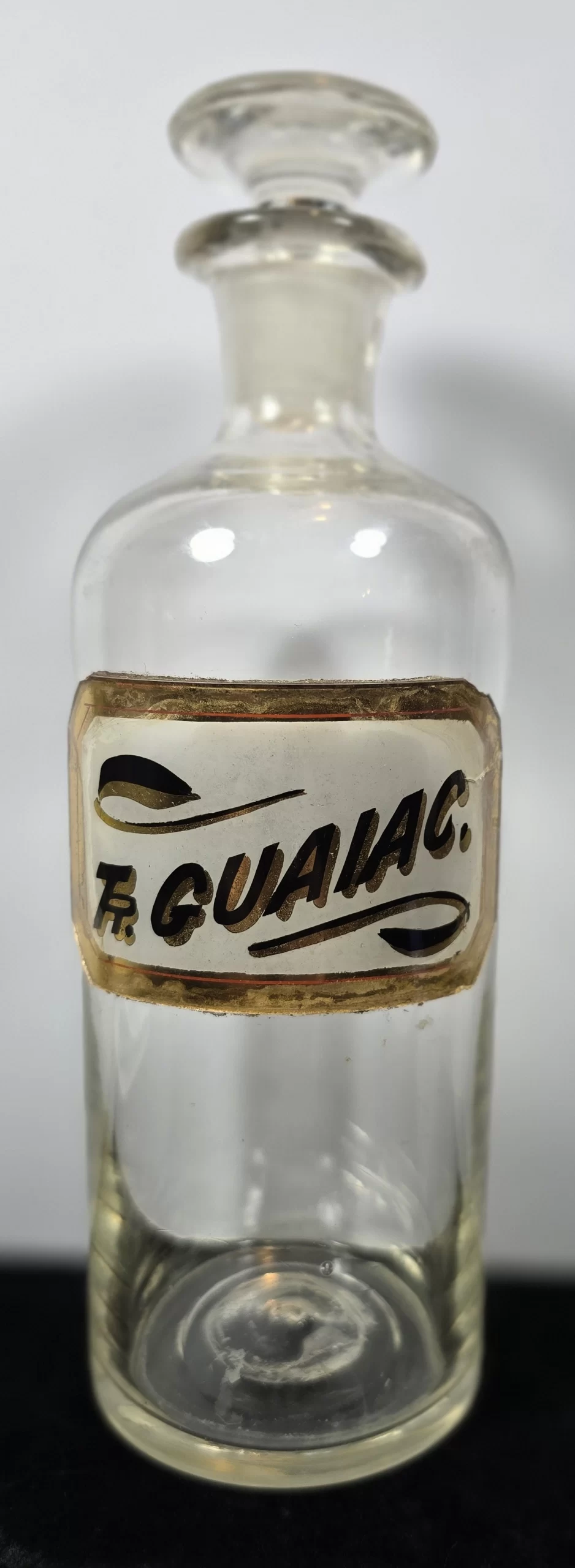
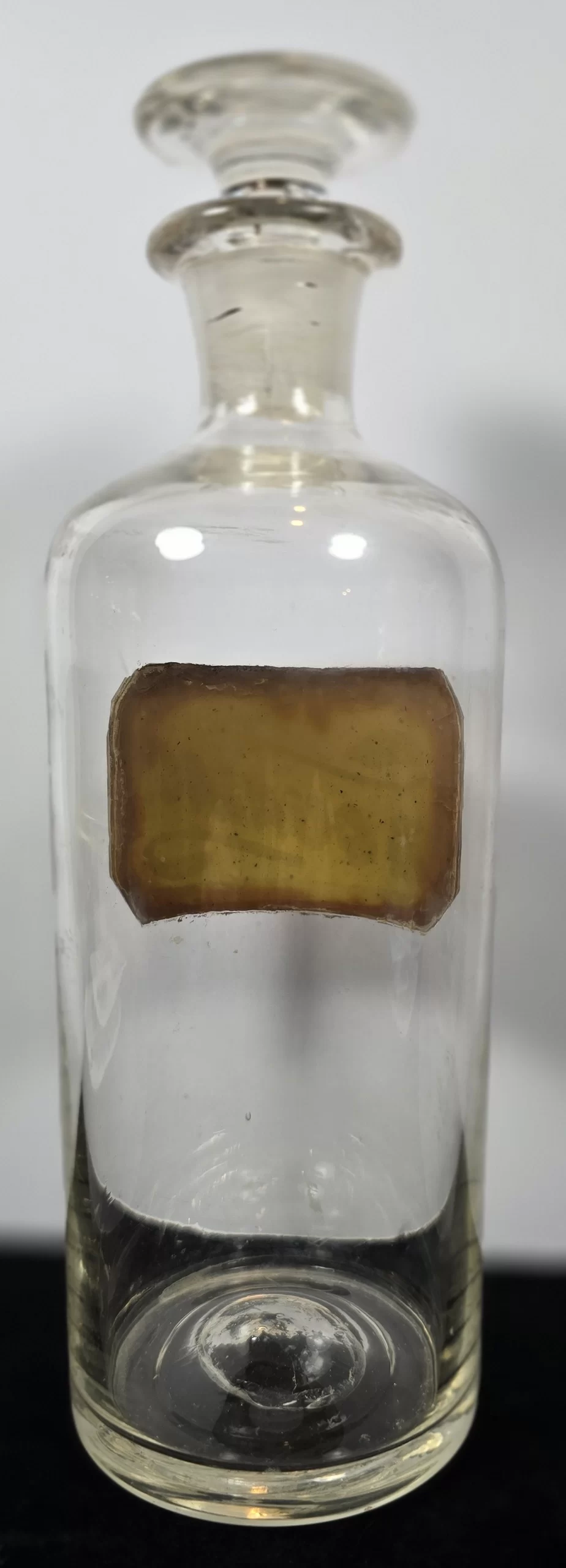
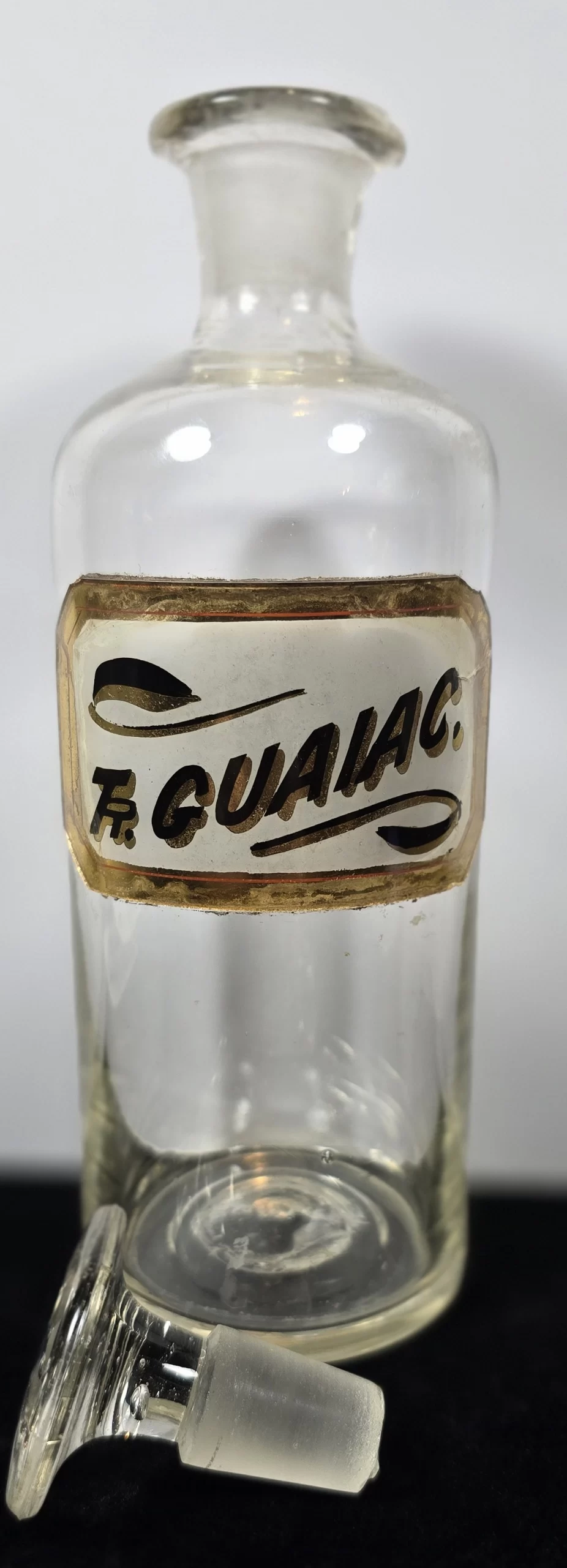
Bottle and stopper in solid condition, with some interior haze and wear. The enameled label is intact but shows age-related discoloration and border wear.
Gallery
Historical context
Guaiac’s reputation in Europe began after the Spanish conquest of the Caribbean, where it was introduced as a “miraculous” New World cure for venereal disease. By the 18th and 19th centuries, it was a common apothecary stock, included in pharmacopeias across Europe and America. Though largely ineffective for its touted uses, guaiac retained a place in medical history as one of the first imported “wonder drugs” of colonial trade.
Curious Facts, Ephemera, and Trivia
Guaiac resin was used in one of the earliest chemical diagnostic tests—the guaiac test for occult blood, a forerunner of today’s fecal occult blood tests.
The lignum vitae tree from which it was derived is one of the hardest woods known, sometimes called “ironwood.”
Its popularity for treating syphilis declined as mercury and later arsenical compounds took precedence, before penicillin finally provided a true cure.
Excerpt
“Guaiacum is given in powder or tincture as a sudorific in rheumatism, chronic skin diseases, and in the so-called scrofulous habit.” (19th-century materia medica)
Why it is in the Cabinet
This bottle represents both the enthusiasm and misplaced hopes of early pharmacology, when exotic imports from the New World were embraced as panaceas. The guaiacum resin, despite its dubious curative power, played a pivotal role in the history of syphilis treatment and early diagnostic chemistry.
Support Dr. Bebout’s Cabinet of Medical Curiosities
If you enjoy the history, the oddities, and the effort, help keep this cabinet open. Every little bit helps preserve and share the strange wonders of medicine's past.
Buy Me a Ko-fi ☕ Buy Me a Coffee ☕ Tip via PayPal 💵