
Title
Lydia E. Pinkham’s Vegetable Compound – Trade Card “Grandchildren”
Author
Lydia E. Pinkham Medicine Company
Image
Description
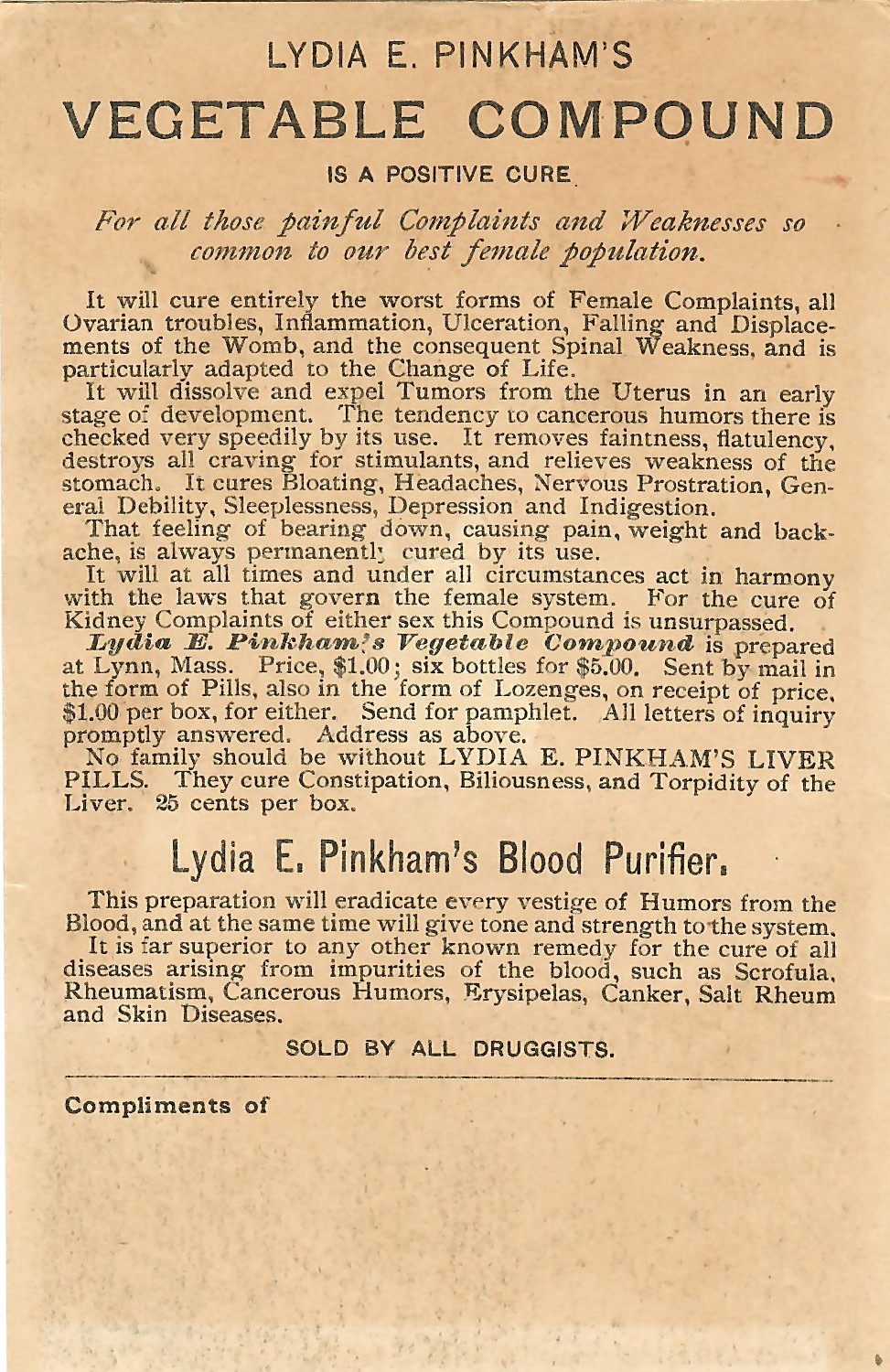
This advertising piece promotes Lydia E. Pinkham’s Vegetable Compound, one of the most famous patent medicines of the late 19th and early 20th centuries. Marketed as a cure for “female complaints” including menstrual pain, menopause symptoms, ovarian troubles, and even tumors, the formula was heavily advertised to women at a time when medical care was limited, expensive, and often dismissive of women’s health concerns.
The ad boldly promises to dissolve tumors, cure indigestion, relieve depression, and “remove faintness, flatulency, and weakness of the stomach.” It also promotes Lydia E. Pinkham’s Liver Pills and Blood Purifier as additional remedies.
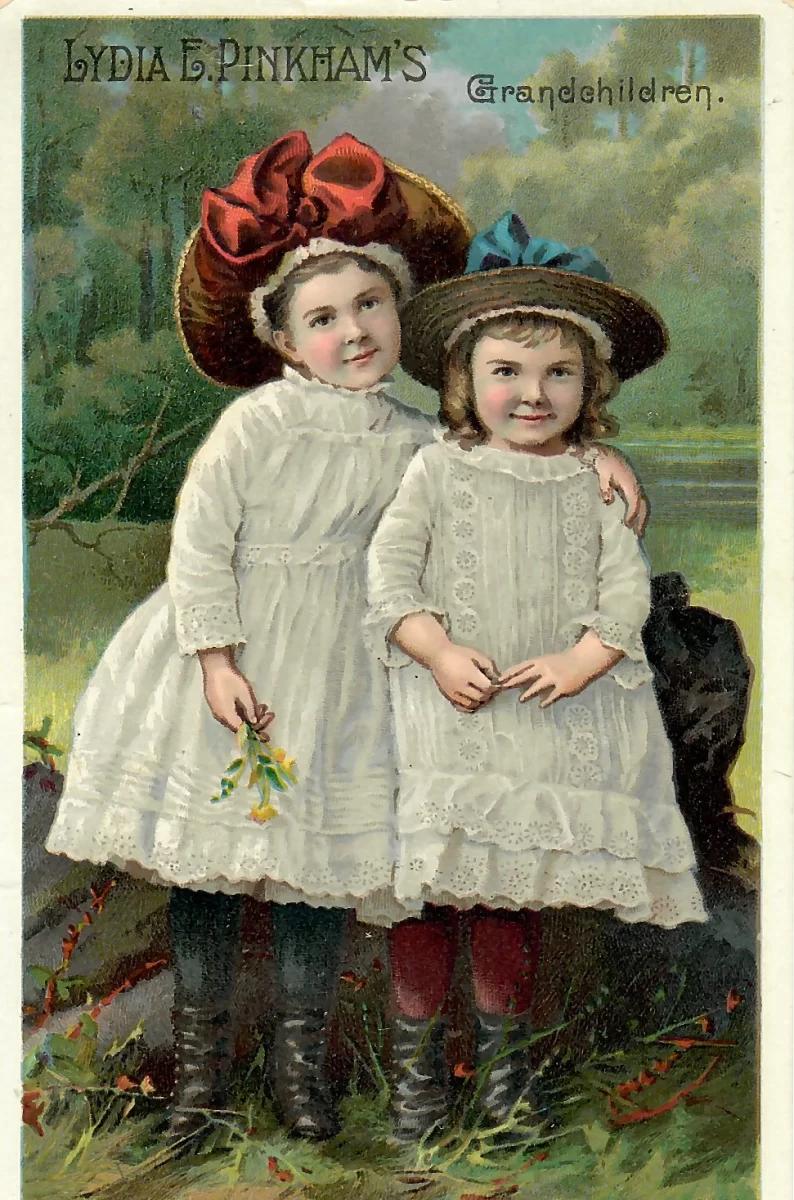
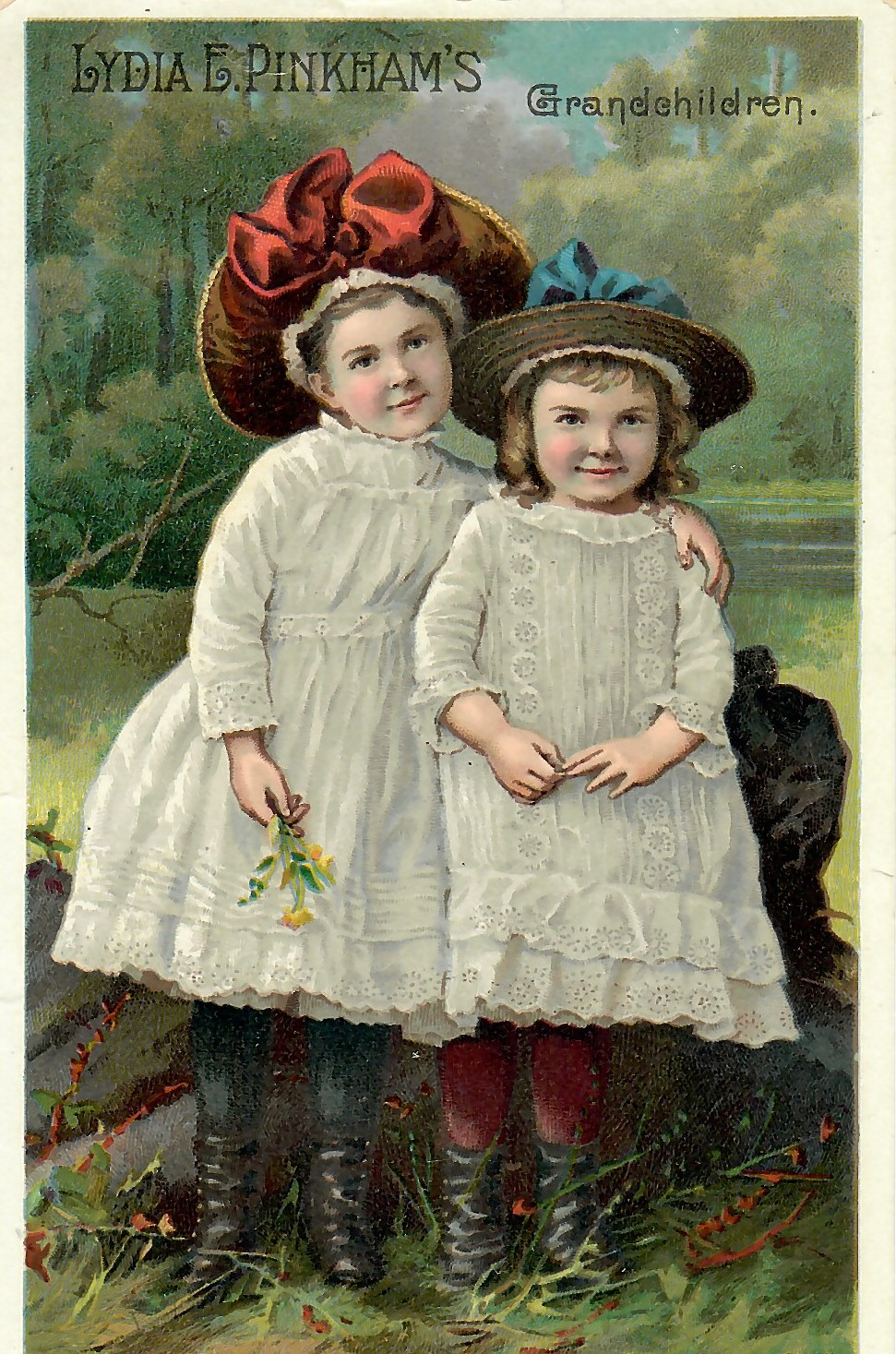
The second piece, a trade card featuring Pinkham’s grandchildren, reflects how the company softened its branding with family imagery, balancing the more serious medical claims with comforting, domestic themes.
Condition
The advertising sheet shows toning and light edge wear. The trade card remains vibrant with strong color, typical of late 19th-century chromolithography.
Gallery
Historical context
First sold in 1875, Lydia E. Pinkham’s Vegetable Compound became one of the most widely recognized patent medicines in America. It was primarily composed of alcohol (up to 20%) and various herbs including unicorn root, fenugreek, and life root. Its success was built not only on its ingredients but also on groundbreaking direct-to-women advertising campaigns, which made Lydia herself a household name.
Curious Facts, Ephemera, and Trivia
Pinkham’s face was featured on packaging and advertisements, making her one of the first widely recognized female brand icons.
During Prohibition, the Compound remained popular because of its alcohol content.
The company encouraged women to write letters to Lydia for medical advice—though by the 1890s, Lydia had long been dead, and staff answered the mail.
Excerpt
“It will dissolve and expel tumors from the uterus in an early stage of development… It cures bloating, headaches, nervous prostration, general debility, sleeplessness, depression, and indigestion.” — Lydia E. Pinkham’s advertising broadside, c. 1890.
Why it is in the Cabinet
This piece is a prime example of women’s health marketing, quack medicine claims, and the blending of medical and domestic imagery to build consumer trust. It illustrates how gender, commerce, and questionable medical science intersected in the era of patent medicines.
Support Dr. Bebout’s Cabinet of Medical Curiosities
If you enjoy the history, the oddities, and the effort, help keep this cabinet open. Every little bit helps preserve and share the strange wonders of medicine's past.
Buy Me a Ko-fi ☕ Buy Me a Coffee ☕ Tip via PayPal 💵