
Title
Bromo-Seltzer Speed Crystals Bottle – Emerson Drug Company, Baltimore
Author
Emerson Drug Company – Baltimore, Maryland
Image
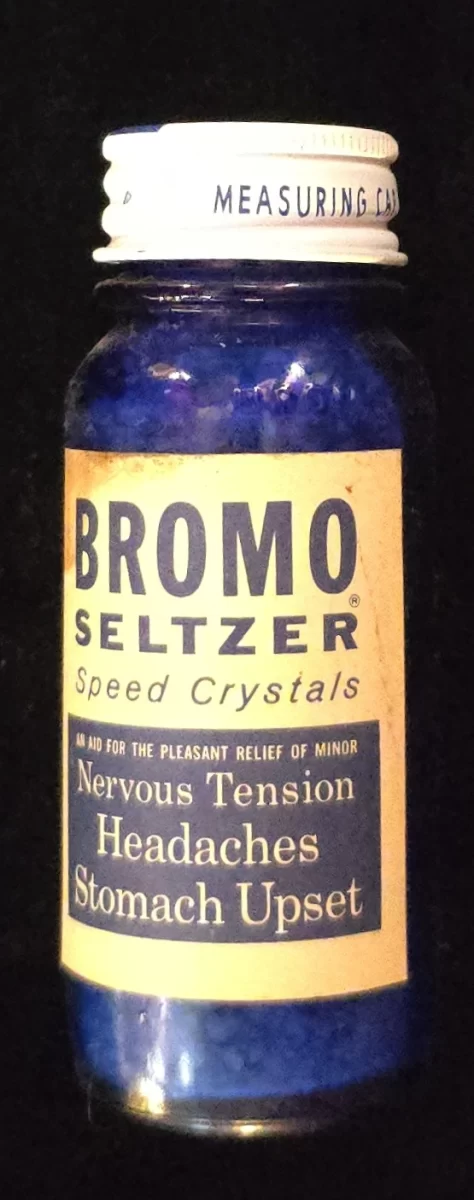
Description
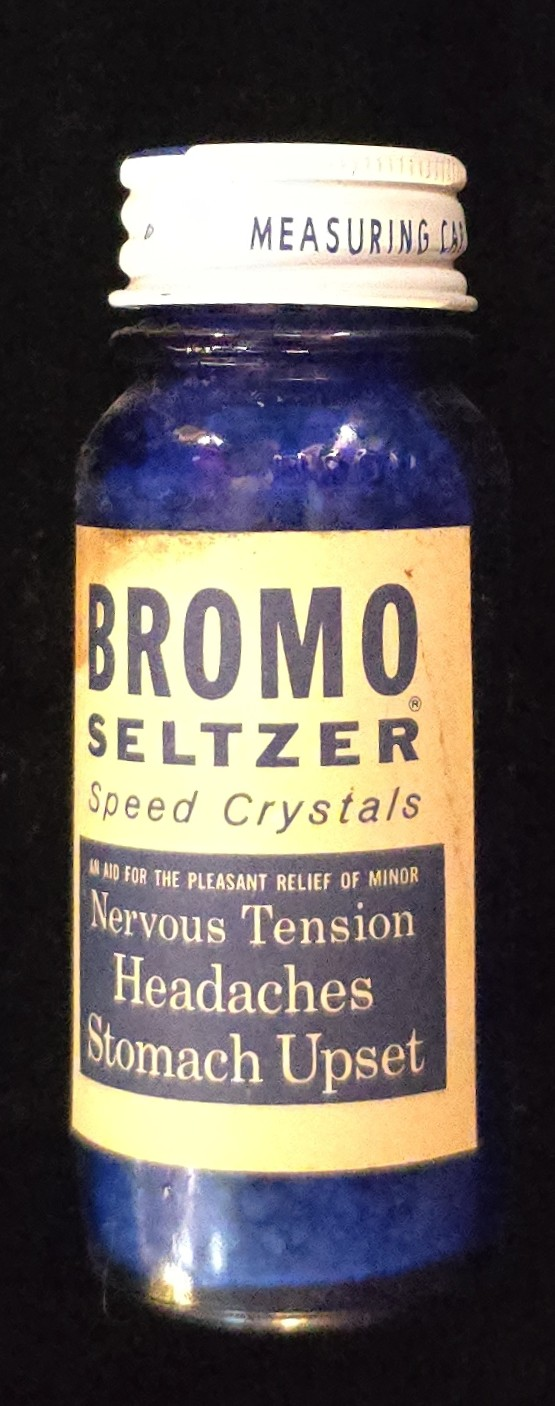
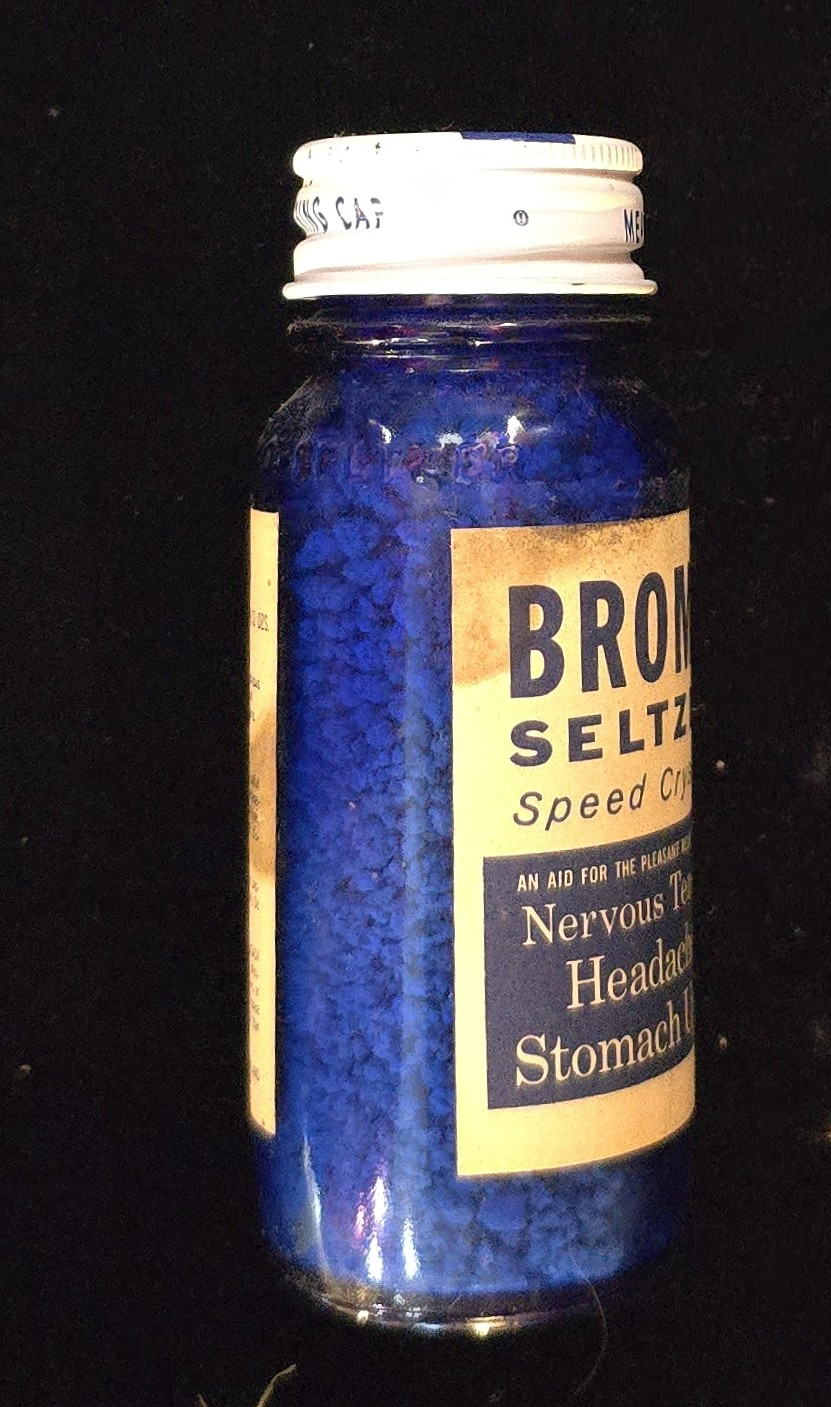
This cobalt blue glass bottle of Bromo-Seltzer Speed Crystals was produced by the Emerson Drug Company of Baltimore, Maryland. Marketed for the “pleasant relief” of nervous tension, headaches, stomach upset, colds, neuralgia, and minor aches and pains, this bottle retains its contents of crystalline granules.
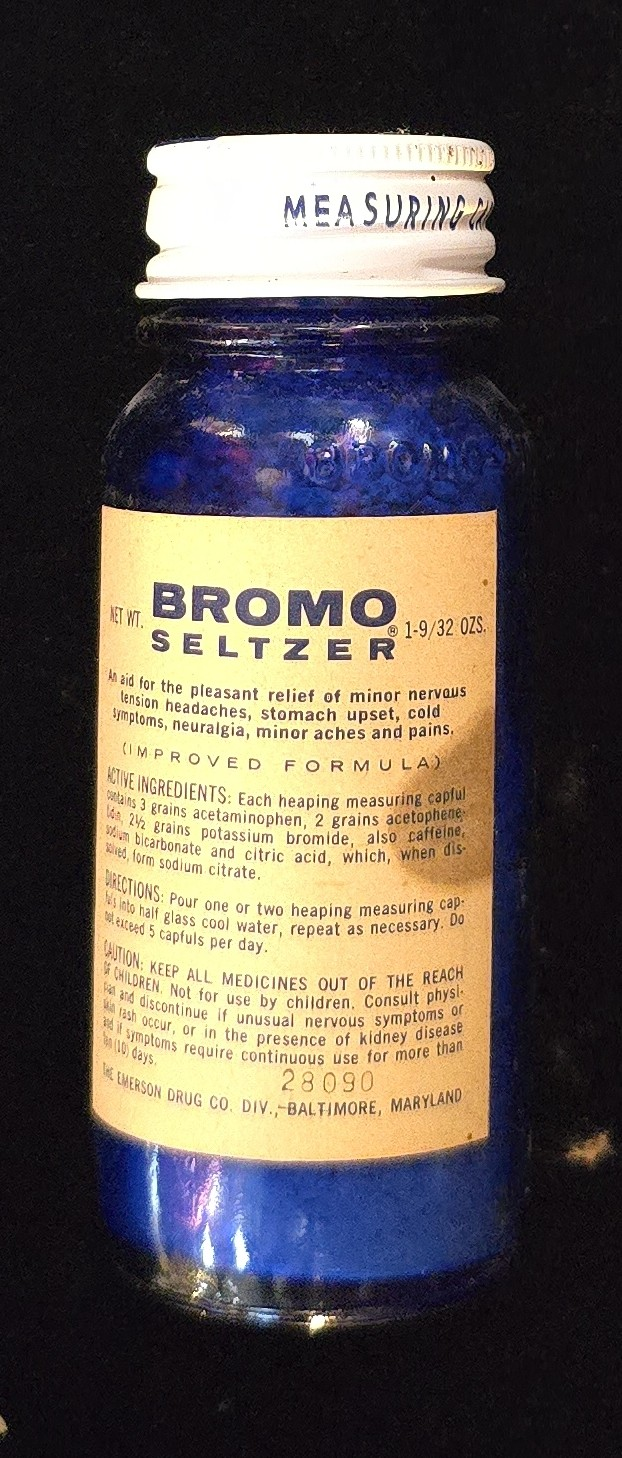
The bottle features an embossed “BROMO” mark on the glass and a white metal screw cap embossed with “Measuring Cap.” The front label identifies the product as “Speed Crystals,” while the back label details active ingredients, directions for use, and safety warnings.
The listed active ingredients include acetaminophen, aceto-phenetidin (phenacetin), potassium bromide, caffeine, sodium bicarbonate, and citric acid—a combination reflecting mid-20th century formulations, before safety concerns led to the removal of phenacetin and bromides from over-the-counter remedies.
Condition
Cobalt glass intact with strong color.
Cap and paper labels present; light staining and edge wear.
Full contents remain sealed inside the bottle.
Embossed lettering still sharp and legible.
Gallery
Historical context
Bromo-Seltzer was introduced in 1888 by Isaac Emerson, founder of the Emerson Drug Company. Originally formulated with sodium bromide (hence the name), it quickly became a widely known household remedy. By the mid-20th century, the brand shifted toward acetaminophen-based formulations but retained bromides and phenacetin for decades.
The product was aggressively advertised on radio and in print, including sponsorship of the Bromo-Seltzer Tower in Baltimore, a city landmark. Over time, safety concerns led to reformulations, but the cobalt bottles remain iconic collectibles.
Curious Facts, Ephemera, and Trivia
The Bromo-Seltzer Tower in Baltimore still stands today and once housed the world’s largest four-dial gravity clock.
“Speed Crystals” branding reflected both the rapid dissolution of the product in water and mid-century fascination with quick, modern relief.
Phenacetin, one of the listed ingredients, was later withdrawn due to links with kidney damage and cancer.
Bromo bottles were so common that the cobalt glass was often repurposed around the home for storage.
Excerpt
From the label:
“An aid for the pleasant relief of minor nervous tension headaches, stomach upset, cold symptoms, neuralgia, minor aches and pains.”
Why it is in the Cabinet
This bottle is included in the Cabinet as an excellent example of mid-20th century American patent medicine packaging. The combination of cobalt glass, bold branding, and unsafe now-banned ingredients illustrates the evolution of pharmaceutical regulation and consumer safety standards in the 20th century.
Related Objects
Support Dr. Bebout’s Cabinet of Medical Curiosities
If you enjoy the history, the oddities, and the effort, help keep this cabinet open. Every little bit helps preserve and share the strange wonders of medicine's past.
Buy Me a Ko-fi ☕ Buy Me a Coffee ☕ Tip via PayPal 💵