
Title
Sanford’s Balsam of Myrrh (C. Hanford Mfg. Co., Montreal, Quebec)
Author
C. Hanford Mfg. Co. Ltd.
Image
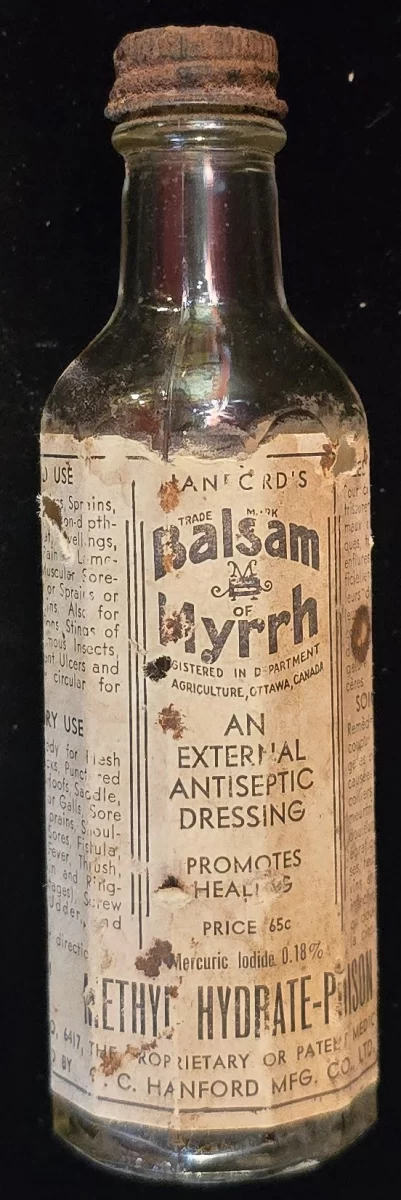
Description
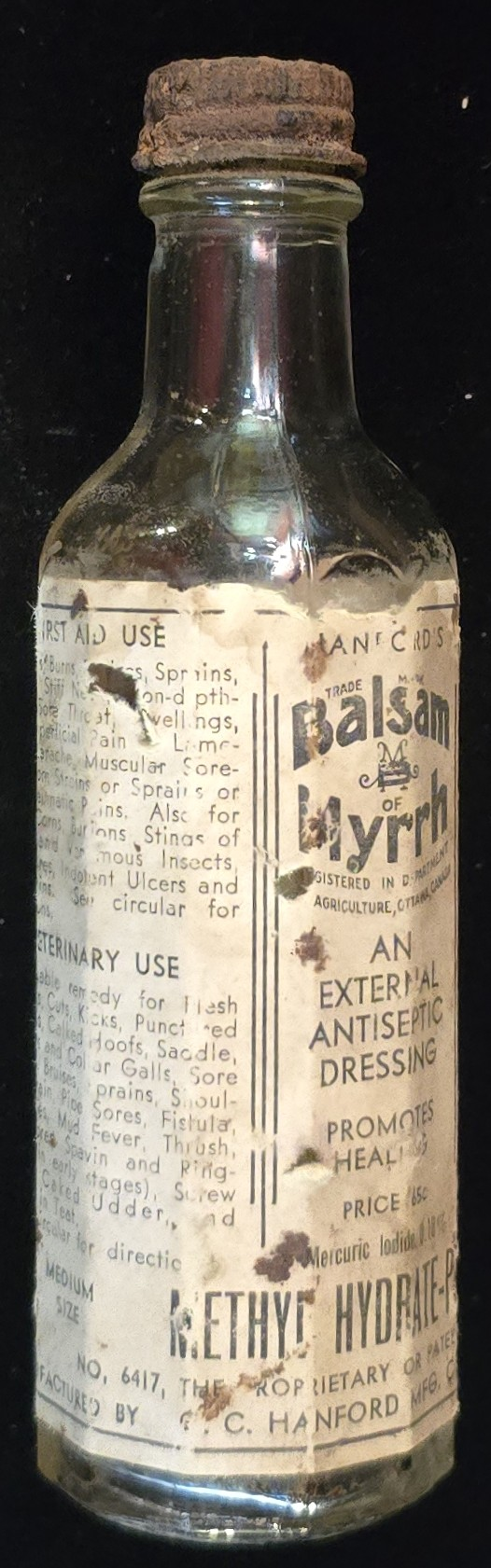
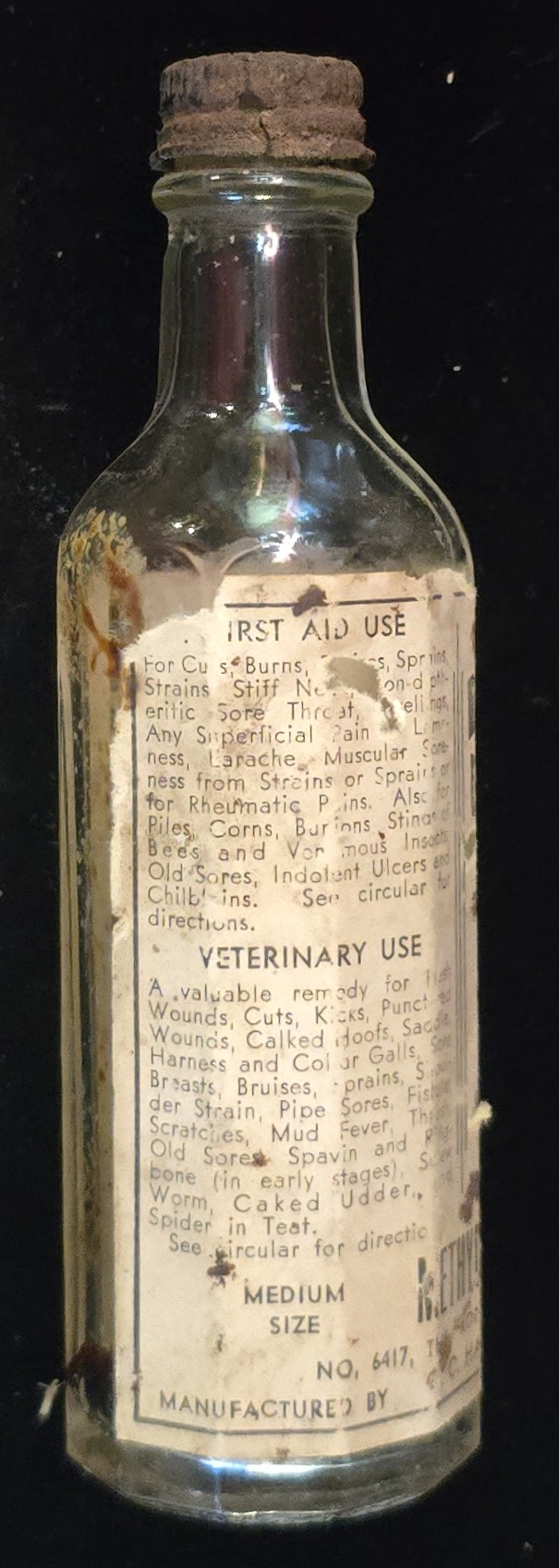
Sanford’s Balsam of Myrrh was an external antiseptic dressing widely sold in Canada under the Proprietary or Patent Medicine Act. Marketed for both human and veterinary use, it claimed to relieve cuts, burns, bruises, sprains, rheumatism, insect stings, and ulcers. Veterinary claims extended to thrush, mud fever, spavin, and even caked udders. The formulation contained mercuric iodide (0.18%) and methyl hydrate, both toxic substances, making the “POISON” marking on the label an essential legal requirement.
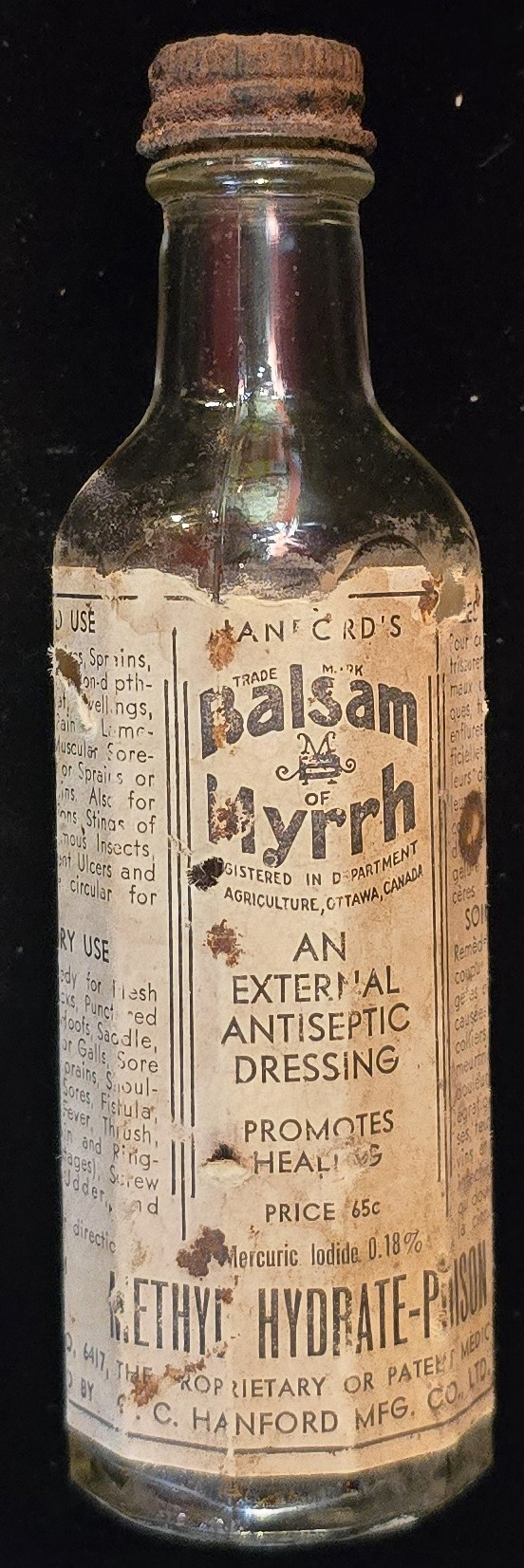
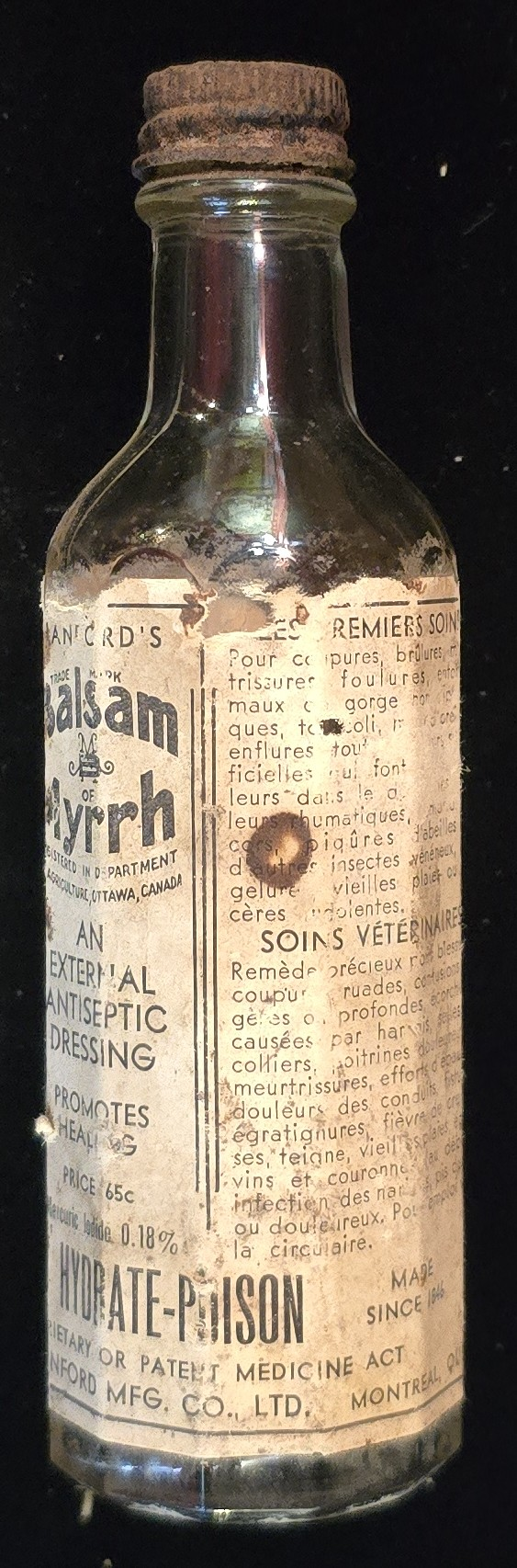
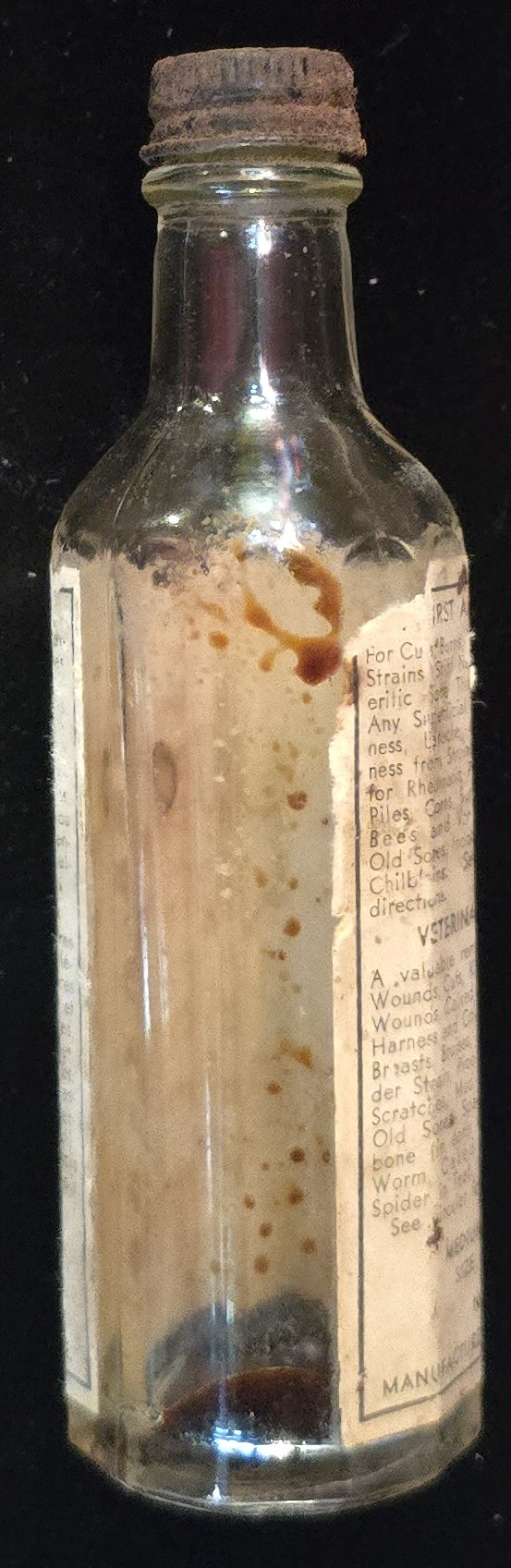
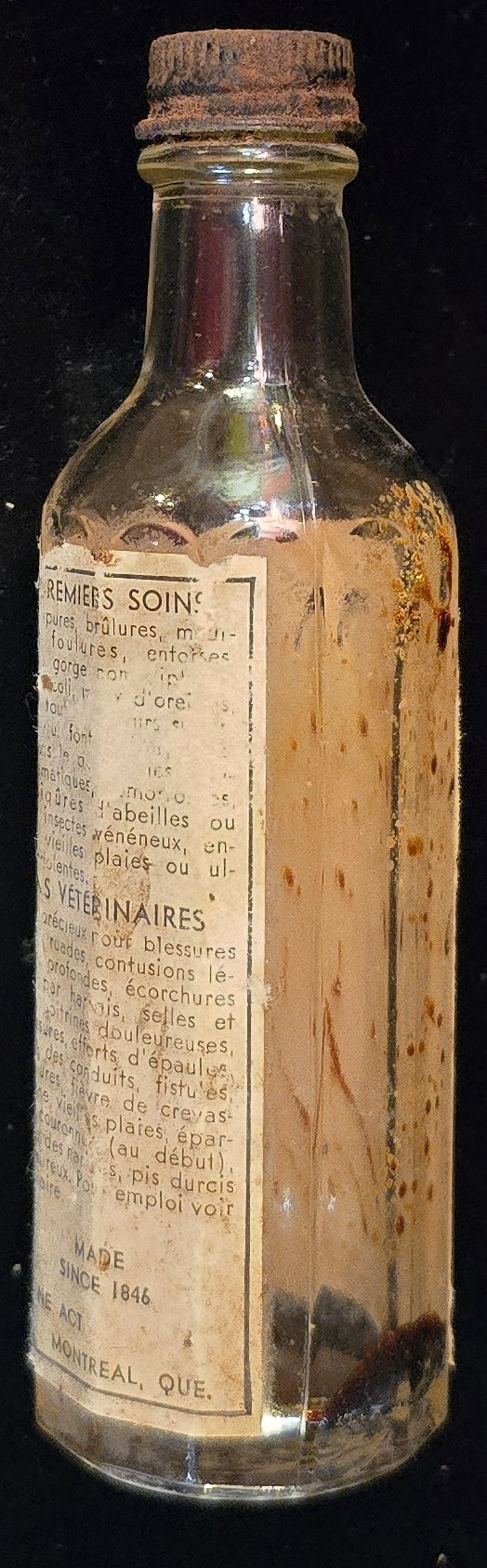
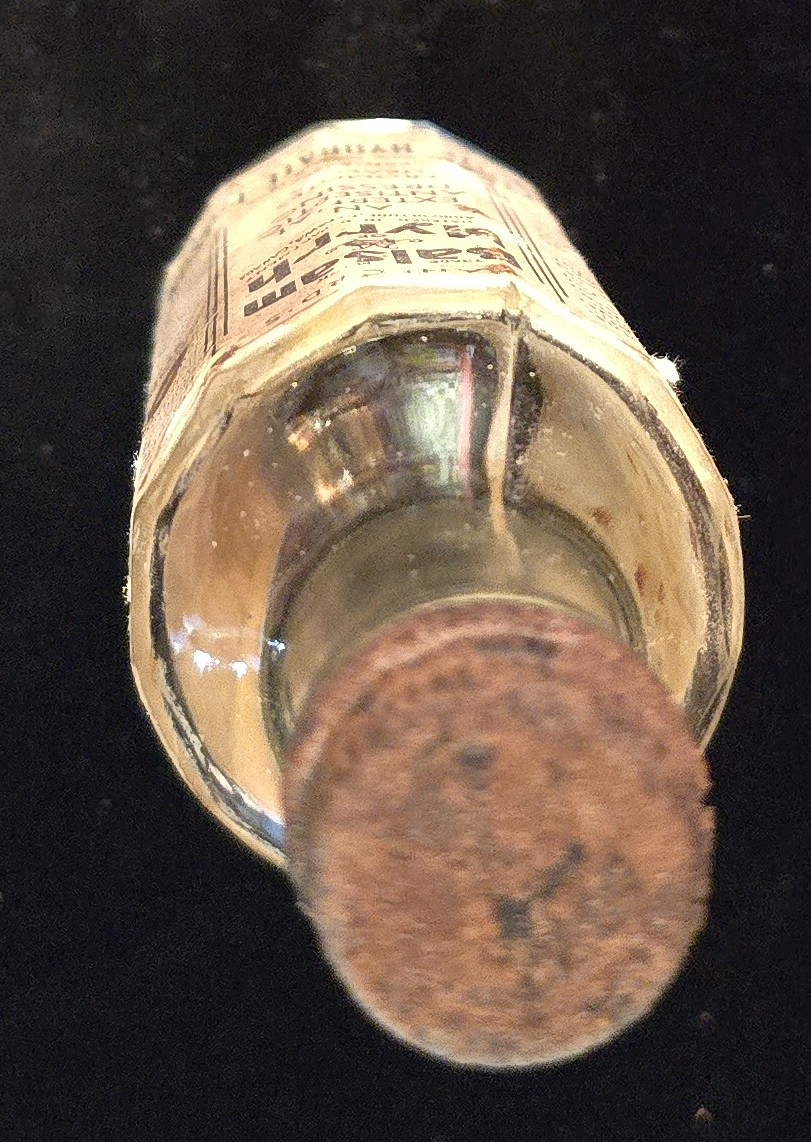
The bottle here is a clear glass, octagonal shape with cork-and-metal cap, priced at 65¢, with bilingual French/English labeling.
Condition
Paper label browned and spotted, with portions worn away. Rusted metal cap intact, some liquid residue remains at bottle bottom. Overall fair condition with good legibility.
Gallery
Historical context
Balsam of Myrrh has been used since antiquity as a resin-based healing agent. By the 19th and 20th centuries, “patent medicines” like Sanford’s combined traditional plant ingredients with chemical antiseptics and alcohol, often marketed as cure-alls. In Canada, strict labeling under the Proprietary or Patent Medicine Act required the word “Poison” for certain ingredients. Despite this, such products were common in home medicine cabinets until stricter pharmaceutical regulations phased them out mid-20th century.
Curious Facts, Ephemera, and Trivia
The company touted its origins as far back as 1846, though this particular bottle likely dates 1920s–40s.
The bilingual label reflects early Canadian regulation requiring both French and English text.
Veterinary claims were a strong selling point in rural areas, where a single bottle was marketed as useful for both farmer and livestock.
Excerpt
“An external antiseptic dressing — promotes healing. For cuts, burns, bruises, sprains, insect stings, rheumatic pains, and old sores.”
Why it is in the Cabinet
This bottle represents the dual-use, cure-all medicines that straddled both human and veterinary markets in the early 20th century. Its toxic contents, broad claims, and enduring brand history make it a fascinating example of Canadian patent medicine.
Support Dr. Bebout’s Cabinet of Medical Curiosities
If you enjoy the history, the oddities, and the effort, help keep this cabinet open. Every little bit helps preserve and share the strange wonders of medicine's past.
Buy Me a Ko-fi ☕ Buy Me a Coffee ☕ Tip via PayPal 💵