
Prescription for Mrs. Umlon
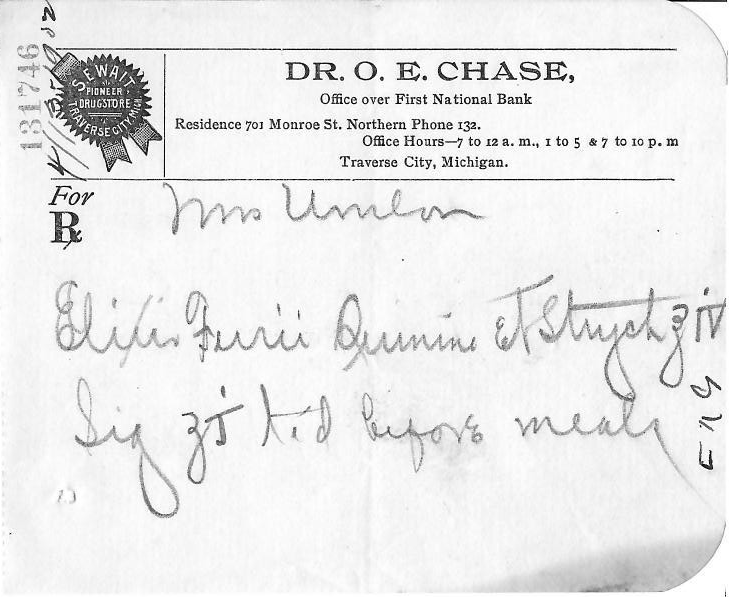
Prescribing Doctor: Dr. O.E. Chase
Patient Name: Mrs. Umlon
Pharmacy: S.E. Wait Pioneer Drugstore
Date: Undated (estimated 1900–1910)
Location: Traverse City, Michigan
Transcription
℞
Elix. Ferri Quinine et Strychnine ℥iv
Sig: ʒj t.i.d. before meals
Interpretation
Prescription for Mrs. Umlon
Medication: Elixir of Iron, Quinine, and Strychnine
Dispense: 4 ounces
Directions: Take 1 dram (about 1 teaspoon) three times daily before meals.
Condition
Paper shows light age toning and edge wear but remains well-preserved. Handwriting is legible, with clear use of standard medical abbreviations (℞, ℥, ʒ). Script suggests a professional physician’s hand.
Historical Context
The Elixir of Iron, Quinine, and Strychnine was a standard “tonic” in American pharmacies during the late 19th and early 20th centuries.
Iron (Ferri): Intended to treat anemia and “weak blood.”
Quinine: Originally used for malaria, but also given as a general restorative.
Strychnine: In tiny doses, it was believed to stimulate the nervous system, appetite, and digestion, despite its toxic reputation.
This combination was often prescribed for convalescence, fatigue, and nervous exhaustion.
Curious Facts and Trivia
Many pharmacists kept pre-mixed bottles of this elixir on hand, making it one of the era’s most widely dispensed “pick-me-ups.”
Advertisements often claimed it would “restore vigor” and “strengthen the system” — foreshadowing modern-day energy tonics and supplements.
Strychnine, though infamous as a poison, remained in medical use into the mid-20th century in such elixirs.
Callout Box
⚠️ Caution: Strychnine is highly toxic. While once considered safe in small doses, cumulative exposure posed serious risks. Modern medicine no longer uses it as a tonic.
Why It’s in the Cabinet
This prescription showcases how physicians of the past blended stimulant, hematinic, and antimalarial agents into one bottle, reflecting the “tonic culture” of the early 1900s. Its survival offers a window into everyday prescribing practices that blurred the line between medicine and poison.
Support Dr. Bebout’s Cabinet of Medical Curiosities
If you enjoy the history, the oddities, and the effort, help keep this cabinet open. Every little bit helps preserve and share the strange wonders of medicine's past.
Buy Me a Ko-fi ☕ Buy Me a Coffee ☕ Tip via PayPal 💵