
Title
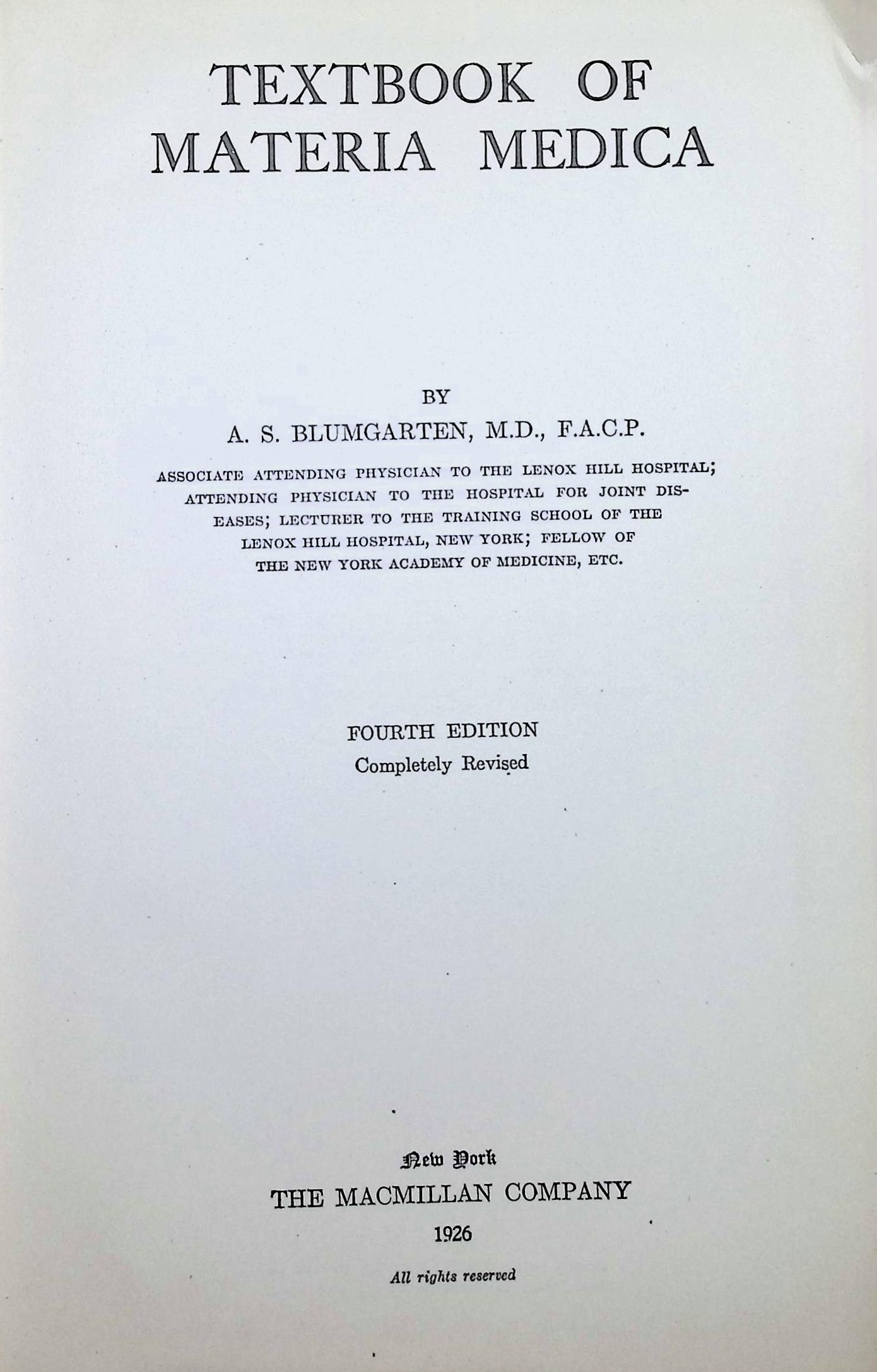
Textbook of Materia Medica (Fourth Edition, 1926)
Author
A. S. Blumgarten, M.D., F.A.C.P.
Image
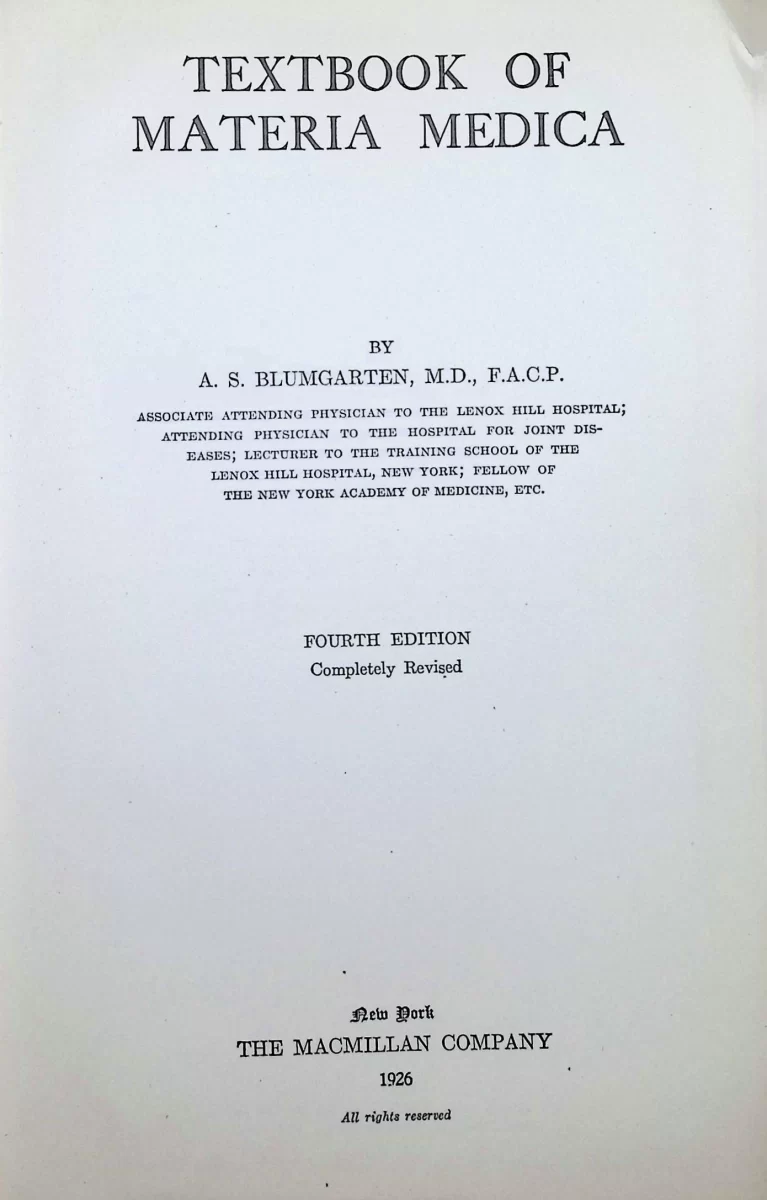
Description
This Textbook of Materia Medica, Fourth Edition, was published in 1926 by The Macmillan Company. Written by A. S. Blumgarten, M.D., Associate Attending Physician to Lenox Hill Hospital, this medical text was designed for both physicians and nurses.
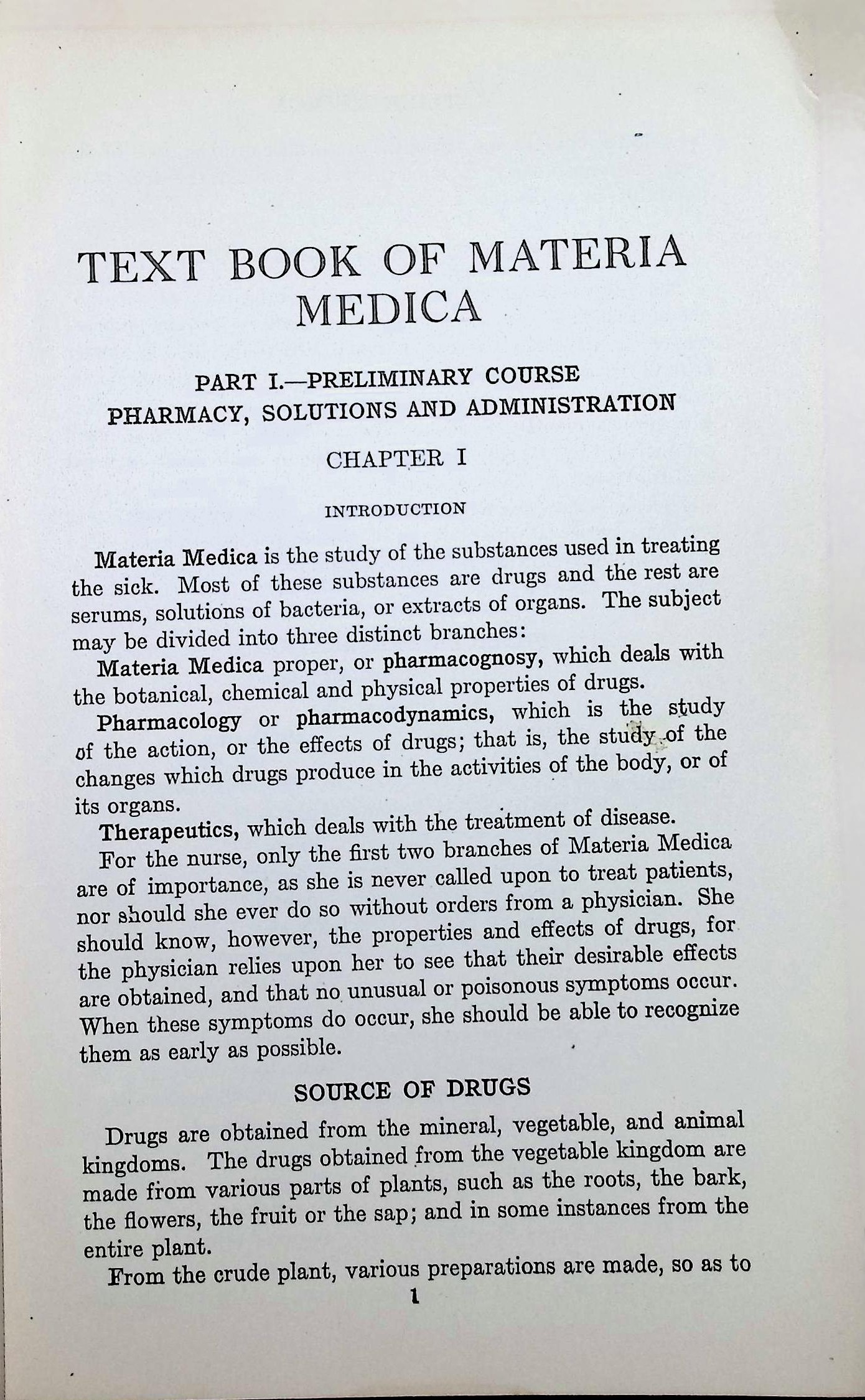
The book introduces materia medica as the study of substances used in treating the sick — including plant, animal, and mineral origins of drugs. It divides the field into pharmacognosy, pharmacology, and therapeutics, with emphasis on safe drug handling, preparation, and administration. The nursing sections highlight the practical aspects of dosage precision, medicine storage, and identifying dangerous side effects.
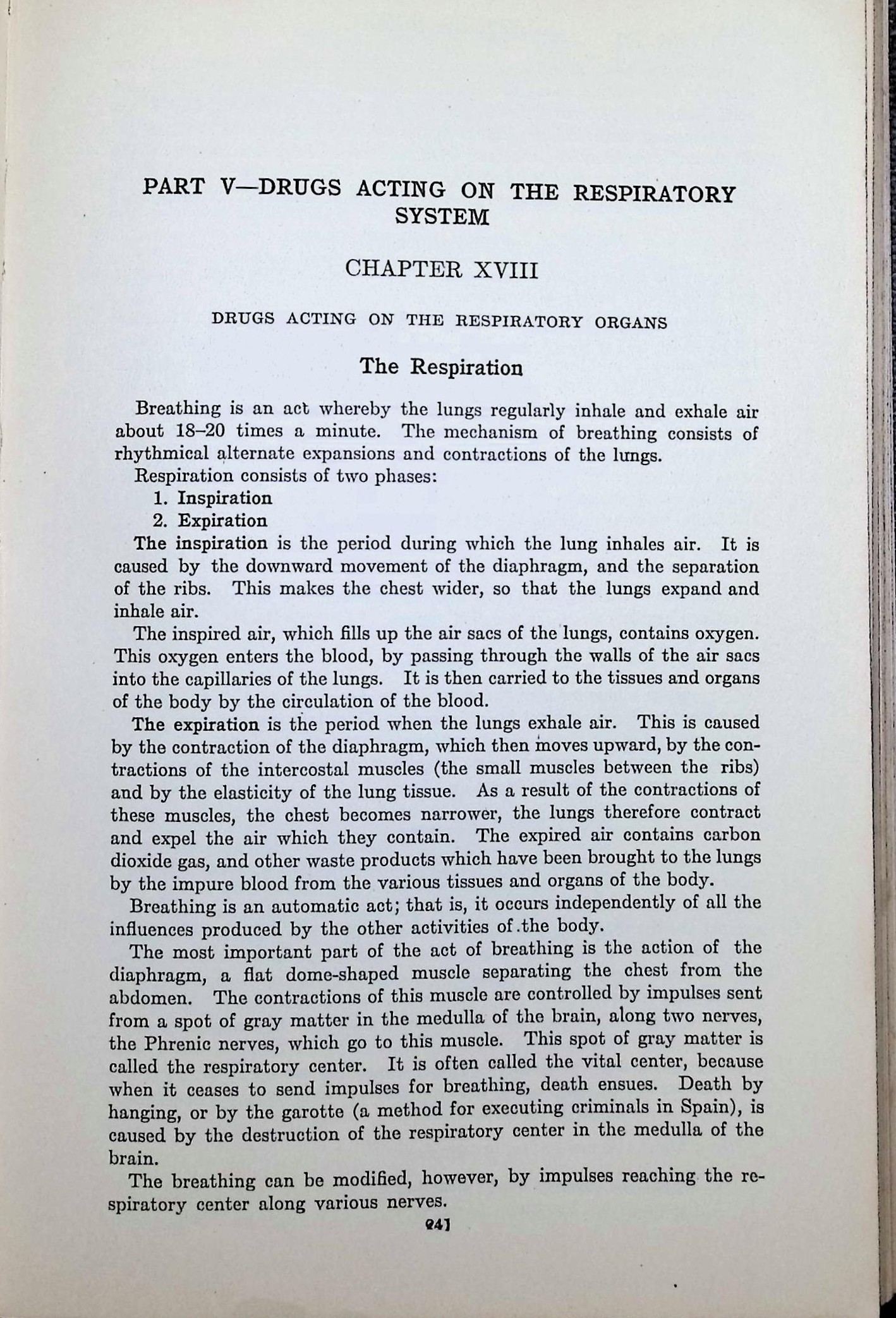
Detailed chapters cover the administration of medicines, classification of drugs, and their effects on the respiratory, circulatory, digestive, and nervous systems.
Condition
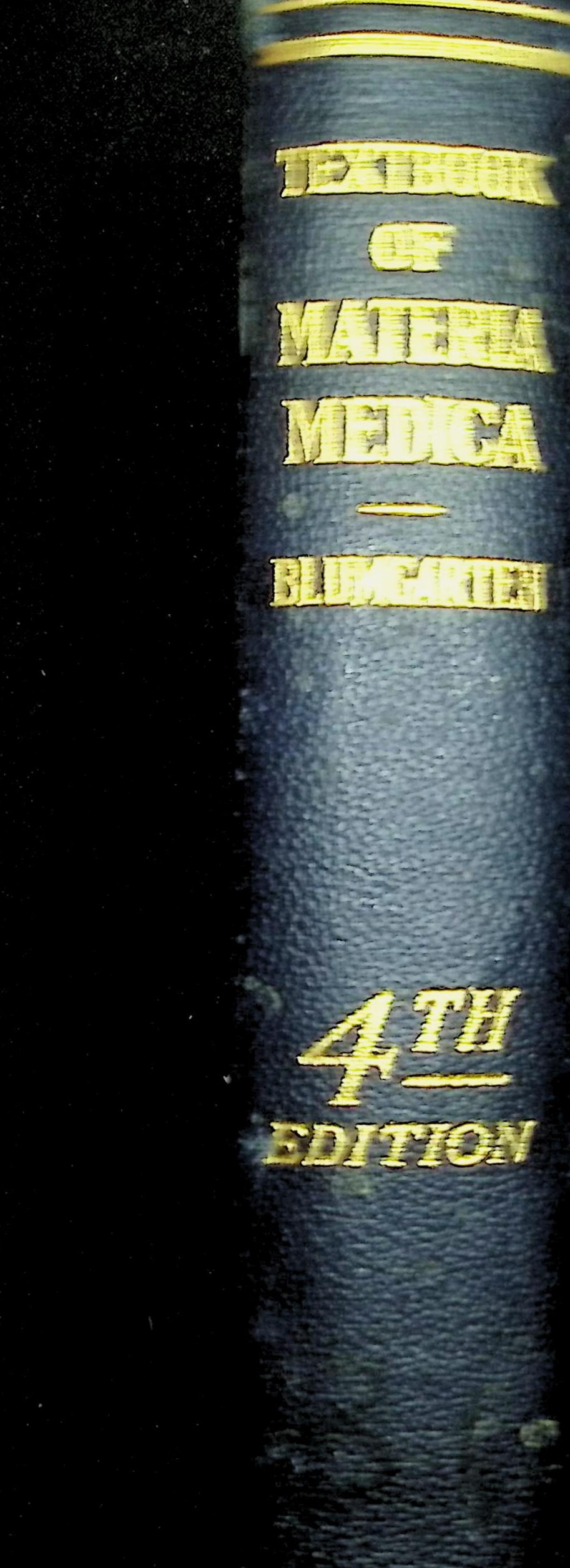
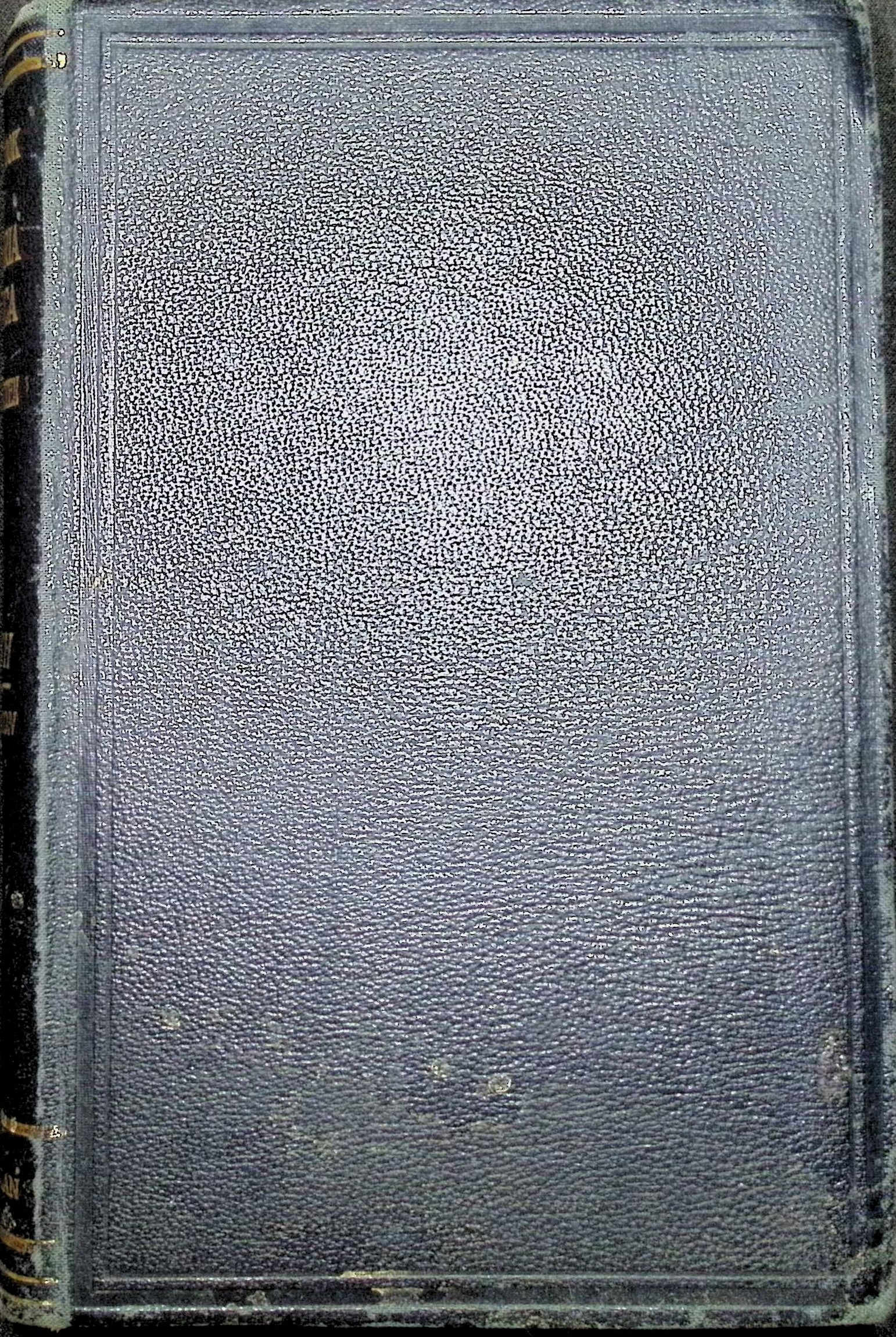
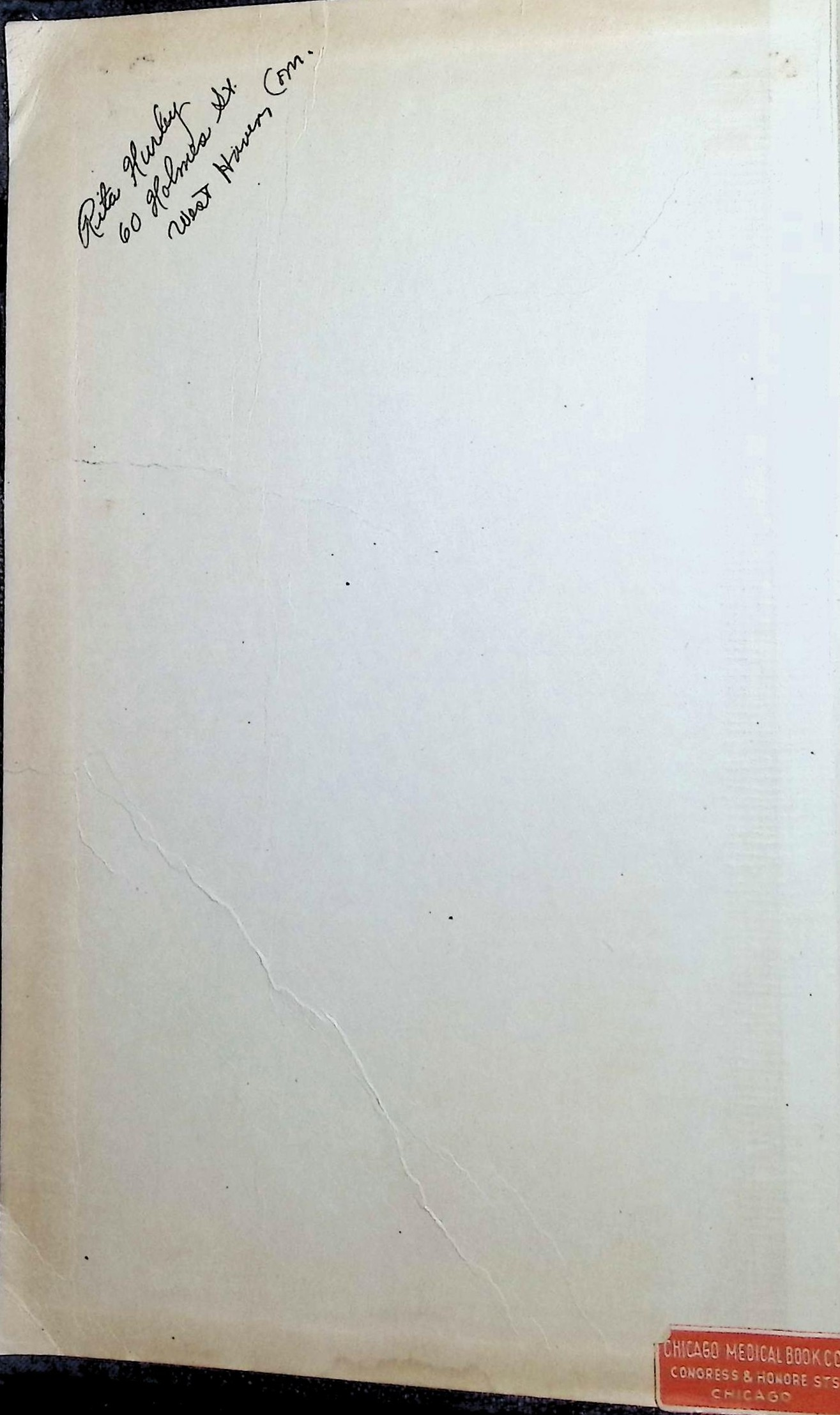
Black leather-like hardcover with gilt lettering on spine. General shelf wear, light rubbing to edges. Interior pages clean with light toning; contains ownership inscription (“Rita H. Huxley, West Haven, Conn.”) and a bookseller’s stamp from Chicago Medical Book Co.
Gallery
Historical context
By the 1920s, materia medica textbooks were transitioning toward the more modern discipline of pharmacology. Blumgarten’s work reflects this shift, combining older classifications with emerging therapeutic science. It represents the interwar period’s push for standardized nursing and medical education in drug administration.
Curious Facts, Ephemera, and Trivia
Materia medica texts were once considered essential for both doctors and nurses, teaching not just drug effects but storage, labeling, and safety.
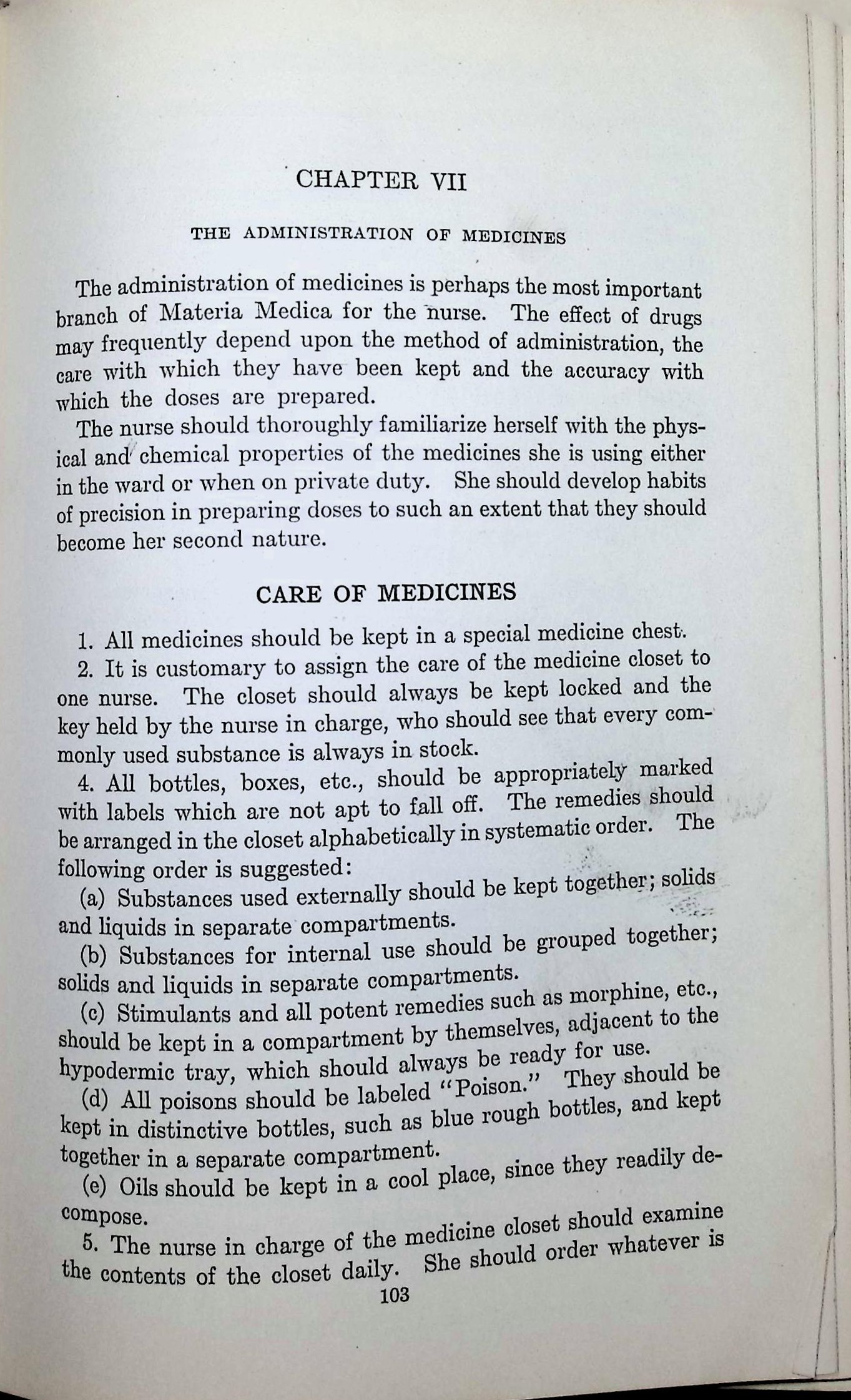
Blumgarten stresses labeling poisons clearly and grouping stimulants (like morphine) separately in a medicine chest — a precursor to later controlled substance protocols.
The book illustrates how nurses were expected to memorize drug effects without necessarily prescribing them, underscoring the strict physician-led model of care.
Excerpt
“The nurse should thoroughly familiarize herself with the physical and chemical properties of the medicines she is using either in the ward or when on private duty. She should develop habits of precision in preparing doses to such an extent that they should become her second nature.” (p. 103)
Why it is in the Cabinet
This textbook preserves a snapshot of medical education just before the modern pharmaceutical era. It bridges the older traditions of materia medica with the scientific discipline of pharmacology, while also highlighting the evolving role of nurses in safe drug handling.
Support Dr. Bebout’s Cabinet of Medical Curiosities
If you enjoy the history, the oddities, and the effort, help keep this cabinet open. Every little bit helps preserve and share the strange wonders of medicine's past.
Buy Me a Ko-fi ☕ Buy Me a Coffee ☕ Tip via PayPal 💵