
Going Back to Med School… 1880 Style
Modern medicine? I’ve got that covered. But late 19th-century medicine? That’s a whole different beast. Strychnine for the stomach, laudanum for sleep, boric acid for the eyes—these weren’t quack cures in 1880, they were standard practice. I’m heading back to med school… 1880 style, to learn exactly what my colleagues of the era were thinking.
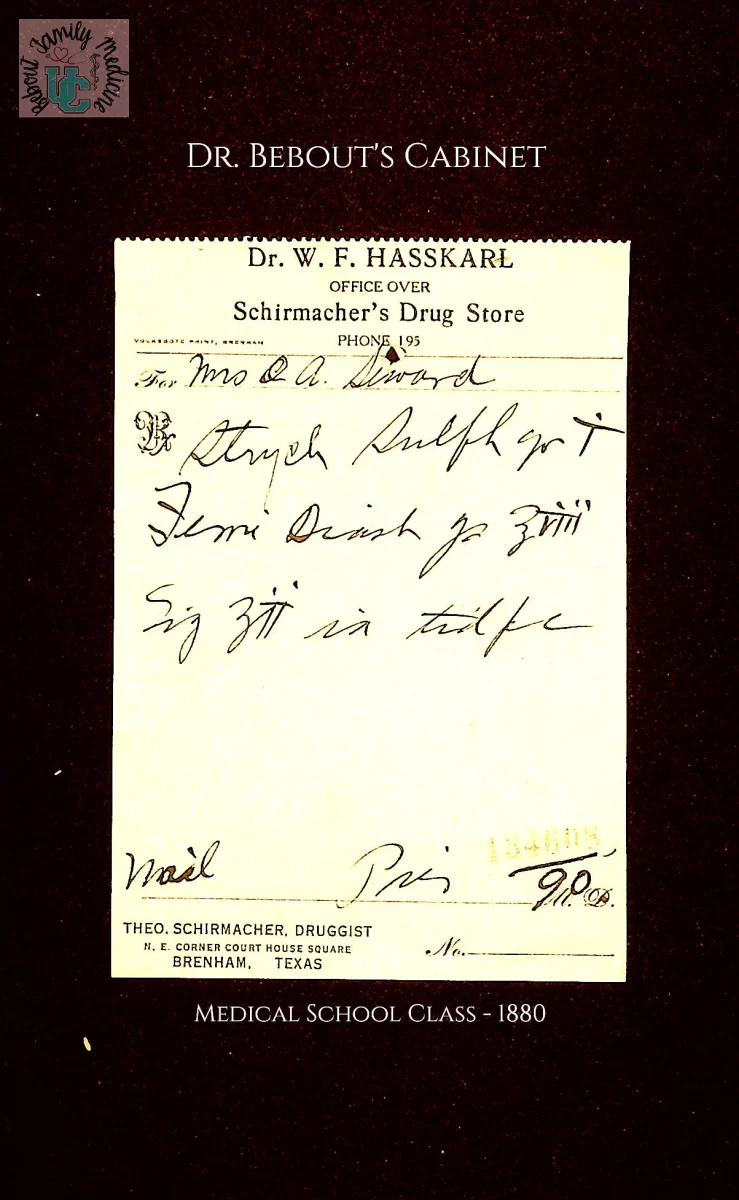
I’ve been a practicing physician for decades, but lately, I’ve found myself going down a rabbit hole—straight into the late 1800s.
It started with a stack of antique prescriptions from the 1880–1900 era. As I tried to read the faded ink and decipher the handwriting, I kept running into ingredients I’d never heard of—at least not in modern medicine. Strychnine for digestive problems. Laudanum for insomnia. Boric acid for the eyes. Camphor in places I wouldn’t dare put camphor.
I realized something: I know a lot about medicine in 2025… but I barely know what my colleagues in 1880 were thinking when they reached for these remedies. Why did they choose what they did? What did their textbooks teach? What was considered “cutting-edge” science back then?
So, I’m starting a new project I’m calling Going Back to Med School: 1880 Style. My goal is to immerse myself in the medical thinking of the late 19th century—through their textbooks, journals, prescriptions, and medical supply catalogs—and learn the why behind what they did.
This isn’t about mocking the past. It’s about stepping into their shoes (and maybe their apothecaries) to understand the logic, beliefs, and limitations of their time. I’ll be digging into:
Pharmacology and materia medica texts that list treatments from aconite to zinc oxide
Medical journals and case reports describing symptoms in Victorian detail
Prescriptions and dosing practices that would get my license yanked today
Social and cultural factors that shaped medicine in the Gilded Age
I’ll share my findings as I go—sometimes fascinating, sometimes horrifying, and sometimes both at the same time.
From my own Cabinet of Medical Curiosities, here are a few examples that have already made me stop and say, Wait… they did what?
Strychnine and Sugar of Milk — prescribed as a daily tonic, not a poison.
Aconite tincture — used for pain relief and fever reduction, despite its extreme toxicity.
Calomel — mercurous chloride, used as a purgative and for “liver complaints,” often causing mercury poisoning.
Radithor — a 1920s radium water “energy tonic” (yes, they drank radioactive water on purpose).
Alum eye washes — meant to treat inflammation, but enough to make a modern ophthalmologist cringe.
Taka-Diastase — an enzyme powder from Aspergillus oryzae, marketed to “help the weak stomach” digest food.
Every one of these had a rationale in its time. None of it was random. I want to know what that rationale was, straight from the sources they were reading—not what we think about it now.
If you’ve got an interest in medical history, antique pharmacy, or just like to wonder “what were they thinking?”—come along. This is going to be one strange, educational trip back to med school… 1880 style.
Support Dr. Bebout’s Cabinet of Medical Curiosities
If you enjoy the history, the oddities, and the effort, help keep this cabinet open. Every little bit helps preserve and share the strange wonders of medicine's past.
Buy Me a Ko-fi ☕ Buy Me a Coffee ☕ Tip via PayPal 💵