
Title
Miles Anti-Pain Pills
Author
Miles Laboratories, Inc., Elkhart, Indiana, U.S.A.
Image
Description
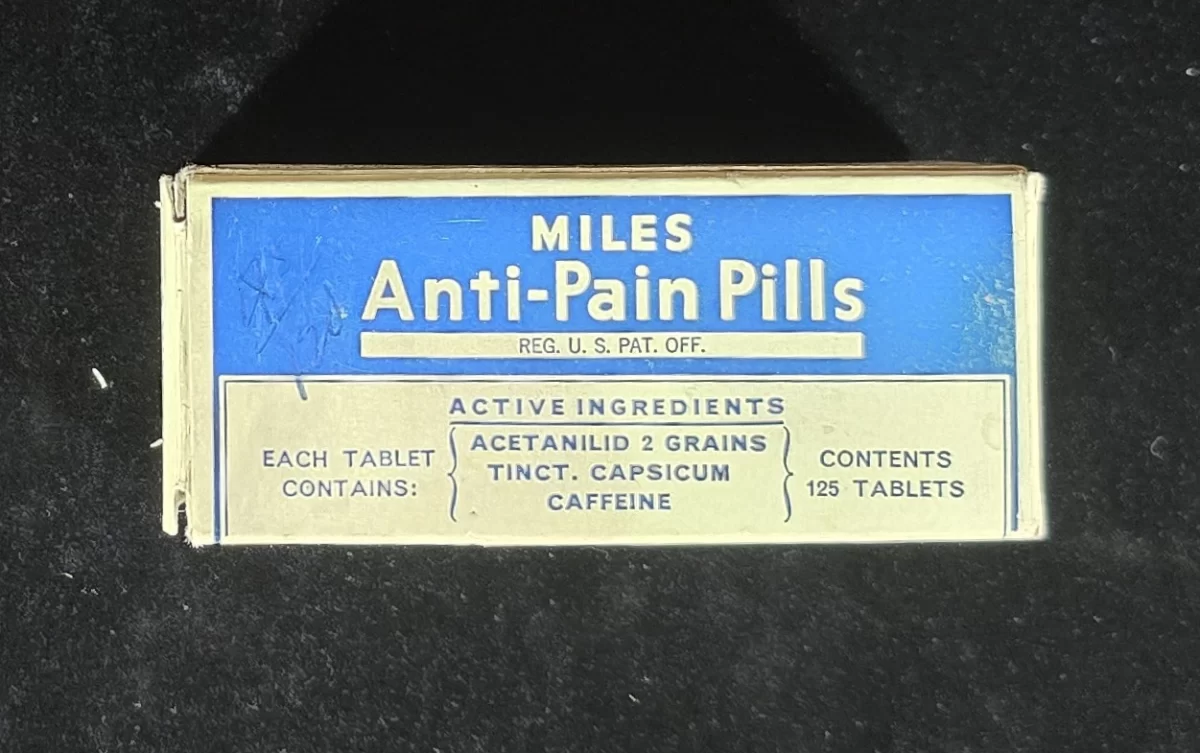
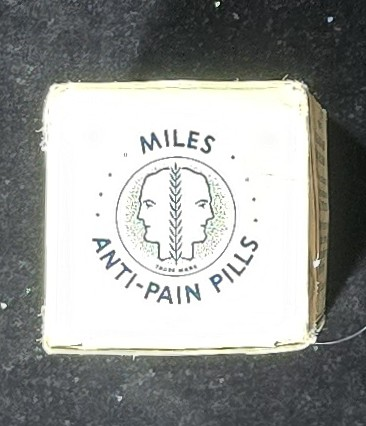
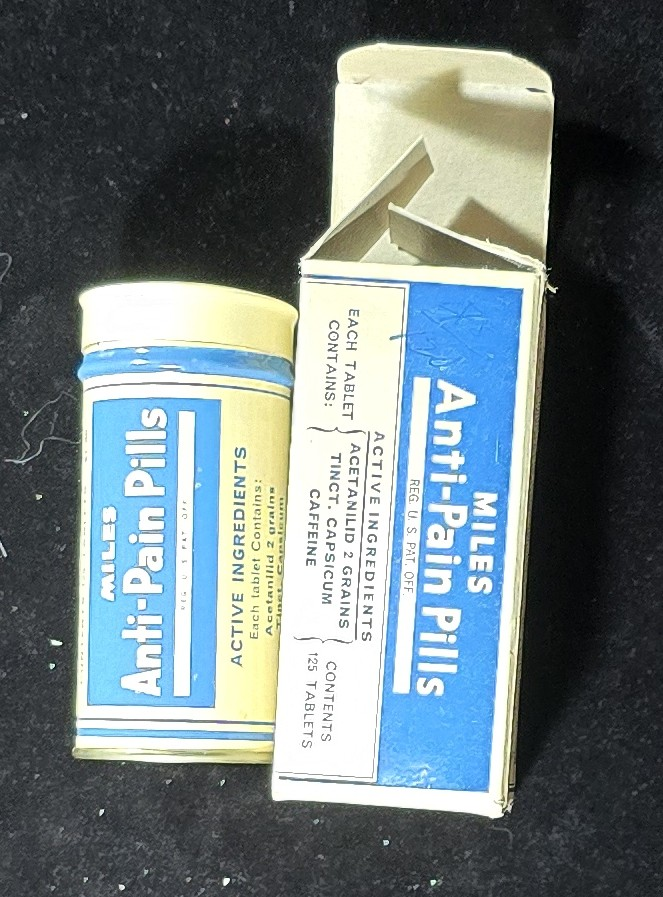
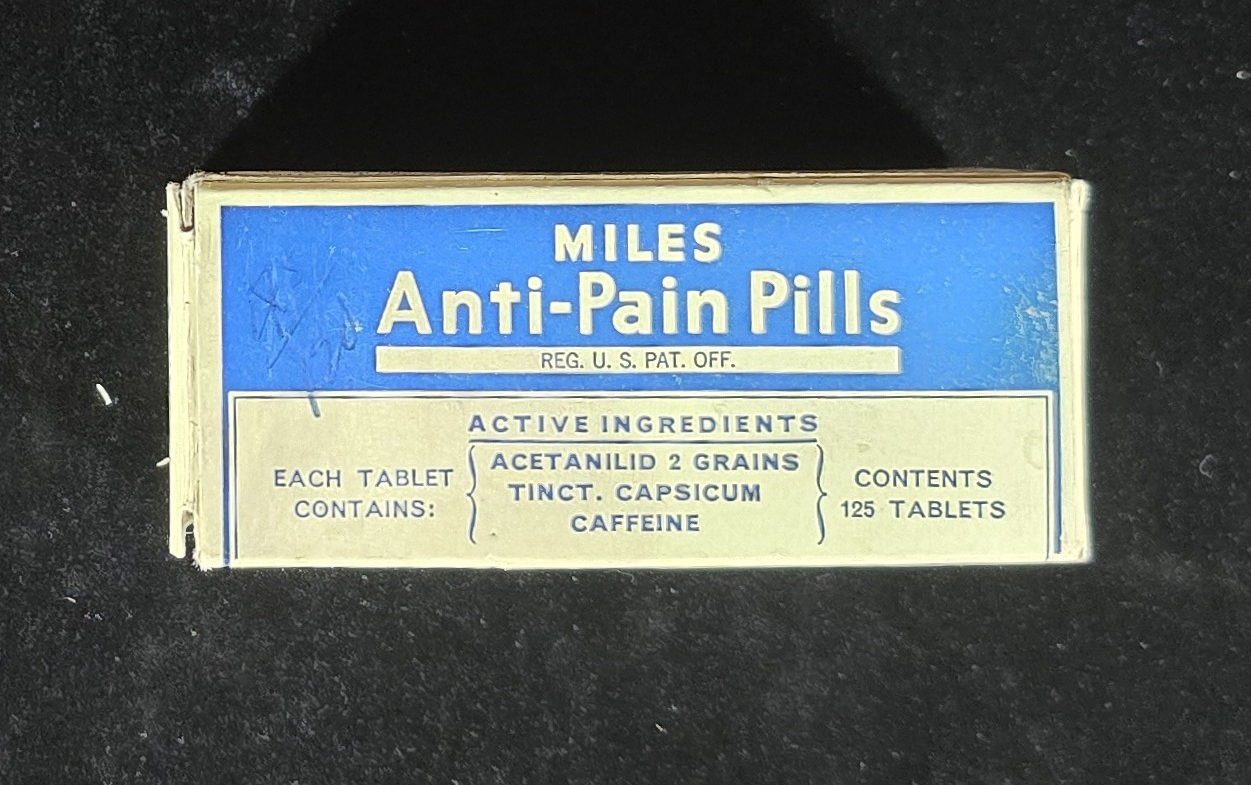
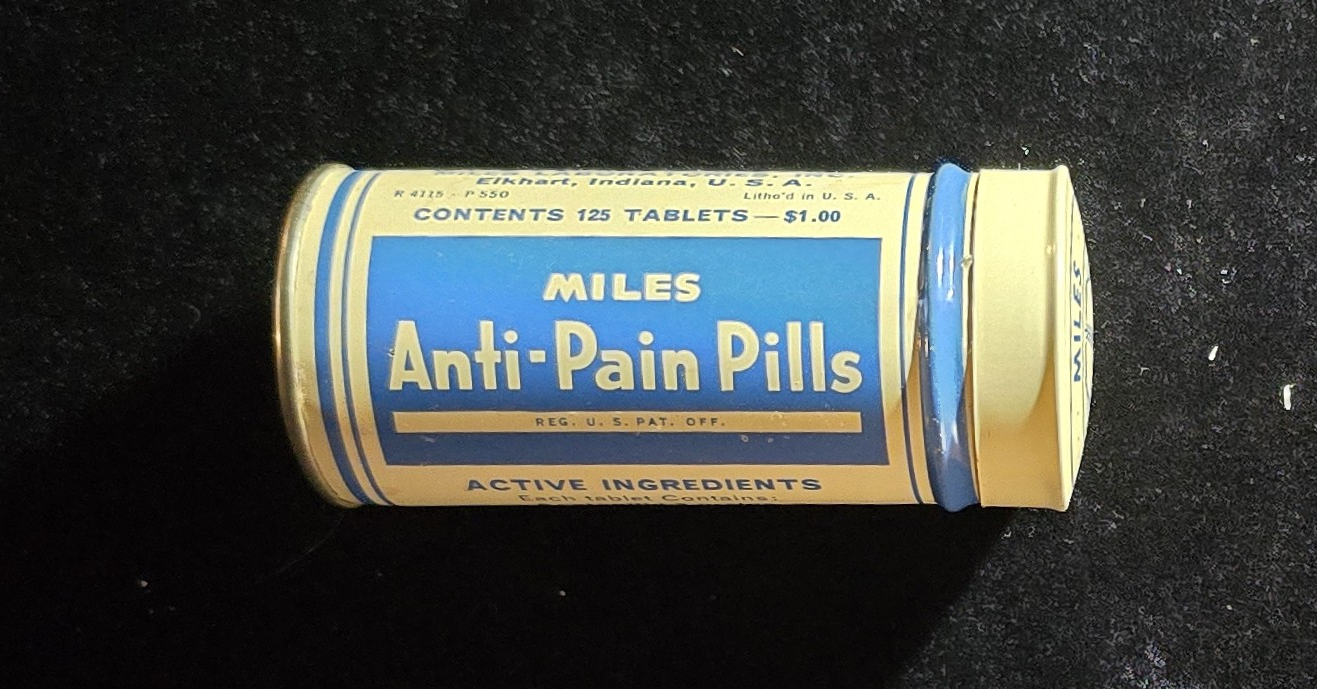
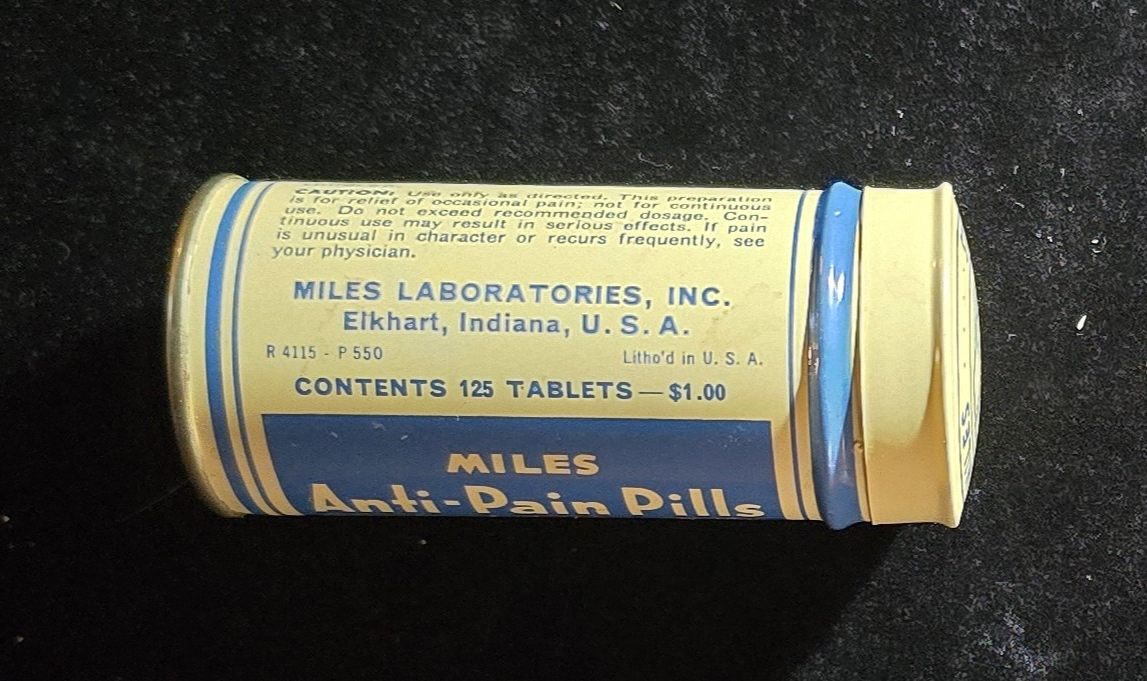
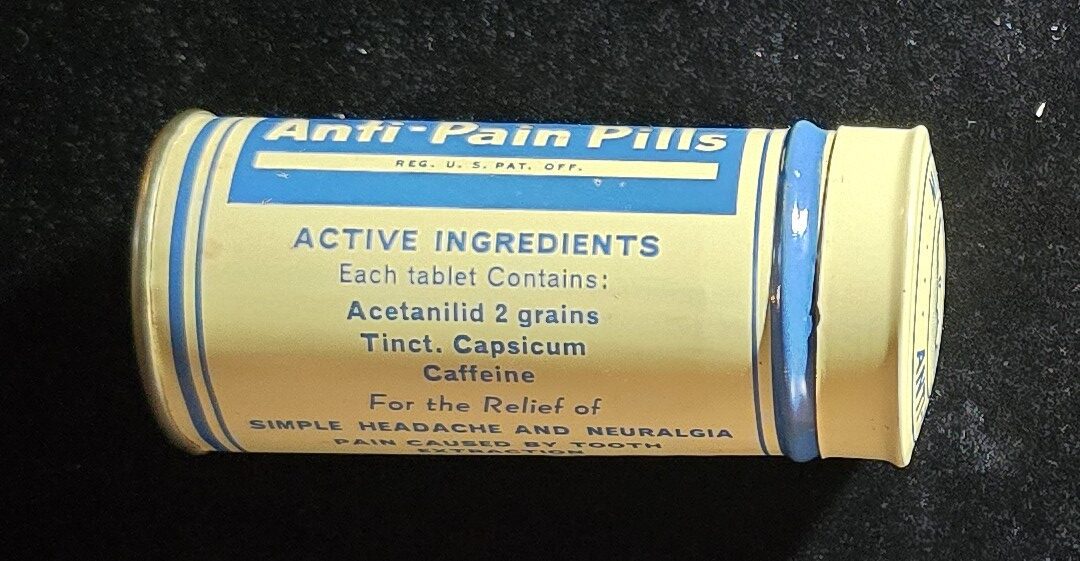
This complete retail package of Miles Anti-Pain Pills consists of the original lithographed blue-and-yellow tin containing 125 tablets, housed within its printed cardboard box. The packaging features the Miles Laboratories trademark — a double-profile portrait flanking a central botanical motif — along with bold blue panels and clear product labeling.
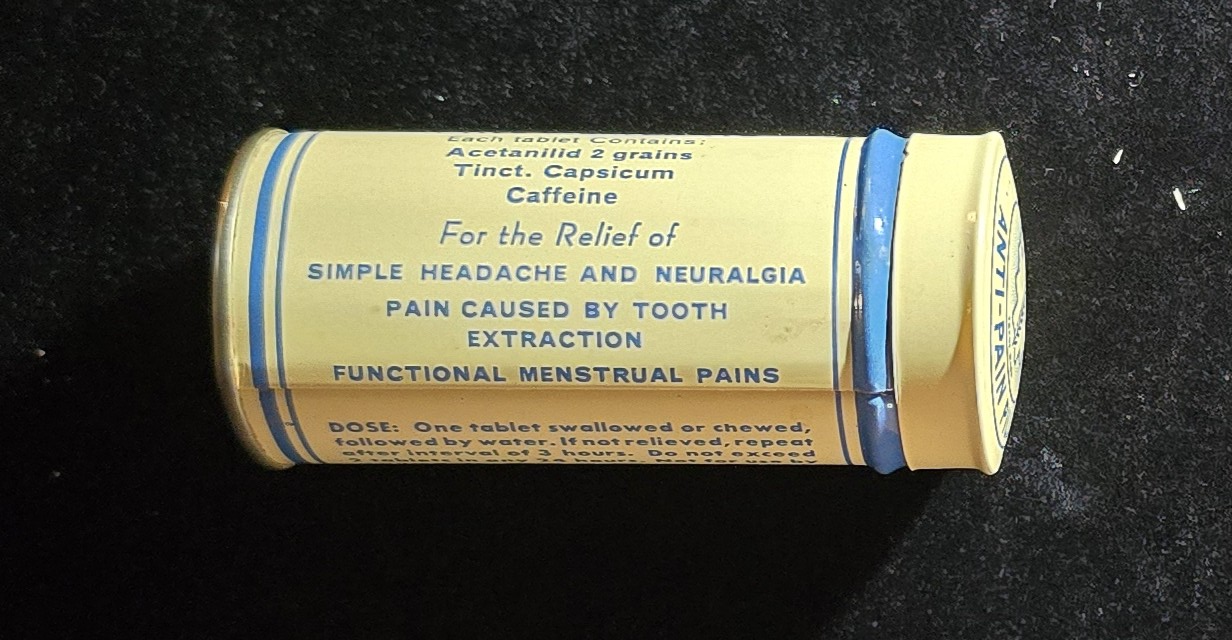
Active ingredients per tablet:
Acetanilid, 2 grains – an early analgesic and antipyretic, later found to be toxic to the liver and blood when overused.
Tincture of Capsicum – derived from cayenne pepper, used for its warming and counterirritant properties.
Caffeine – a central nervous system stimulant known to enhance the effect of certain analgesics.
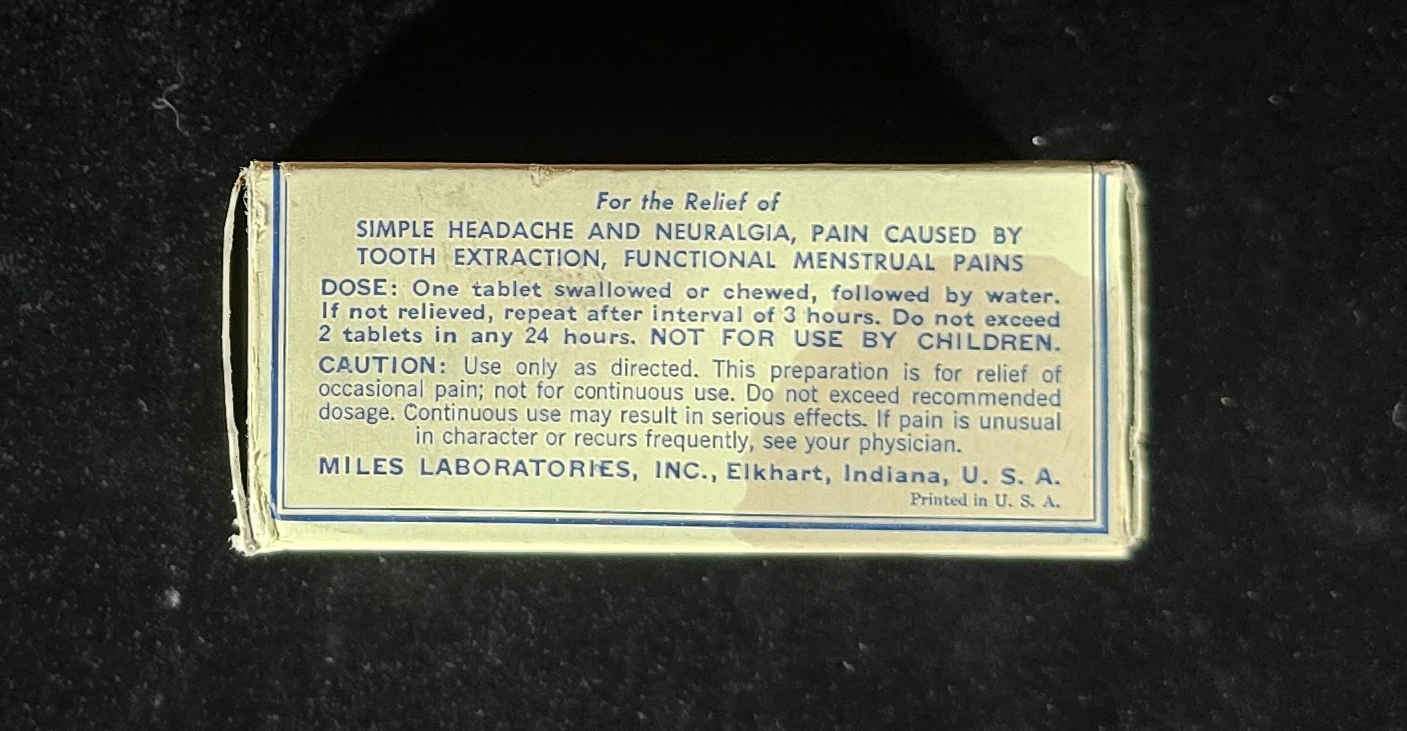
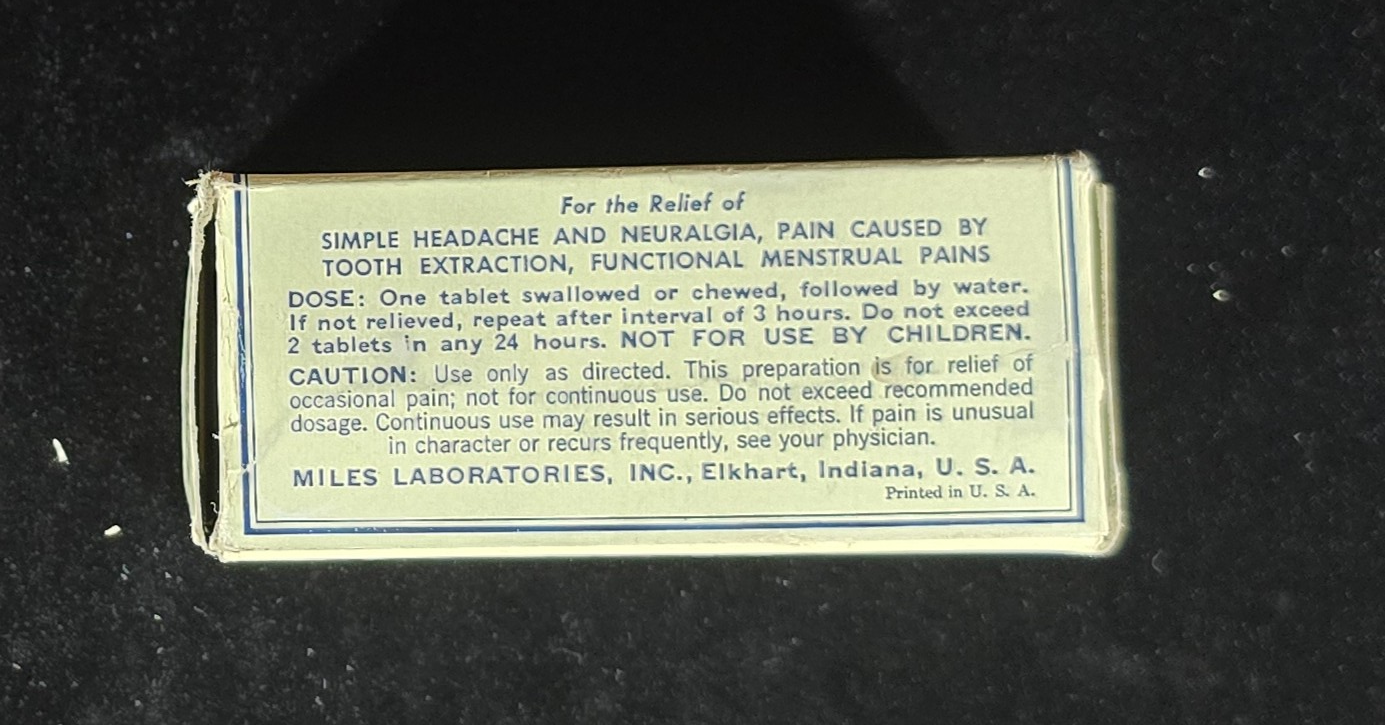
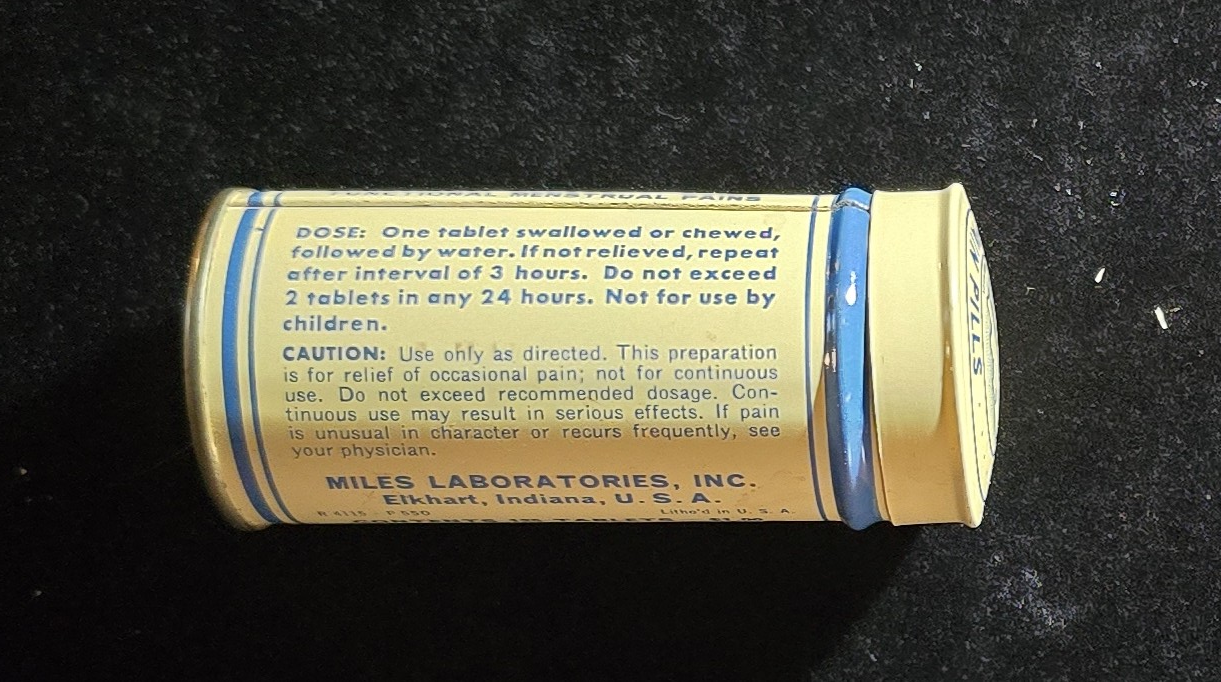
The label indicates uses for “simple headache and neuralgia, pain caused by tooth extraction, and functional menstrual pains.” Directions warn against exceeding two tablets in any 24-hour period and specify “not for use by children.”
Condition
Box and tin show minor edge wear and light surface scuffing consistent with age; lithographed colors remain bright and legible. Box edges slightly frayed; tin exhibits minor dents near seam. No major rust present. Original contents appear intact but unverified.
Gallery
Historical context
Miles Laboratories, founded in Elkhart, Indiana in 1884, became well known for patent medicines before transitioning into more regulated pharmaceutical production. Anti-Pain Pills occupy a transitional niche in pharmaceutical history — part legitimate pain relief, part relic of the cure-all marketing style of the early 20th century. While acetanilid does relieve pain and fever, chronic use was linked to methemoglobinemia and other toxic effects, leading to its replacement in most markets by safer alternatives like acetaminophen.
The combination of active analgesic (acetanilid), counterirritant (capsicum), and stimulant (caffeine) reflects a period when multi-ingredient painkillers were common and regulatory oversight was increasing but not yet fully modernized.
By modern standards, Miles Anti-Pain Pills are pharmacologically active and would have offered real pain relief. However, their broad marketing claims and inclusion of an unsafe primary ingredient place them squarely in the “transitional medicine” category — bridging the gap between the unregulated patent medicines of the 19th century and the standardized pharmaceuticals of the later 20th century.
Like Antikamnia, Miles’ Pain Pills relied on acetanilide for pain relief — a substance later recognized as dangerously toxic. The two brands together tell the story of how widely this “poison cure” was marketed before regulation caught up.
Curious Facts, Ephemera, and Trivia
Active drug really worked… dangerously. Each tablet lists Acetanilid (aka acetanilide) 2 grains, a true analgesic/antipyretic later linked to methemoglobinemia and other toxicity with repeated use.
“Kick” formula. Caffeine was commonly paired with analgesics to boost effect; tinct. capsicum served as a counterirritant/vasodilator “warmer.”
Price right on the tin. Your can shows “Contents 125 tablets — $1.00.”
Indiana roots. Miles Laboratories, Elkhart, Indiana—the same company later famous for Alka-Seltzer and chewable multivitamins.
Transitional labeling. The box already carries dose limits (“Do not exceed 2 tablets in any 24 hours”), a sign of tightening regulation versus earlier patent-medicine free-for-all.
Excerpt
ACTIVE INGREDIENTS — Each tablet contains: Acetanilid 2 grains; Tinct. Capsicum; Caffeine.
For the relief of: Simple headache and neuralgia; pain caused by tooth extraction; functional menstrual pains.
Dose: One tablet swallowed or chewed… Do not exceed 2 tablets in any 24 hours. Not for use by children.
*Miles Laboratories, Inc., Elkhart, Indiana, U.S.A.
Why it is in the Cabinet
This piece is a textbook transitional medicine artifact: real pharmacology (it would relieve pain) packaged and promoted with broad, cure-ish claims, and built around an analgesic (acetanilid) we later learned was unsafe with repeated use. Add the complete packaging (box + tin), the printed $1.00 price, and the Indiana manufacturer, and it hits the Cabinet’s sweet spot: medical history you can hold—effective, risky, and right on the line between patent-medicine hype and modern regulation.
Support Dr. Bebout’s Cabinet of Medical Curiosities
If you enjoy the history, the oddities, and the effort, help keep this cabinet open. Every little bit helps preserve and share the strange wonders of medicine's past.
Buy Me a Ko-fi ☕ Buy Me a Coffee ☕ Tip via PayPal 💵