
Title
Johnson & Johnson Band-Aid Tin Trio – Sheer Strips, Flexible Fabric, and Cloth Strips
Author
Johnson & Johnson
Image
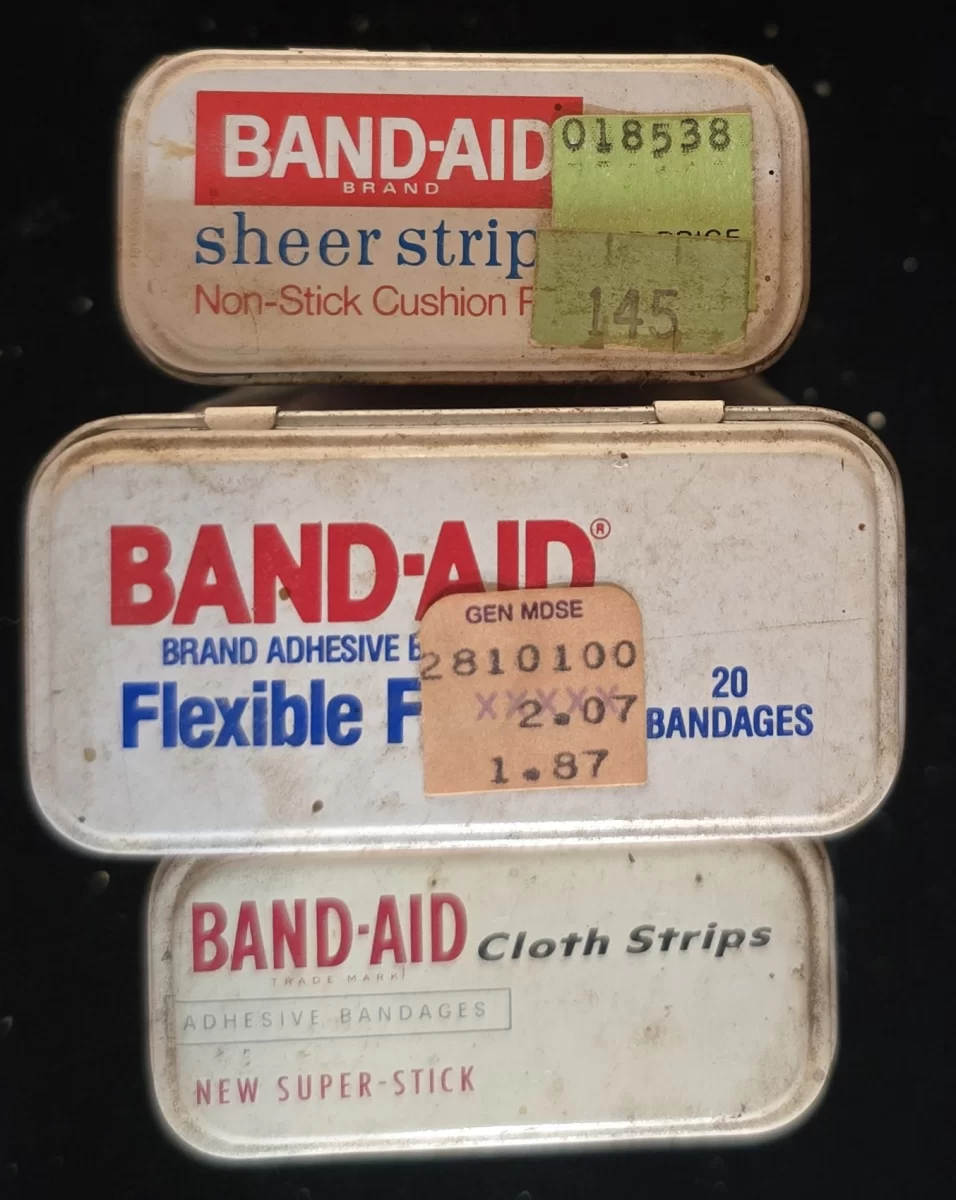
Description
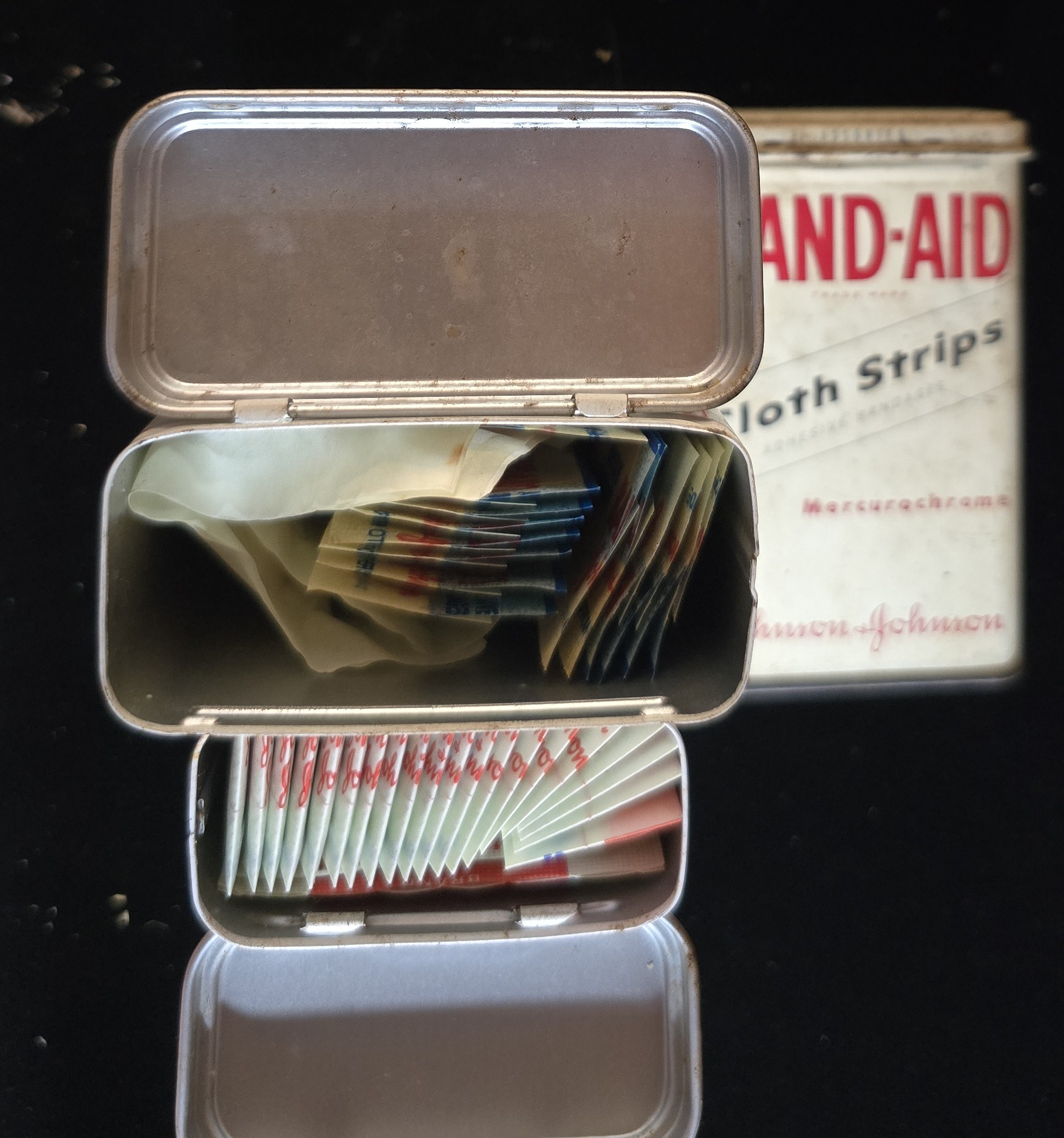
This collection features three distinct vintage Band-Aid tins produced by Johnson & Johnson, showcasing a progression in branding and materials across decades. These flat, hinged metal tins once held 20–30 adhesive bandages and were a staple in mid-century medicine cabinets. The trio includes:
Sheer Strips with Non-Stick Cushion Pad
Flexible Fabric Bandages
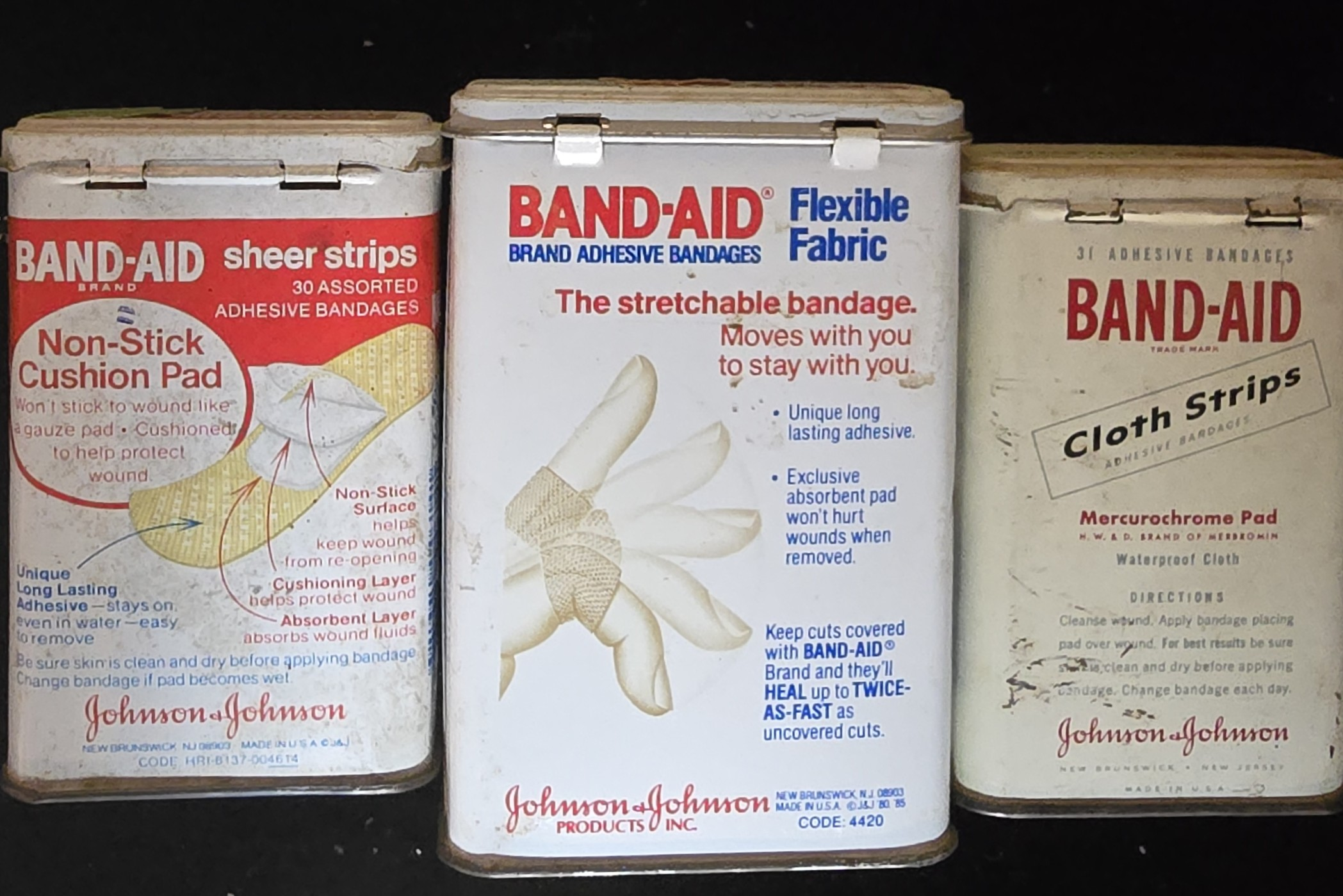
Cloth Strips with Mercurochrome Pad
Each tin offers not only a glimpse into evolving medical packaging but also demonstrates shifting public trust in first-aid innovations like mercurochrome and synthetic fabrics. Some tins still contain original bandages in wax paper wrappers, while others feature price tags and retail stickers dating back to the 1980s.
Condition
Fair to good overall. Some surface wear, light rust, and staining consistent with age. Most text remains legible. Contents appear intact in some tins, including wrapped bandages. Hinges and lids function properly.
Gallery

Historical context
Johnson & Johnson introduced Band-Aids in 1920. By the 1950s–1970s, metal tins like these were commonly used for sterile storage before plastic packaging took over. Mercurochrome-based bandages were phased out after safety concerns arose regarding mercury compounds in the 1990s. The shift from cloth to plastic and flexible fabric strips reflected broader changes in material science and consumer preferences.
Curious Facts, Ephemera, and Trivia
The Mercurochrome pad version reflects a time when mercury-based antiseptics were trusted household items — until regulatory concerns pushed them off shelves.
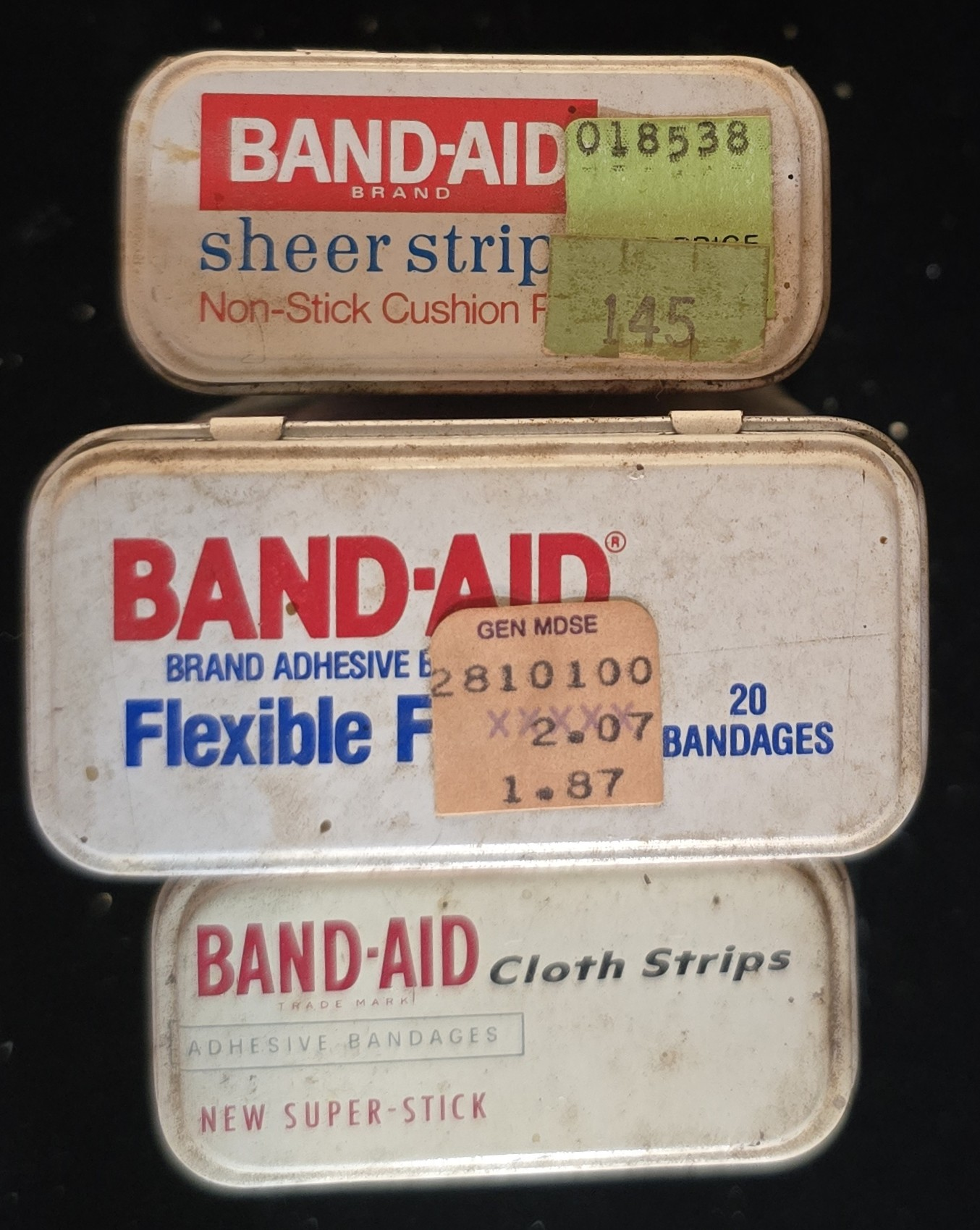
One tin has a retail sticker dated 1-87, helping anchor it in the late 1980s.
The graphic of a hand wrapping a finger was an early attempt at visual instruction right on the packaging.
These tins were among the last metal Band-Aid containers before the switch to cardboard and plastic.
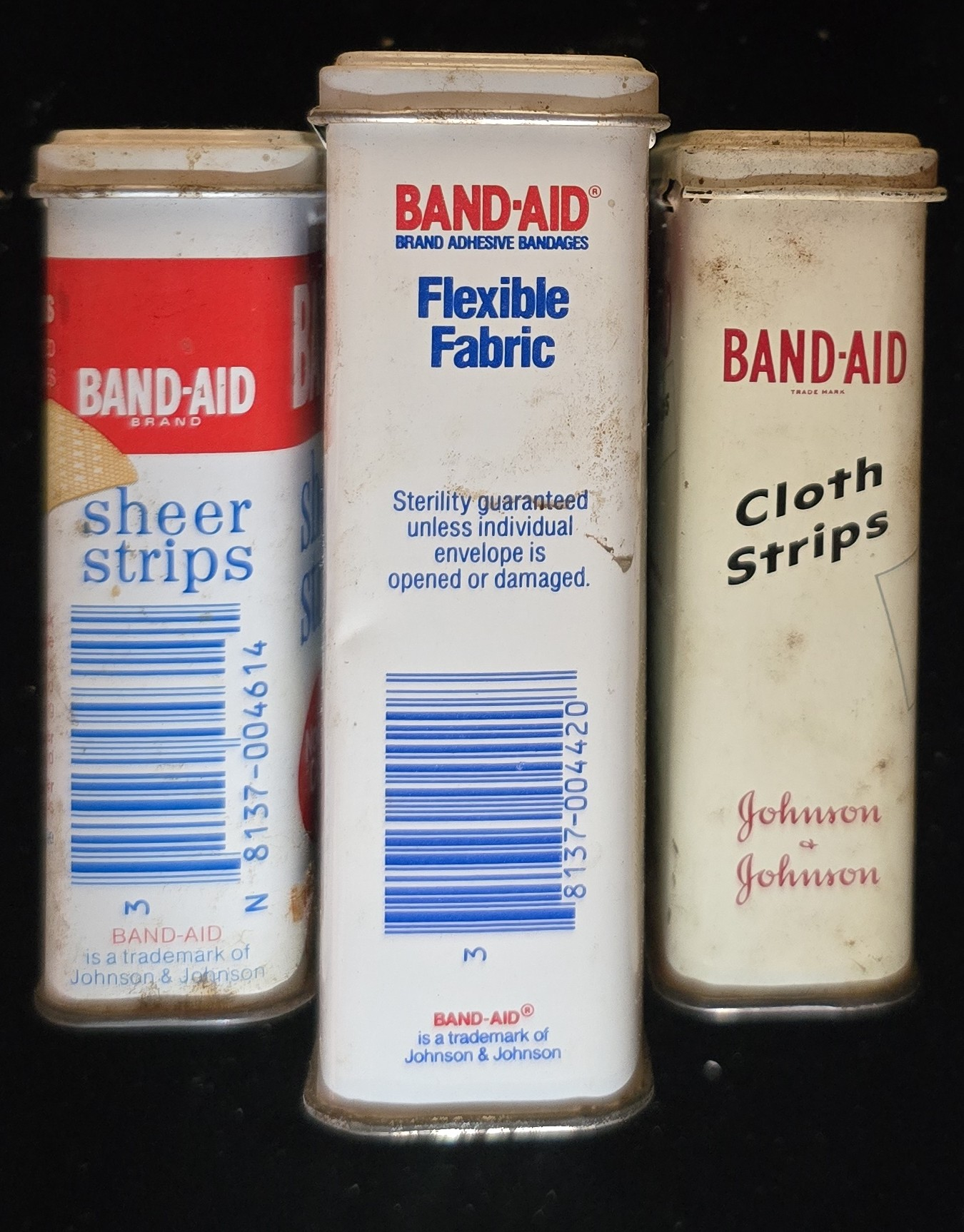
Tins labeled Johnson & Johnson Products, Inc. predate those labeled simply Johnson & Johnson, helping date the manufacturing era.
⚕️ A Professional Medical Opinion on Band-Aids
Let’s not romanticize these too much. As a practicing physician, I’ll tell you straight:
“I hate Band-Aids.
They’re a disservice to wound care.Hydrogen peroxide? It boils out your wound… and your healing tissue with it.
Neosporin? Causes irritation and makes healing worse.
Band-Aids? They seal wounds into a tropical soup — moist, hot, and stagnant — and prevent proper drying and healing.
The best wound care is clean, breathable, and minimally disturbed. These over-the-counter ‘solutions’ often make things worse, not better.”
— Dr. Bebout
Excerpt
“Keep cuts covered with BAND-AID® Brand and they’ll HEAL UP to TWICE-AS-FAST as uncovered cuts.” — From the Flexible Fabric tin (Code 4420)
Why it is in the Cabinet
These tins represent a nostalgic and instructive slice of 20th-century consumer health culture. They’re not just packaging — they’re snapshots of how Americans once approached wound care, brand trust, and antiseptic use. The presence of mercury-based medicine, evolving materials, and colorful marketing makes this trio a valuable addition to the Cabinet’s archive on domestic medical history.
Support Dr. Bebout’s Cabinet of Medical Curiosities
If you enjoy the history, the oddities, and the effort, help keep this cabinet open. Every little bit helps preserve and share the strange wonders of medicine's past.
Buy Me a Ko-fi ☕ Buy Me a Coffee ☕ Tip via PayPal 💵