
Title
Dr. Spiegel’s Stomach and Liver Pills – A Specific for Bilious Complaints
Author
N/A
Image
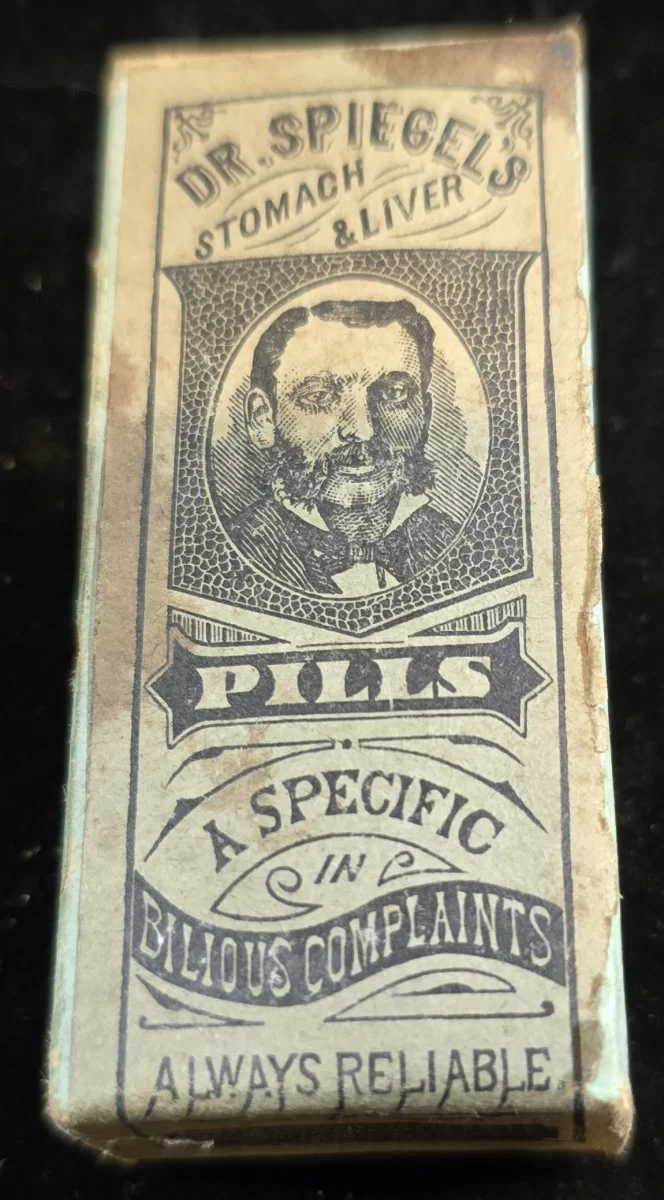
Description
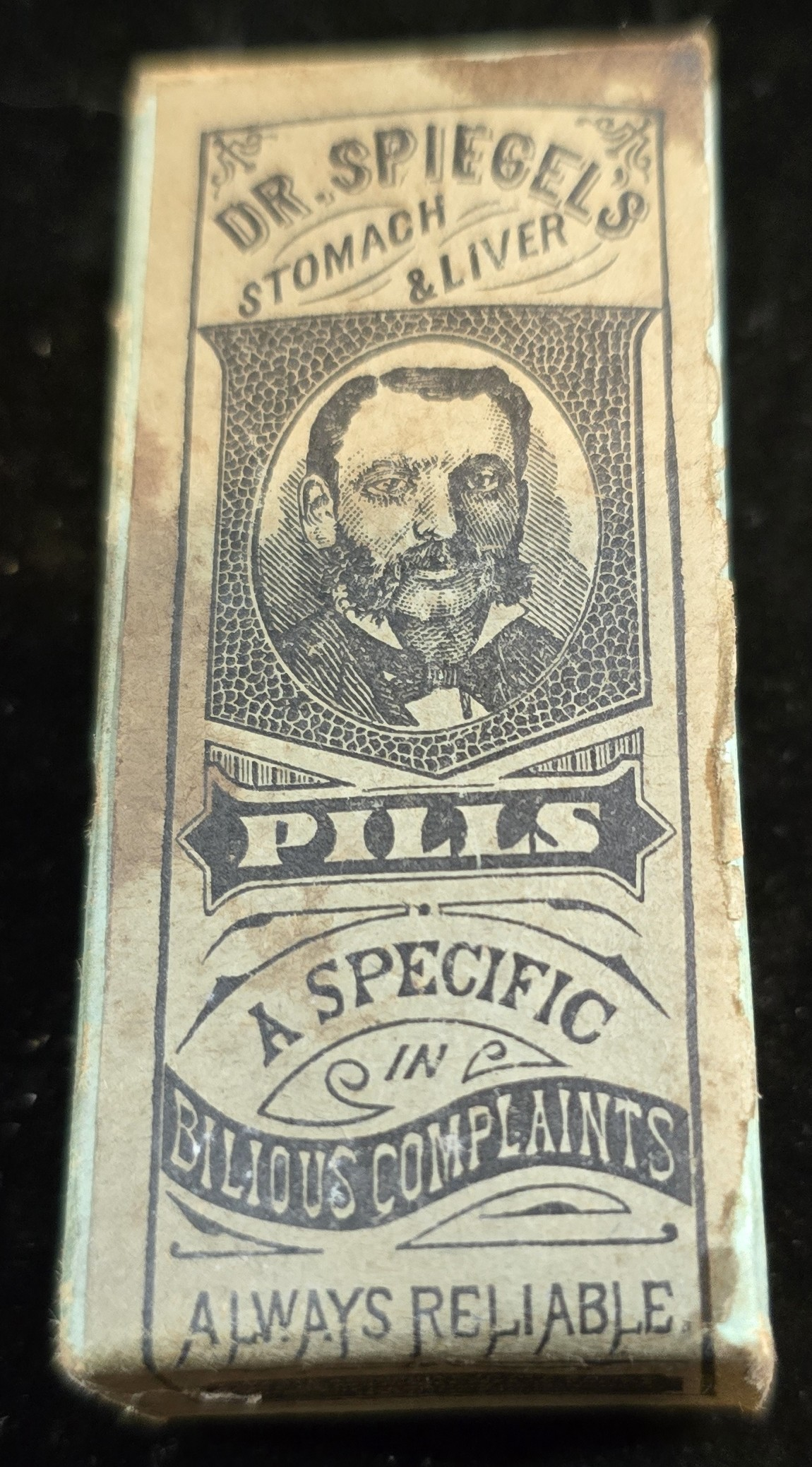
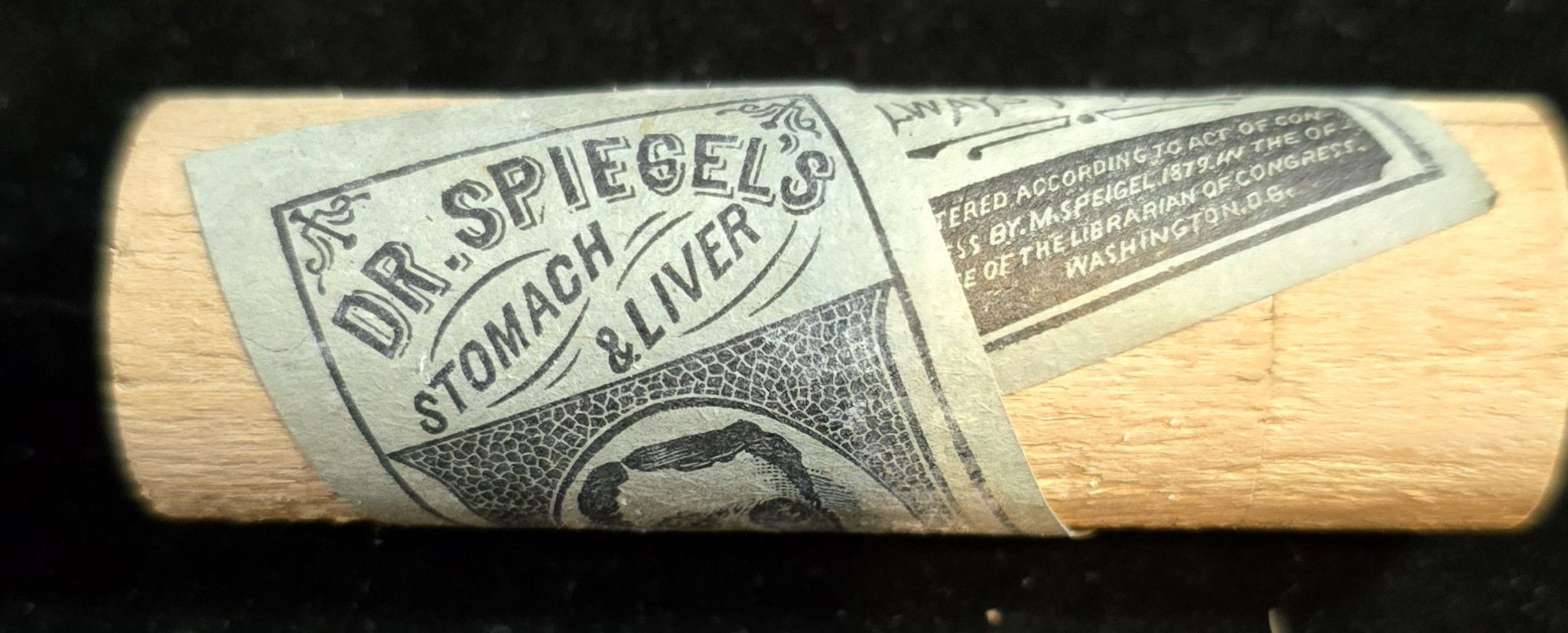
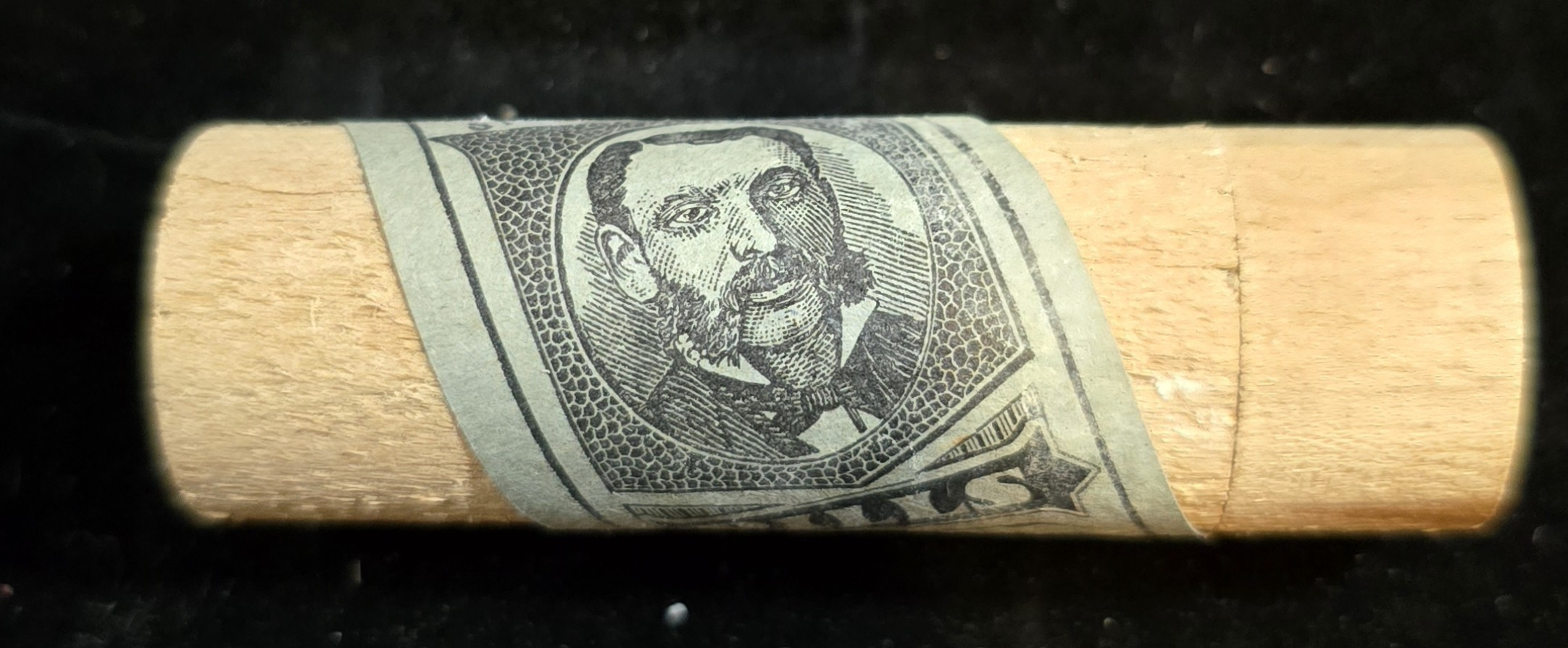
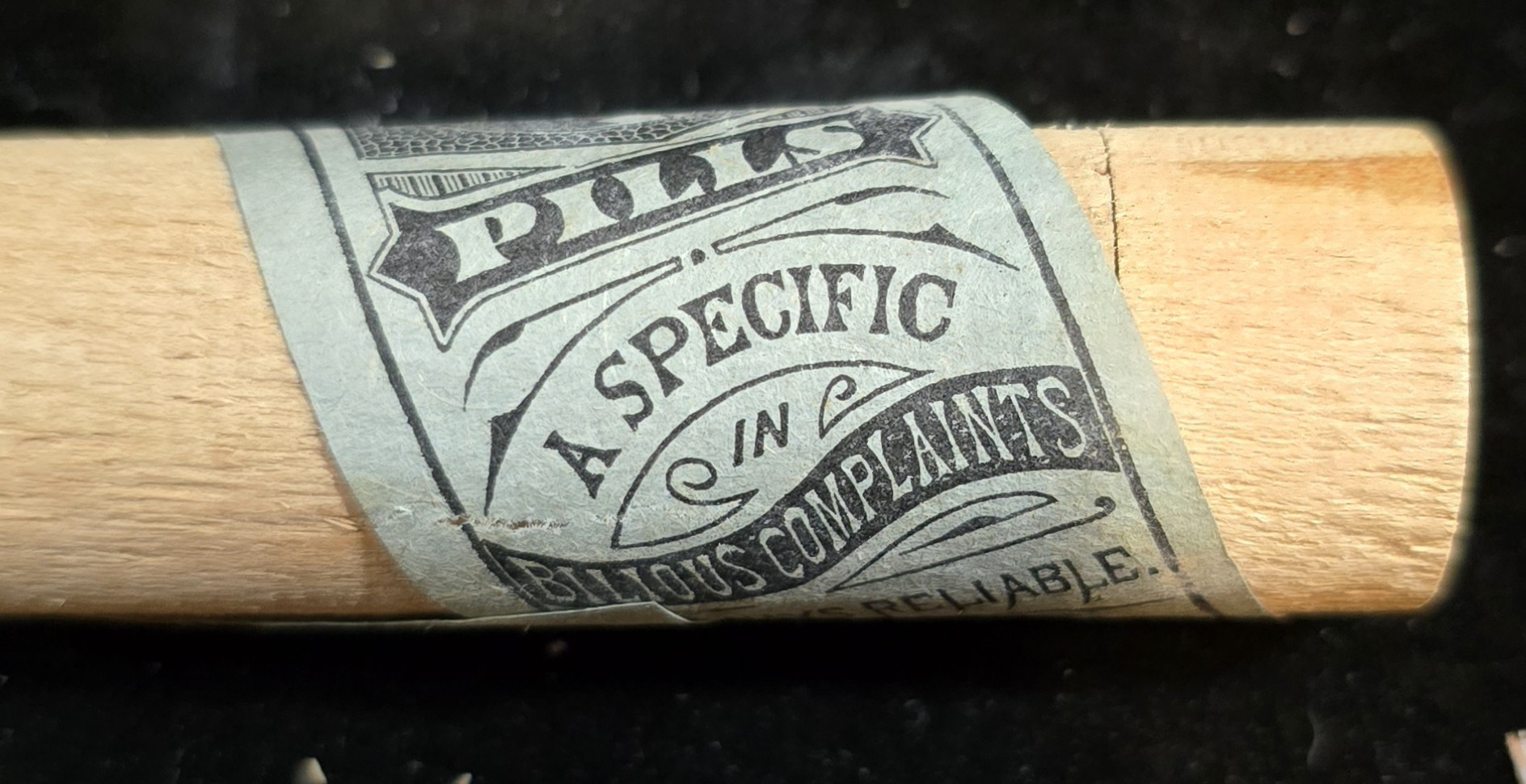
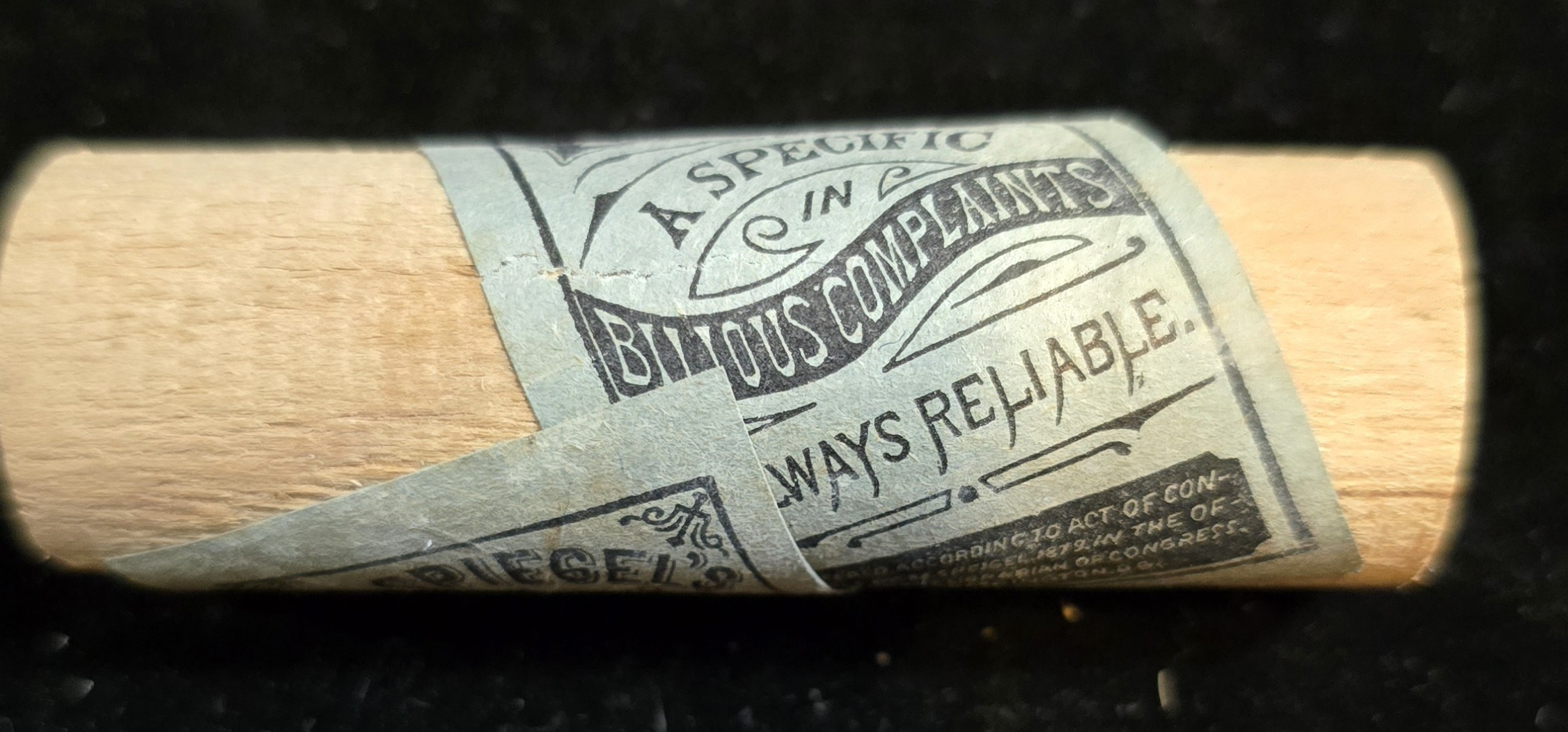
This vividly preserved early patent medicine package contains Dr. Spiegel’s Stomach and Liver Pills, a remedy marketed in the late 19th and early 20th centuries as “A Specific in Bilious Complaints.” Wrapped in a wood cylinder and housed in a blue paperboard box, the product proudly displays a portrait of Dr. Spiegel himself and declares it is “Always Reliable.”
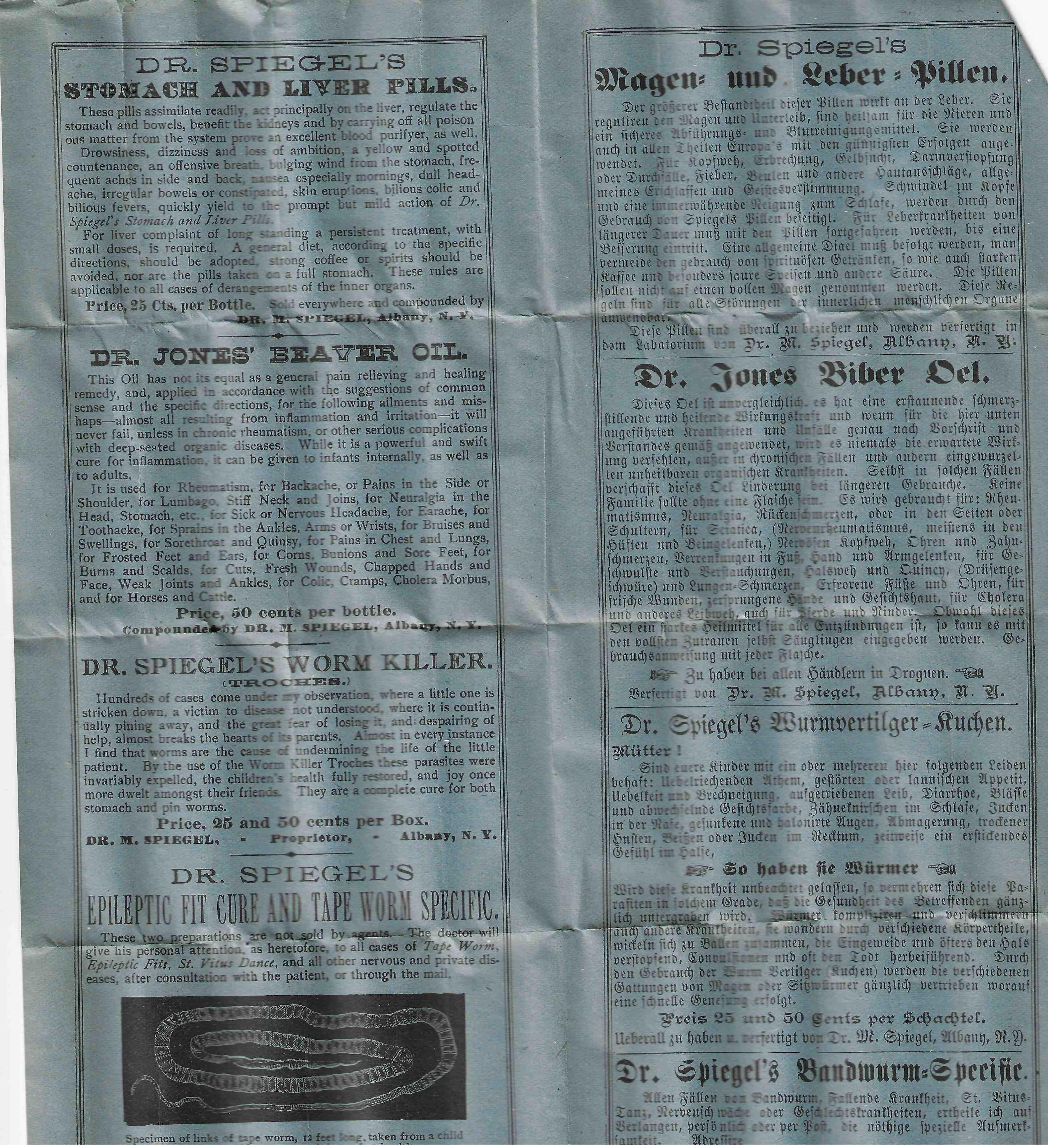
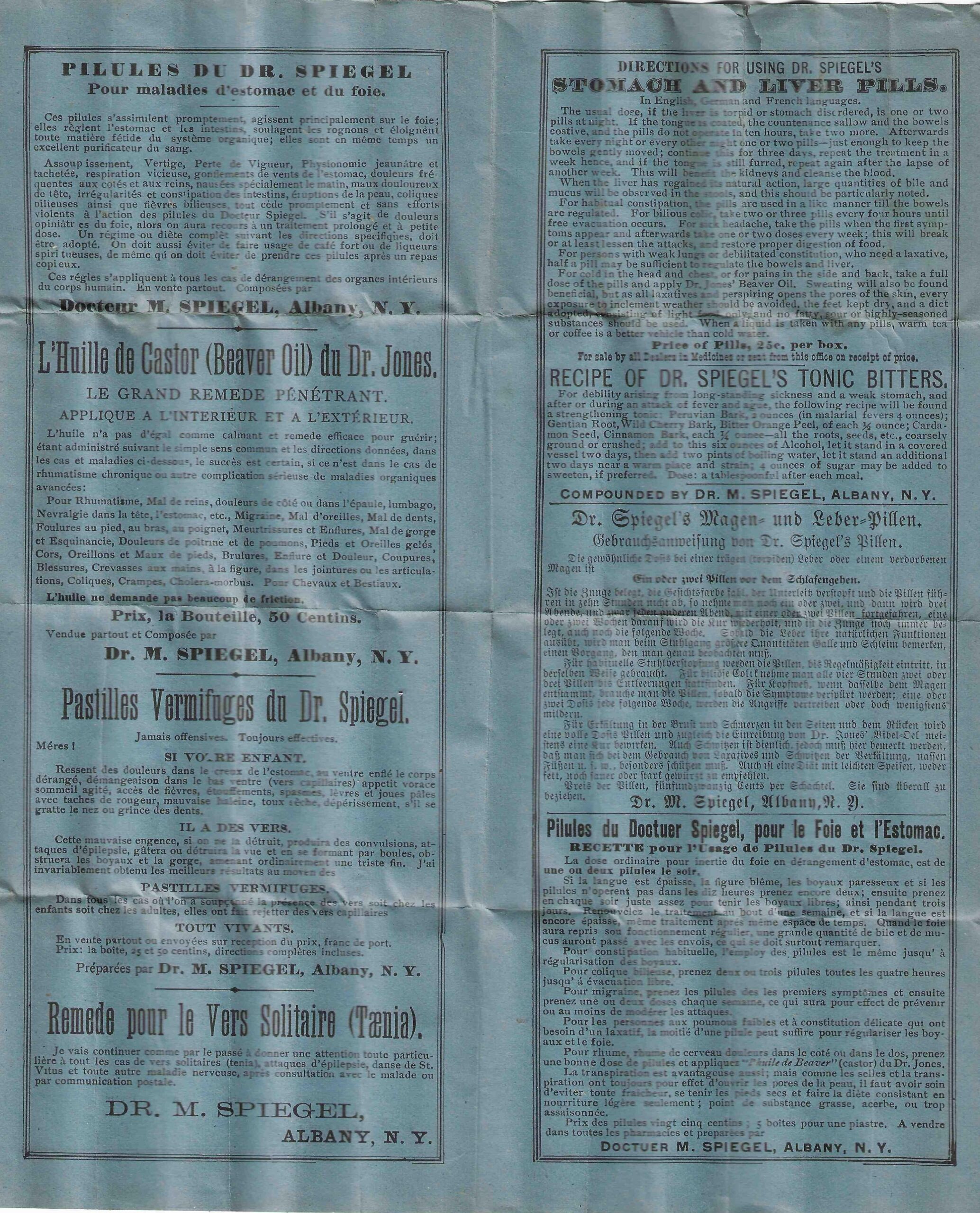
The accompanying tri-fold pamphlet—printed in English, German, and French—promotes not only the liver pills, but a host of other Spiegel products, including Dr. Jones’ Beaver Oil, Dr. Spiegel’s Worm Killer, and even Dr. Spiegel’s Epileptic Fit Cure and Tapeworm Specific, featuring a striking woodcut of a tapeworm allegedly removed from a child.
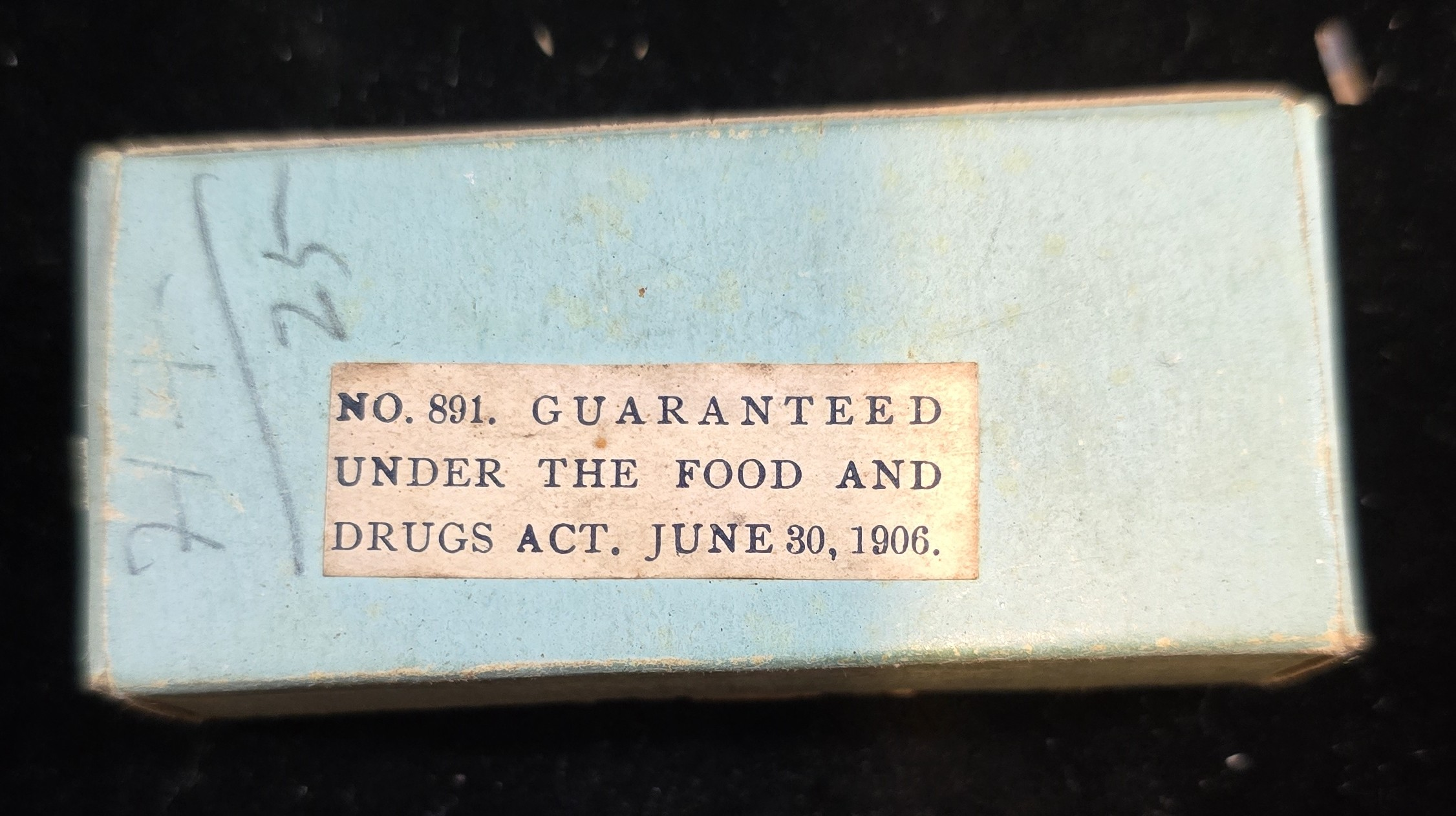
The pills claim to “regulate the liver,” “cleanse the blood,” and cure everything from dizziness and constipation to “eruptions of the skin” and “low spirits.” In typical fashion of the day, the text warns of internal “poisons” and promotes daily use. The item is guaranteed under the 1906 Pure Food and Drug Act (No. 891), placing it post-1906 but pre-1938.
Condition
Excellent condition. Original wooden pill cylinder with full paper label intact. Blue retail box shows minor edge wear and has its original guarantee label. Fold-out pamphlet is complete and legible, with only minor creases and no tears.
Gallery

Historical context
Dr. M. Spiegel of Albany, New York was one of many 19th-century physicians who operated within the booming market of proprietary medicines, often combining minimal regulation with maximum marketing flair. Products bearing his name were advertised for everything from indigestion to epilepsy, sometimes in the same flyer. The multilingual pamphlet suggests Spiegel’s products were aimed at a diverse immigrant population in the U.S.
The guarantee under the 1906 Pure Food and Drug Act represents a transitional period: manufacturers were now required to avoid mislabeled or adulterated drugs but were still free to make sweeping therapeutic claims.
Curious Facts, Ephemera, and Trivia
The pills are labeled as “A Specific in Bilious Complaints,” a vague term once used to describe nausea, indigestion, flatulence, and general malaise—typically blamed on a sluggish liver.
The pamphlet includes ads for Dr. Jones’ Beaver Oil, applied externally and internally.
One line promises it is effective “for worms, fits, and liver complaints,” creating a trifecta of questionable scope.
Spiegel’s products were available in English, French, and German—clearly marketed to immigrant communities in the northeast U.S.
The imagery of the extracted tapeworm was likely included to provoke both fear and fascination.
Excerpt
“These pills assimilate readily… benefit the kidneys and by carrying off all poisonous matter from the system prove an excellent blood purifier.”
Why it is in the Cabinet
This object is a perfect example of the overlapping markets of fear-based medicine, multilingual advertising, and early regulatory gray zones. The graphic imagery, preserved condition, and marketing audacity all earn it a place among the Cabinet’s finest frauds and favorites. It is a striking example of how broad a net 19th-century medicine cast—and how the line between physician, entrepreneur, and showman was often blurred.
Also featured in the Reddit discussion thread here
Support Dr. Bebout’s Cabinet of Medical Curiosities
If you enjoy the history, the oddities, and the effort, help keep this cabinet open. Every little bit helps preserve and share the strange wonders of medicine's past.
Buy Me a Ko-fi ☕ Buy Me a Coffee ☕ Tip via PayPal 💵