
Title
Calotabs (Calomel Tablets)
Author
n/a
Image
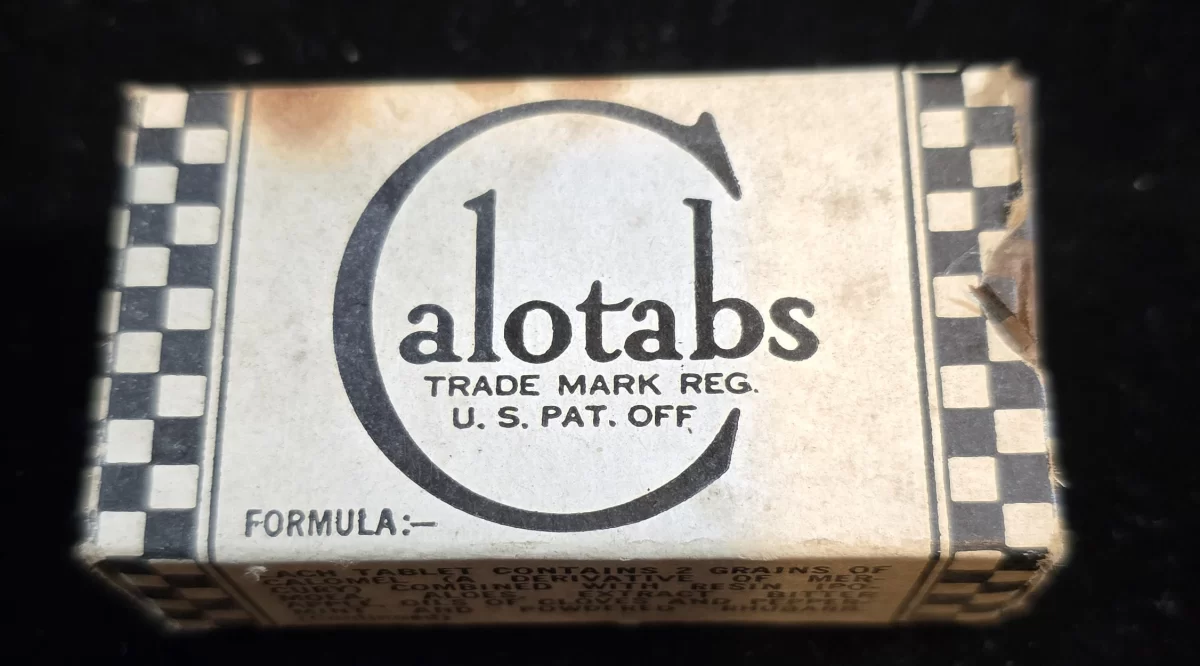
Description
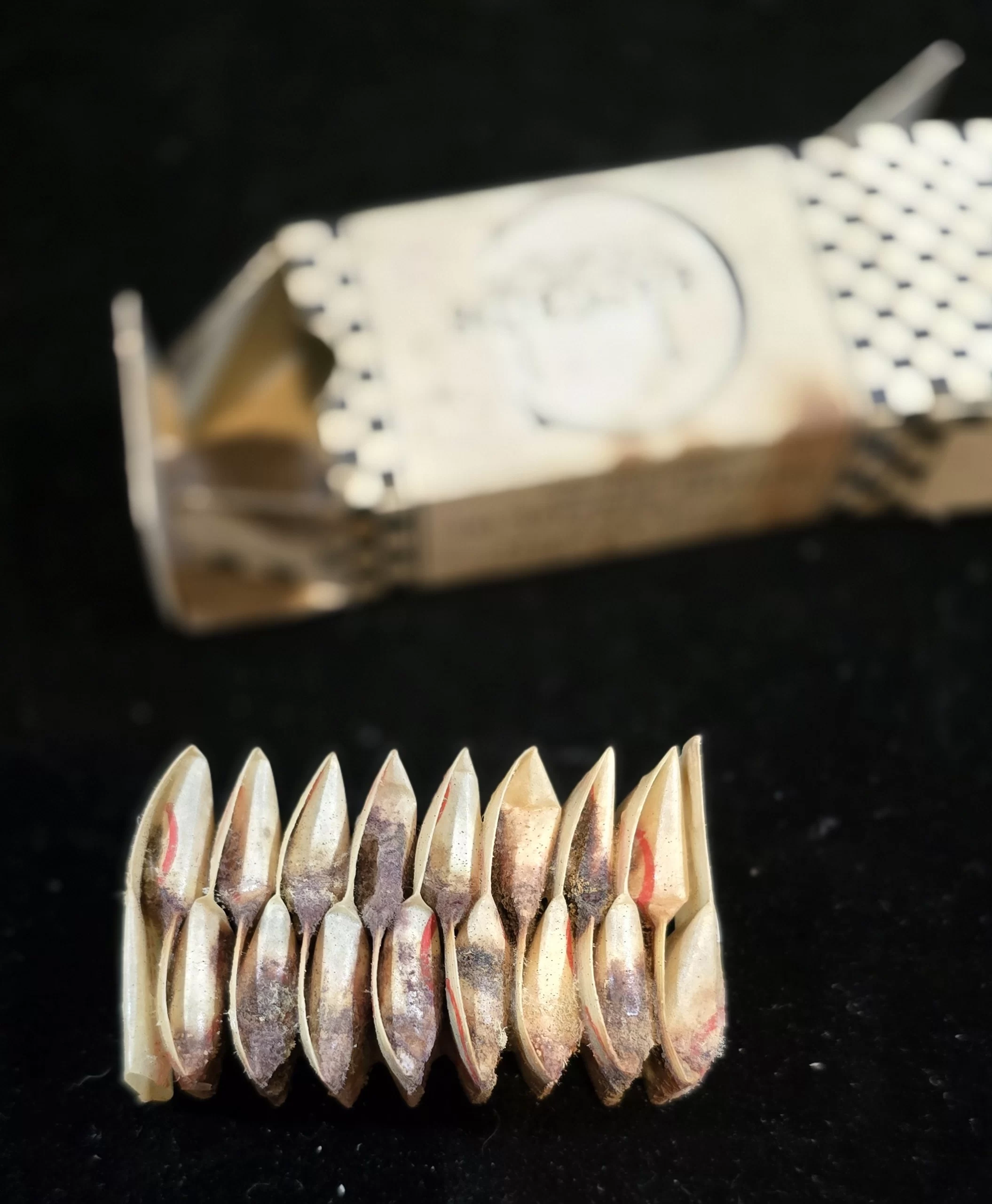
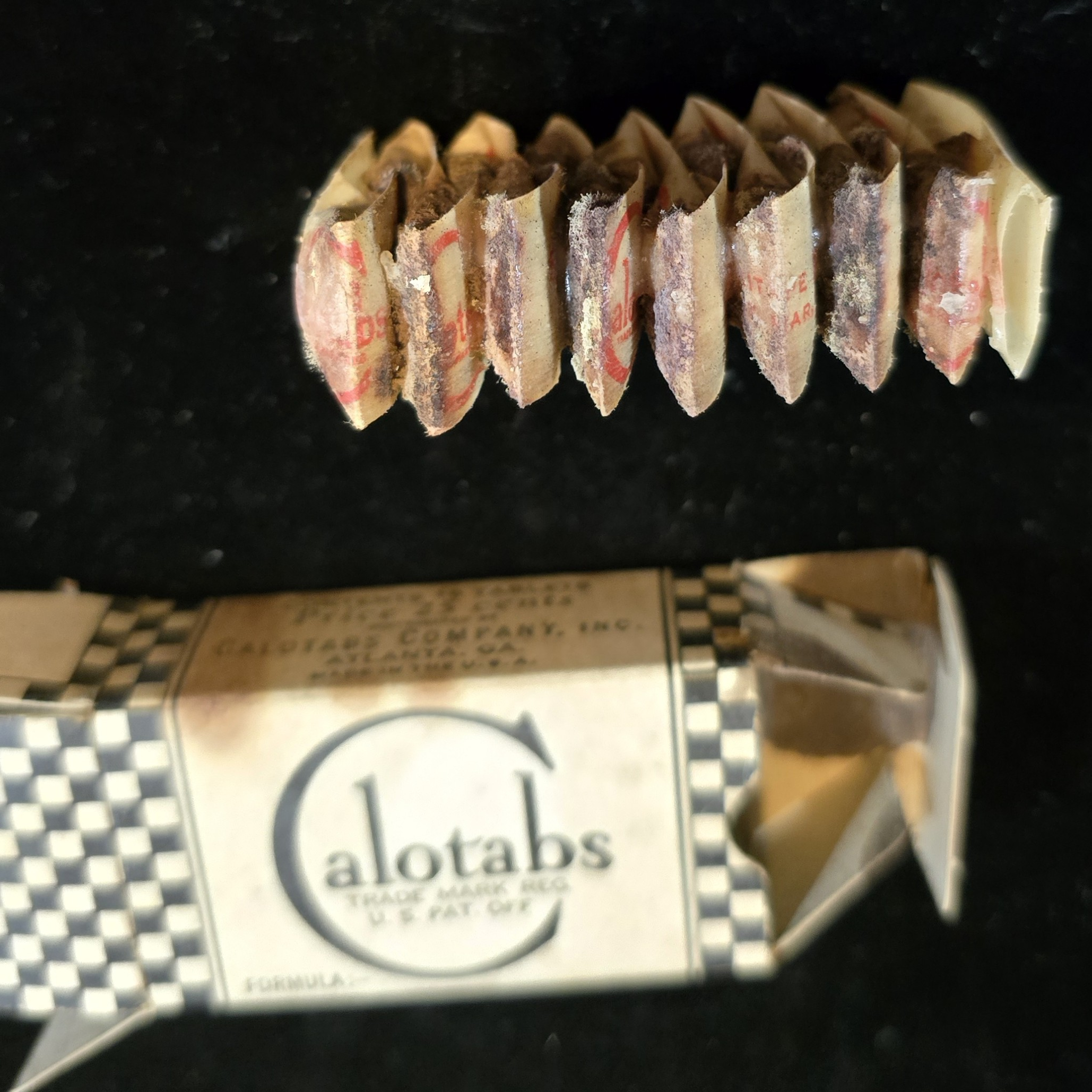
Calotabs were a widely distributed over-the-counter remedy produced by the Calotabs Company of Atlanta, Georgia. Each box, priced at 25 cents, contained 16 tablets composed of a compound that included 2 grains of calomel (a mercury derivative), along with resin ipomoea, aloes, extract of bitter apple, oils of clove and peppermint, and powdered rhubarb. Packaged in a distinctive black-and-white checkerboard box, this product was touted as a “pleasant” and “safe” laxative or purgative. A full direction sheet is included in the packaging.
Condition
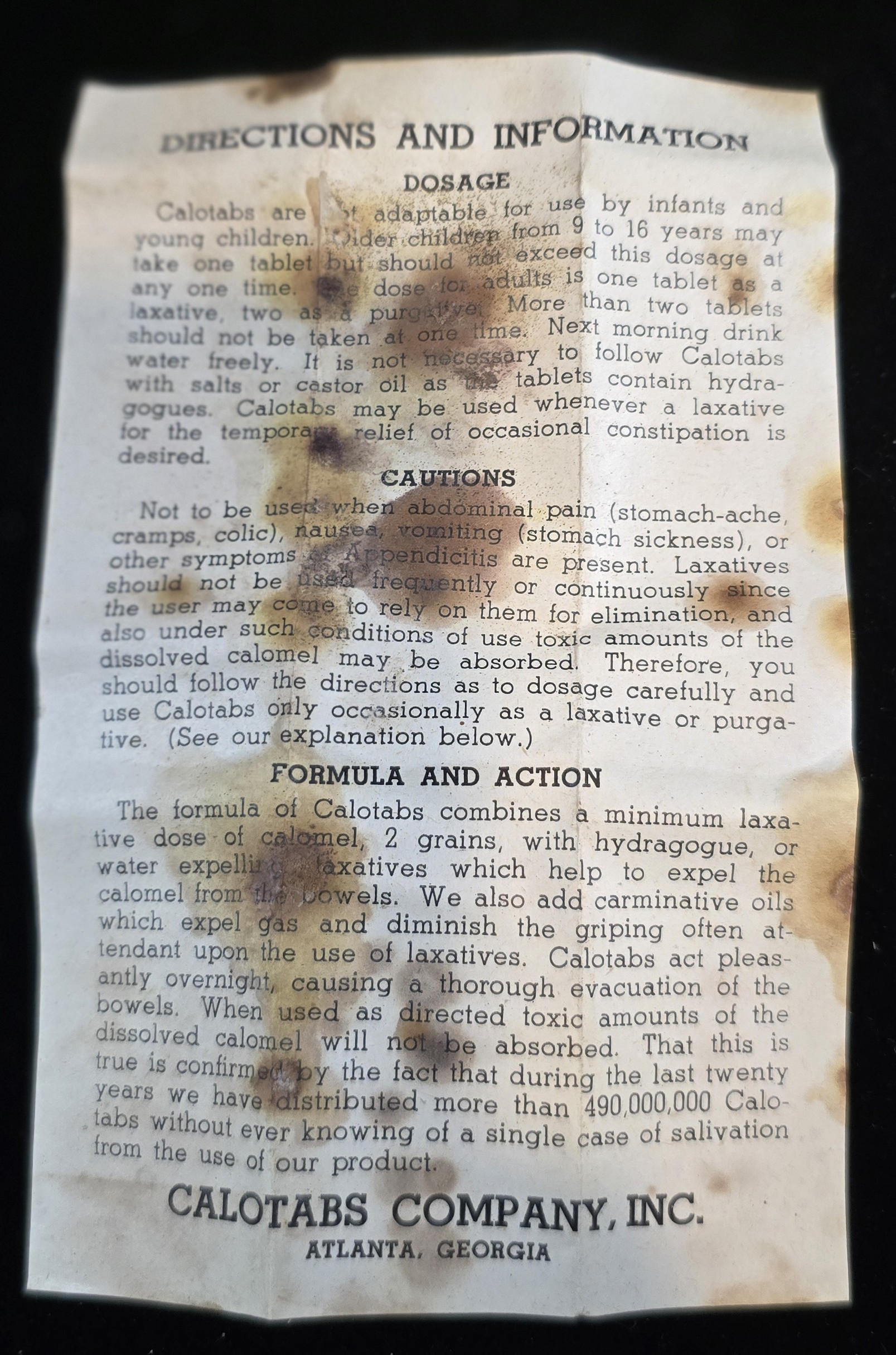
Box shows typical age discoloration and staining, but remains structurally intact. Insert is spotted and partially water-stained but legible. Internal tablets are still present, accordion-folded in their waxy wrappers with visible signs of age and powdering.
Gallery

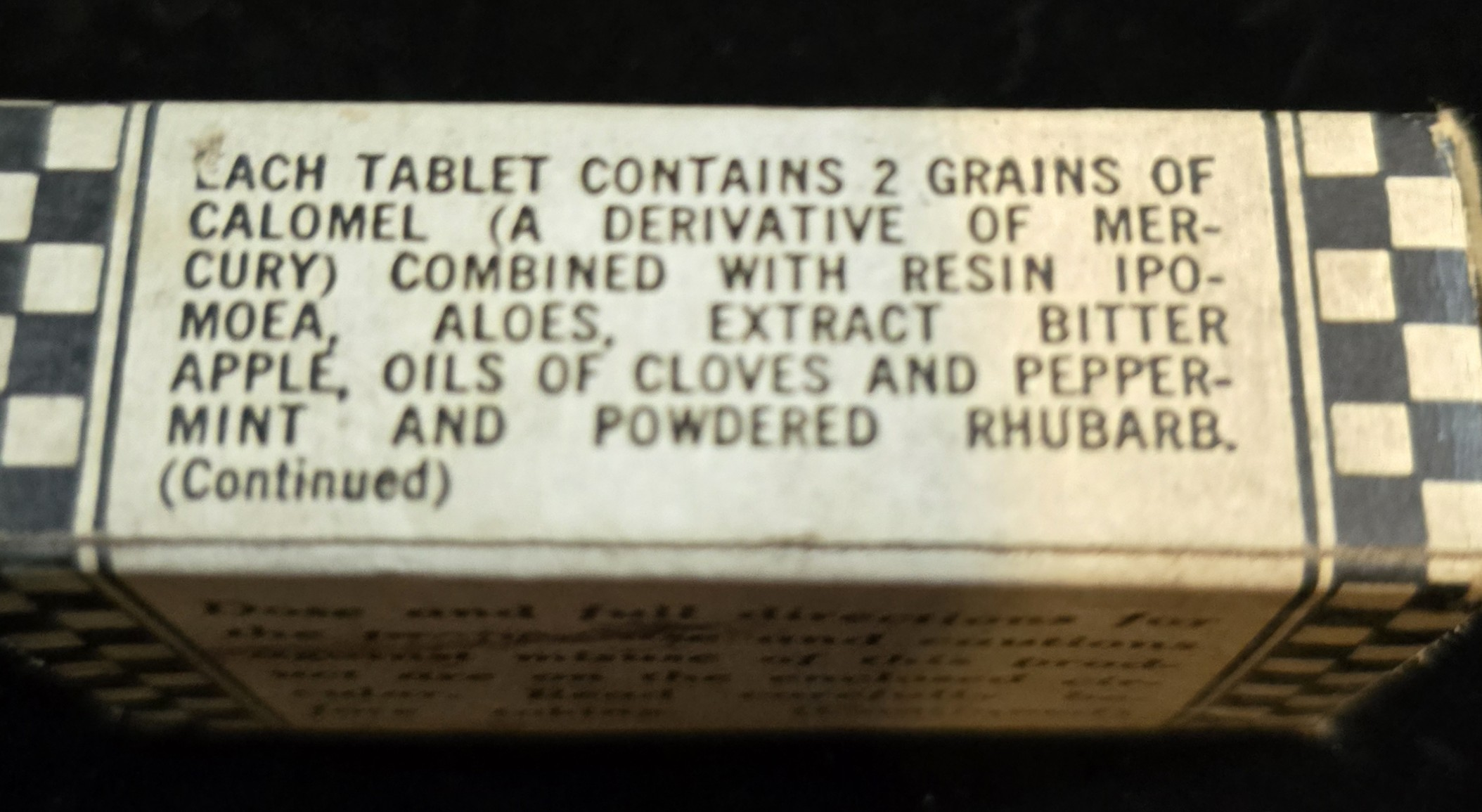
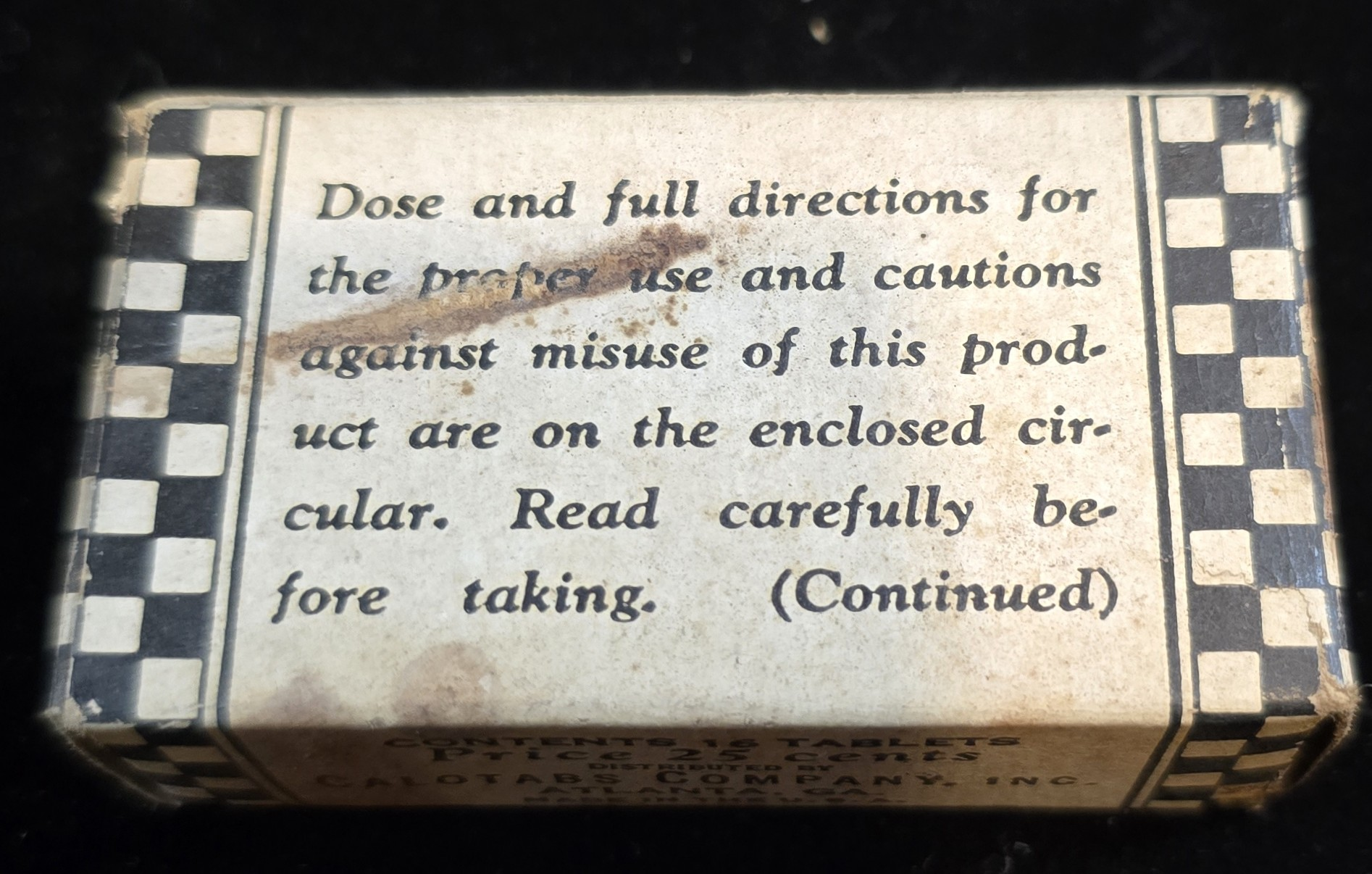
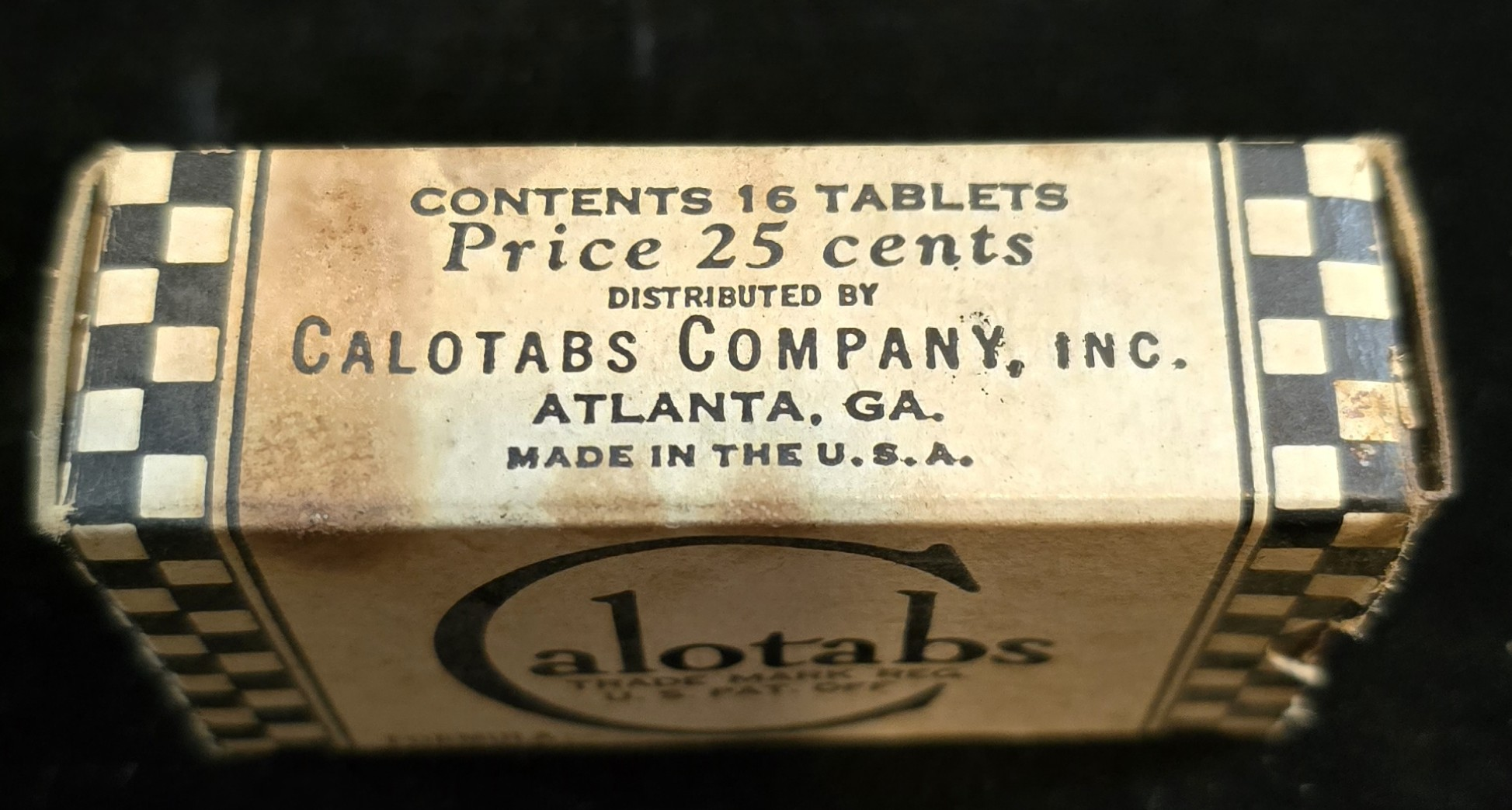
Historical context
Calomel, or mercurous chloride, was a common medicinal compound in the 18th and 19th centuries, used for everything from constipation to liver complaints. However, mercury toxicity from overuse (leading to symptoms such as tremors, excessive salivation, and gum disease) was well-documented by the early 20th century. Calotabs were an attempt to rebrand calomel as a “gentler,” less toxic option by combining it with herbal ingredients and claiming minimal risk of mercury absorption.
Curious Facts, Ephemera, and Trivia
Calotabs claimed over 490 million doses had been distributed without a single reported case of mercury poisoning — a statement that is, at best, optimistic.
The directions cautioned against use in cases of nausea, cramping, or appendicitis — an acknowledgment that their powerful effects could exacerbate serious conditions.
The packaging reflects an era when mercury was still available on drugstore shelves in “purified” form.
Excerpt
“Calotabs act pleasantly overnight, causing a thorough evacuation of the bowels… When used as directed, toxic amounts of the dissolved calomel will not be absorbed.”
Why it is in the Cabinet
This product is emblematic of the transitional era between 19th-century mercurial medicine and 20th-century pharmacological regulation. Calotabs tried to thread the needle — offering the historical remedy of calomel while downplaying its known risks with cheery assurances and botanical buffers. It illustrates how branding and reassurance were used to maintain public trust in increasingly questioned remedies.
Support Dr. Bebout’s Cabinet of Medical Curiosities
If you enjoy the history, the oddities, and the effort, help keep this cabinet open. Every little bit helps preserve and share the strange wonders of medicine's past.
Buy Me a Ko-fi ☕ Buy Me a Coffee ☕ Tip via PayPal 💵