
Title
Zylate – Veterinary Topical by Upjohn (Revised Formula, 1948)
Author
The Upjohn Company, Kalamazoo, Michigan
Image
Description
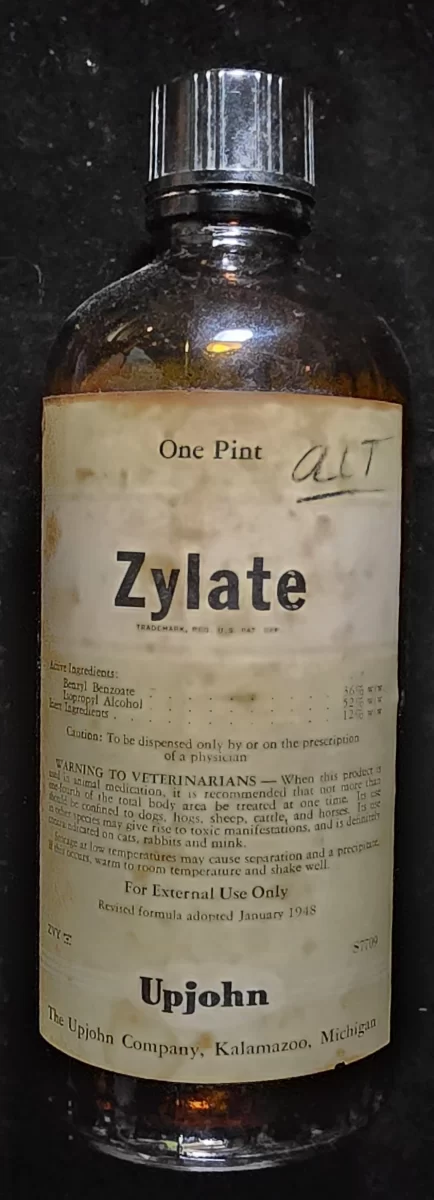
This amber glass bottle of Zylate, manufactured by The Upjohn Company of Kalamazoo, Michigan, is a preserved example of a mid-20th-century veterinary topical preparation. The product is labeled for external use only, with a revised formula dated January 1948. Zylate contains benzyl benzoate and isopropyl alcohol, both known for their antiseptic and antiparasitic properties.
The label includes specific cautions for veterinary application, advising against use on cats, rabbits, and mink due to toxicity, and warns that improper use may lead to adverse effects in livestock.
The clear print and detailed warning text reflect a post-WWII pharmaceutical era focused on both expanding veterinary medicine and increasing regulatory precision.
Condition
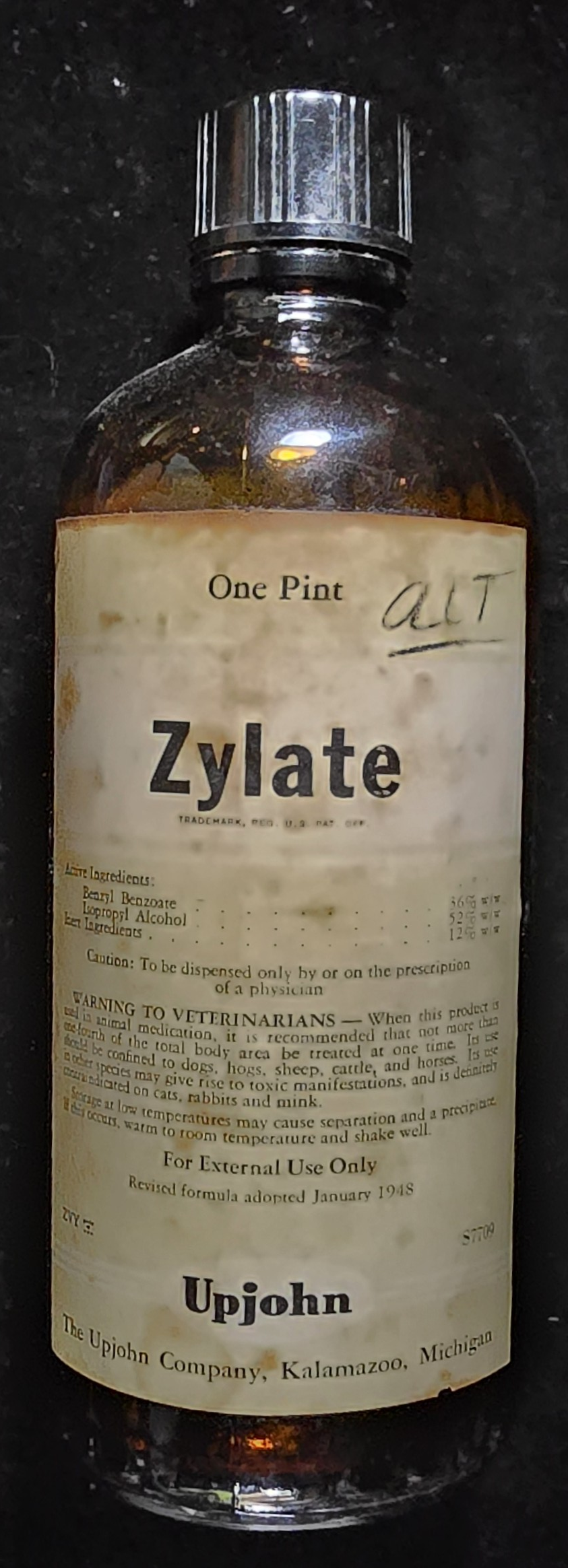
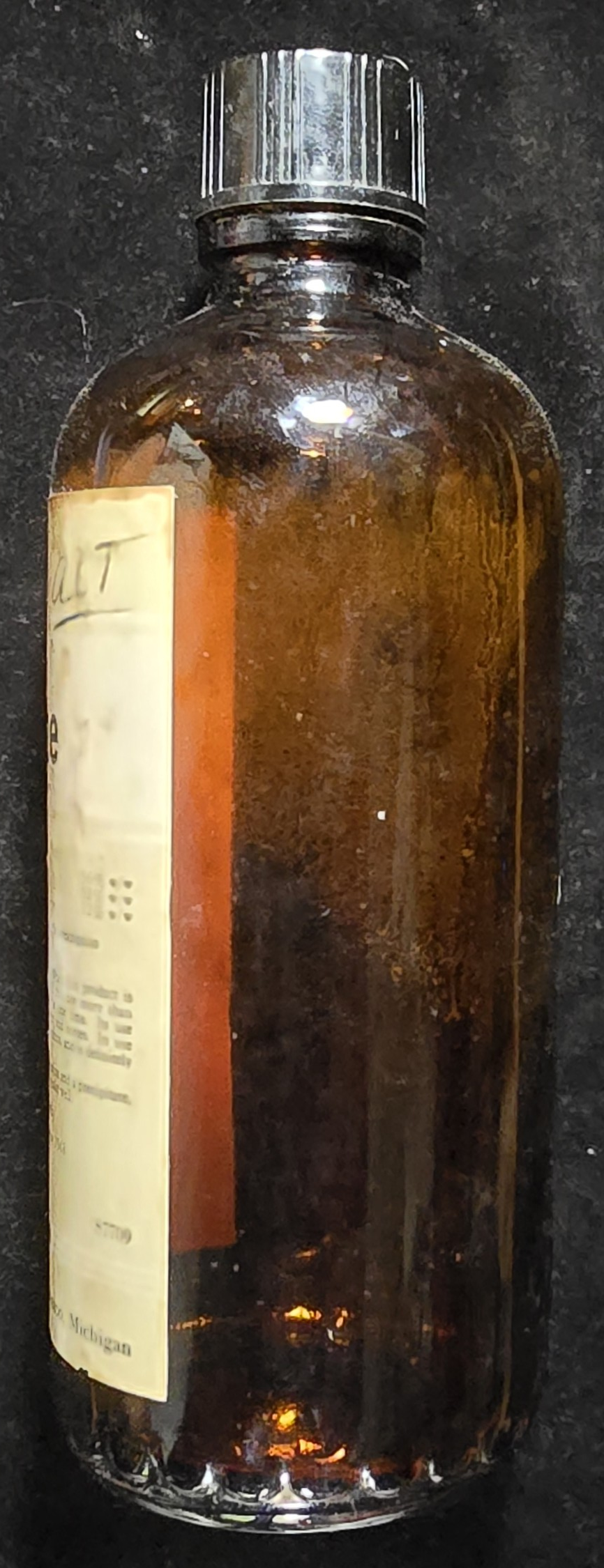
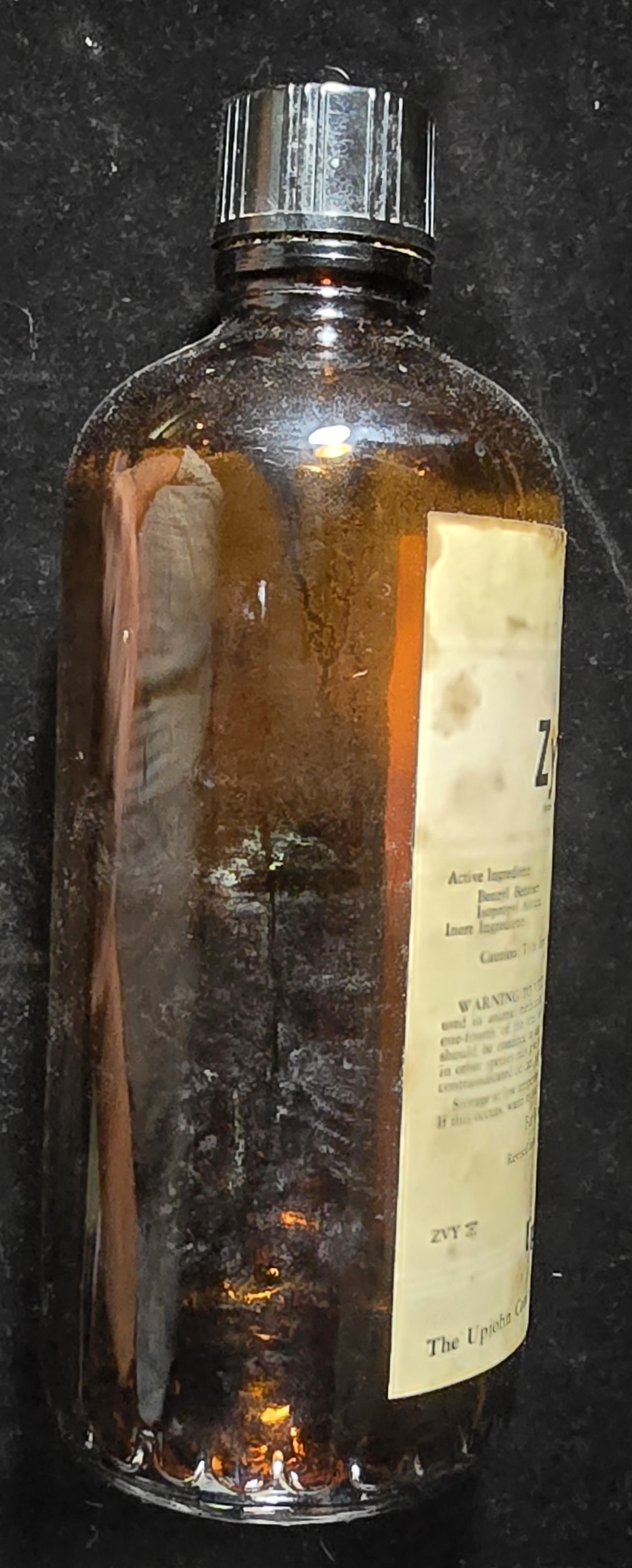
Excellent. The amber glass is intact with a metal screw cap, and the label is clearly legible with only minor discoloration and edge wear. The bottle appears unused, with no visible residue.
Gallery
Historical context
Benzyl benzoate, one of Zylate’s main ingredients, was commonly used in the mid-20th century to treat parasitic infestations such as scabies and lice in both humans and animals. In veterinary medicine, it served a role in treating mange, particularly in larger livestock. The use of isopropyl alcohol would have served as both a solvent and antiseptic.
The Upjohn Company, founded in 1886, was a major pharmaceutical producer in Kalamazoo, Michigan. Their postwar veterinary lines paralleled their human pharmaceutical offerings, showing the increasing overlap of clinical standards across species.
Curious Facts, Ephemera, and Trivia
The 1948 formula revision reflects a period when the FDA and USDA were tightening regulations on veterinary pharmaceuticals.
The label includes specific animal warnings — notably “definitely contraindicated on cats, rabbits, and mink,” suggesting experimental knowledge of species-specific toxicity.
The product warns against separation and precipitation at low temperatures, showing the formulation’s chemical instability under certain storage conditions.
The notation “ALT” handwritten on the label likely denotes alternative stock or placement — a common practice in multi-use veterinary clinics.
Excerpt
“WARNING TO VETERINARIANS — This product is used in animal medication… Its use should be confined to dogs, hogs, sheep, cattle, and horses.”
Why it is in the Cabinet
This bottle of Zylate represents a fascinating chapter in veterinary pharmaceutical history — one where human-grade antiseptics crossed into the barn and pasture. Its inclusion in the Cabinet preserves a time when formulations like this were dispensed under strict professional guidance, bridging the gap between farm care and regulated science. The intact label and historical warnings offer a snapshot of postwar medical-industrial caution and curiosity.
Support Dr. Bebout’s Cabinet of Medical Curiosities
If you enjoy the history, the oddities, and the effort, help keep this cabinet open. Every little bit helps preserve and share the strange wonders of medicine's past.
Buy Me a Ko-fi ☕ Buy Me a Coffee ☕ Tip via PayPal 💵