
Title
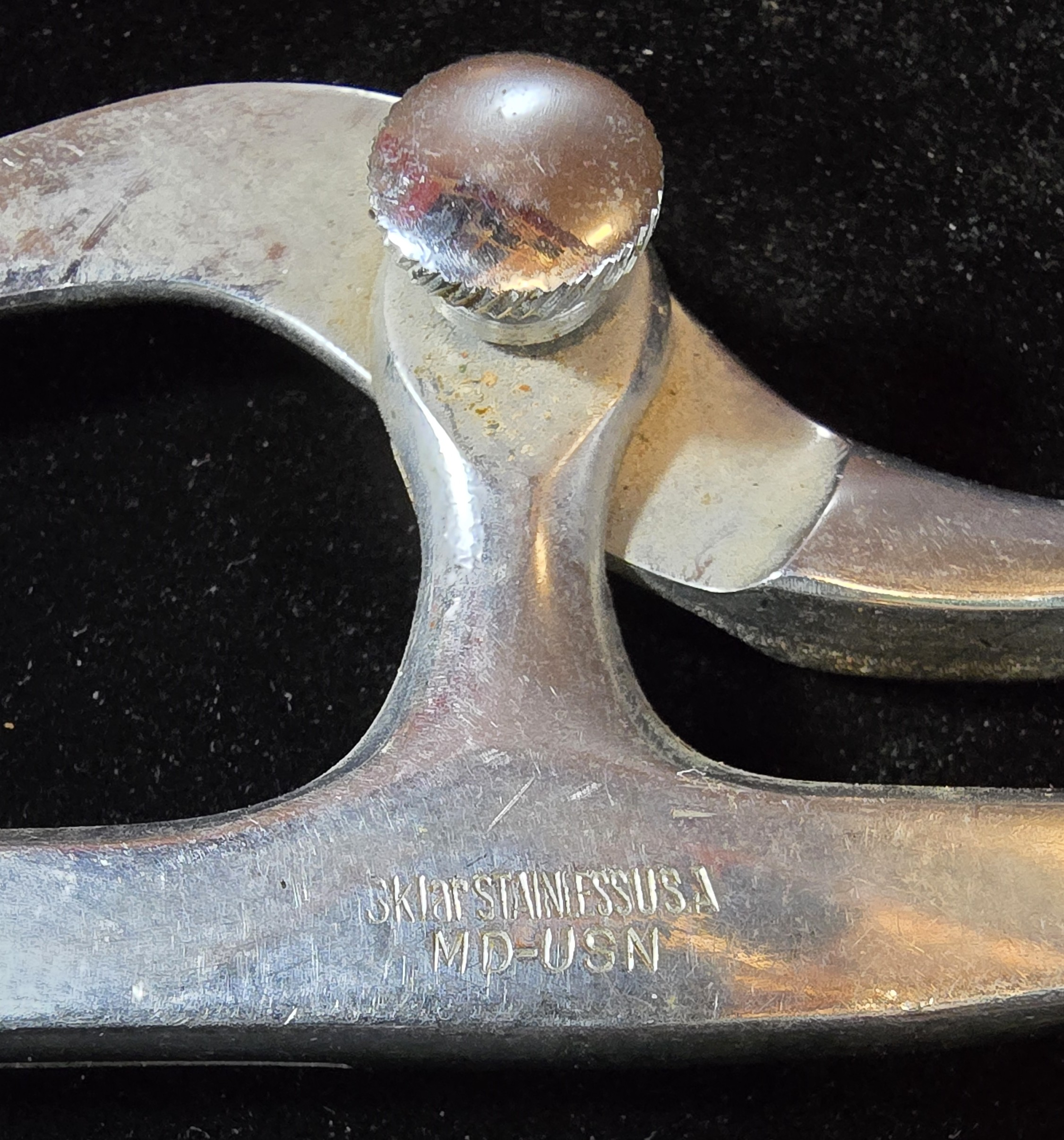
Sklar Tonsil Snare – Stainless Steel Surgical Instrument, MD-USN Marked
Author
Dr. Bebout’s Cabinet of Medical Curiosities
Image
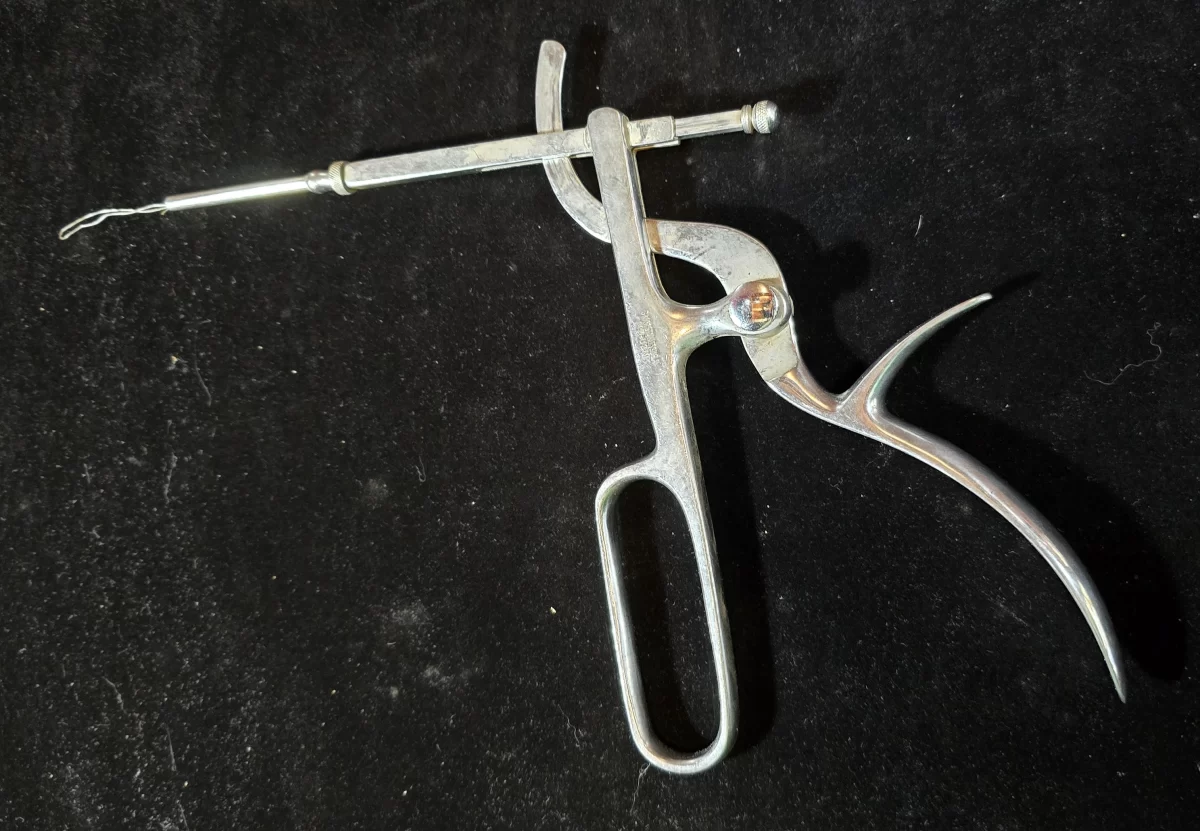
Description
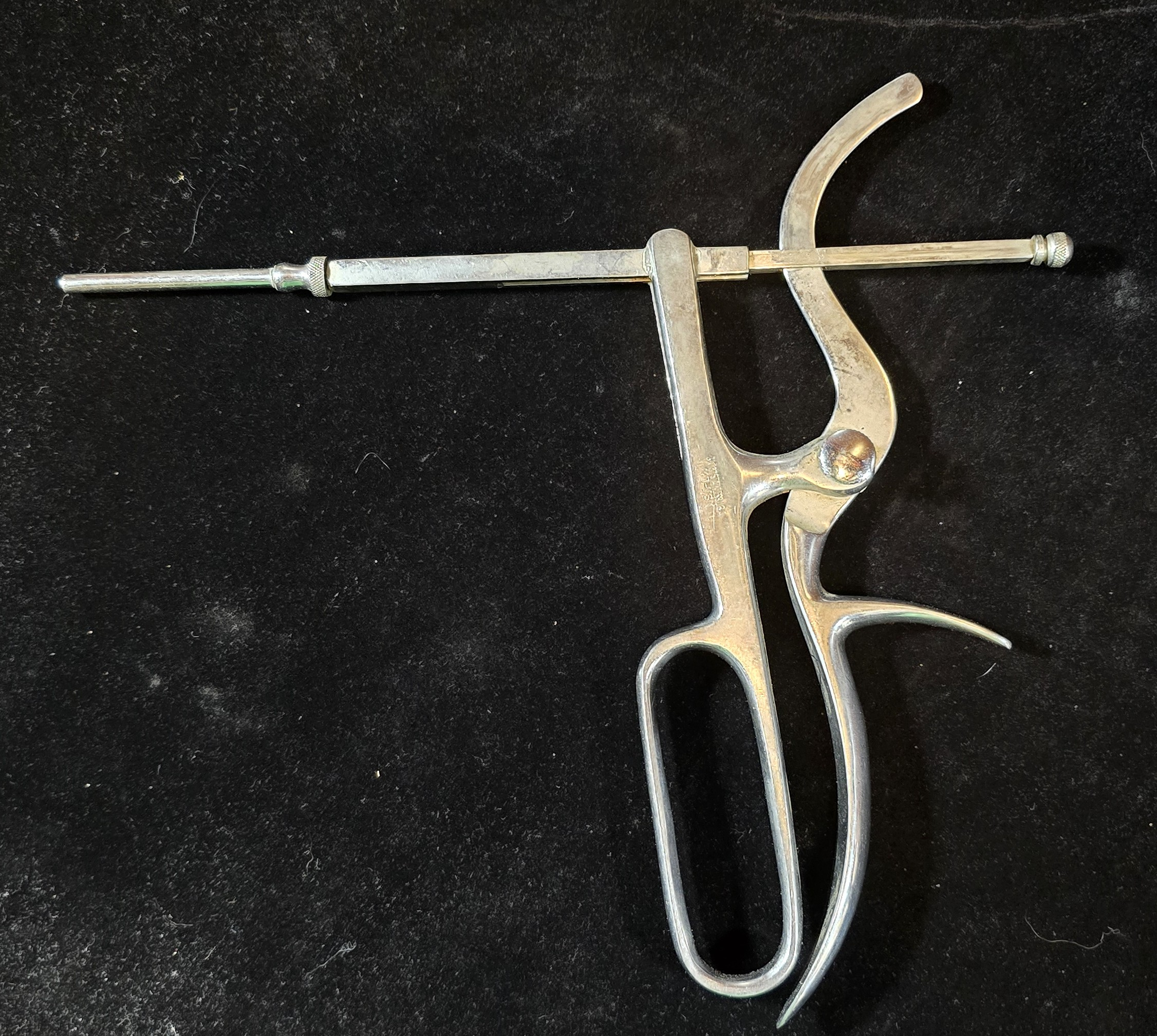
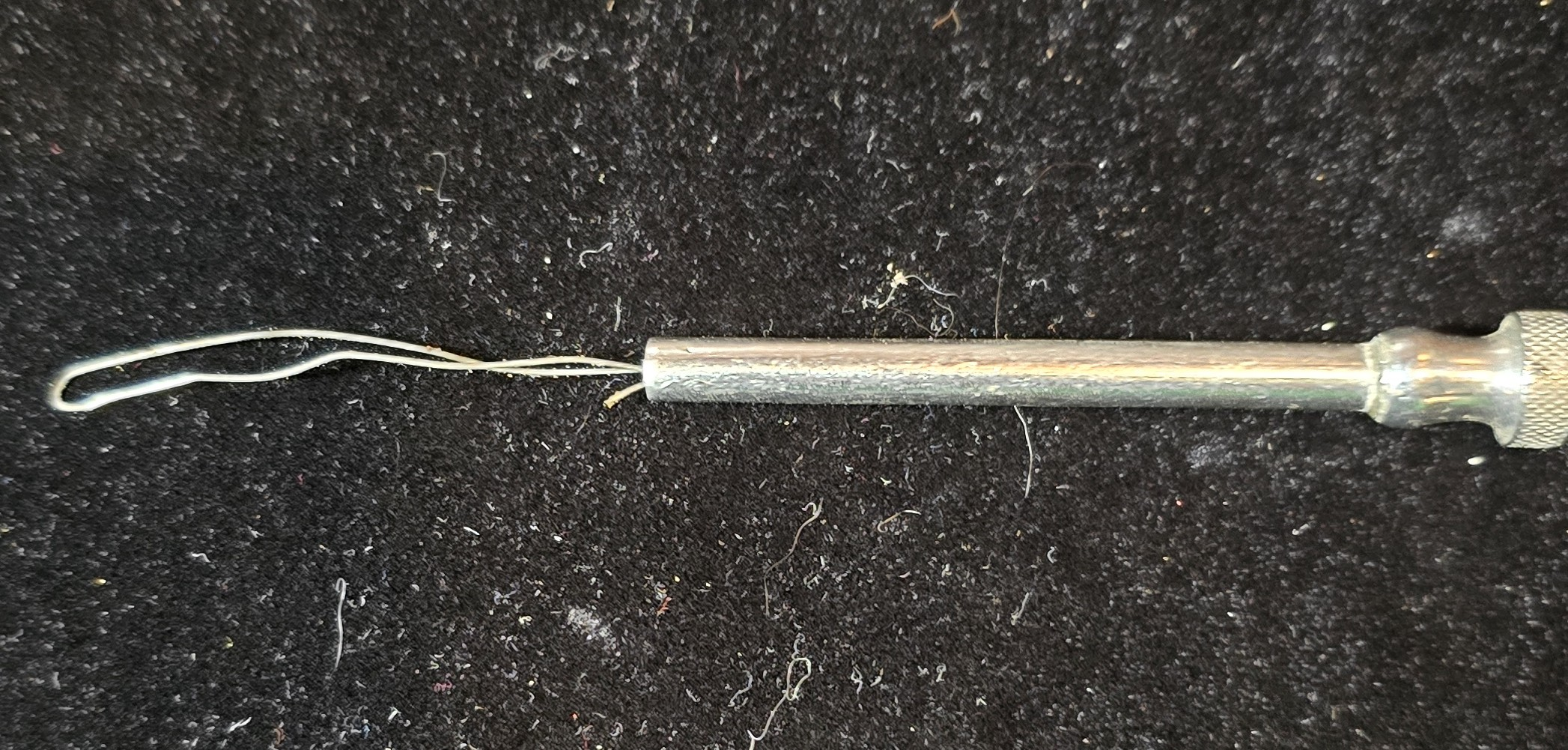
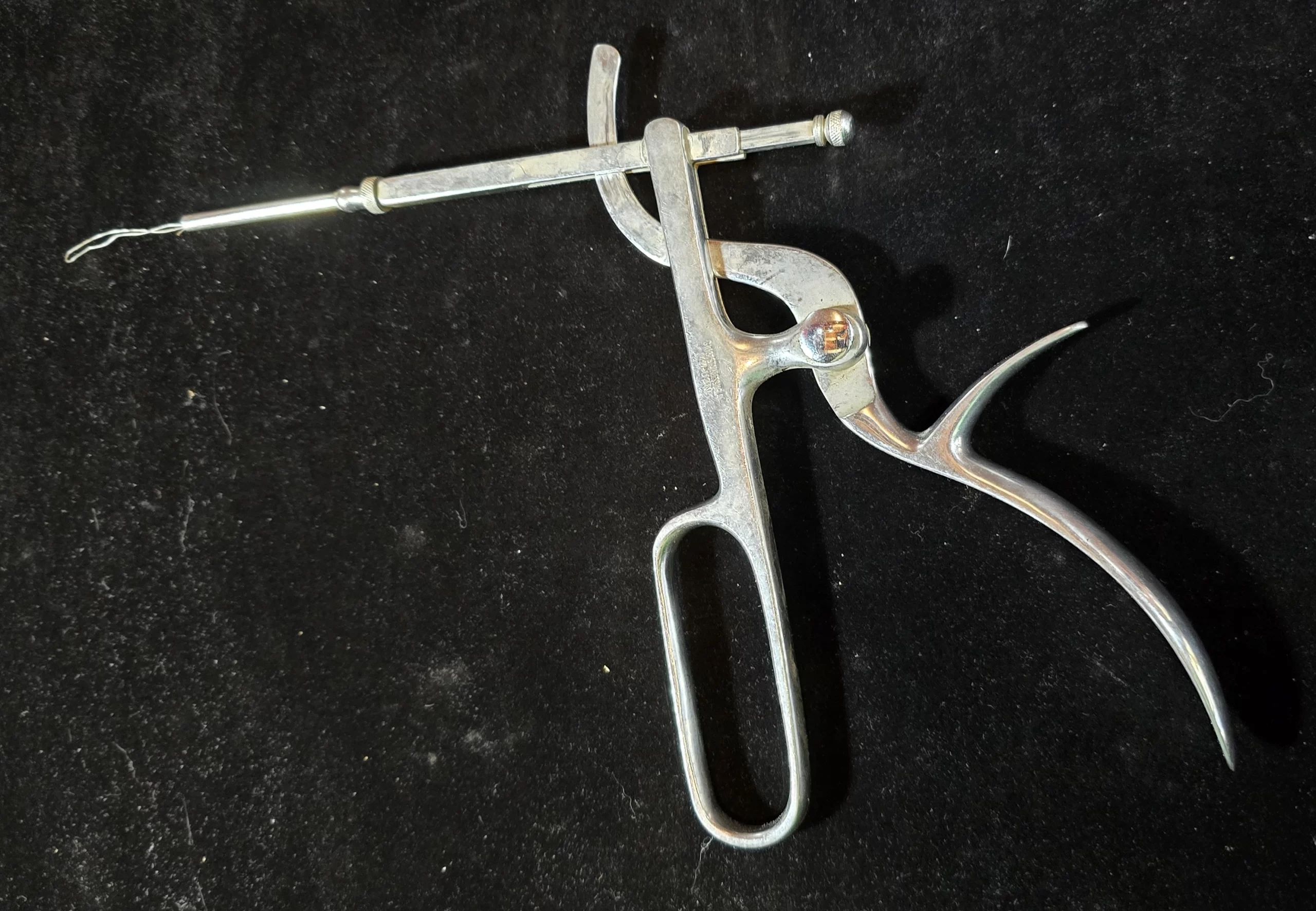
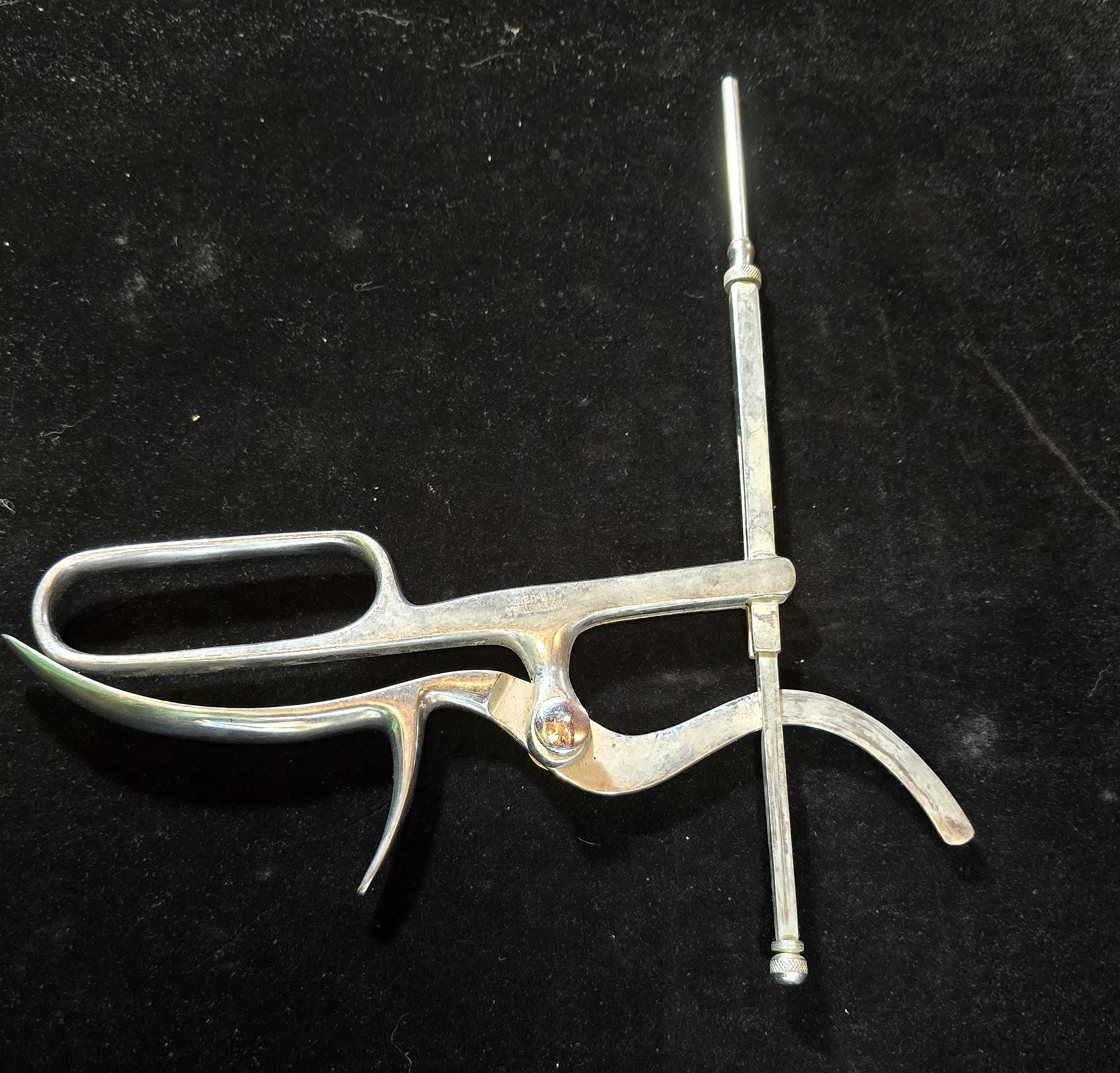
This stainless steel tonsil snare, manufactured by Sklar and marked MD-USN, is a classic example of mid-20th century military surgical instrumentation. Designed for the removal of tonsils, this snare features a pistol-grip handle, a sliding shaft, and a wire loop tip used to encircle the tonsil and sever it cleanly—usually following blunt dissection or crushing.
Tonsil snares like this one were a staple of ENT surgery kits, particularly in military field and shipboard hospitals. The Sklar brand and MD-USN marking indicate this instrument was used by the U.S. Navy, likely between the 1940s and 1960s.
Condition
Very good vintage condition. Mechanism is functional. Minor surface wear and oxidation consistent with age and use. Wire loop present and intact. No cracks, bends, or structural flaws noted.
Gallery
Historical context
Tonsillectomy was once among the most common surgeries performed, especially on children.
Manual snares like this one allowed for clean removal of tonsils with minimal bleeding by crushing the vascular pedicle.
The shift to electrocautery and harmonic scalpels in later decades made mechanical snares like this largely obsolete.
Sklar remains a recognized surgical manufacturer, and MD-USN designates this as official U.S. Navy medical equipment.
Curious Facts, Ephemera, and Trivia
The loop was often replaceable wire, threaded manually before each procedure.
Some surgeons could complete a bilateral tonsillectomy in under five minutes using this style of snare.
ENT tools like this were often included in shipboard or field surgical kits and had to be durable, portable, and effective with minimal electricity.
The crushing method was partly to induce vasospasm and mechanical hemostasis—a clever workaround before bipolar cautery became widespread.
Excerpt
“After blunt dissection, the tonsillar pedicle was secured with the snare, tightened with a firm pull, and the tonsil released with controlled pressure. Hemostasis achieved through pressure and trauma.”
— U.S. Navy Field Surgical Manual, c. 1950s
Why it is in the Cabinet
This instrument represents both the ingenuity and grit of mid-century field medicine. It’s a brutal yet brilliant solution to a once-common problem. Its military markings and intact mechanism make it a perfect addition to the Cabinet’s collection of ENT surgical history.
Support Dr. Bebout’s Cabinet of Medical Curiosities
If you enjoy the history, the oddities, and the effort, help keep this cabinet open. Every little bit helps preserve and share the strange wonders of medicine's past.
Buy Me a Ko-fi ☕ Buy Me a Coffee ☕ Tip via PayPal 💵