
Title
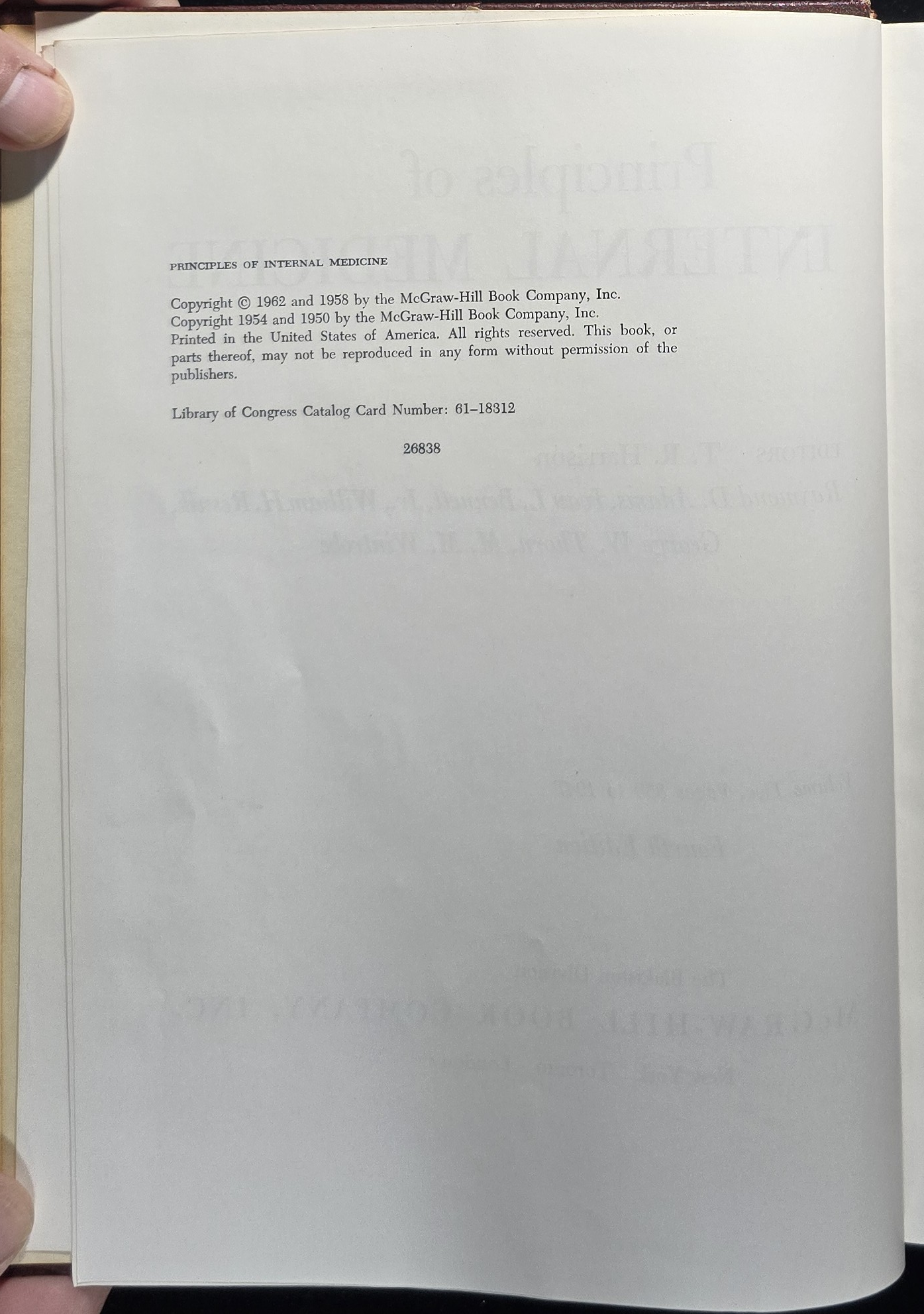
Principles of Internal Medicine – Fourth Edition (1962)
Author
Author/Editor: Tinsley R. Harrison, M.D., et al.
Publisher: McGraw-Hill Book Company, Inc. – The Blakiston Division
Image
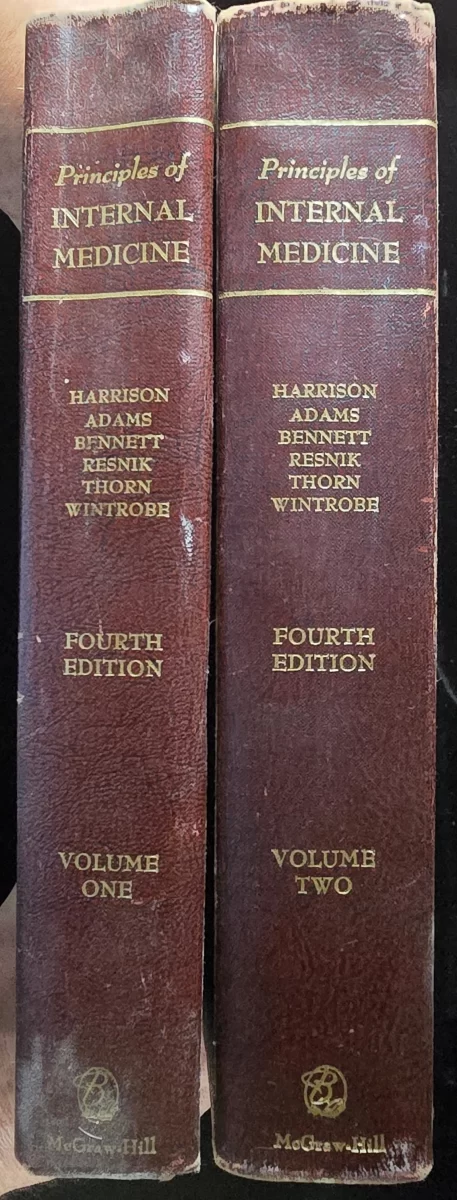
Description
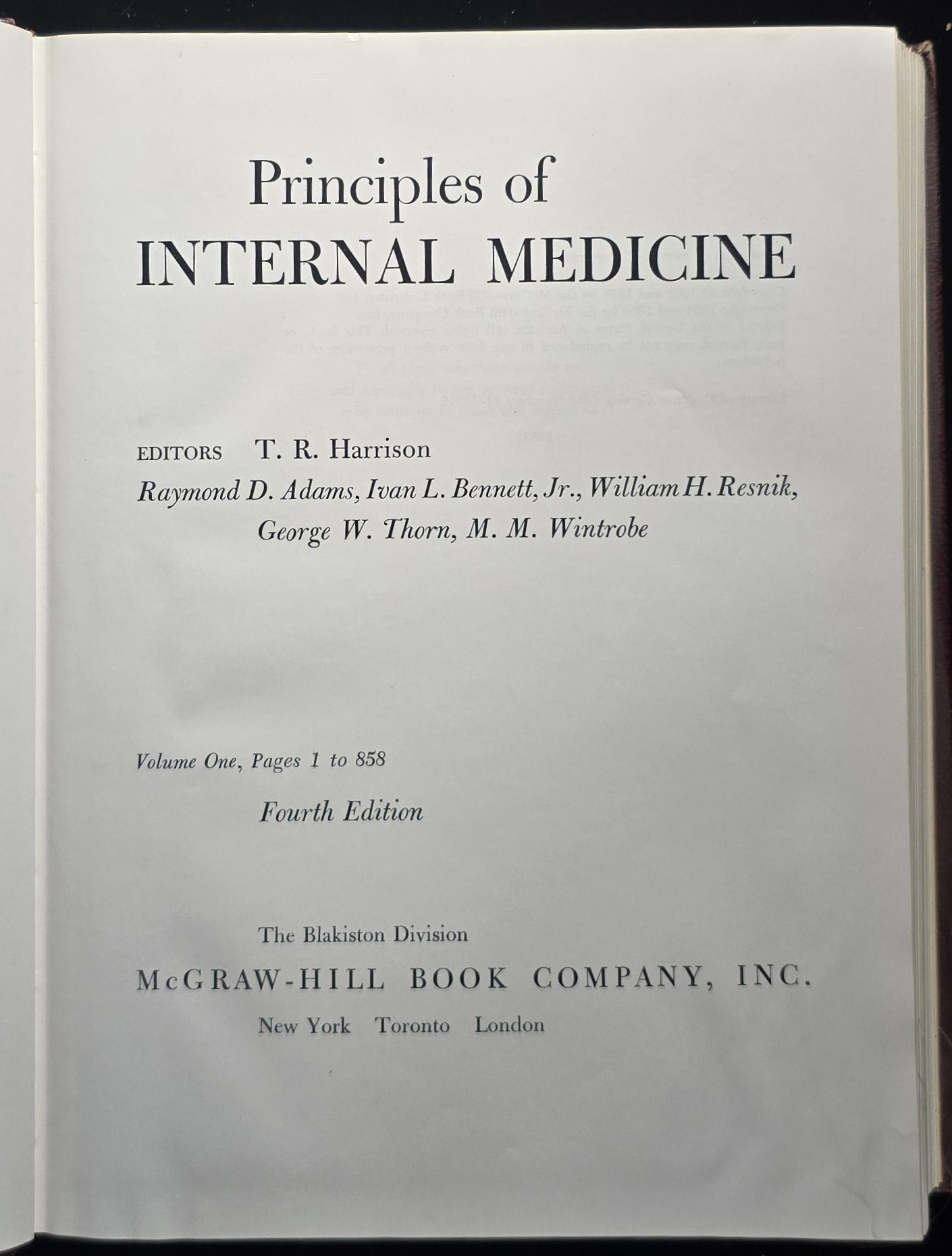
This two-volume Fourth Edition of Harrison’s Principles of Internal Medicine represents a cornerstone in mid-20th century clinical education. First published in 1950, Harrison’s quickly established itself as the standard text for internal medicine, offering a pragmatic, patient-centered, and diagnostically rich approach to care.
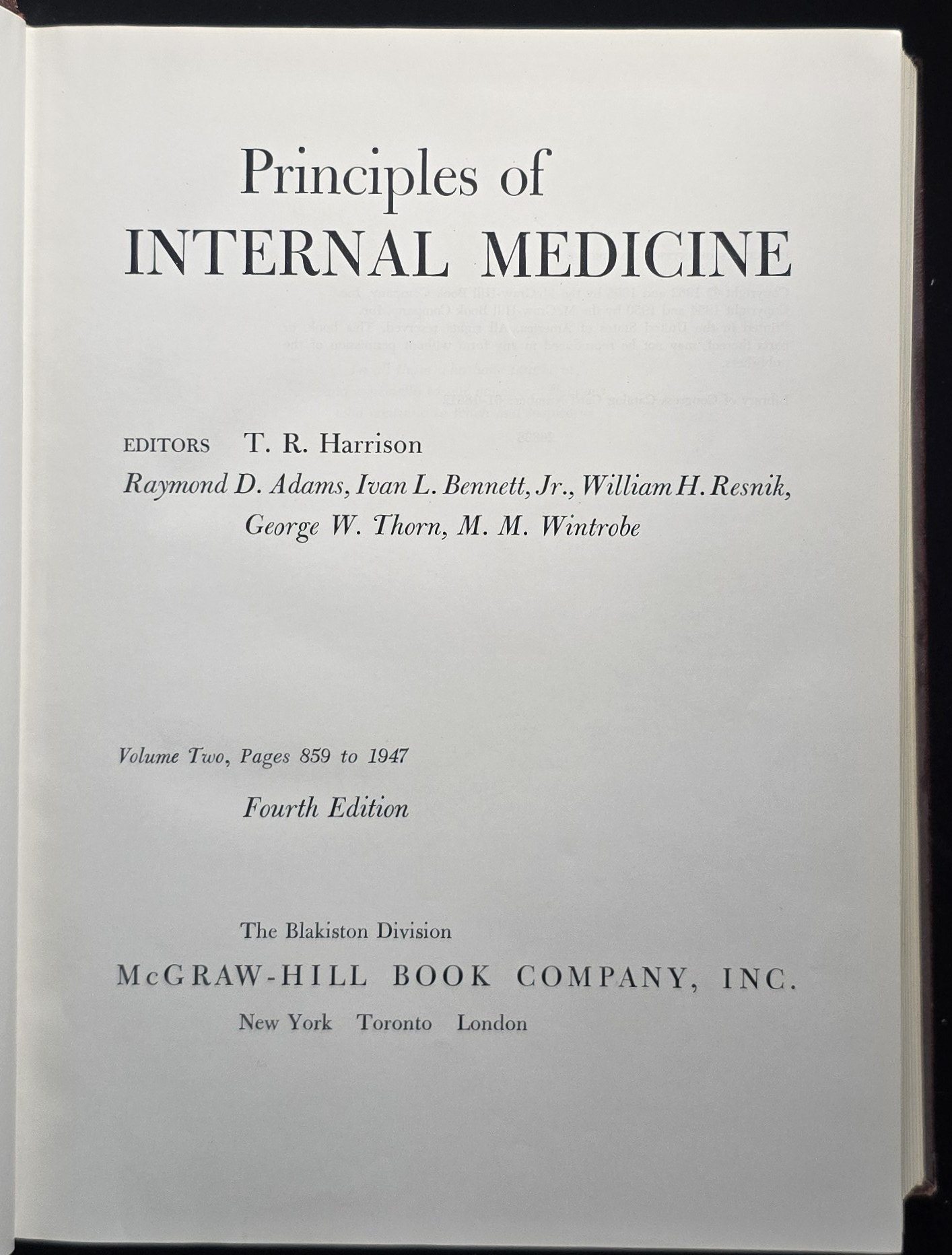
This 1962 edition was edited by Tinsley R. Harrison, Raymond D. Adams, M. M. Wintrobe, George W. Thorn, William H. Resnik, and Ivan L. Bennett Jr.—all giants in their respective fields.
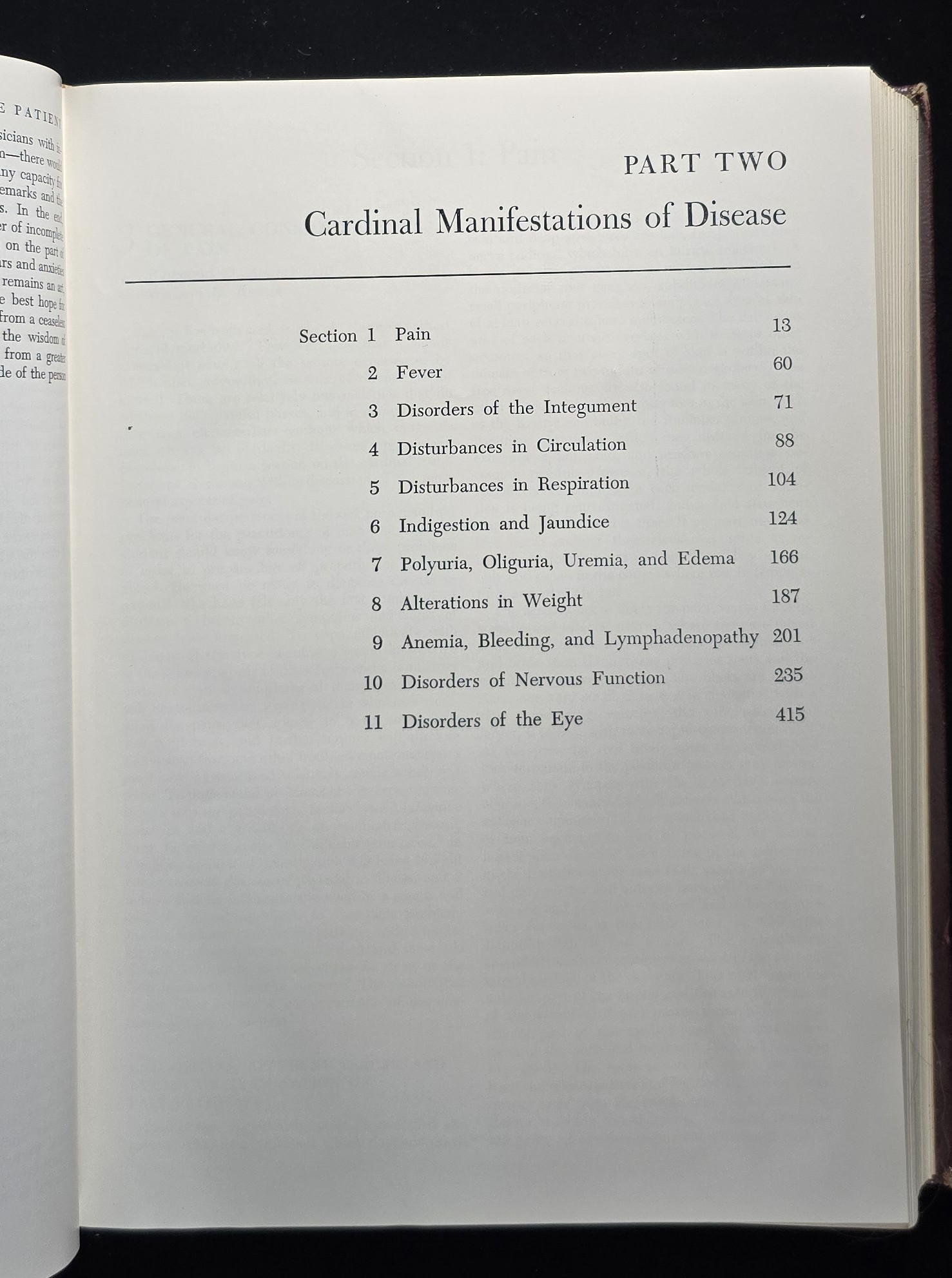
Volume I and II together span nearly 2,000 pages of detailed diagnostic reasoning, physiologic understanding, and case-based clinical medicine at a time when bedside skills and emerging technologies coexisted.
Condition
Binding intact on both volumes
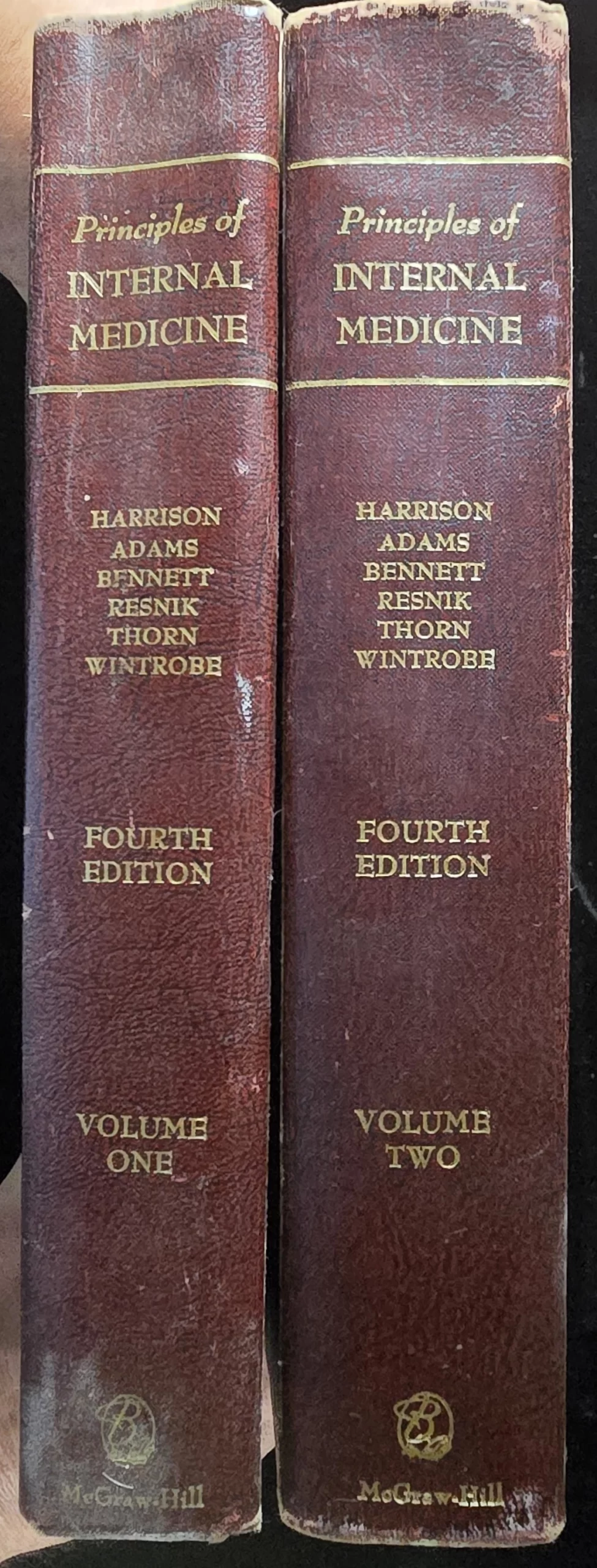
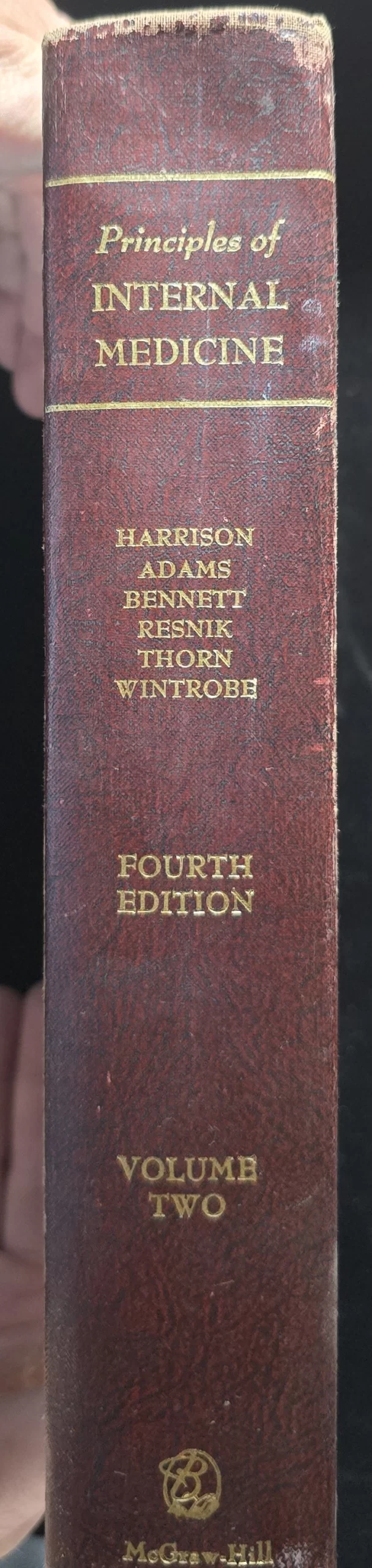
Moderate shelf wear and rubbing to spine and corners
Upper spine cloth worn/frayed on both volumes
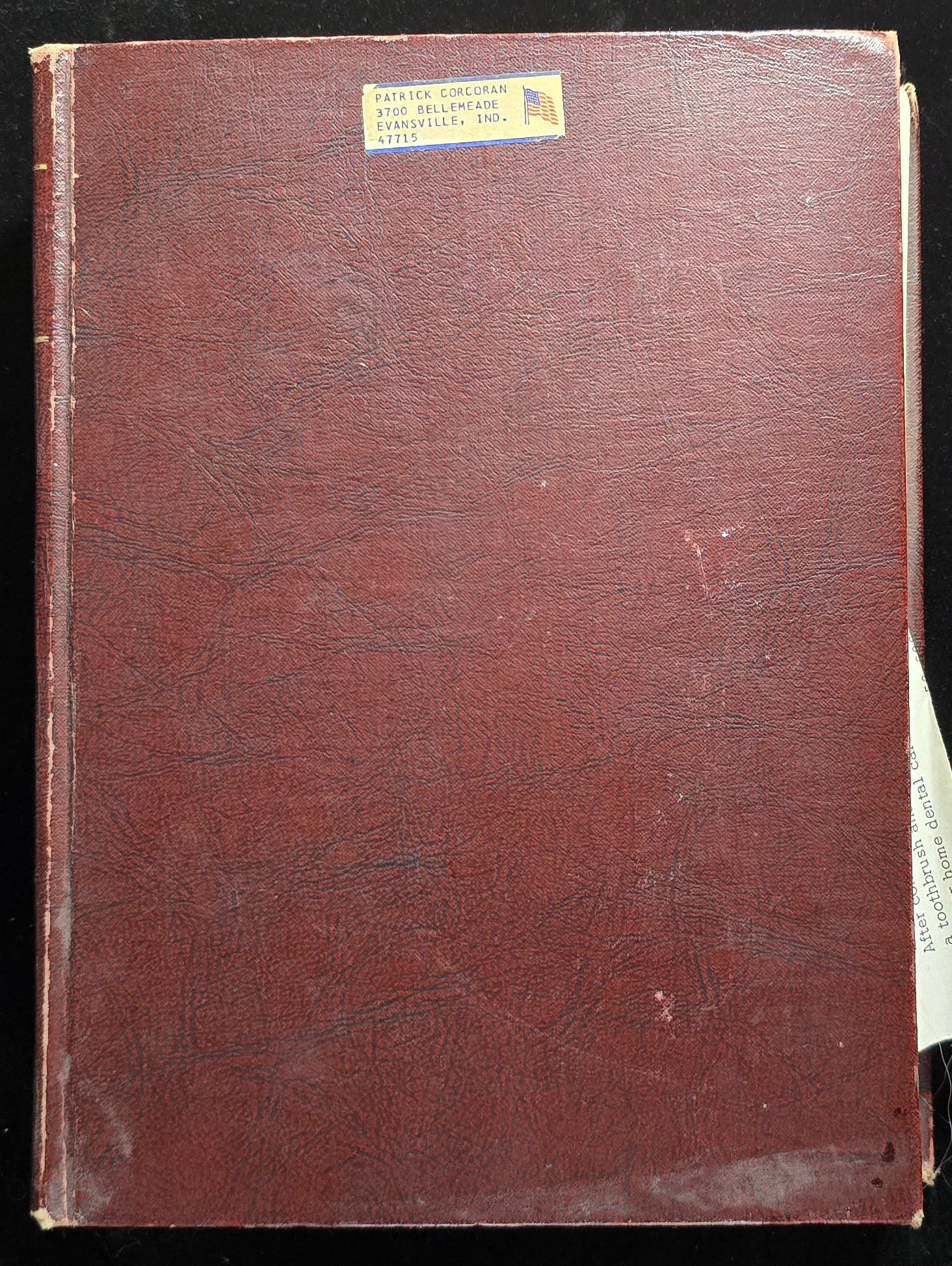
Light scuffing to rear boards
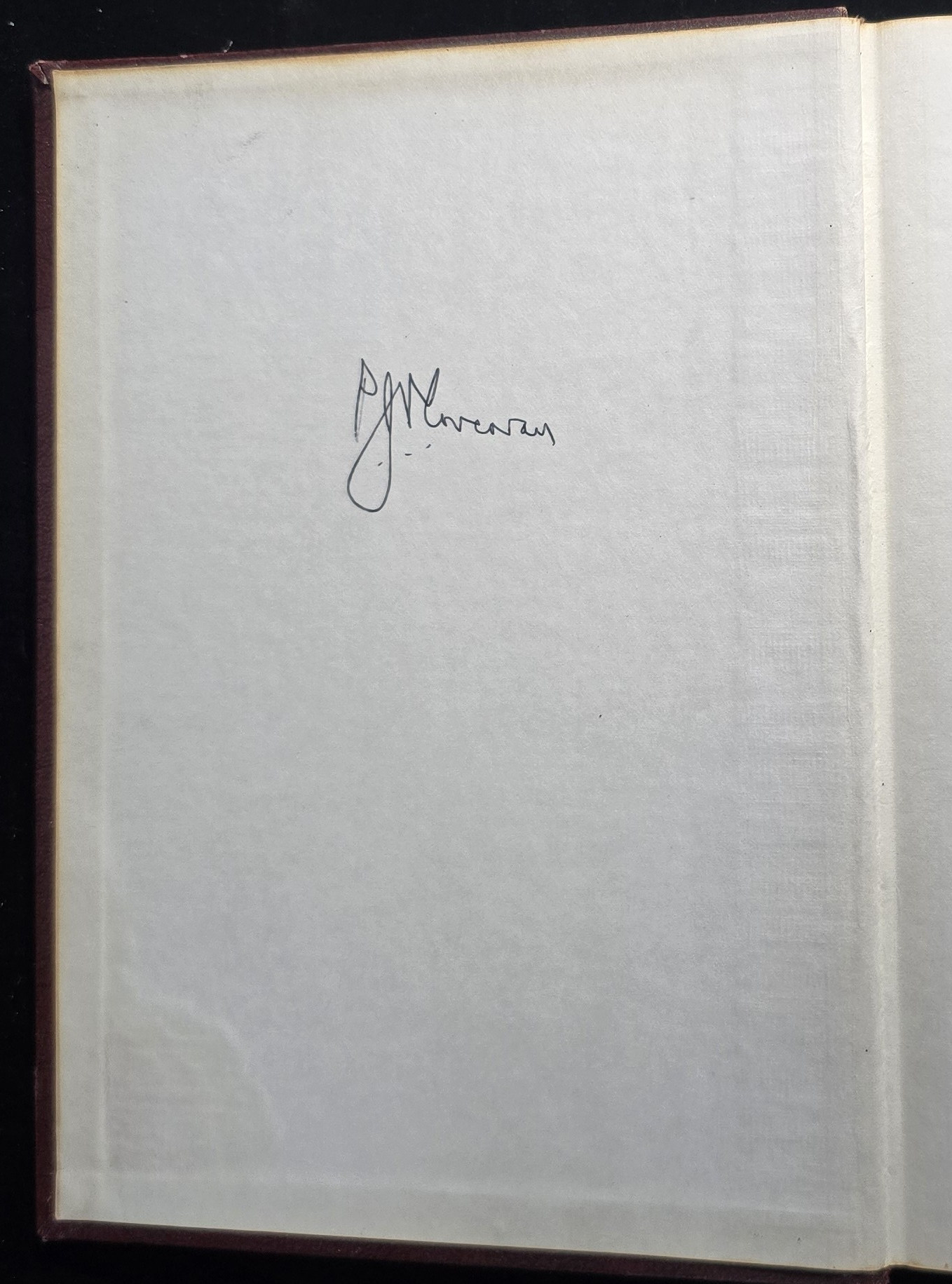
Clean interior with no major staining or foxing
Bookplate present: Patrick Corcoran, Evansville, Indiana
Gallery

Historical context
First published in 1950, Harrison’s Principles of Internal Medicine quickly became a cornerstone of medical education and practice. The Fourth Edition, issued in 1962, captures a pivotal moment in American internal medicine—when diagnosis was still deeply rooted in physical examination, yet laboratories, ECGs, and radiographs were transforming clinical logic.
This edition was produced under the editorial direction of a powerhouse team: Tinsley R. Harrison, neurologist Raymond Adams, hematologist M. M. Wintrobe, endocrinologist George Thorn, and others whose names remain influential across generations of textbooks.
Curious Facts, Ephemera, and Trivia
Dr. Tinsley Harrison, the founding editor, insisted that each contributor be both a “practicing clinician and a careful scholar.” This principle shaped the textbook’s tone—clinical, humanistic, and scientifically grounded.
The Library of Congress card number (61–18312) suggests the final manuscript was submitted in 1961, with printing in 1962.
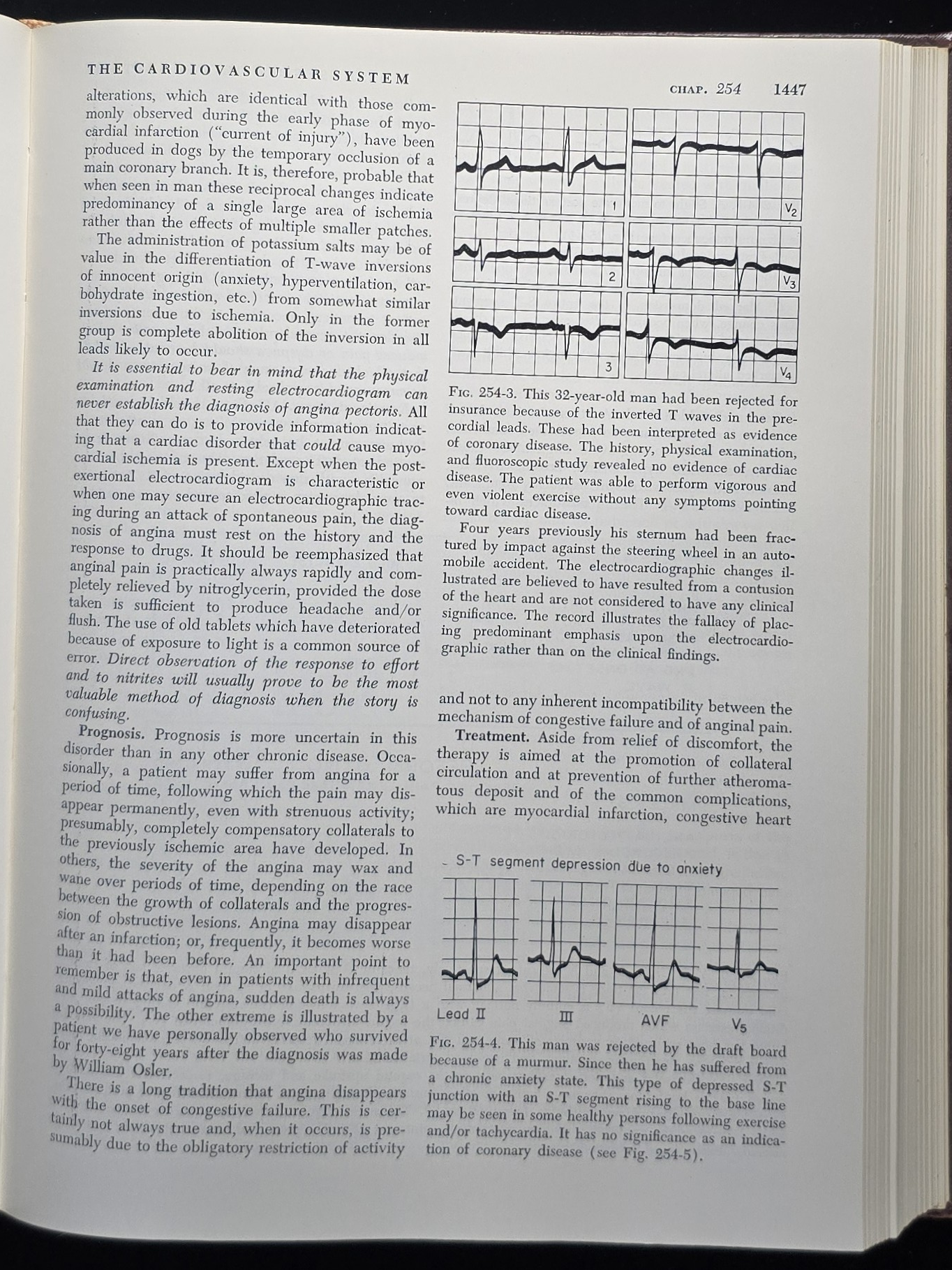
Page 1447 includes a case citing William Osler in relation to angina prognosis: “An important point to remember is that… sudden death is always a possibility.”
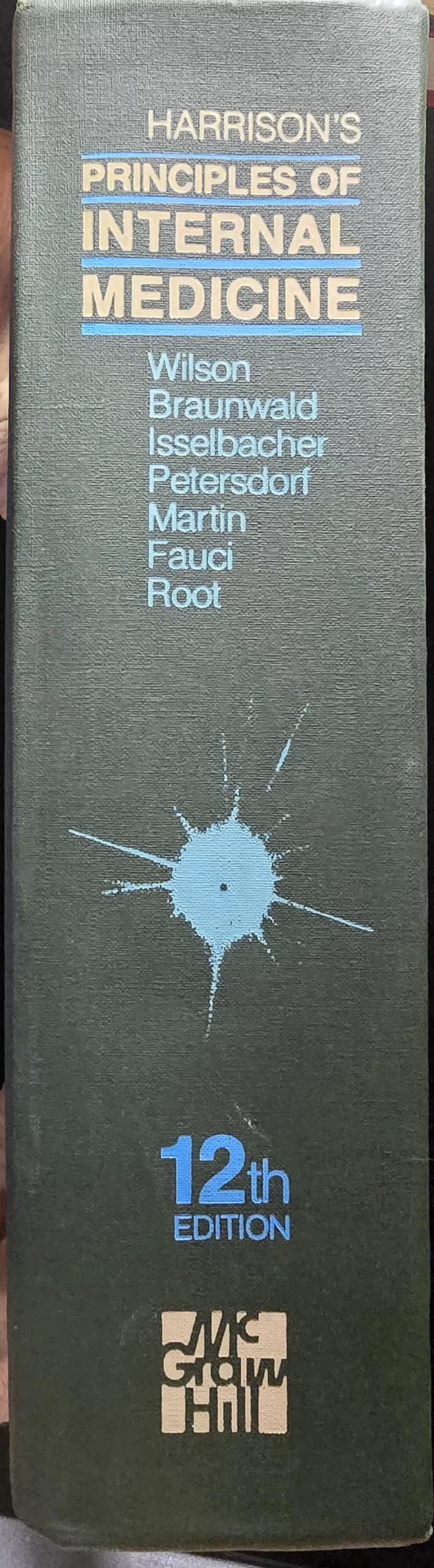
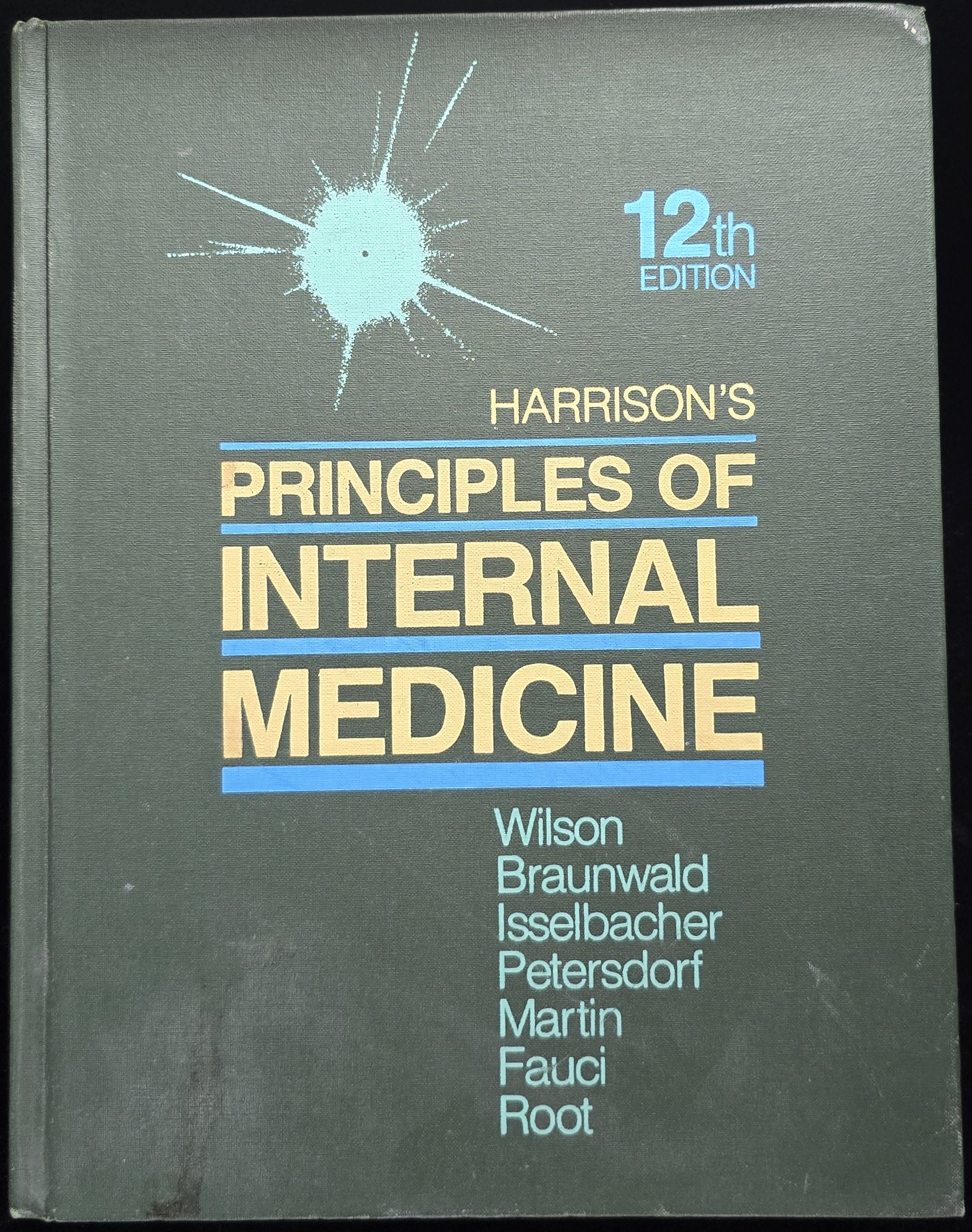
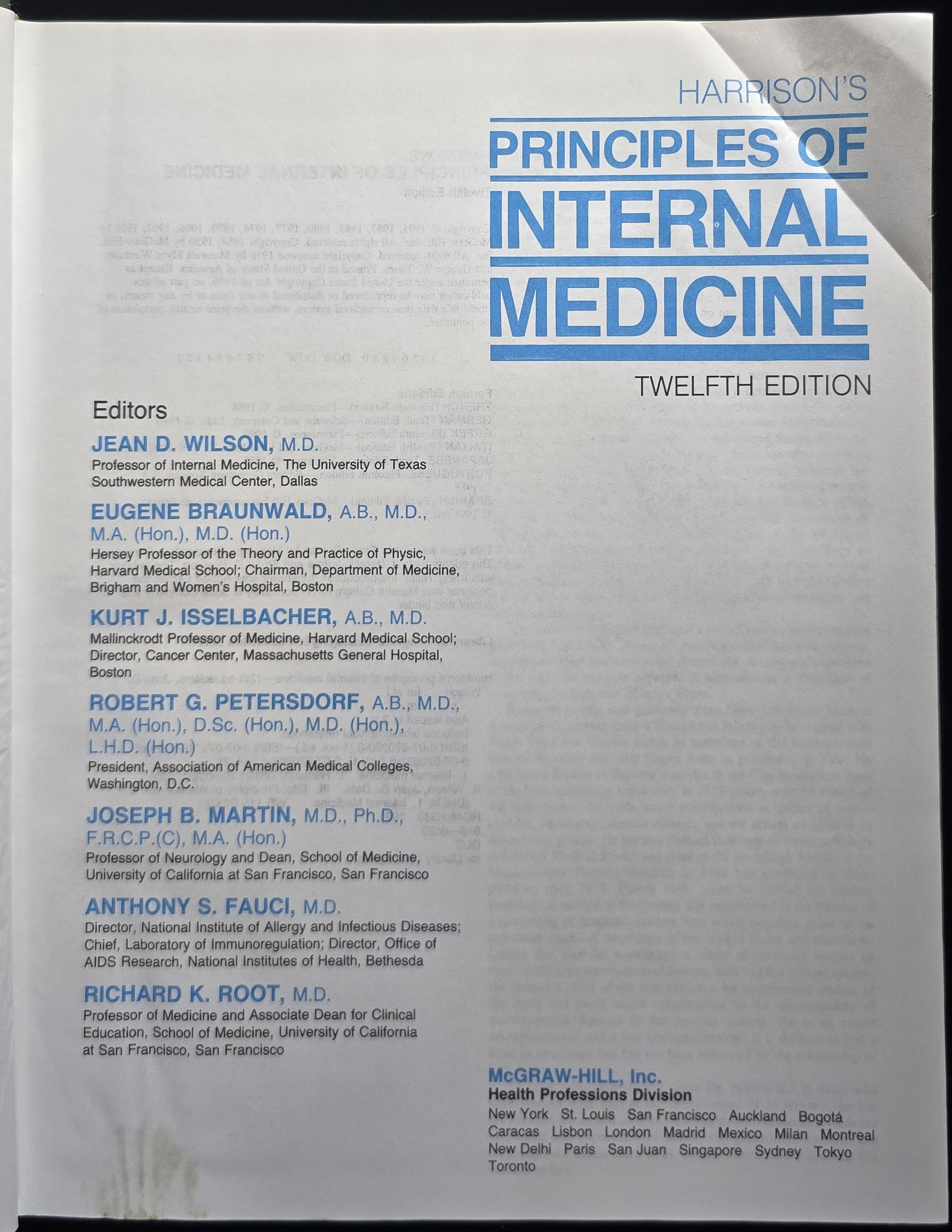
The 12th edition of Harrison’s (1991), also in this collection, prominently features Anthony S. Fauci, decades before he became a household name.
Excerpt
“It is essential to bear in mind that the physical examination and resting electrocardiogram can never establish the diagnosis of angina pectoris. All that they can do is to provide information indicating that a cardiac disorder could cause myocardial ischemia in the present.”
— Volume 2, Page 1447
This clinical realism, grounded in Oslerian tradition but informed by evolving technology, defines Harrison’s enduring appeal.
Why it is in the Cabinet
This Fourth Edition represents a transitional era in medicine—when bedside clinical judgment still reigned but was beginning to yield to technological diagnostics. It captures the voices of medicine’s modern founders and bridges two generations of practice.
The inclusion of both the 1962 Fourth Edition and the 1991 Twelfth Edition offers a unique opportunity to compare the state of internal medicine across nearly three decades of progress, revealing how certain diseases (like heart disease, diabetes, and hypertension) evolved in understanding, while some core diagnostic wisdom remained remarkably stable.
This set also offers local provenance through the stickered nameplate of a former physician in Evansville, Indiana—linking this volume back to a specific practice and life in the American Midwest.
While reviewing this volume, an original 1966 promotional letter from the Oral B Company was discovered tucked between the pages. The letter, addressed to physicians and signed by Dr. Charles F. McKhann, advertised the company’s new Automatic Oral Hygiene Kit—an early electric toothbrush marketed as a clinical tool. This remarkable piece of mid-century medical marketing has been cataloged separately in the Miscellaneous section of the Cabinet. [See full listing here.]
Support Dr. Bebout’s Cabinet of Medical Curiosities
If you enjoy the history, the oddities, and the effort, help keep this cabinet open. Every little bit helps preserve and share the strange wonders of medicine's past.
Buy Me a Ko-fi ☕ Buy Me a Coffee ☕ Tip via PayPal 💵