
Title
Diseases Peculiar to Women: Clinical Lectures
Author
Lombe Atthill, M.D.
Image

Description
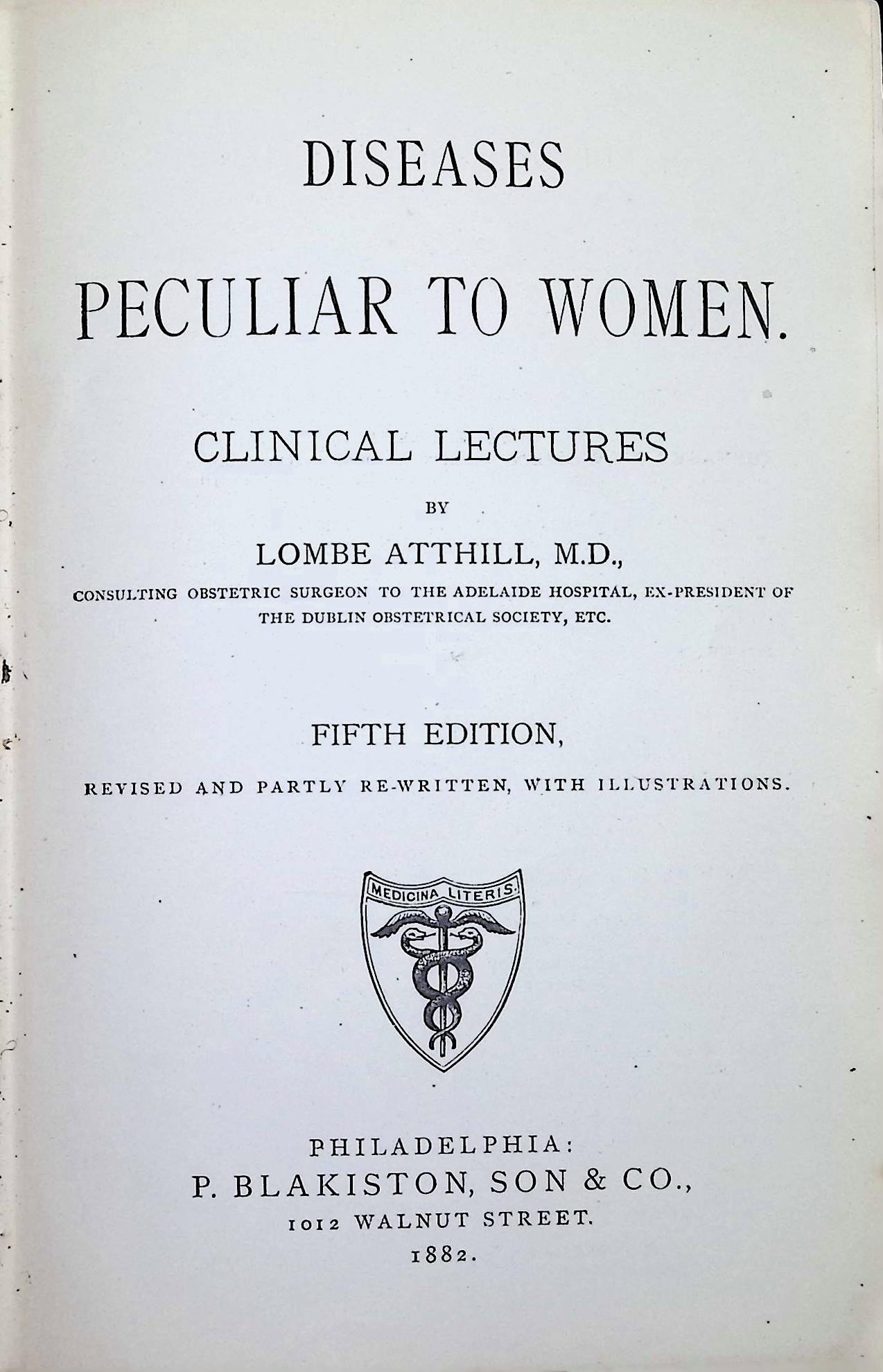
This 1882 edition of Diseases Peculiar to Women by Dr. Lombe Atthill presents a detailed series of clinical lectures originally delivered at the Adelaide Hospital in Dublin. Atthill, a consulting obstetric surgeon and former president of the Dublin Obstetrical Society, offers a window into 19th-century gynecological thought, surgical practice, and prevailing attitudes toward women’s health.
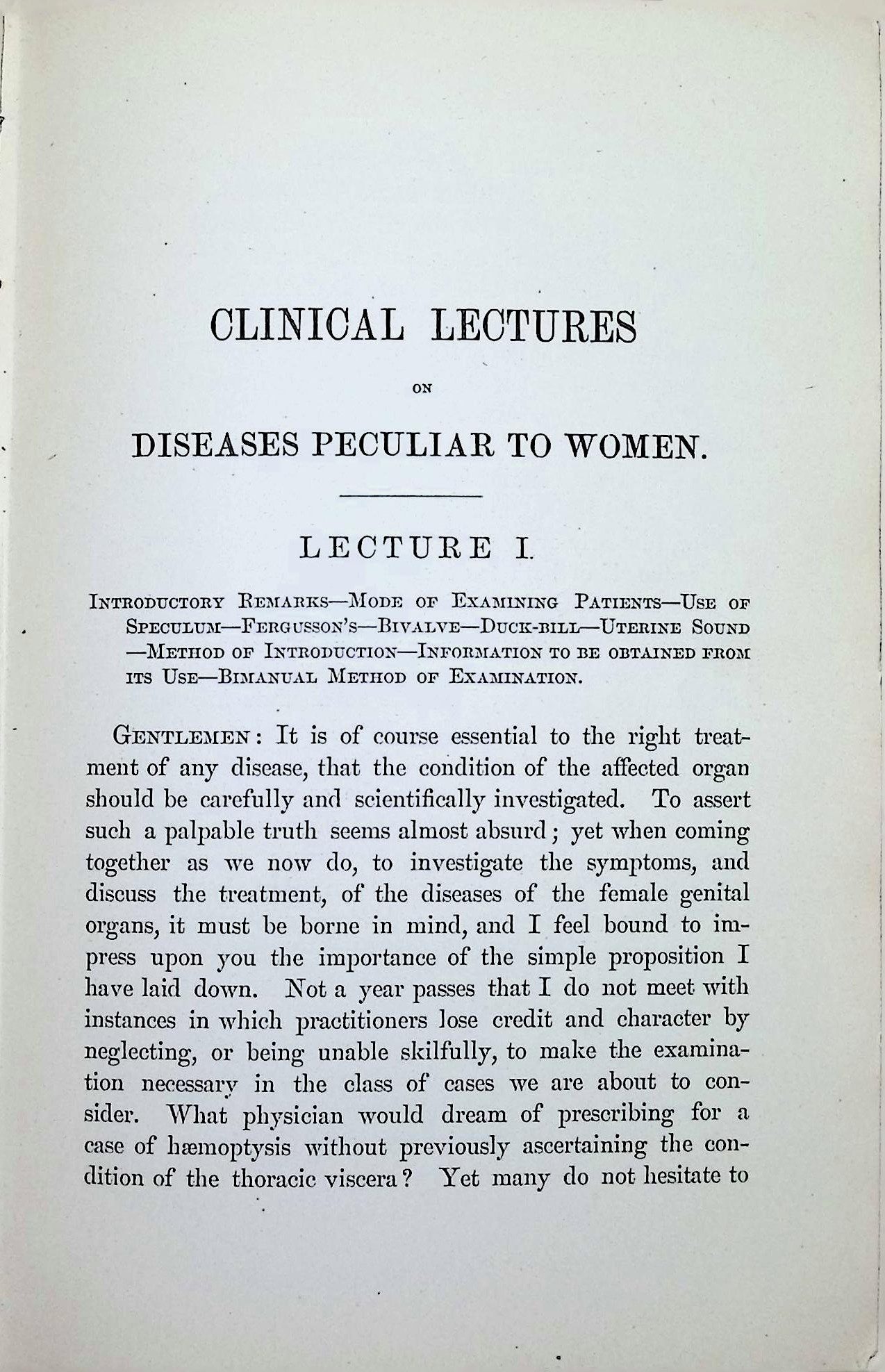
The book is structured as a series of clinical lectures, beginning with foundational instruction on examination methods (e.g., use of specula, uterine sounds, bimanual technique), and progressing to discussions of conditions like fibrous tumors of the uterus and ovarian cystic disease.
Selected Highlights:
Lecture I: Introduction to examination techniques, with stern advice on the necessity of scientific investigation before treatment. Notably calls out the professional risks of diagnostic neglect.
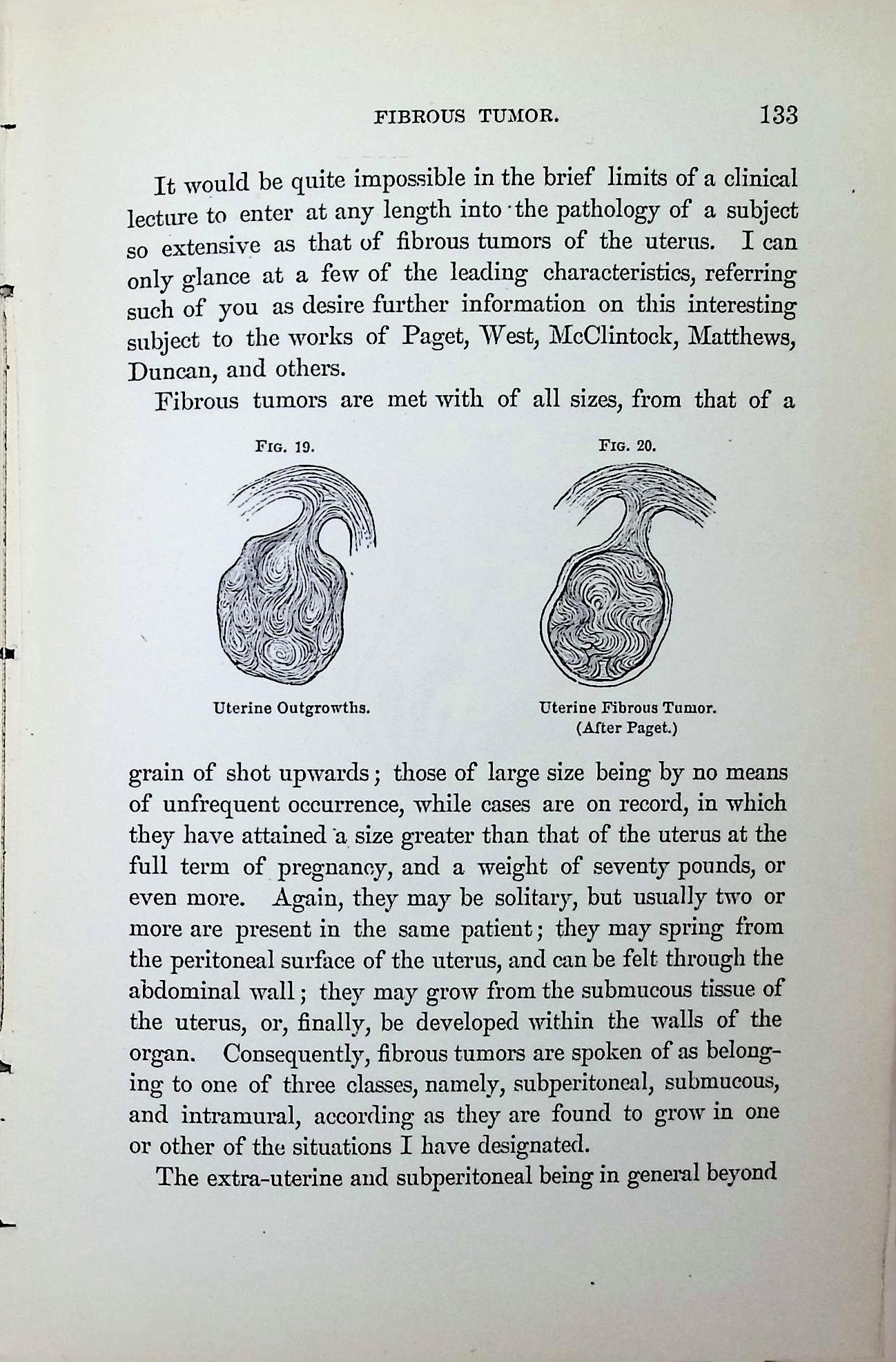
Page 133 – Fibrous Tumor: Diagrams (after Paget) depict uterine outgrowths. Atthill notes fibrous tumors may grow as large as 70 lbs and classifies them by location: subperitoneal, submucous, or intramural.
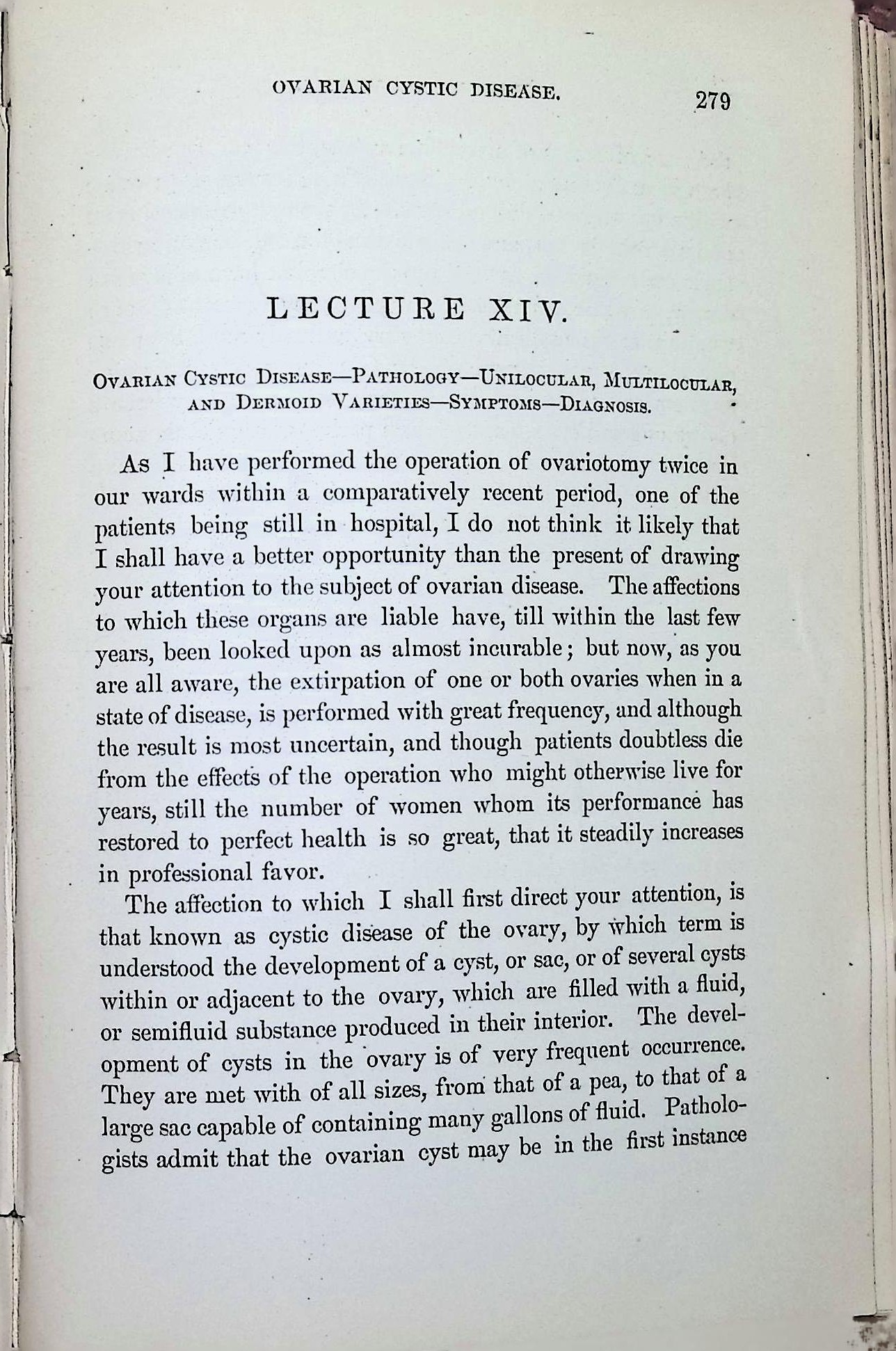
Lecture XIV – Ovarian Cystic Disease: Discusses the extirpation of one or both ovaries as a rising treatment, previously considered nearly incurable. Atthill remarks on the massive size cysts can reach—”many gallons of fluid”—and their increasing operability.
Condition
Binding intact but worn at the edges and spine
Significant separation between front board and text block
Moderate cover wear with rubbing and spotting
Internal pages clean and legible; illustrated with engravings
Some foxing and age toning consistent with age
Gallery



Historical context
Dr. Lombe Atthill (1827–1910) was a distinguished Irish obstetrician and gynecologist. He served as consulting obstetric surgeon at the Adelaide Hospital in Dublin and held the presidency of the Dublin Obstetrical Society. First published in the 1870s, Diseases Peculiar to Women became a widely circulated teaching text, particularly among English-speaking physicians training in women’s health.
The lectures in this volume reflect the shift during the 19th century from generalized medical practice toward more specialized gynecological examination and intervention—at a time when many conditions affecting women were misunderstood, misdiagnosed, or dismissed altogether.
This fifth edition (1882) was revised and partly re-written by Atthill himself and includes added illustrations to support clinical education.
Curious Facts, Ephemera, and Trivia
The lecture format was a common method of instruction in the 19th century; Atthill’s lectures were transcribed and published to broaden access to medical knowledge.
Tools discussed include the Fergusson speculum, bivalve specula, duck-bill, uterine sound, and the bimanual method—standard practice tools of the era, but also sources of controversy when it came to the propriety of pelvic exams.
Atthill notes tumors weighing over 70 pounds, and ovarian cysts containing “many gallons of fluid,” emphasizing the dramatic presentations seen in Victorian surgical wards.
The title page emblem on this edition is the caduceus, despite the staff of Asclepius being the correct symbol of medicine—an early example of the symbol confusion still seen today.
Excerpt
“Gentlemen: It is of course essential to the right treatment of any disease, that the condition of the affected organ should be carefully and scientifically investigated. To assert such a palpable truth seems almost absurd…”
— Lecture I: Introductory Remarks
And later:
“Fibrous tumors are met with of all sizes… a size greater than that of the uterus at the full term of pregnancy, and a weight of seventy pounds, or even more.”
— Page 133: Fibrous Tumor
Why it is in the Cabinet
This book earns its place in the Cabinet of Medical Curiosities not only for its age (over 140 years old) and well-preserved illustrations, but because it is a window into the evolution of gynecology—and the attitudes that shaped women’s healthcare in the late 19th century.
It reflects the growing movement toward empirical diagnosis and operative treatment for gynecologic conditions once deemed untreatable or “hysterical.” But it also reveals the deeply paternalistic framework of the era. This tension—between scientific advancement and social constraint—is exactly the kind of story the Cabinet aims to preserve.
Support Dr. Bebout’s Cabinet of Medical Curiosities
If you enjoy the history, the oddities, and the effort, help keep this cabinet open. Every little bit helps preserve and share the strange wonders of medicine's past.
Buy Me a Ko-fi ☕ Buy Me a Coffee ☕ Tip via PayPal 💵