
Title
Liquocide – The Liquozone Company, Chicago, IL
Author
N/A
Image
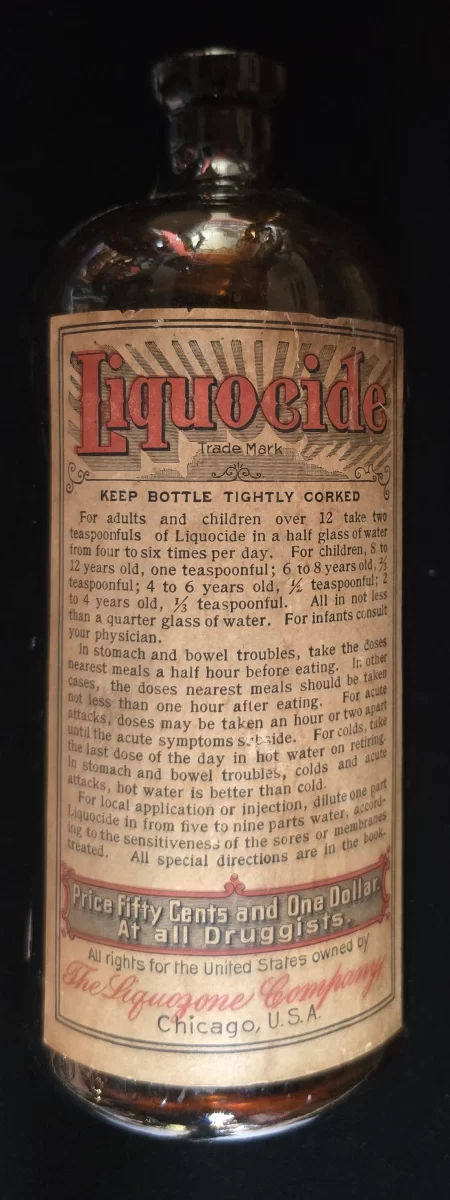
Description
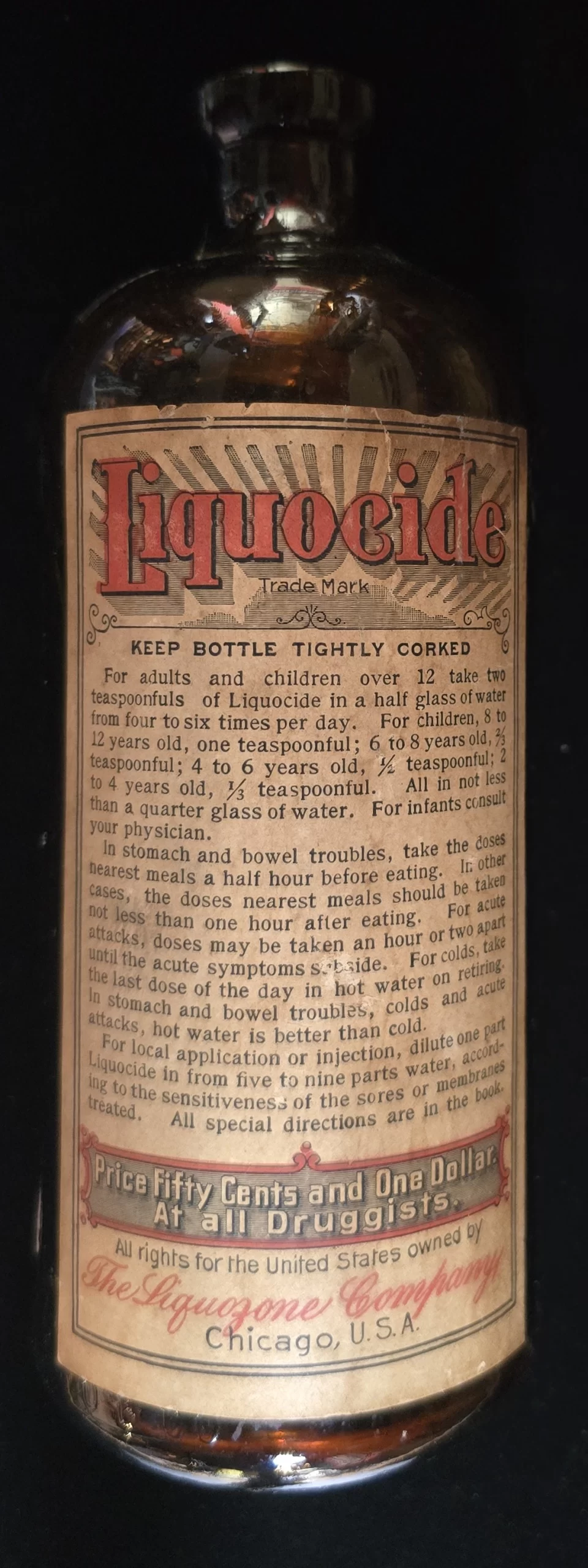
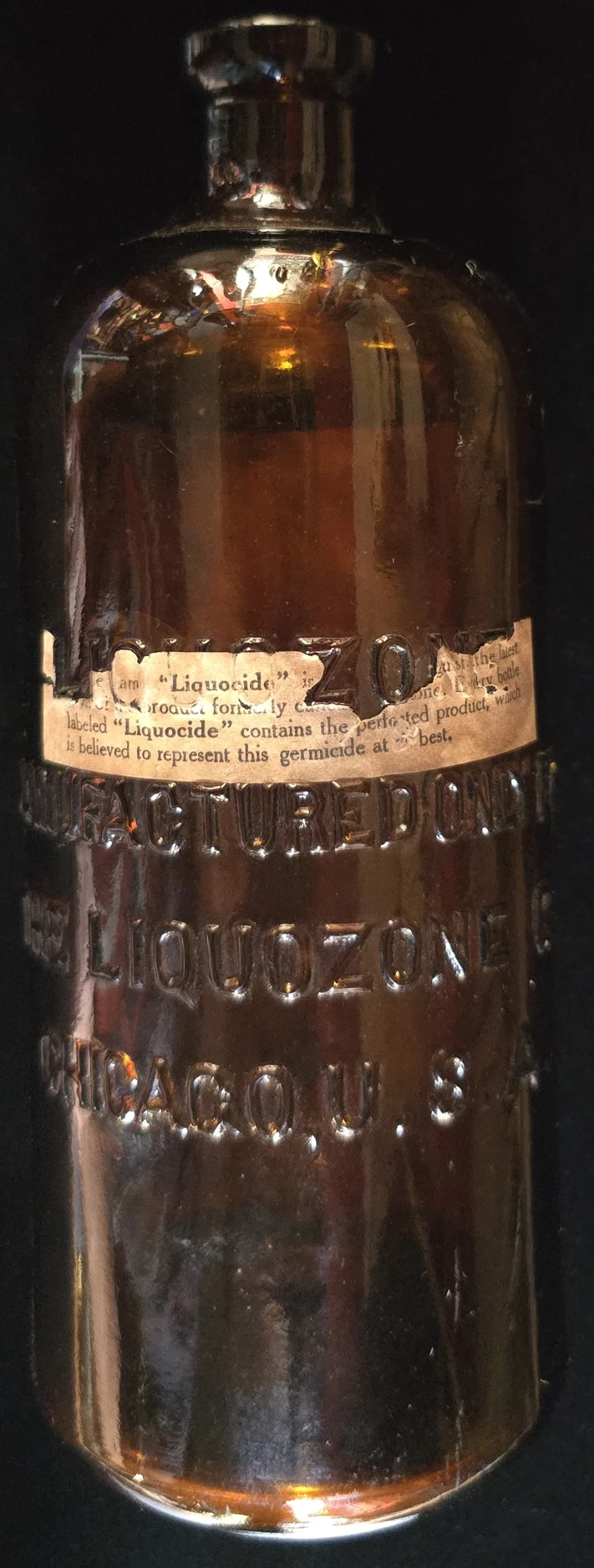
This amber glass bottle of Liquocide was produced by The Liquozone Company of Chicago, Illinois. Embossed with the company name and containing its original paper label, this specimen illustrates the powerful branding of a widely marketed germicide. According to the label, Liquocide was intended for both internal and external use and promoted for ailments ranging from colds and bowel trouble to injection use on sores. Dosages were broken down by age and severity of symptoms, and consumers were advised to consult the included book for full directions.
Condition
Excellent condition. Original label intact with legible text. Embossed glass clean and unchipped. No cork present. The label shows slight age-toning but is well preserved overall.
Gallery
Historical context
Liquozone was an early 1900s health craze, marketed as a water-based product infused with “free oxygen” through ozonization. The company claimed this enhanced form of oxygen could kill germs and treat a wide variety of diseases. It was often promoted as safe, natural, and scientifically advanced. These claims were ultimately debunked, and the product became a textbook example of patent medicine fraud. Government scrutiny and changing laws around medical advertising led to its eventual downfall.
Liquozone emerged during a period of minimal regulation and maximum marketing optimism. Marketed as a scientific miracle containing “free oxygen” through ozonization, it was heavily promoted as a safe, natural germicide that could cure everything from consumption to catarrh.
In 1905, muckraking journalist Samuel Hopkins Adams published a scathing exposé in Collier’s Weekly, later collected as The Great American Fraud. In Chapter 3, he devoted an entire essay to Liquozone, calling it:
“…a notable swindle, selling under false pretenses and by means of deliberately fraudulent advertising a product of practically no therapeutic value.”
Adams’ work helped usher in the Pure Food and Drug Act of 1906, which would change how such products were labeled, sold, and scrutinized. Liquozone became a symbol of the unchecked claims and consumer exploitation that characterized the patent medicine era.
Curious Facts, Ephemera, and Trivia
Liquozone was involved in one of the earliest advertising scandals brought before the FDA after the Pure Food and Drug Act of 1906.
The company was notorious for offering free bottles through mail-order marketing campaigns.
The name “Liquocide” was likely chosen to imply germ-killing power, even though the product’s efficacy was unproven.
Excerpt
“For adults and children over 12 take two teaspoonfuls of Liquocide in a half glass of water from four to six times per day…”
Why it is in the Cabinet
This bottle represents a pivotal era in American medical marketing—where therapeutic claims outpaced evidence and regulation. As a physician and collector, I find Liquozone to be a perfect example of the optimism, desperation, and ingenuity that shaped early 20th-century public health—and the cautionary lessons that followed.
Support Dr. Bebout’s Cabinet of Medical Curiosities
If you enjoy the history, the oddities, and the effort, help keep this cabinet open. Every little bit helps preserve and share the strange wonders of medicine's past.
Buy Me a Ko-fi ☕ Buy Me a Coffee ☕ Tip via PayPal 💵