
Title
The Dispensatory of the United States of America, 17th Edition (ca. 1885–1890)
Author
George B. Wood, M.D. and Franklin Bache, M.D.
(Original authorship; revisions by various editors over time)
Image
Description
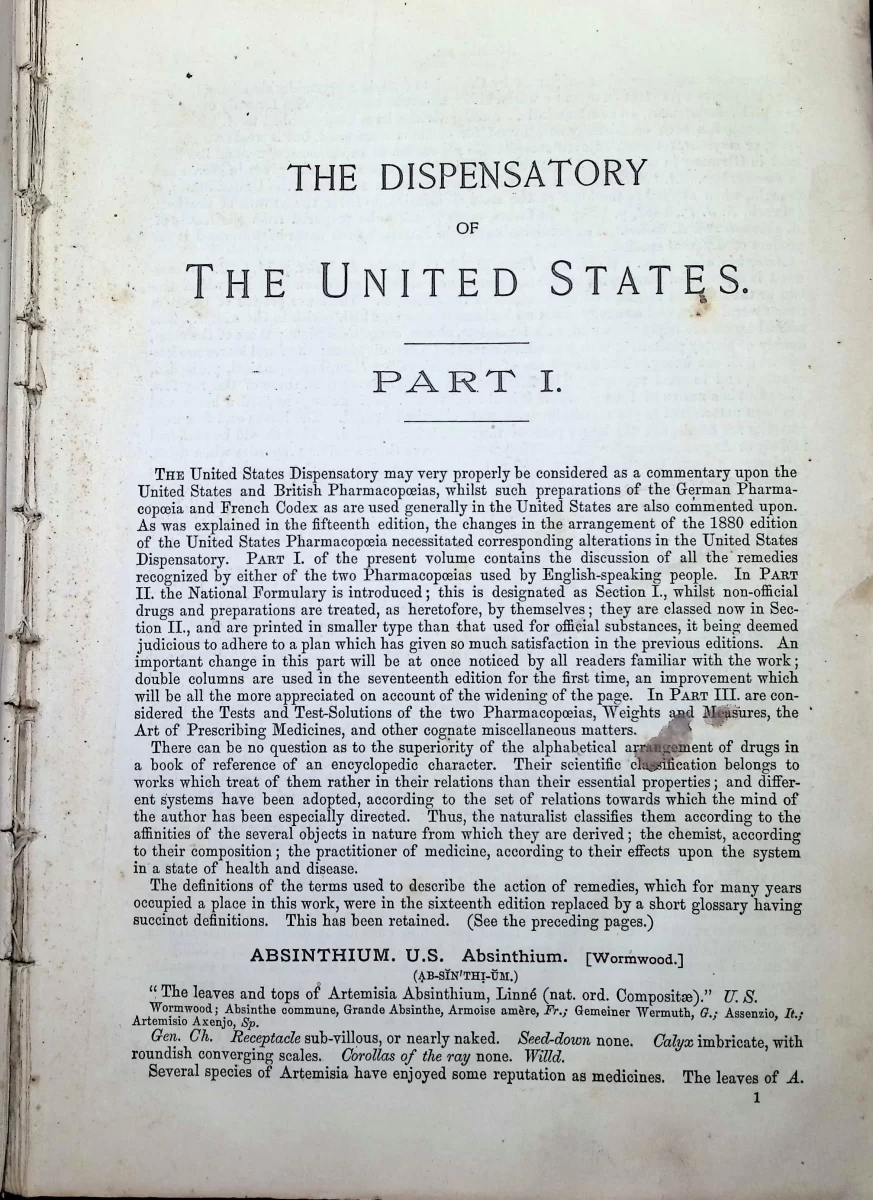
This massive volume—nearly 1,900 pages long—is the 17th edition of The Dispensatory of the United States of America, a cornerstone of 19th-century American pharmacy. Published as a commentary and practical extension of the U.S. and British Pharmacopoeias, the Dispensatory served as both a scientific reference and a working guide for pharmacists, physicians, and apothecaries.
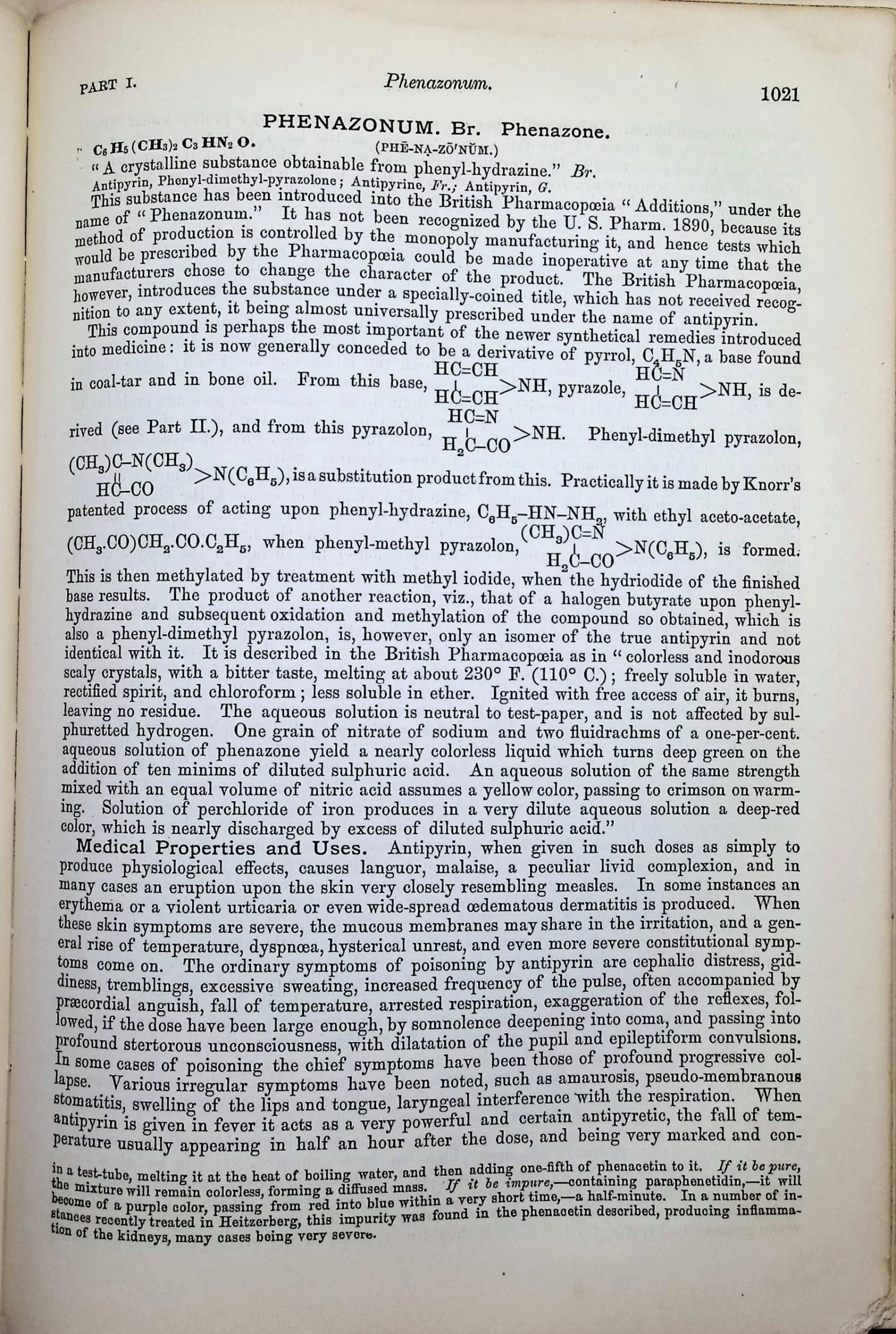
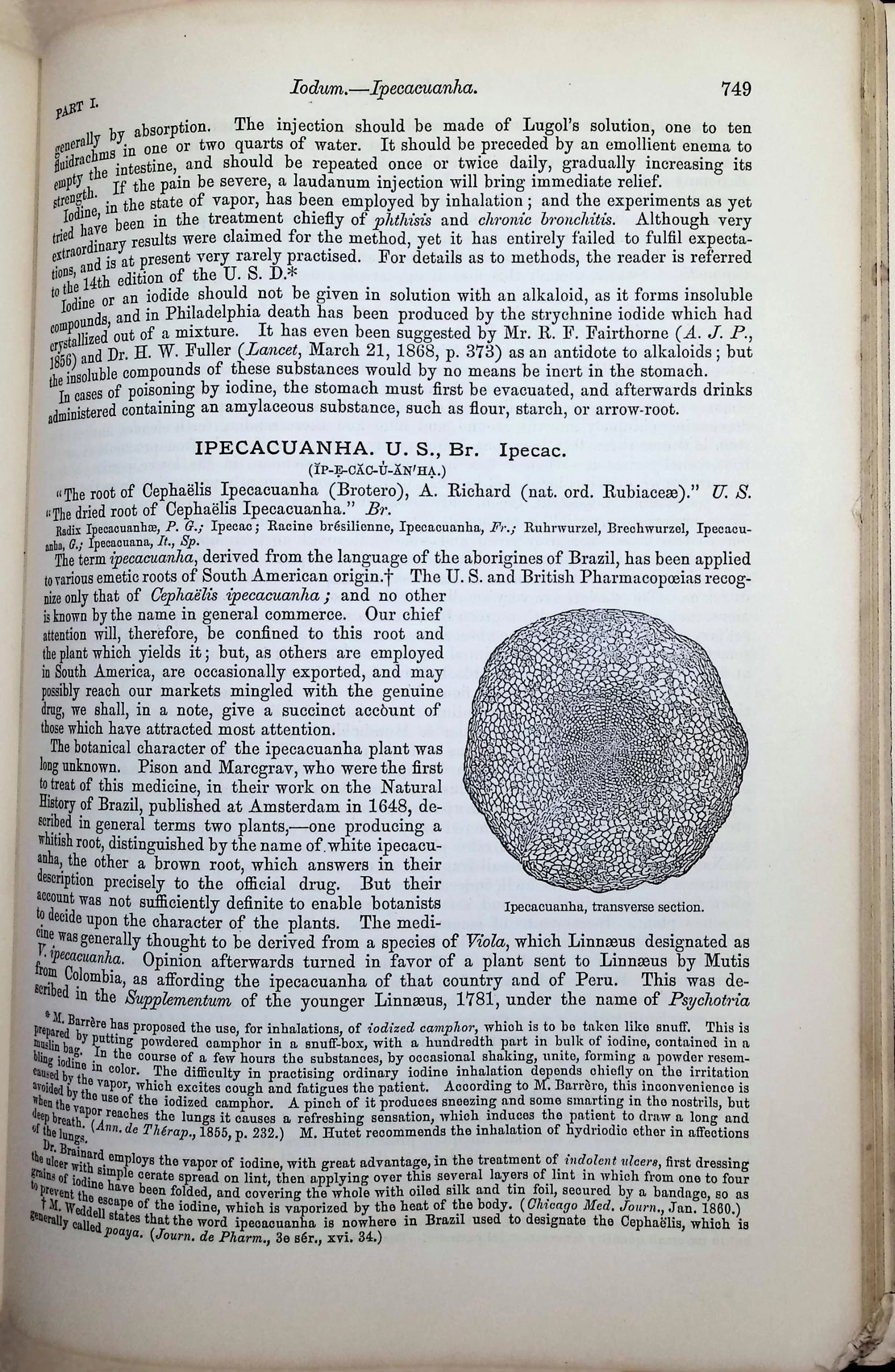
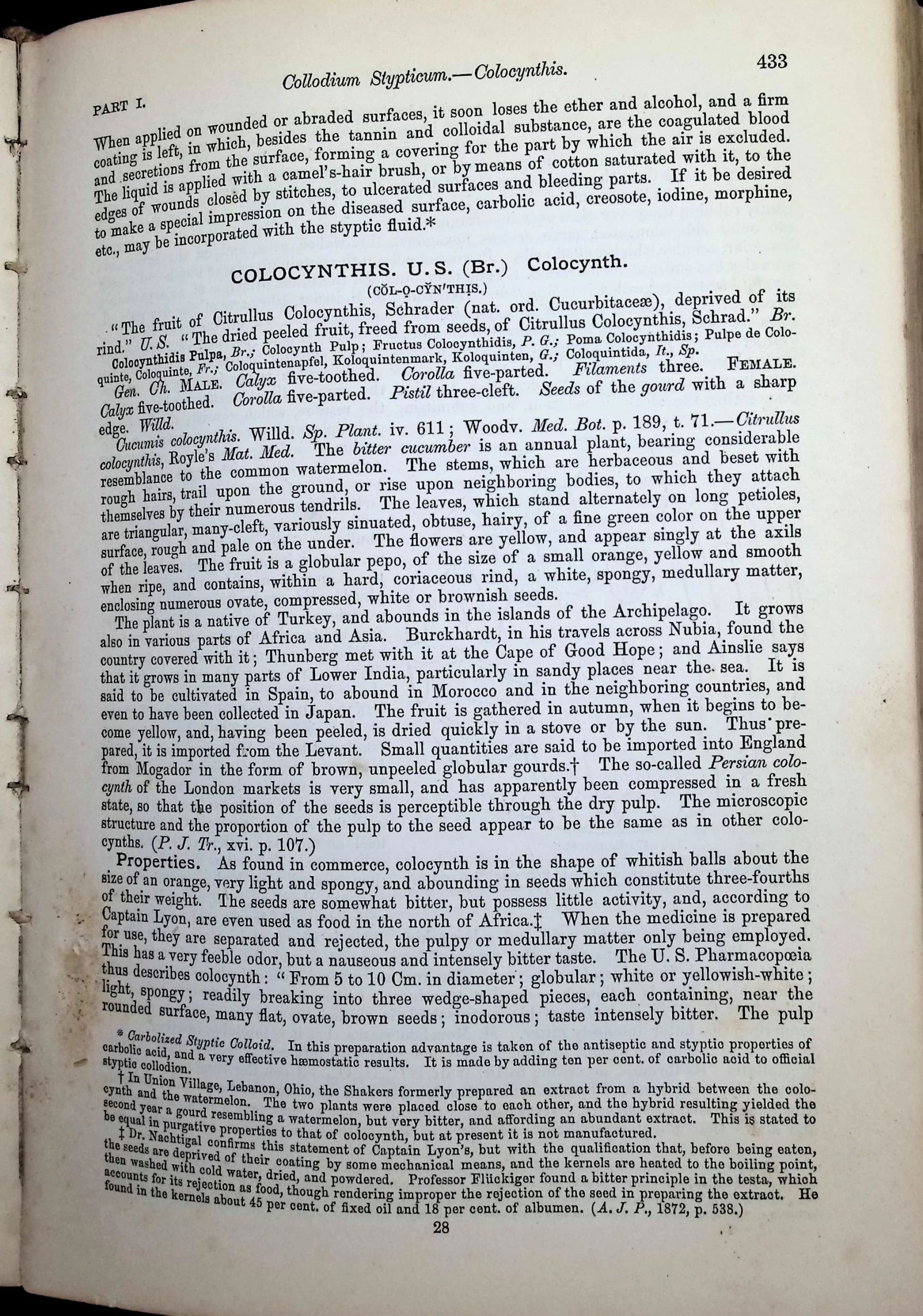
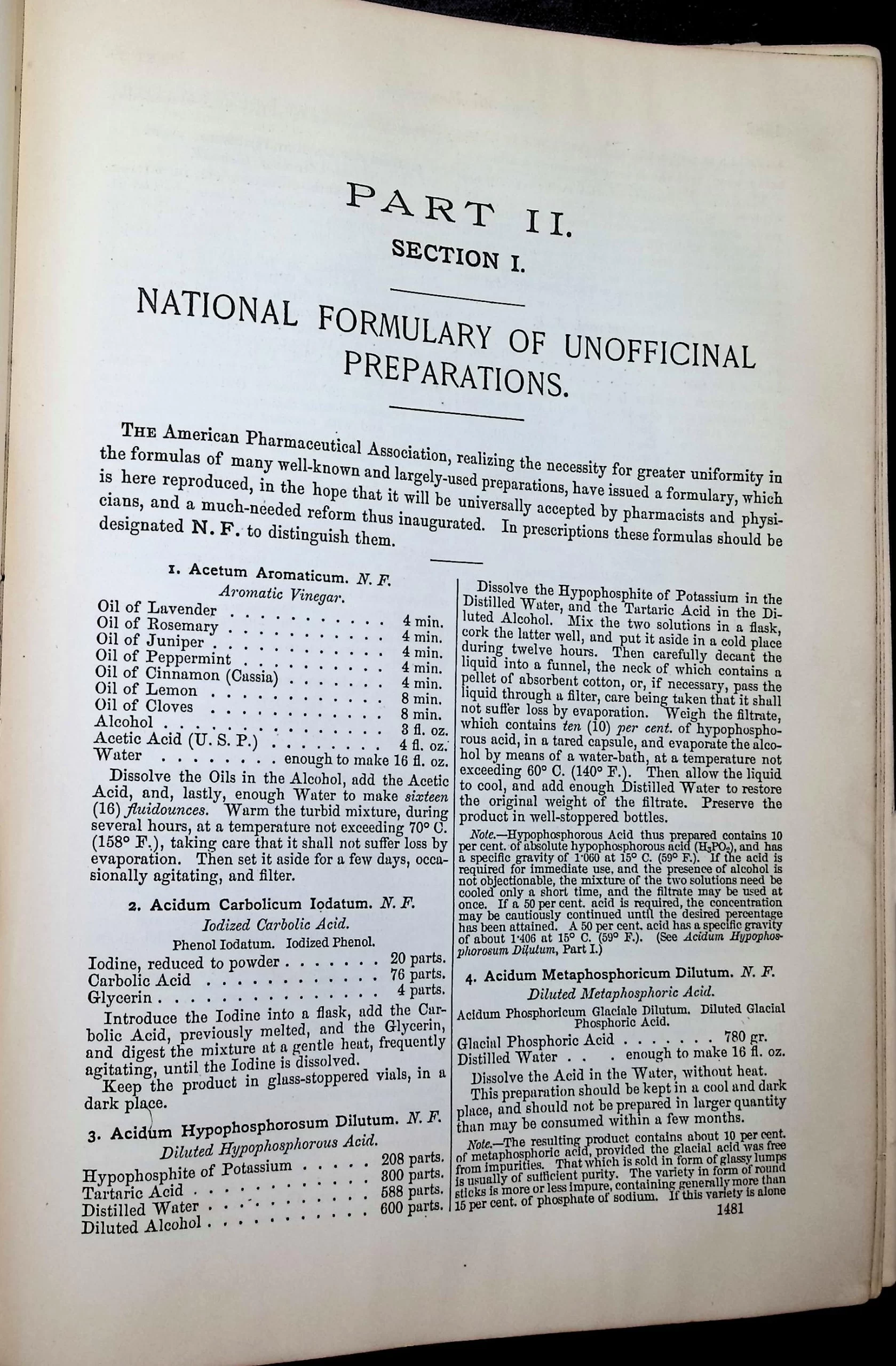
This edition is notable for its adoption of the National Formulary and for its classification of drugs and compounds by source and therapeutic use. It includes detailed descriptions of preparations like Absinthium, Phenacetin, Ipecacuanha, Colocynthis, and countless others—many now obsolete or banned.
Because the 17th edition is difficult to access and no digitized version is currently available online, I’ve included a freely available copy of the 13th edition for historical reference and public browsing:
👉 Download or view the 13th edition (Archive.org)
Note: My own copy is far too fragile to scan or digitize safely.
Condition
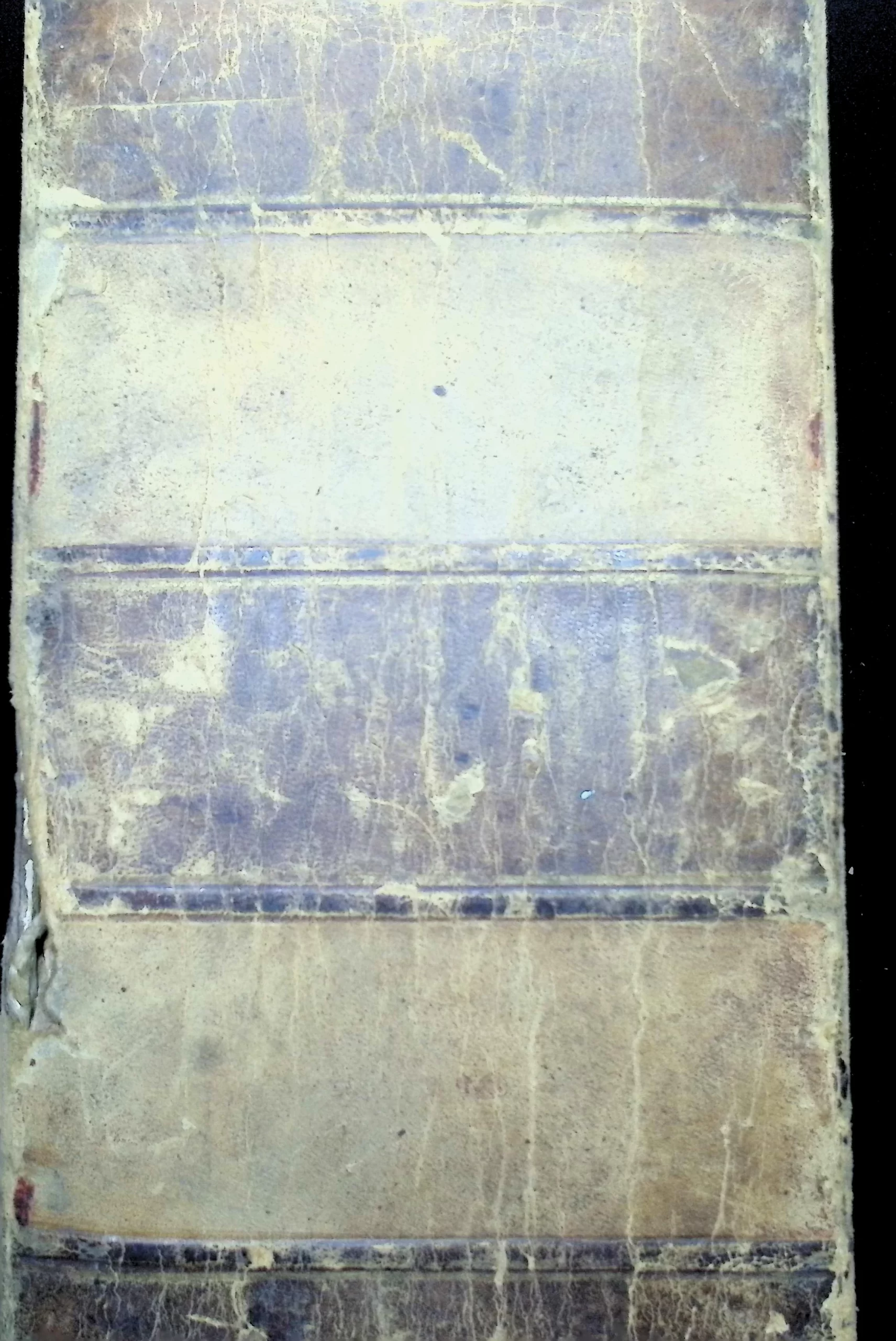
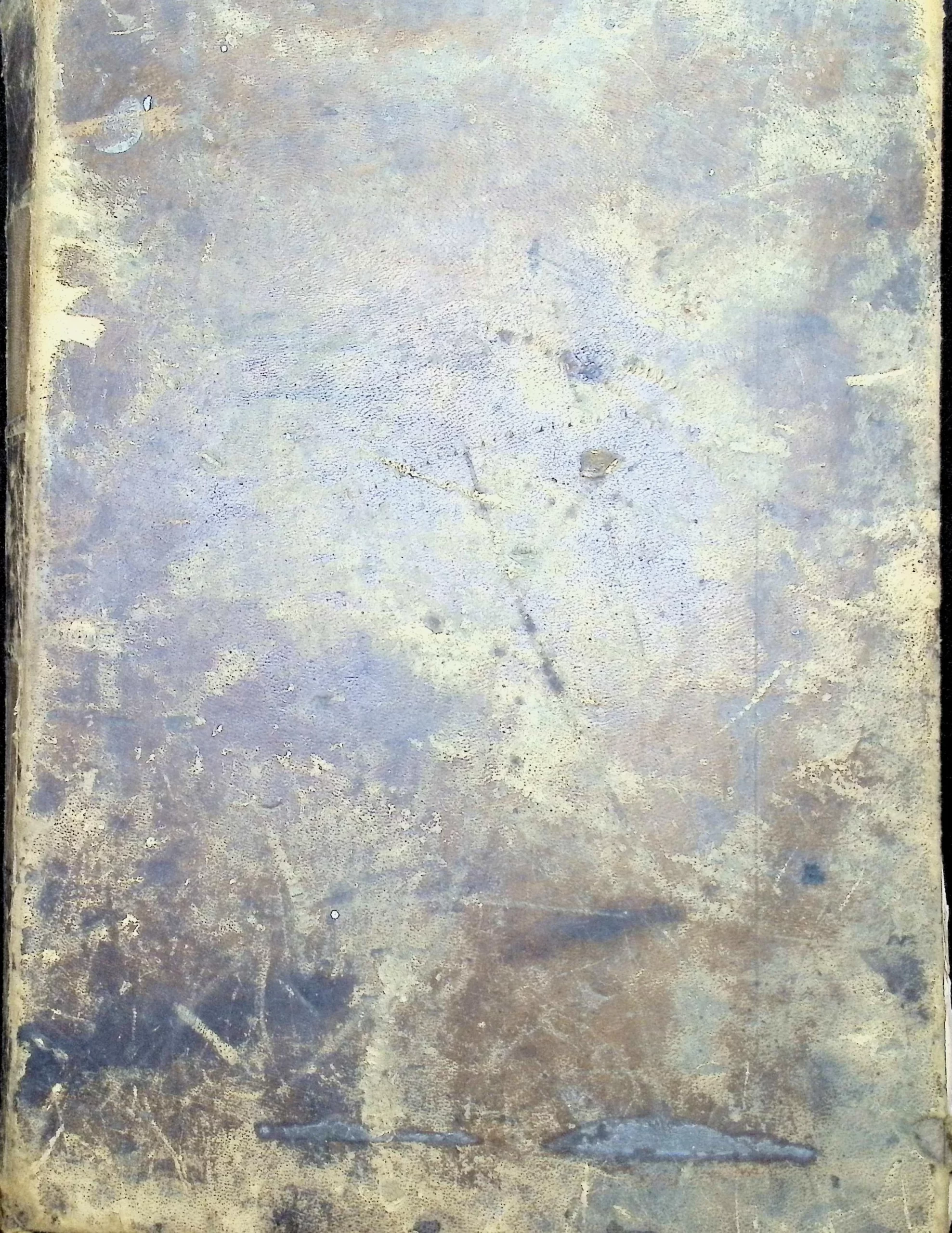
Full leather binding, significantly worn
Front and back covers scuffed with corner damage
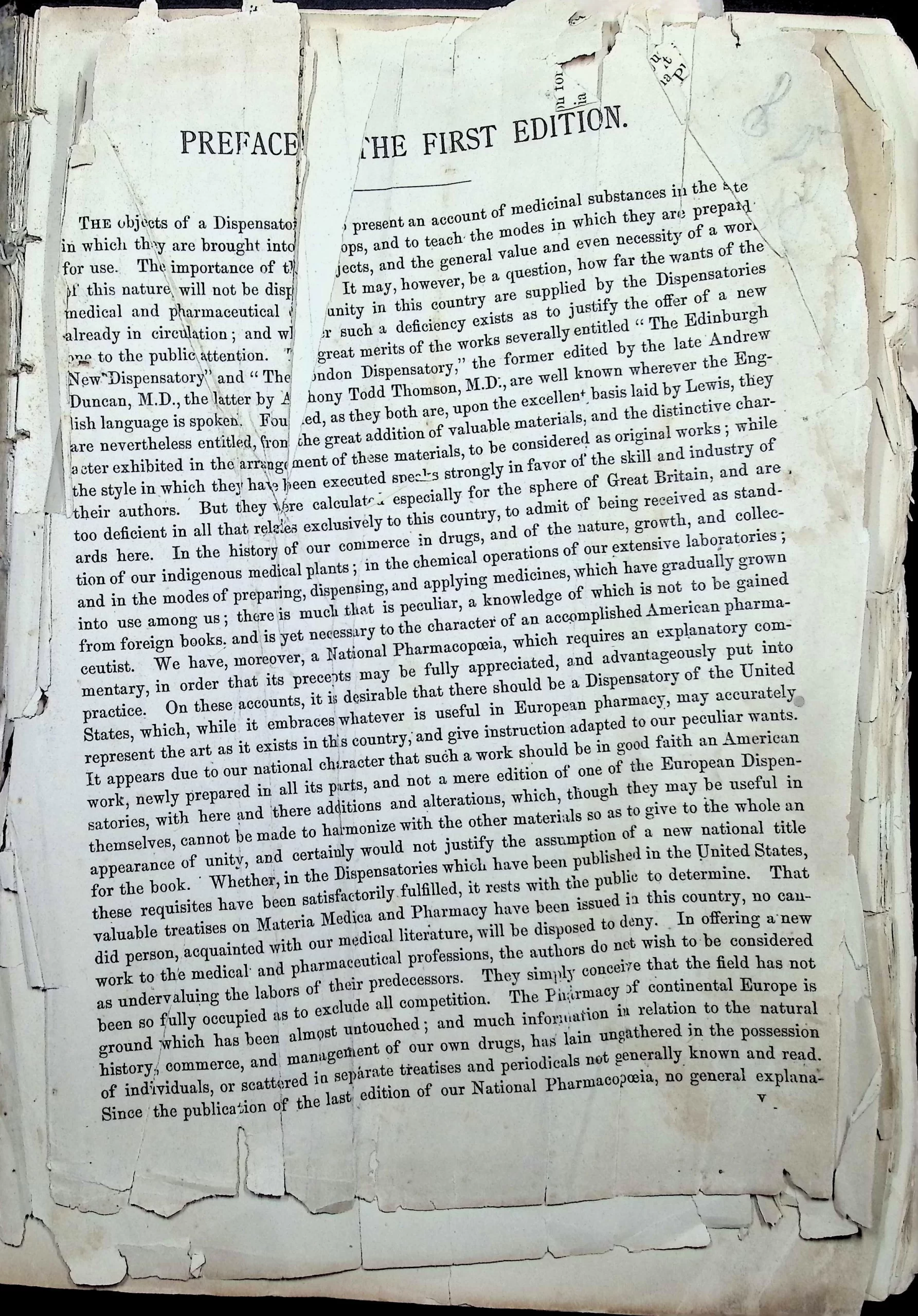
Interior brittle with chipped edges and cracked endpapers
Pages intact but extremely delicate
Some foxing, stains, and signs of age throughout
Spine heavily faded, possibly missing some original embossing
Gallery

Historical context
First published in 1833, the U.S. Dispensatory was an American response to European formularies like the Edinburgh and London Dispensatories. By the late 1800s, it had become the definitive pharmaceutical reference in the U.S., blending chemistry, botany, pharmacology, and medical prescription into a single massive volume. It remained in print for over 150 years.
Curious Facts, Ephemera, and Trivia
Includes entries for now-controversial substances like strychnine, wormwood, and opium tinctures
The Dispensatory was a required text in many 19th-century medical schools
The listed preparation for “Aromatic Vinegar” includes oils of lavender, rosemary, cinnamon, and cloves
The transition to double-column formatting began with this edition
Excerpt
“Thus, the naturalist classifies them according to the affinities of the several objects in nature from which they are derived; the chemist, according to their composition; the practitioner of medicine, according to their effects upon the system in a state of health and disease.”
Why it is in the Cabinet
This battered but magnificent reference tome speaks to the complexity and scope of 19th-century pharmaceutical science. Its contents reveal how deeply intertwined medicine, botany, and chemistry were in the late Victorian era—and how much our understanding of therapeutics has changed. I’ve preserved it not only for its encyclopedic detail, but for its value as a piece of medical history that helped shape professional standards in American healthcare.
Support Dr. Bebout’s Cabinet of Medical Curiosities
If you enjoy the history, the oddities, and the effort, help keep this cabinet open. Every little bit helps preserve and share the strange wonders of medicine's past.
Buy Me a Ko-fi ☕ Buy Me a Coffee ☕ Tip via PayPal 💵