
Title
Prevention of Disease and Care of the Sick
Author
U.S. Public Health Service — Miscellaneous Publication No. 17 (1919)
By W. G. Stimpson, M.D. and M. H. Foster, A.M., M.D.
Image
Description
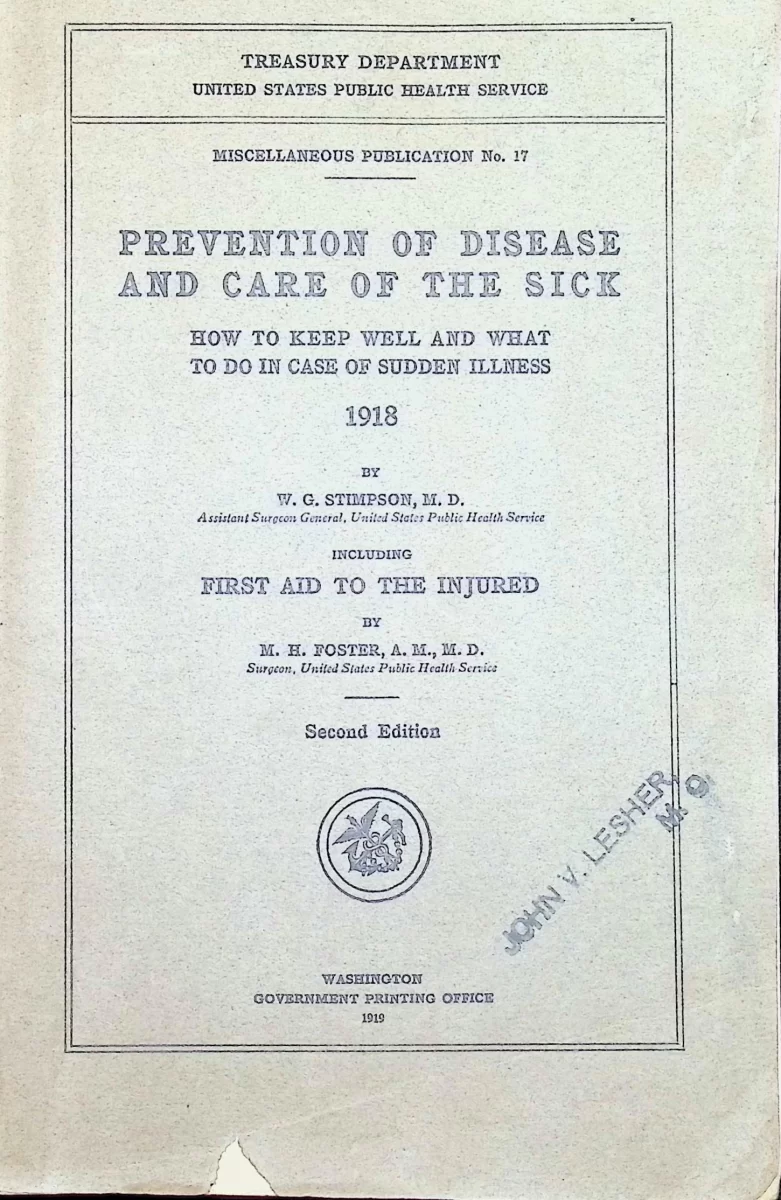
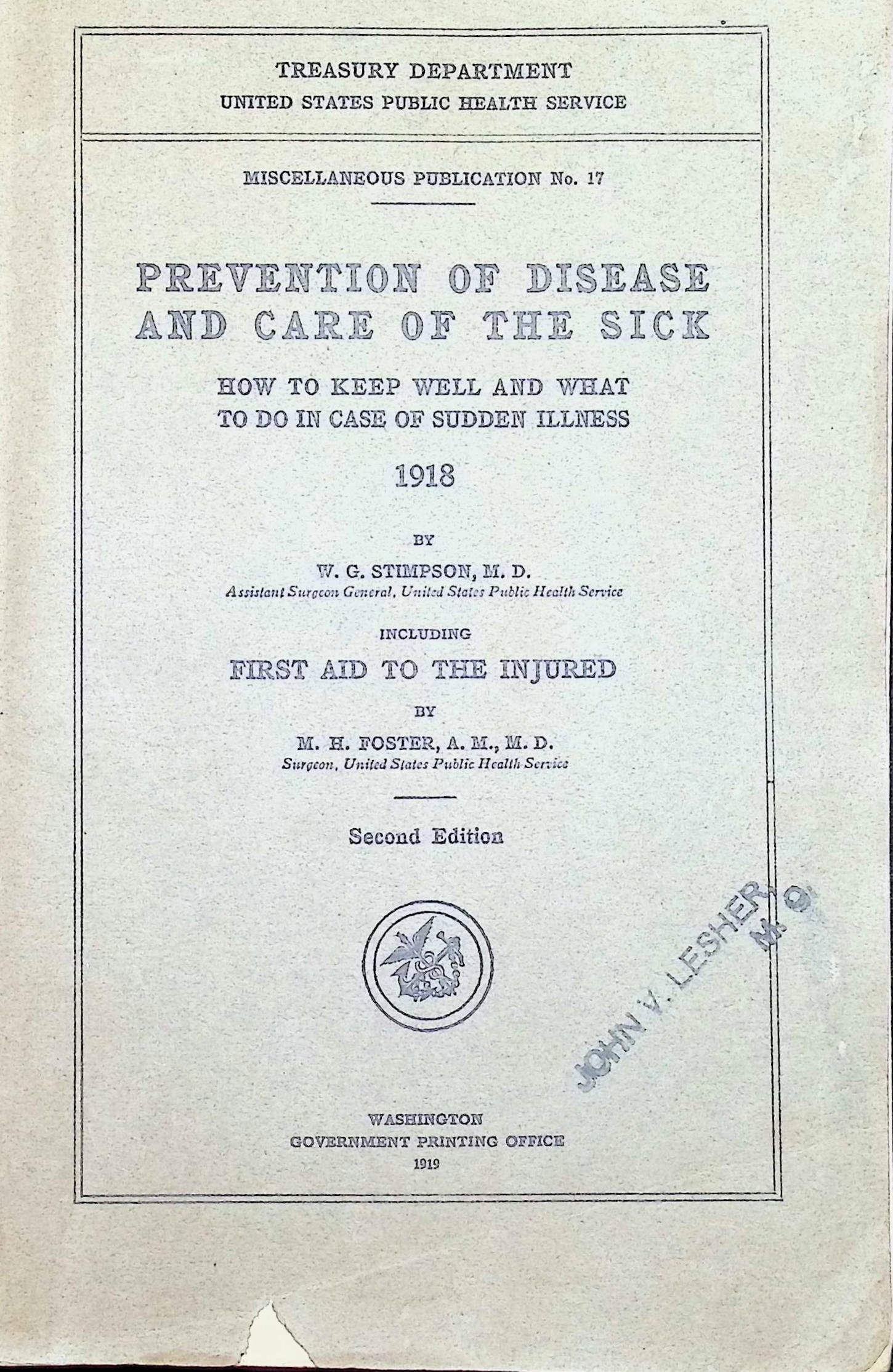
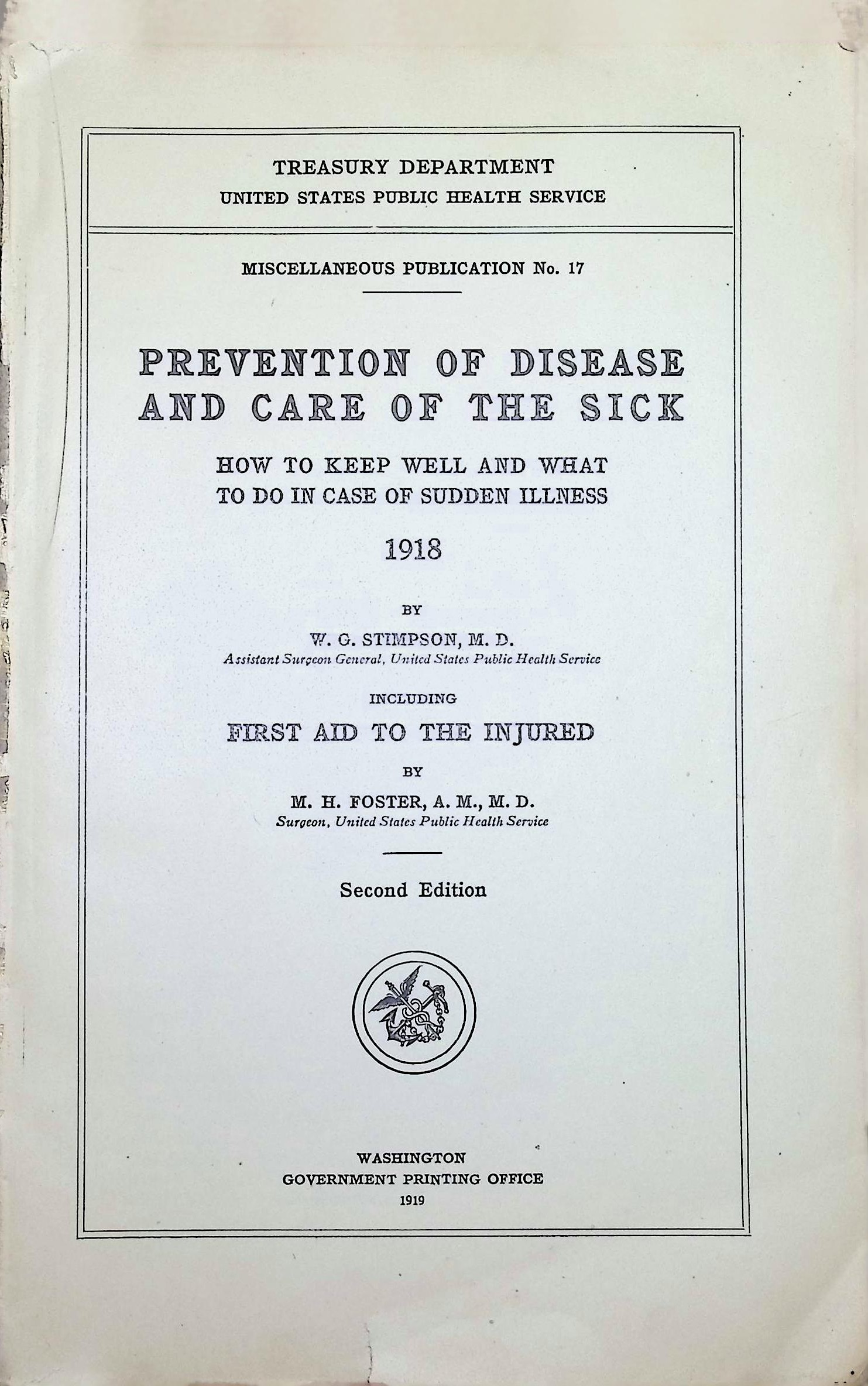
Originally published in 1918 and reissued in this 1919 second edition, Prevention of Disease and Care of the Sick was a widely distributed U.S. government manual designed to educate both households and medical auxiliaries during a time of war, pandemic, and shifting public health infrastructure.
Compiled by senior surgeons in the Public Health Service, the book includes illustrated instructions on how to prevent illness through environmental hygiene, food safety, vector control (especially mosquitoes), sanitation, and basic nursing care. Also included is a robust section on first aid to the injured, guiding laypersons on treating wounds, performing emergency procedures, and recognizing serious illness.
Highly practical and written in accessible language, this publication was part of a federal push to prepare the public for emergencies during the dual crisis of World War I and the 1918 influenza pandemic.
Condition
Staple-bound gray paper cover with U.S. seal and publication data. Owner stamp from Dr. John V. Lesher, M.D. on cover. Slight bottom tear and wear at binding edge. Internal pages crisp, with intact text and photographic illustrations. Binding tight; moderate age toning.
Gallery
Historical context
Published just months after the close of World War I and in the shadow of the deadly 1918 influenza pandemic, this document represents the expanding role of federal public health. The U.S. Public Health Service had grown from a marine hospital system into a more centralized health authority. This booklet was widely circulated to improve civilian health literacy — from rural homes to battlefield support stations.
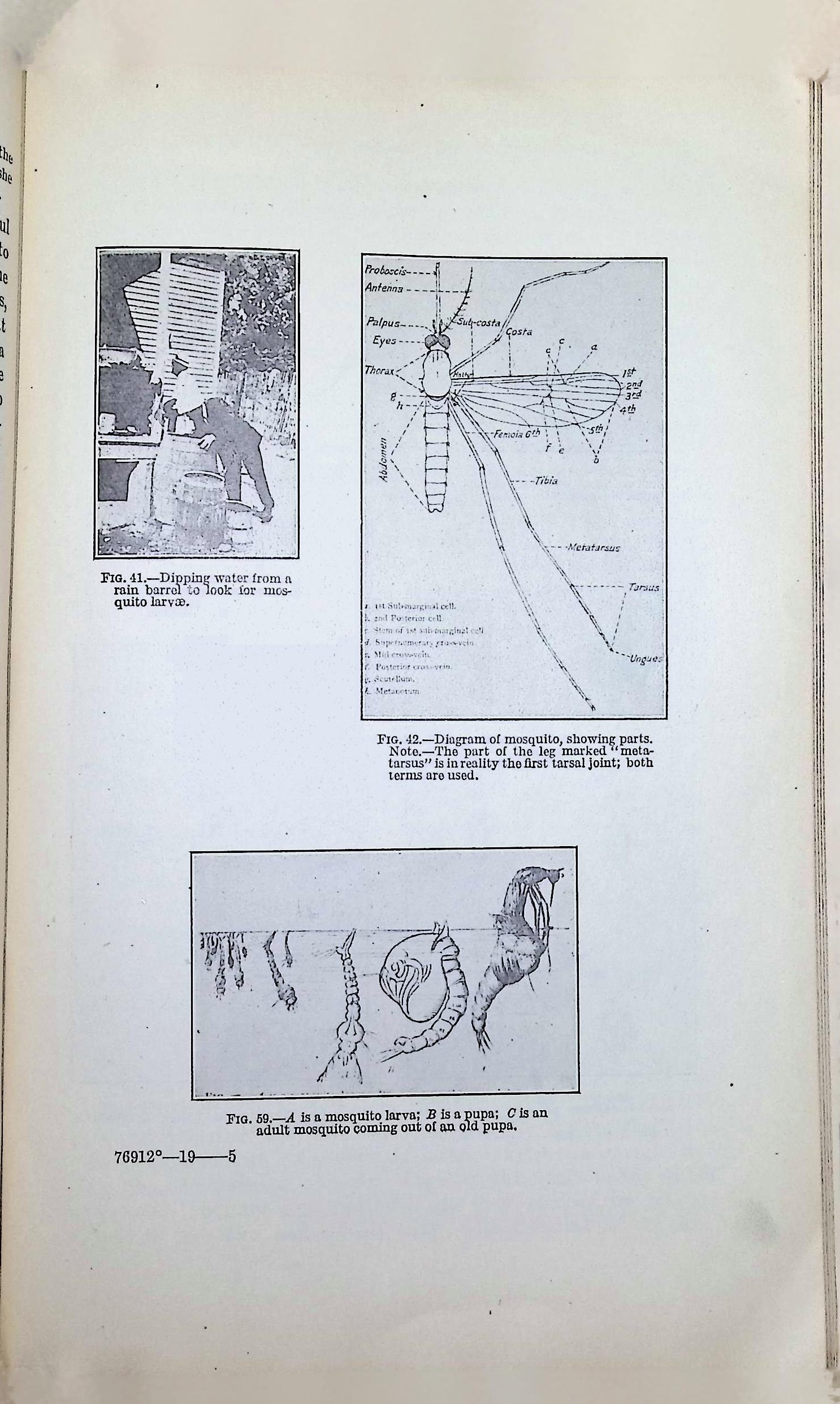
Its emphasis on vector control (e.g., mosquito larvae and rain barrel inspections), food and building sanitation, and early first aid reflects the medical mindset of the time: disease prevention through environment, behavior, and basic disinfection. It also reveals a government learning to communicate medical information directly to its citizens in peacetime and emergency alike.
Curious Facts, Ephemera, and Trivia
Includes hand-drawn mosquito diagrams and lifecycle illustrations with military precision.
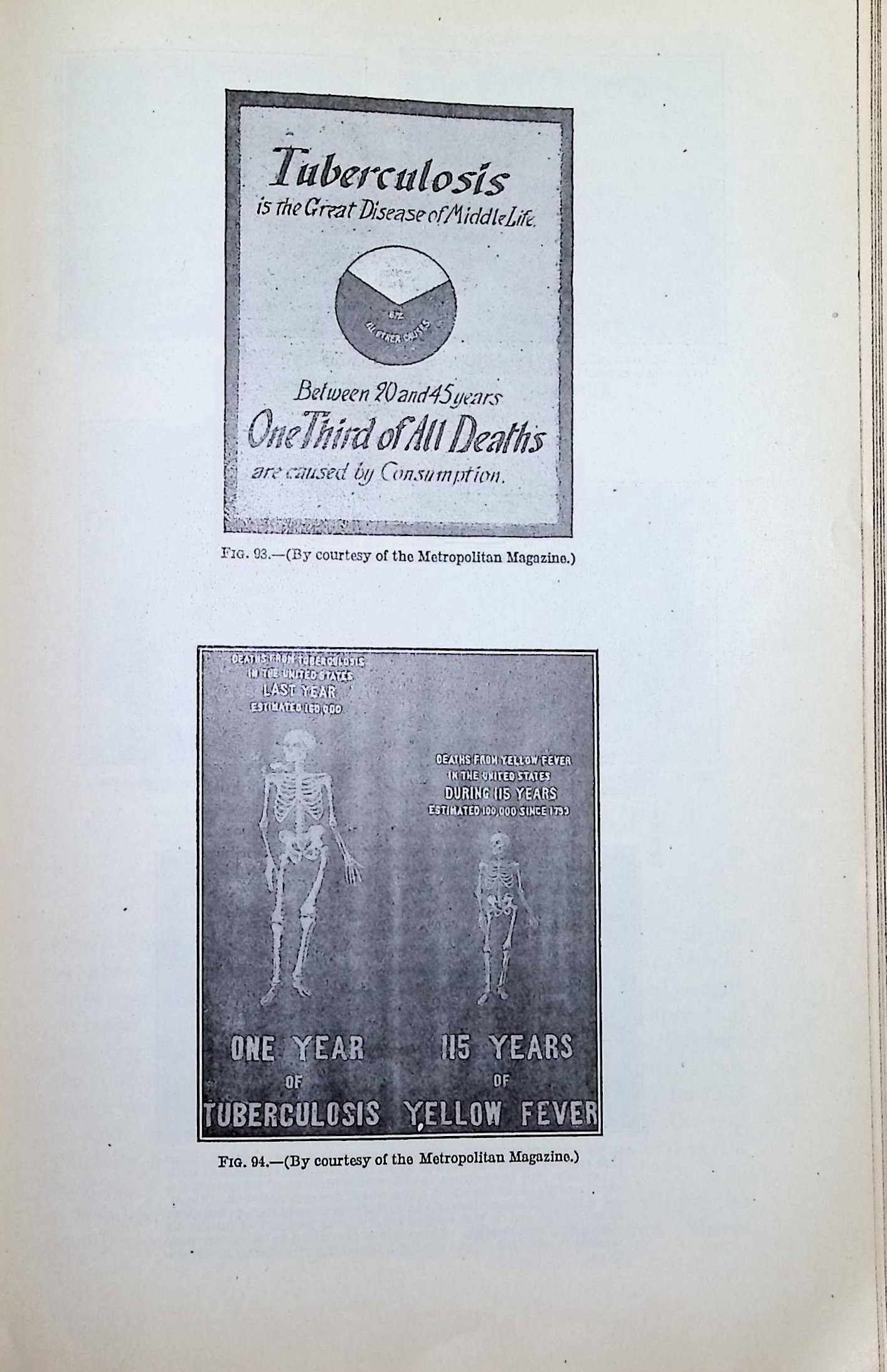
The tuberculosis poster reproduced inside warns: “One Third of All Deaths Are Caused by Consumption.”
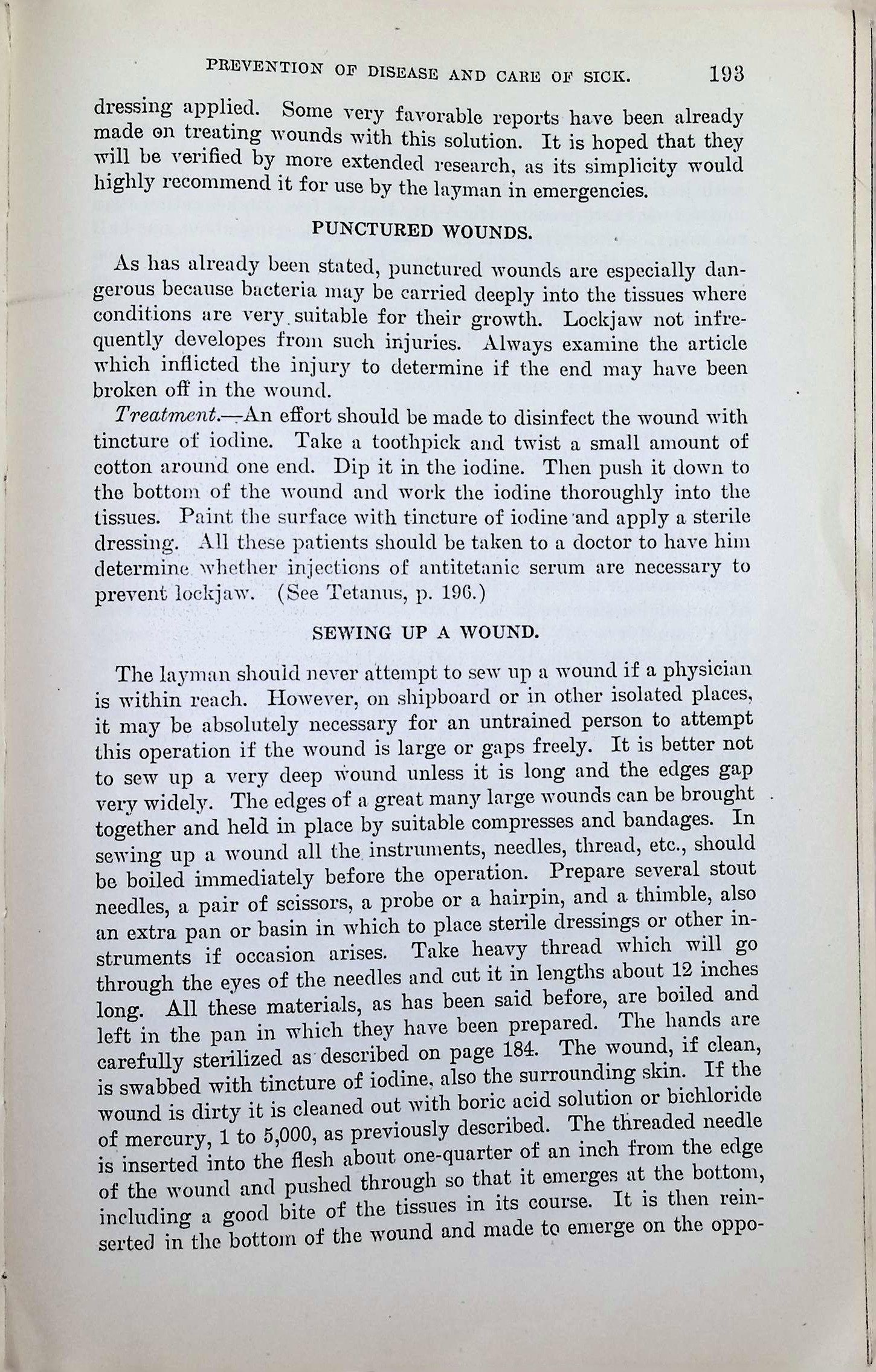
Wound care instructions recommend iodine-soaked toothpicks and sewing with sterilized hairpins and thread in field settings.
One passage recommends mercury bichloride solution (1:5000) for cleaning wounds — now known to be toxic.
Excerpt
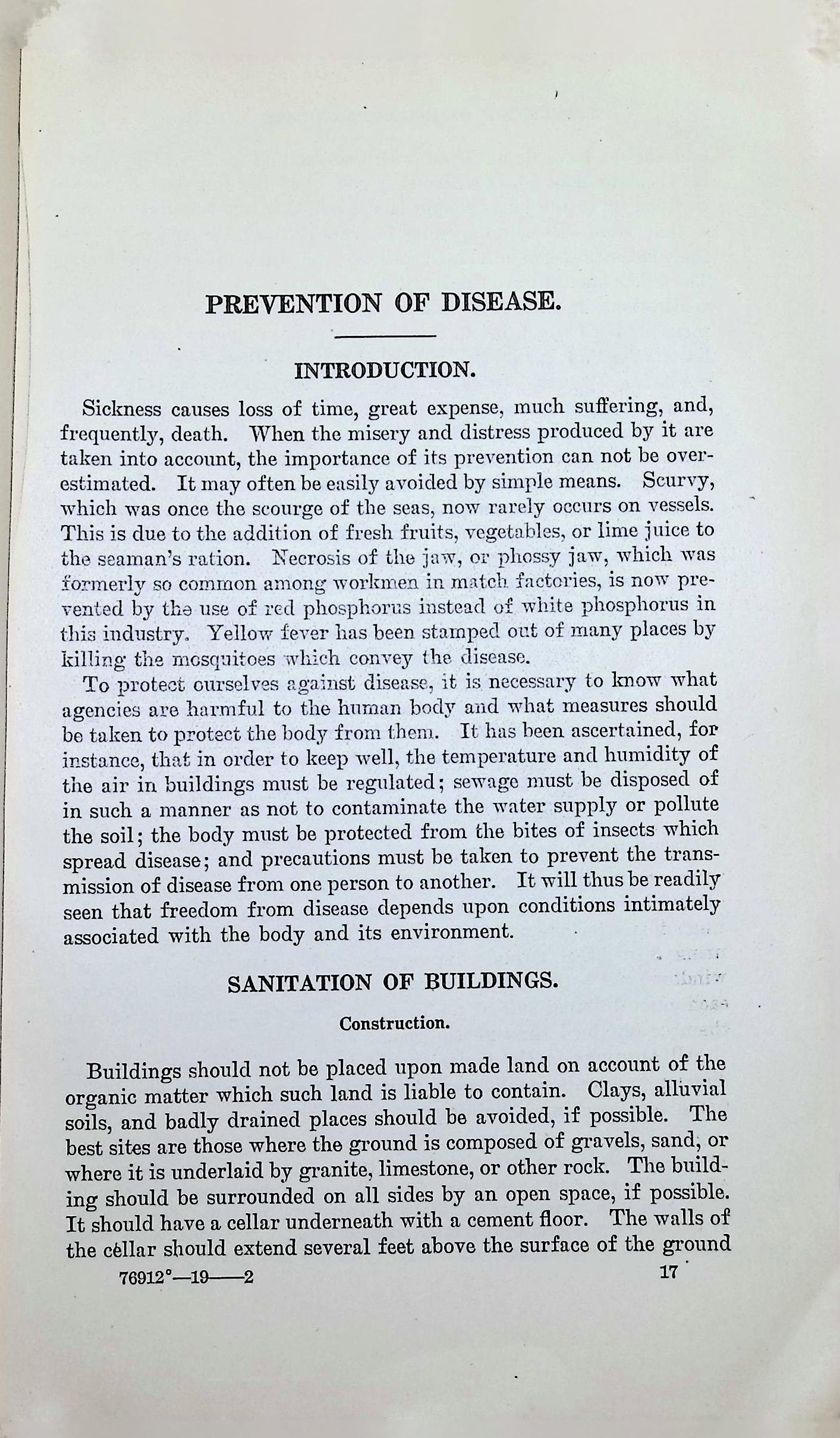
“Sickness causes loss of time, great expense, much suffering, and, frequently, death. The importance of its prevention cannot be overestimated.”
— Introduction
Why it is in the Cabinet
This slim volume is a time capsule from a pivotal moment in public health history — when modern epidemiology was just taking shape, and the U.S. government was beginning to scale medical messaging to its population. Its illustrations, tone, and treatments reflect both the limitations and the earnestness of early 20th-century health campaigns. It serves as a potent artifact of the state’s role in educating and equipping the public during one of the deadliest health crises in American history.
Support Dr. Bebout’s Cabinet of Medical Curiosities
If you enjoy the history, the oddities, and the effort, help keep this cabinet open. Every little bit helps preserve and share the strange wonders of medicine's past.
Buy Me a Ko-fi ☕ Buy Me a Coffee ☕ Tip via PayPal 💵