
Title
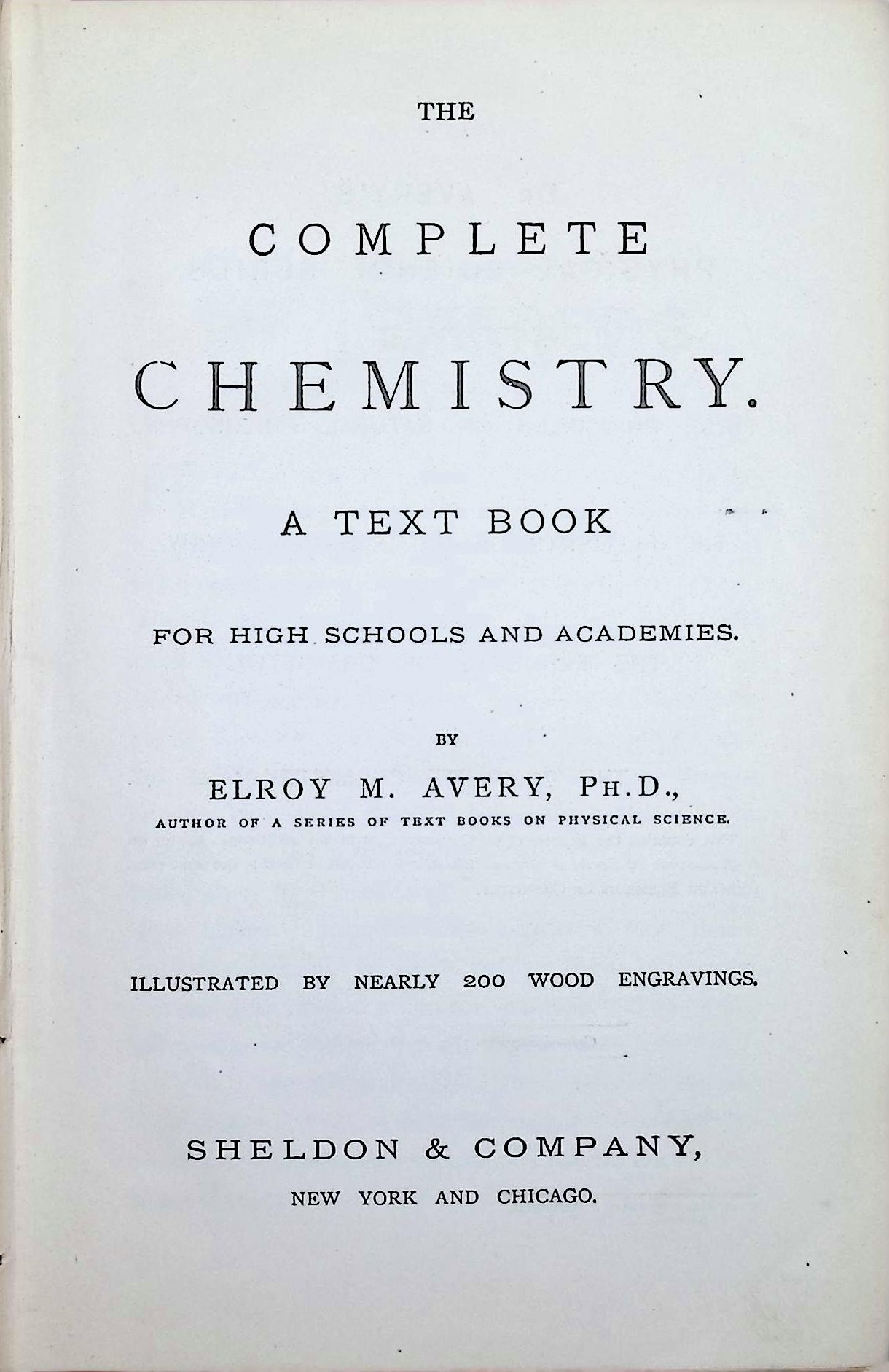
The Complete Chemistry: A Text Book for High Schools and Academies
Author
Elroy M. Avery, Ph.D.
Copyright 1881, 1883 – Sheldon & Company, New York & Chicago
Image
Description
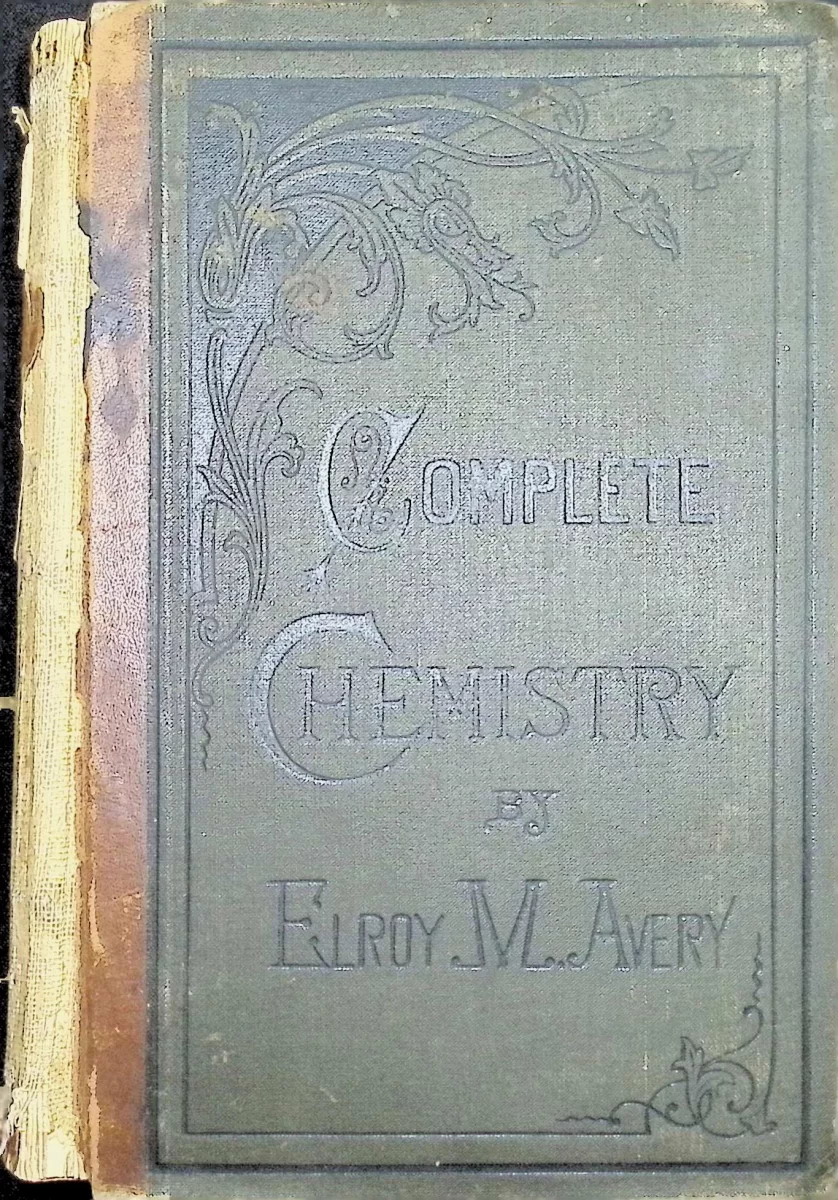
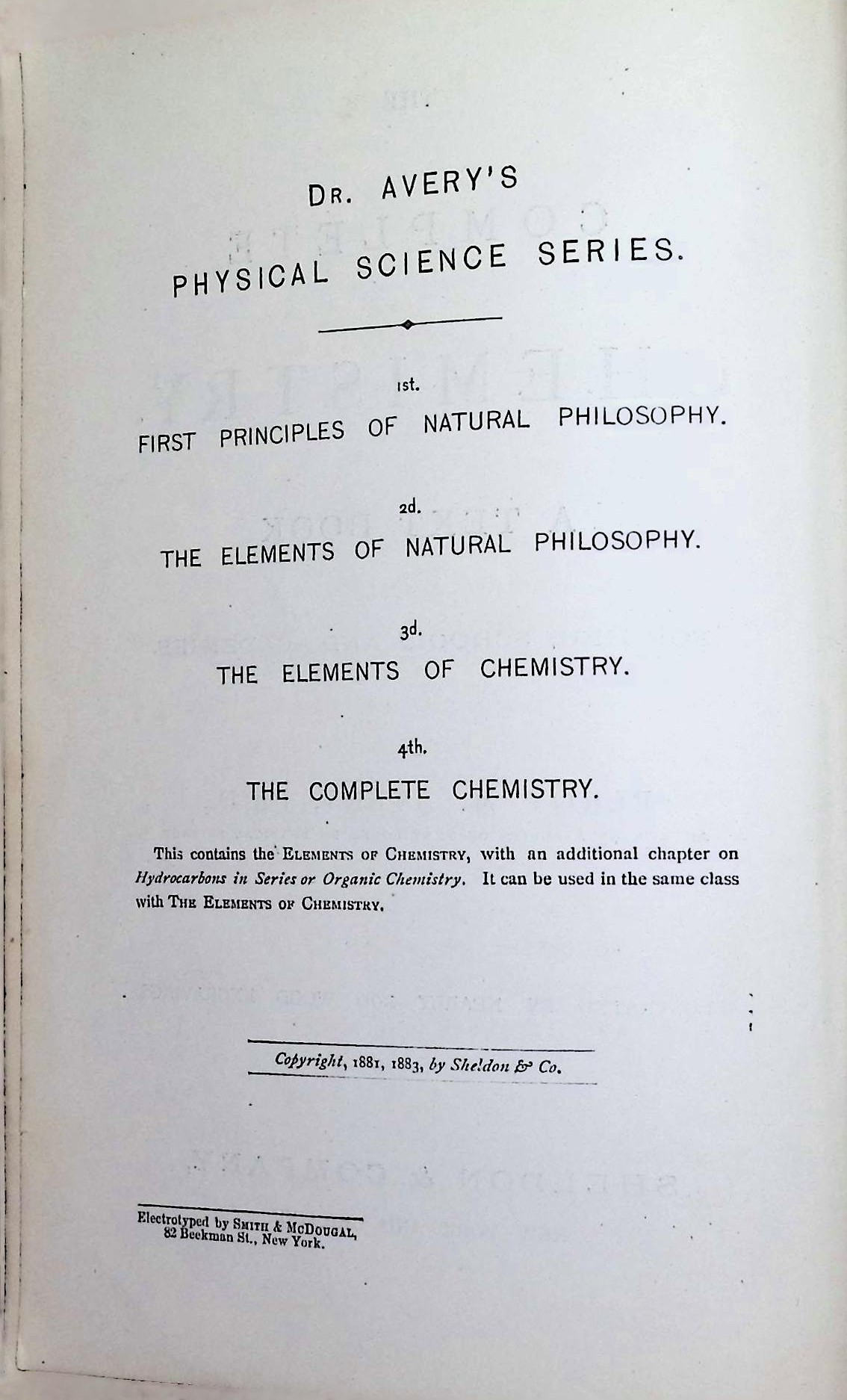
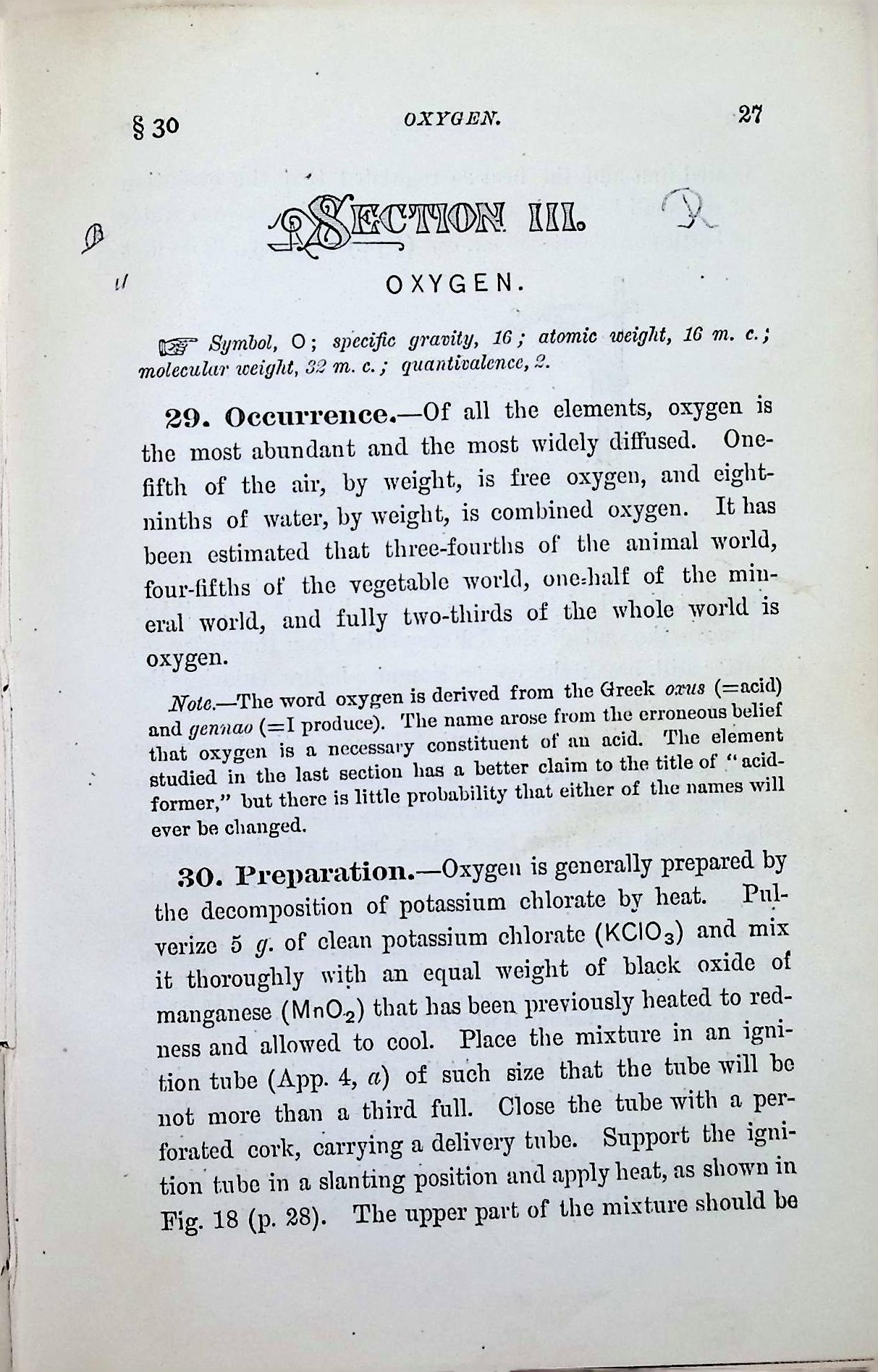
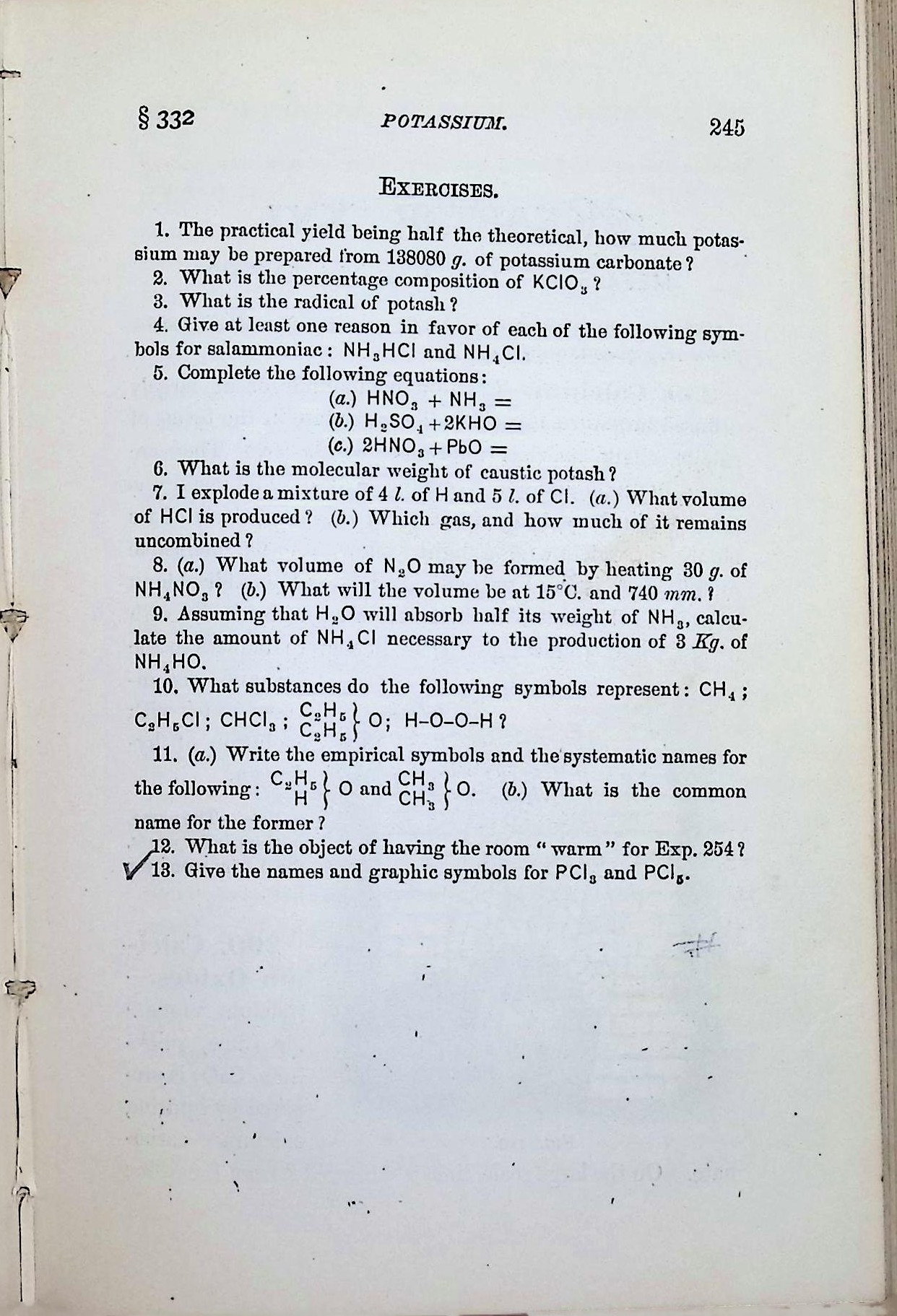
This richly illustrated chemistry textbook by Elroy M. Avery was used in American high schools and academies in the late 19th century. Part of Dr. Avery’s Physical Science Series, The Complete Chemistry combines diagram-heavy lessons with fundamental instruction on gases, atoms, compounds, and reactions — with sections on oxygen, hydrogen, potassium, and acids.
Its content balances descriptive science with applied formulas and student exercises, reflective of a time when chemistry education was beginning to move from the lecture hall into public school classrooms.
The book’s format — woodcut illustrations, margins packed with formulas, and problem sets — mirrors the pedagogical style of its time. Avery was both an academic and a textbook publisher, helping to define science education standards in the U.S. for decades.
Condition
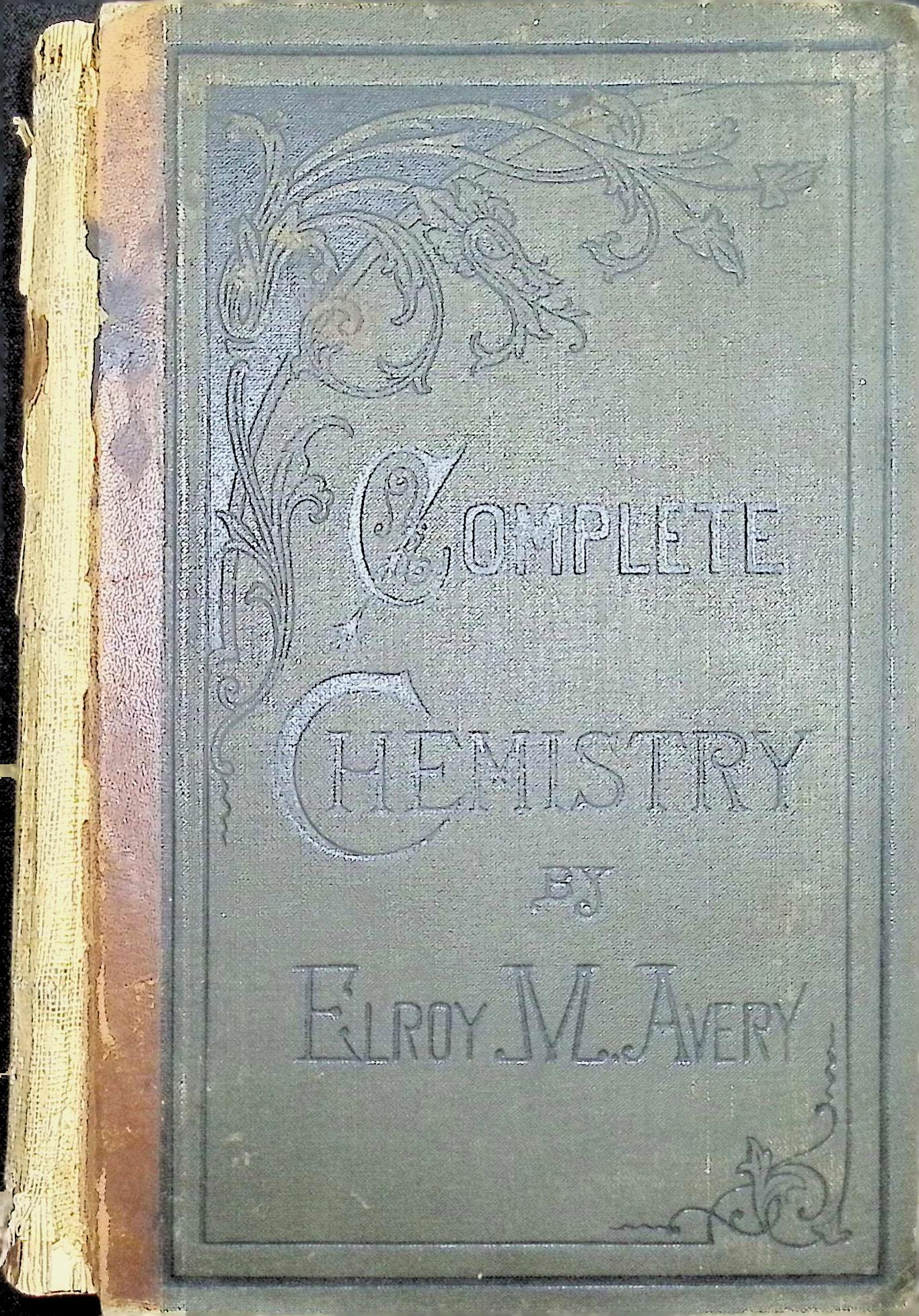
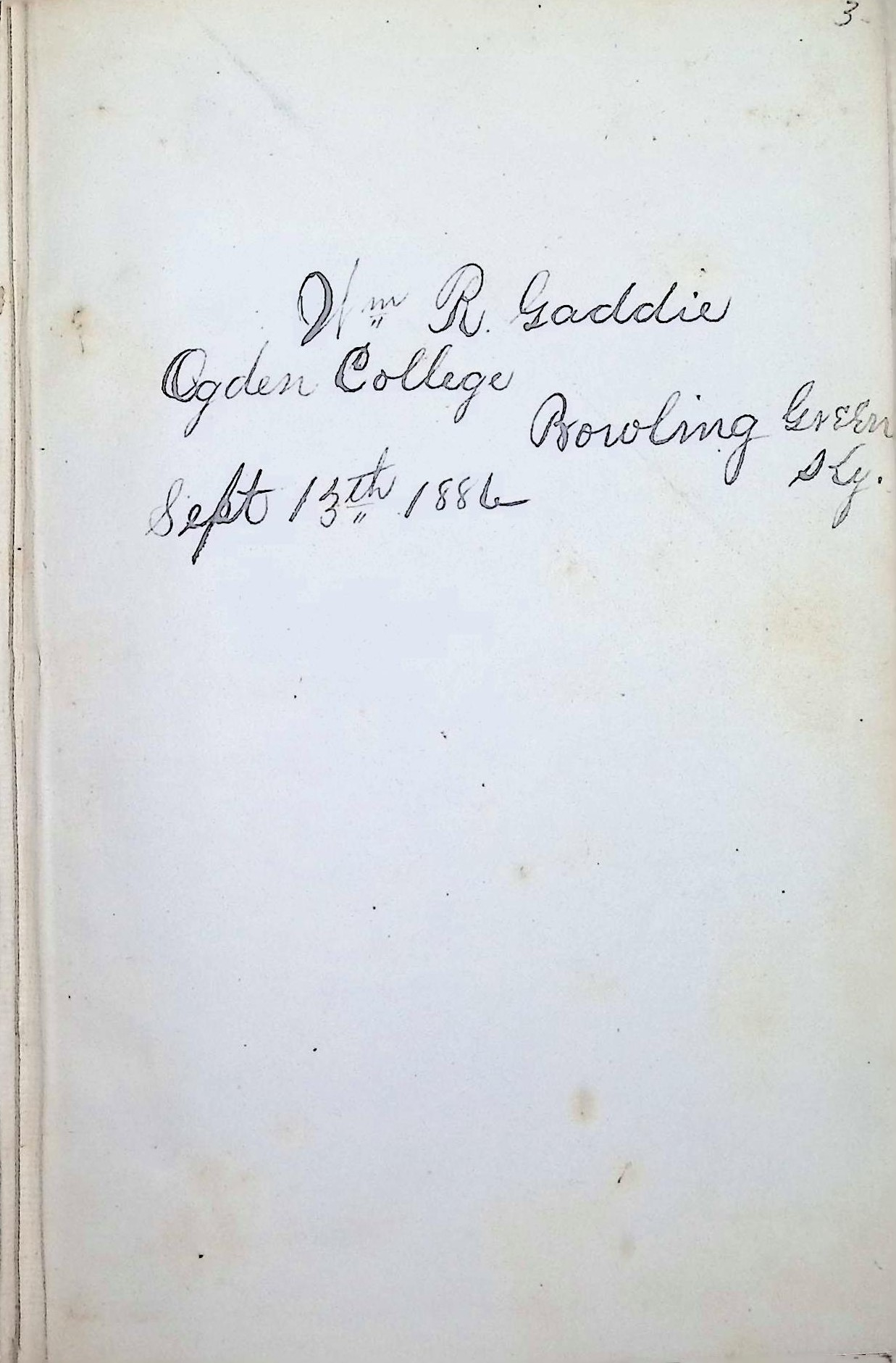
Heavy wear. Brown clothbound hardcover with ornate black stamping. Spine nearly detached, exposing the binding. Front and back covers intact but worn at the edges. Interior pages present and legible. Front endpaper includes handwritten inscription dated September 13th, 1886, from Wm. R. Gaddie of Ogden College, Bowling Green, Kentucky. A working classroom copy from the era.
Gallery
Historical context
By the 1880s, standardized high school science education was emerging as part of a broader public education reform movement. Avery, a former Civil War soldier turned professor, produced textbooks that were widely adopted throughout the Midwest and Northeast.
The presence of this volume at Ogden College — a preparatory institution in Kentucky later absorbed into Western Kentucky University — situates it squarely in the history of Southern science education post-Reconstruction. Its survival in working condition, albeit worn, underscores its hands-on use by generations of students.
Curious Facts, Ephemera, and Trivia
Includes detailed wood engravings of gas collection apparatuses and reaction chambers — some among the best of the era for high school students.
Uses archaic terminology like “poundal” and “litre” (with British spelling) — prior to standardization of American chemical units.
William R. Gaddie’s ownership note from 1886 provides provenance. Gaddie later appears in Bowling Green civic directories as a teacher and principal.
Excerpt
“The nomenclature of chemistry is an attempt to represent the composition of a substance by its name.”
— Chapter IV: Symbols, Nomenclature, Molecular and Atomic Weights pg. 54
Why it is in the Cabinet
This book represents the birth of mass science education in the United States — not just for university scholars but for school-aged students. Its condition tells a story of heavy use, and its inscription links it to a specific student in a now-major Kentucky University. It’s not only a chemistry book — it’s a survivor of educational, regional, and scientific history.
Support Dr. Bebout’s Cabinet of Medical Curiosities
If you enjoy the history, the oddities, and the effort, help keep this cabinet open. Every little bit helps preserve and share the strange wonders of medicine's past.
Buy Me a Ko-fi ☕ Buy Me a Coffee ☕ Tip via PayPal 💵