
Title
Sweet Oil Bottles – DeWitt, Humco, and York Brands
Author
Various Manufacturers – DeWitt International Corp., Humco Laboratory, York Pharmaceutical Co.
Image
Description
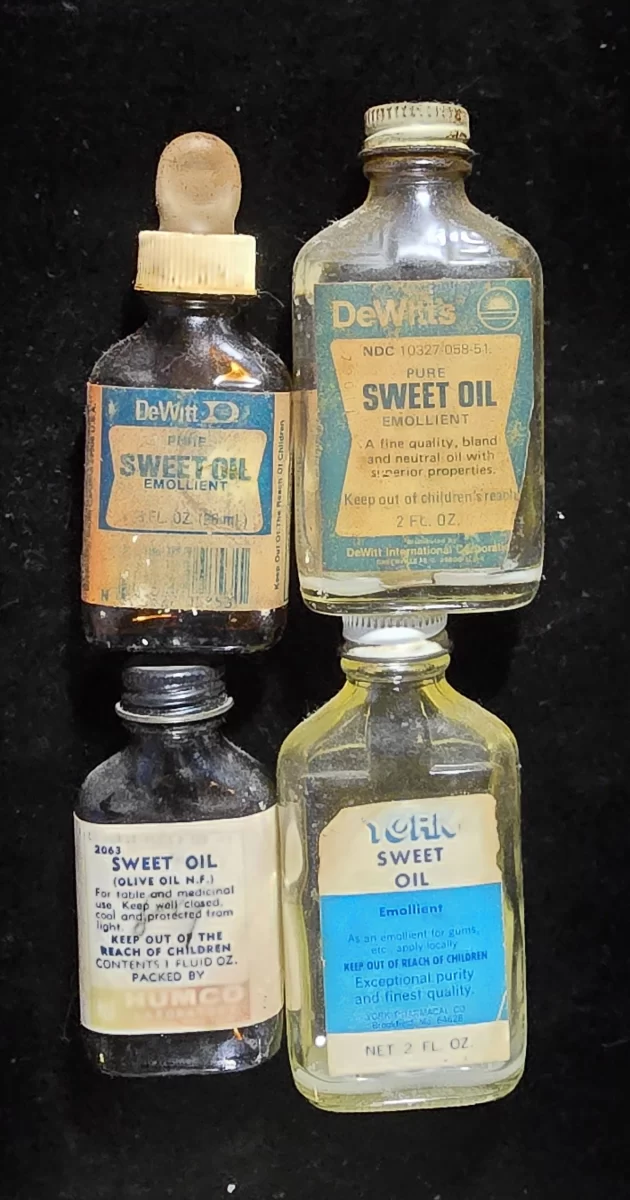
This collection of vintage Sweet Oil bottles represents mid-20th century medicinal and household emollients commonly found in pharmacies across the U.S. Sweet oil—refined olive oil—was widely marketed for use in softening earwax, soothing gums, and treating dry skin.
This set includes:
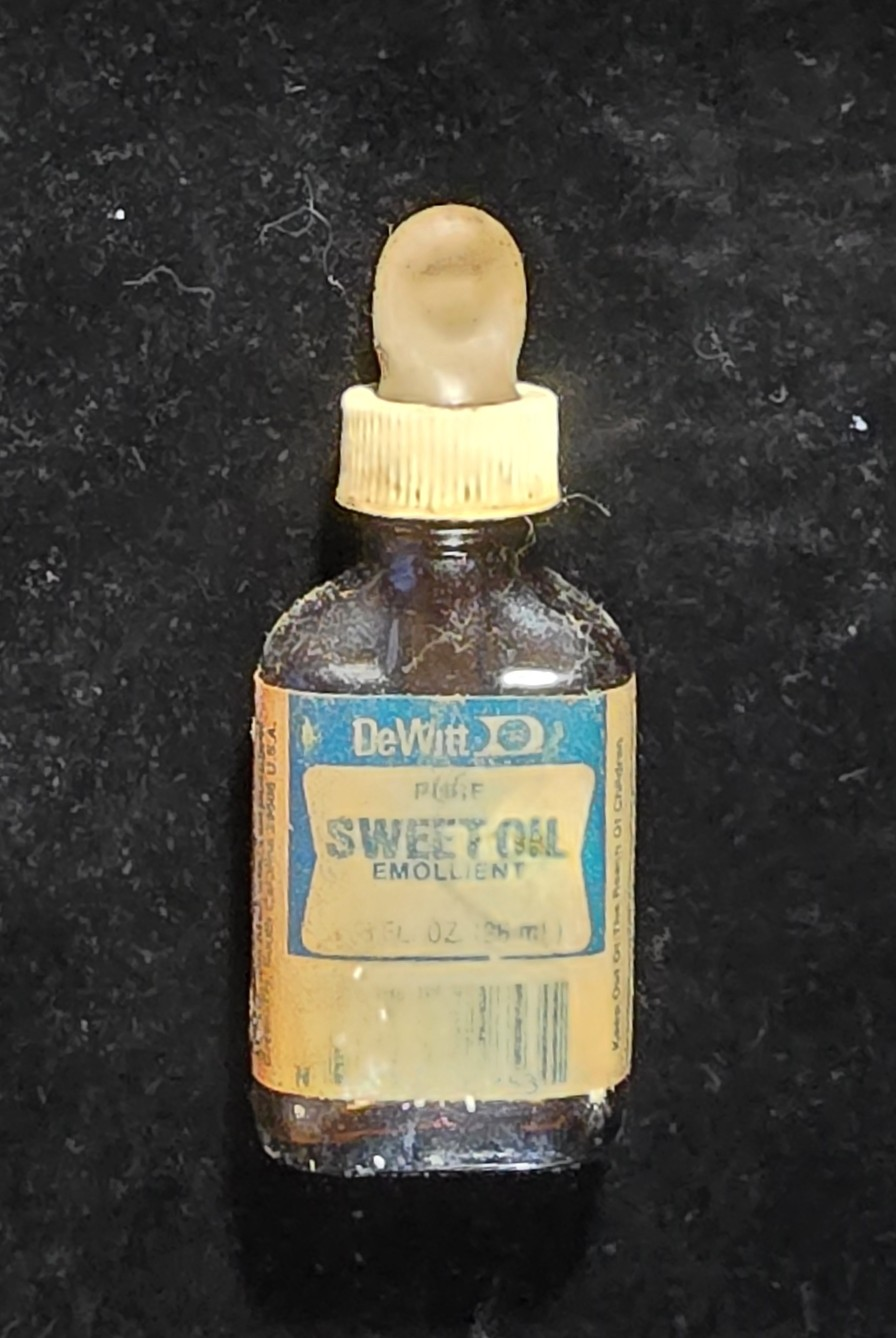
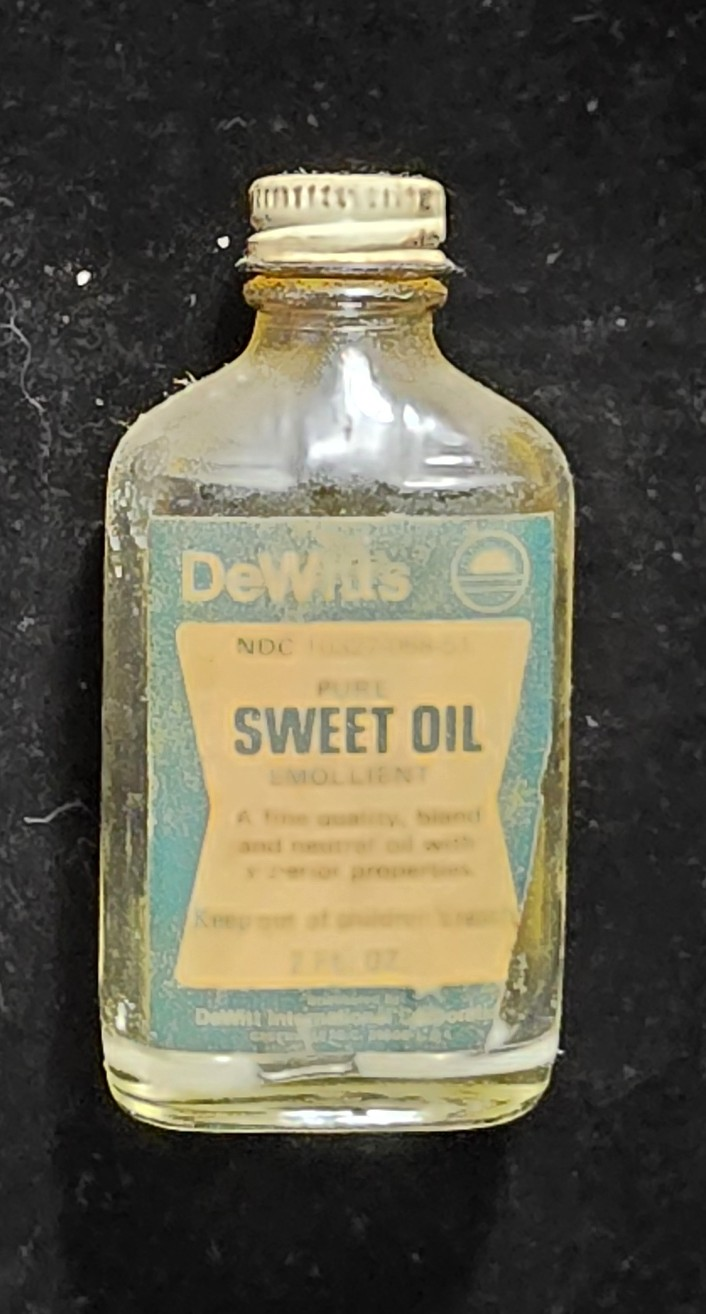
Two DeWitt Sweet Oil bottles, one with a rubber dropper top and one screw-top glass bottle, both labeled “Pure Sweet Oil – Emollient.”
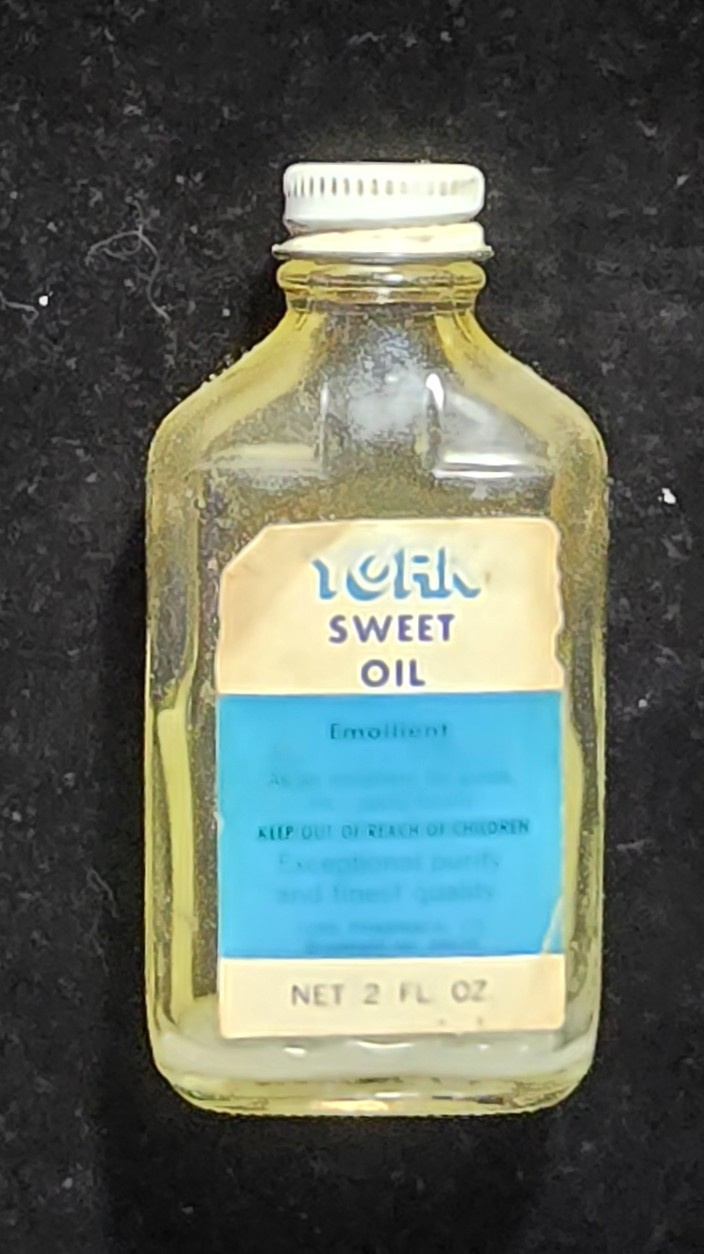
One York Pharmaceutical Co. bottle with a distinctive blue label promising “exceptional purity and finest quality.”
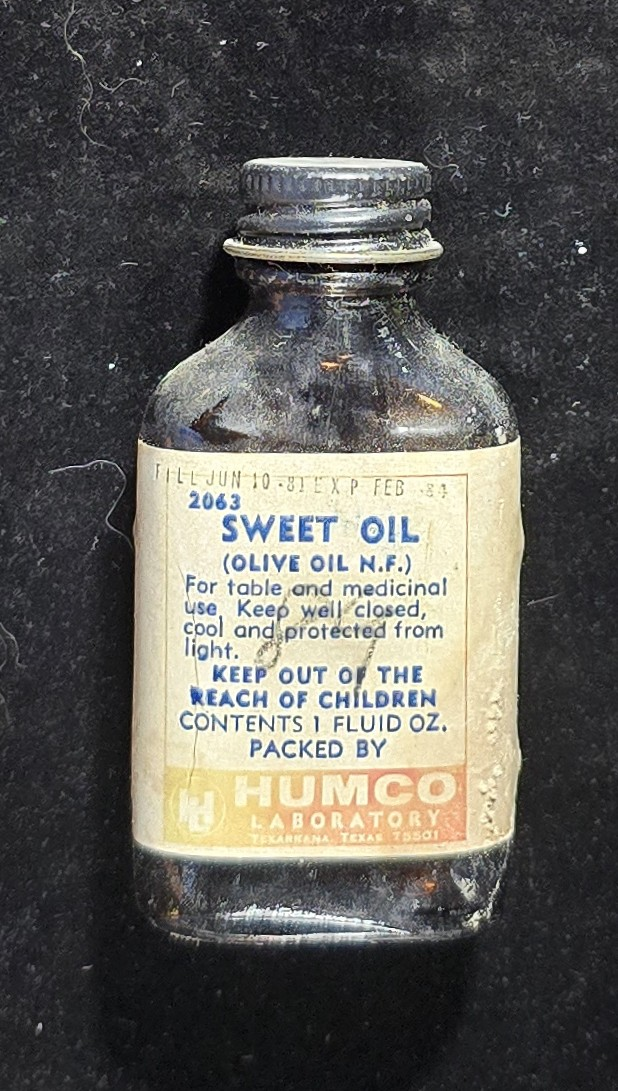
One Humco Laboratory bottle labeled “Sweet Oil (Olive Oil N.F.),” marked for both table and medicinal use, dated with a printed expiration in 1984.
Though marketed as a simple, neutral emollient, sweet oil’s therapeutic framing reflects a time when olive oil held a niche role in American home care.
Condition
All bottles are in good vintage condition with intact labels showing varying degrees of aging, fading, or peeling. The dropper rubber on the DeWitt bottle is discolored and stiff, consistent with age. Minor wear to glass and paper labels as expected.
Gallery

Historical context
Sweet oil has been used for centuries as a gentle remedy. In the United States, it became a common over-the-counter product by the early 20th century, often stocked in medicine cabinets for earache relief and skin conditioning.
These bottles showcase how multiple pharmaceutical suppliers—especially regional labs like Humco in Texas and York in Missouri—produced nearly identical products with slightly varying language to appeal to both medical and home-use audiences.
The inclusion of an NDC number on one DeWitt bottle suggests it was still in regulated distribution in the late 20th century, even as modern synthetic emollients and ear drops began to dominate the market.
Curious Facts, Ephemera, and Trivia
The Humco bottle explicitly states the oil is for “table and medicinal use,” reflecting olive oil’s dual identity in health and cuisine.
One of the bottles includes a warning to protect it from light—a nod to olive oil’s instability when exposed to sunlight.
The 1984 expiration date on the Humco bottle implies this common item remained shelf-stable for years.
The term “sweet oil” was historically used to distinguish olive oil from castor oil or mineral oil.
Excerpt
“As an emollient for gums, etc. apply locally. Exceptional purity and finest quality.” — York Sweet Oil label
Why it is in the Cabinet
These sweet oil bottles are preserved examples of how simple plant-based remedies were packaged, marketed, and distributed across mid-century America. Their branding, materials, and uses illustrate the persistence of natural oils in pharmaceutical contexts and offer a snapshot of everyday domestic medicine.
Support Dr. Bebout’s Cabinet of Medical Curiosities
If you enjoy the history, the oddities, and the effort, help keep this cabinet open. Every little bit helps preserve and share the strange wonders of medicine's past.
Buy Me a Ko-fi ☕ Buy Me a Coffee ☕ Tip via PayPal 💵