
Title
Ceramic Neti Pot by WT & C (Made in Germany)
Author
WT & C (Germany)
Image
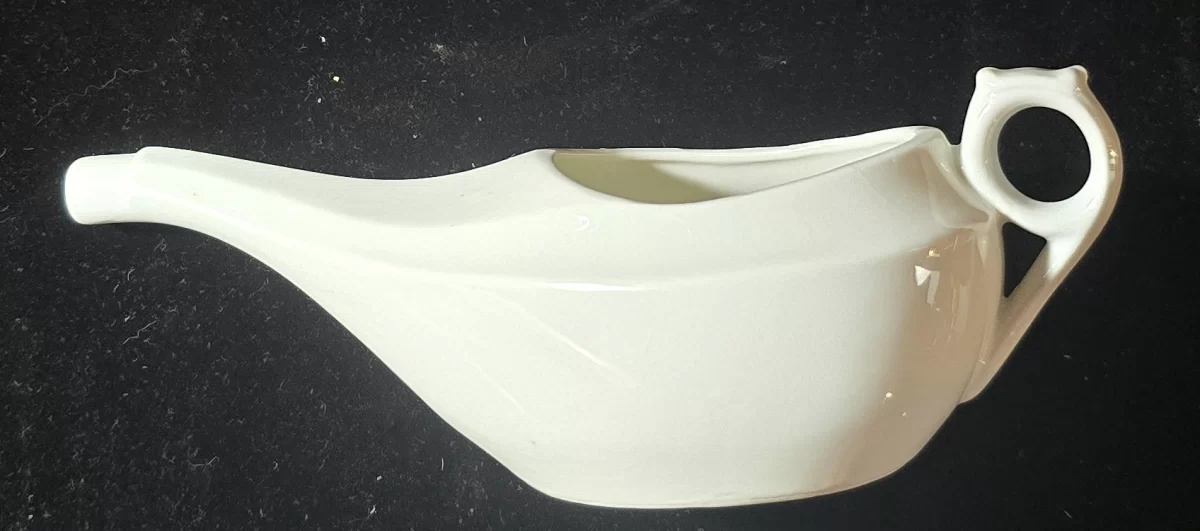
Description
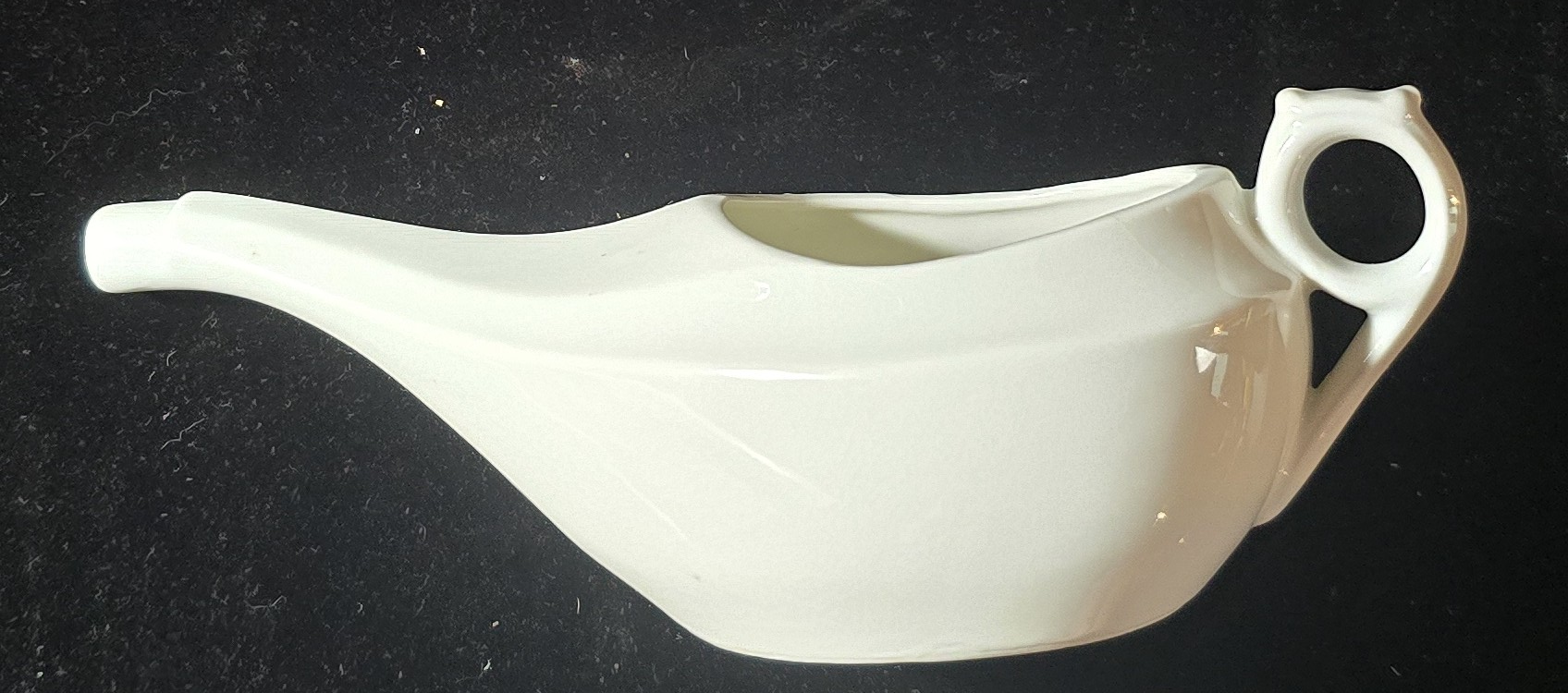
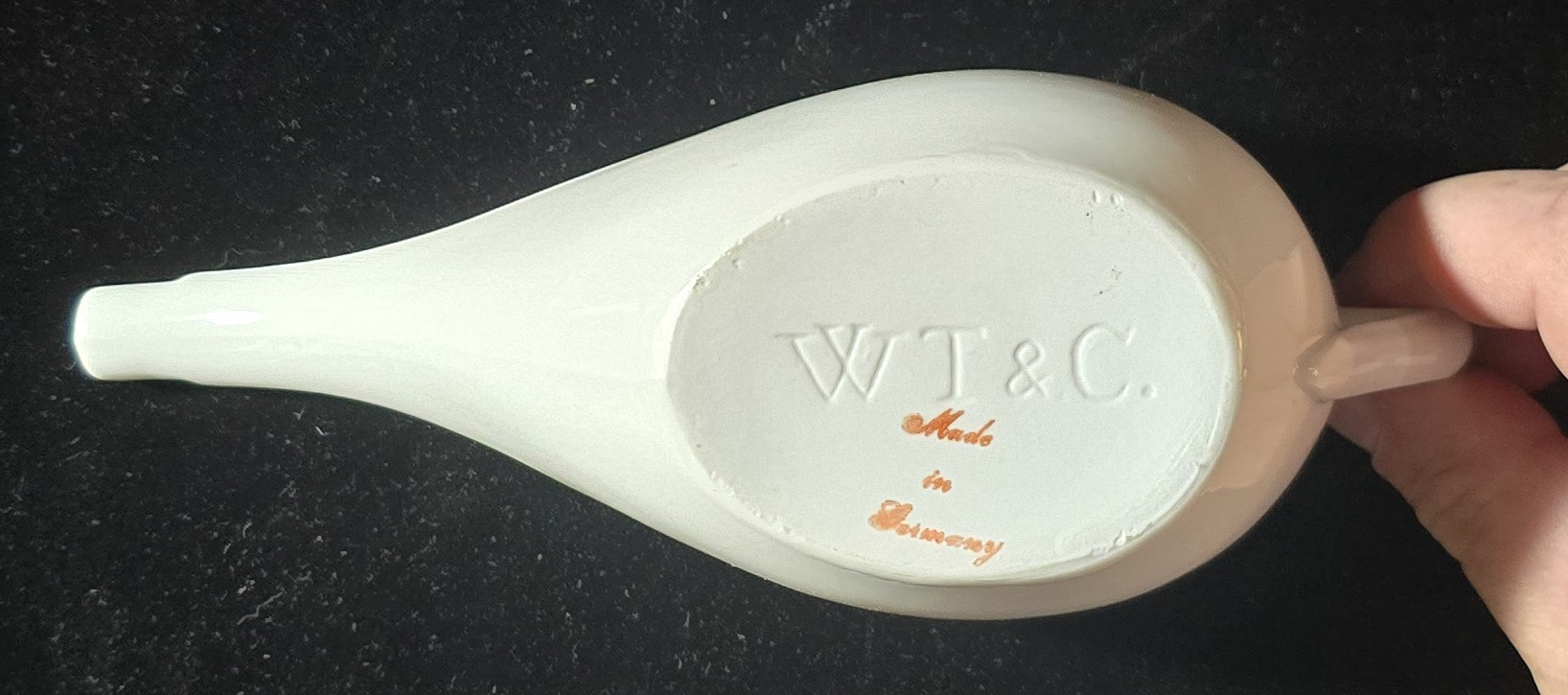
This porcelain neti pot—crafted in Germany by WT & C—is a sleek, teardrop-shaped nasal irrigation vessel. Made of glazed ceramic and embossed with the WT & C manufacturer’s mark, this piece reflects both functional utility and aesthetic refinement. Neti pots like this were used to flush the nasal passages with saline solution, a practice rooted in Ayurvedic medicine but adopted by Western practitioners by the late 1800s.
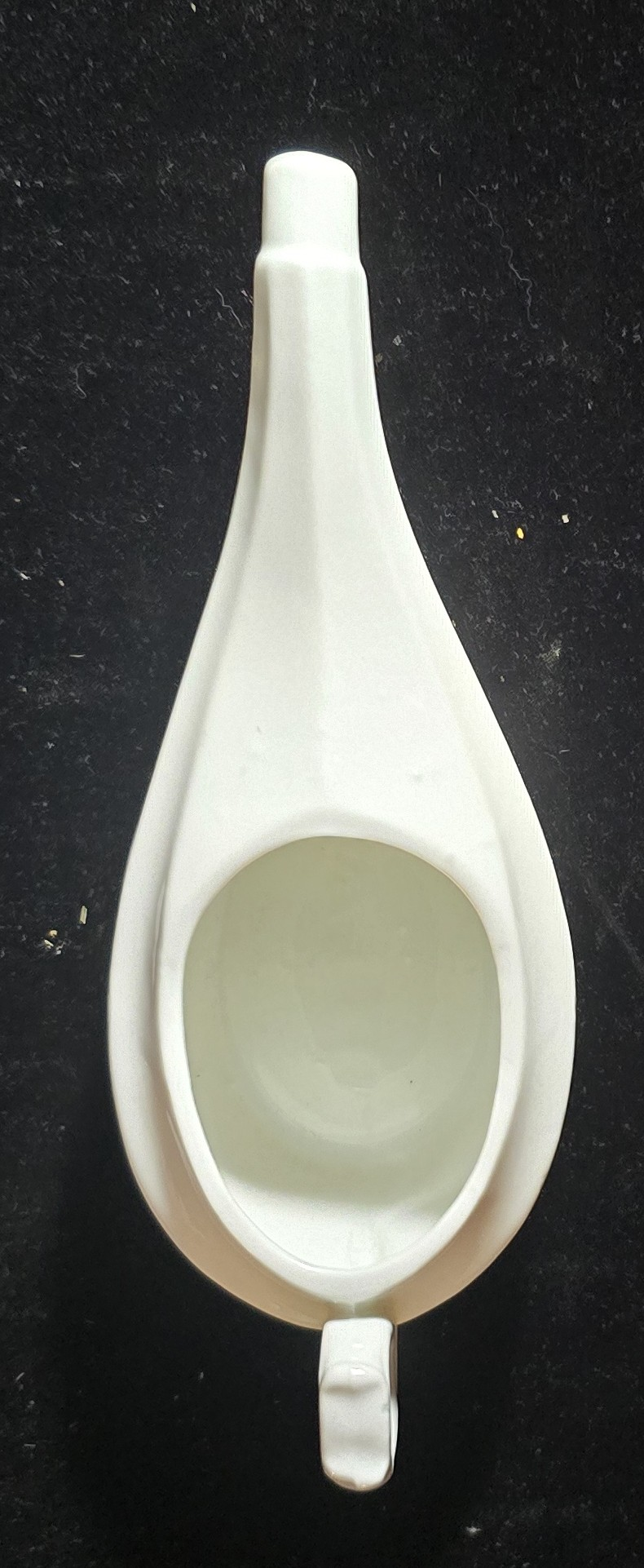
The elongated spout and rounded body allow for comfortable, gravity-assisted rinsing, while the small upright handle supports a steady grip. Its design remains virtually unchanged in modern variants, attesting to the enduring logic of its form.
Condition
Excellent condition with no chips, cracks, or crazing. Glaze is intact. Manufacturer’s embossment is clear; red “Made in Germany” stamp is slightly faded but legible.
Gallery
Historical context
Though popularized in the West in the late 19th century, nasal irrigation originates from India, where the practice was known as jala neti. European and American physicians began recommending neti pots for patients with sinusitis, hay fever, or chronic rhinitis. This ceramic model likely dates to the early 1900s, a time when hygiene and hydrotherapy gained traction in mainstream medicine.
The mark WT & C is attributed to the German firm Wilhelm Tams & Co., which manufactured a range of export porcelain in the late 19th and early 20th centuries.
Curious Facts, Ephemera, and Trivia
Neti pots were often recommended in sanitarium regimens alongside cold plunges and “internal baths.”
Instructions often emphasized using tepid saltwater for best results—too cold or too hot and the sensation could be excruciating.
Some early medical texts describe neti use as a cure-all for melancholia, “nasal catarrh,” and even poor concentration.
The unique shape of this vessel has led to modern confusion—it is sometimes mistaken for a gravy boat or infant urinal in antique shops.
Excerpt
“For cleansing the nasal passages, the pot should be filled with a warm saline solution and tilted gently into one nostril while the head is angled sideways. The fluid will exit the opposite nostril, flushing irritants and mucus.”
— Dr. J. Oswald Bronner, “Home Hydrotherapy Manual,” 1914
This vintage description matches both the shape and intended function of the vessel in your collection.
Why it is in the Cabinet
This neti pot exemplifies the long-standing marriage between ancient practice and Western adaptation. It captures a moment in time when hydrotherapy and nasal hygiene were promoted as daily regimens for everything from sinusitis to mental clarity. Its continued use today—virtually unchanged in form—speaks to the enduring relevance of simple medical tools. As both a utilitarian object and a rare survivor of early-20th-century export porcelain, it deserves a place in the Cabinet for its blend of cross-cultural history, elegant construction, and therapeutic intent.
Support Dr. Bebout’s Cabinet of Medical Curiosities
If you enjoy the history, the oddities, and the effort, help keep this cabinet open. Every little bit helps preserve and share the strange wonders of medicine's past.
Buy Me a Ko-fi ☕ Buy Me a Coffee ☕ Tip via PayPal 💵