
Title
Vaccine Virus (Small-Pox) Tube Set – Gilliland Laboratories
Author
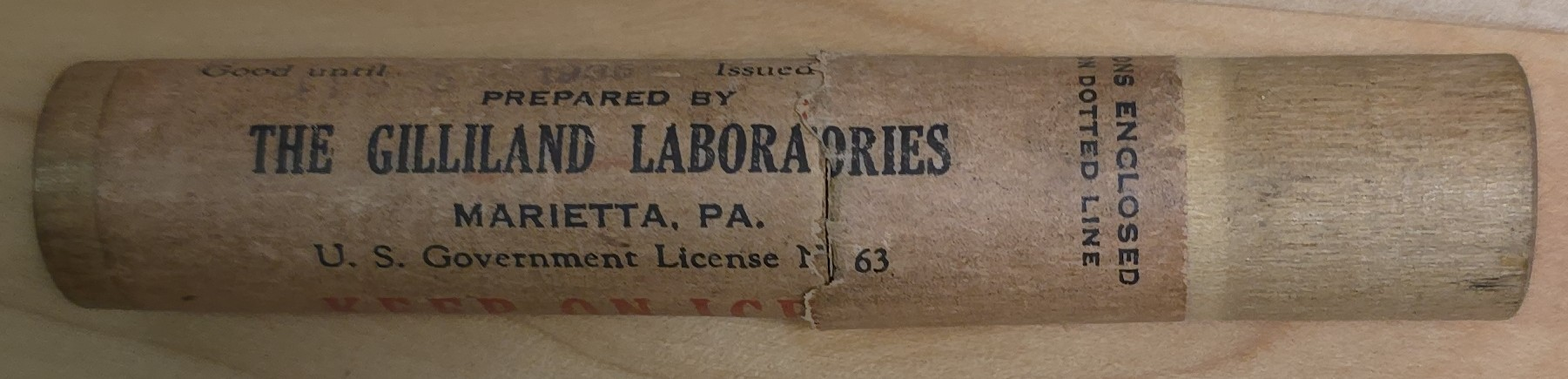
The Gilliland Laboratories, Marietta, Pennsylvania, U.S.A.
Image
Description
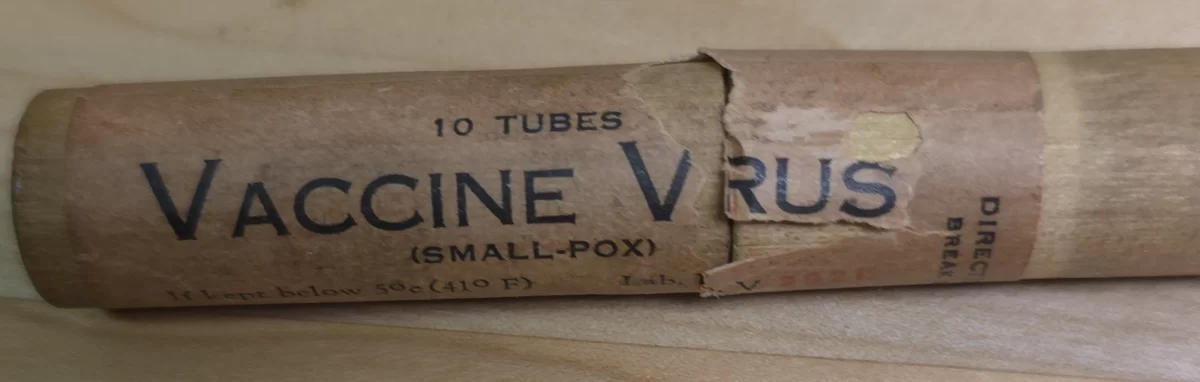
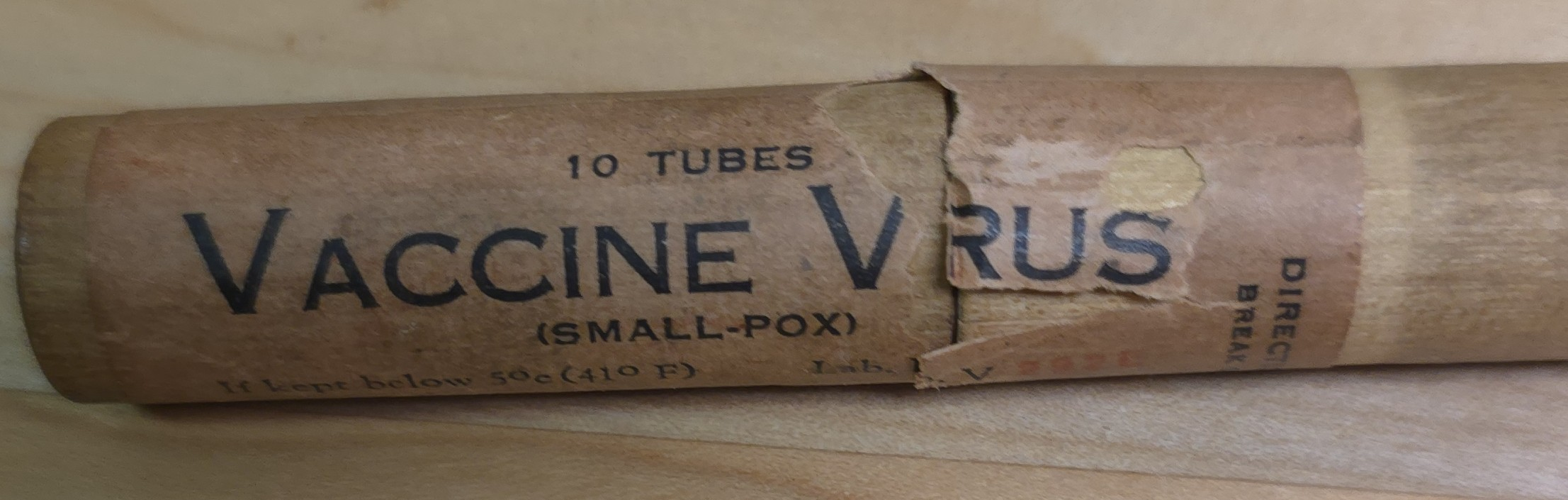
This wooden and paper-labeled container once held ten sealed tubes of smallpox vaccine virus, intended for direct skin scarification or insertion. Issued by Gilliland Laboratories under U.S. Government license, this tube set was part of a long era of mandatory smallpox vaccination campaigns, especially in public schools, military service, and immigration processing centers.
The use of the term “vaccine virus” refers to the vaccinia virus, a live, attenuated relative of smallpox (variola) used to stimulate immunity. Each tube would have contained a freeze-dried or glycerinated preparation sealed for transport and refrigeration.
Condition
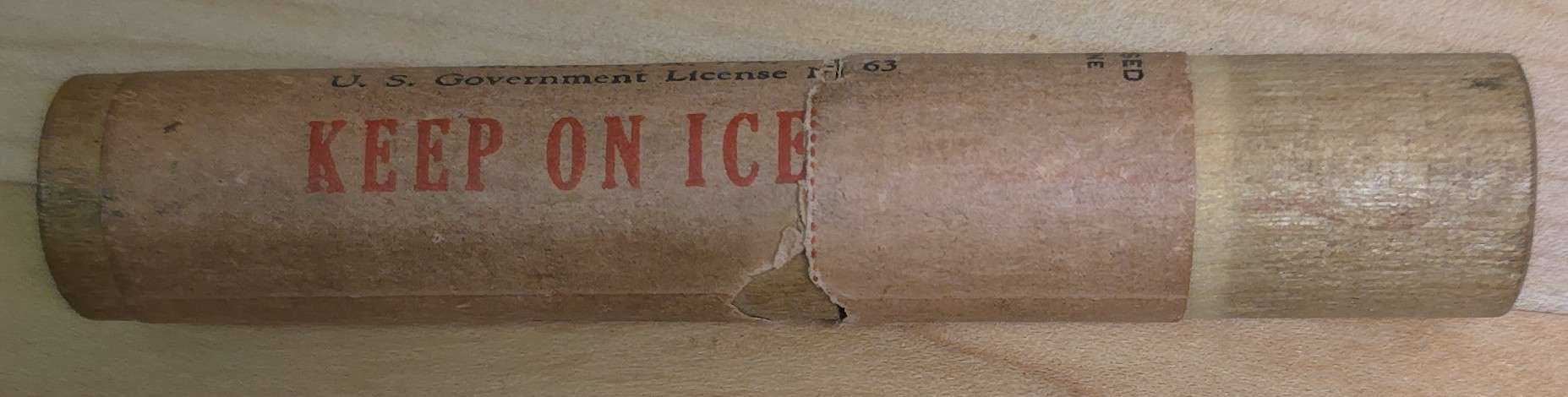
The paper label is intact but torn and stained, with visible creasing and wear. The container is structurally sound, with the wood showing age-related discoloration. The tube contents are no longer present. One end of the label is separating but still mostly legible. A striking example of early 20th-century public health packaging.
Gallery
Historical context
The fight against smallpox was one of the earliest and most successful vaccination efforts in history. By the early 20th century, commercial labs like Gilliland Laboratories were licensed to distribute standardized preparations across the U.S. The use of vaccine tubes—especially glass capillary or ivory points—was common prior to widespread hypodermic delivery systems.
This example likely dates to the interwar period (1920s–30s), when smallpox vaccination was still required in many U.S. states, often enforced in public school enrollment or during outbreaks.
By 1980, the World Health Organization declared smallpox eradicated, and production of the vaccine ceased for routine use. The virus remains one of only a few diseases completely eradicated from nature.
Curious Facts, Ephemera, and Trivia
The term “virus” here predates its modern virological meaning. It was long used to mean “fluid” or “infectious matter.”
Tubes like these were often issued in cardboard or wooden containers with the stark directive: “KEEP ON ICE”—an early nod to cold chain storage before the advent of reliable refrigeration.
The smallpox vaccine was one of the few medical products distributed by the U.S. government with licensing and uniform labeling even in the early 1900s.
Marietta, PA—where Gilliland Laboratories was based—was home to a major federal biologicals depot during WWII and the Cold War.
Excerpt
“Direct: Break”—a clinical command printed on the outer label instructing the user to snap the glass ampule to apply the vaccine, a phrase as efficient as it is ominous.
Why it is in the Cabinet
This item captures a pivotal moment in public health history—the mass production of biologicals for infectious disease control in the early 20th century. Its utilitarian packaging, stern warnings, and fragile, now-vacant interior remind us how perilous and vital vaccination once was.
Support Dr. Bebout’s Cabinet of Medical Curiosities
If you enjoy the history, the oddities, and the effort, help keep this cabinet open. Every little bit helps preserve and share the strange wonders of medicine's past.
Buy Me a Ko-fi ☕ Buy Me a Coffee ☕ Tip via PayPal 💵