
Title
Unmarked Prescription Bottle – Alcohol 2 Percent
Image
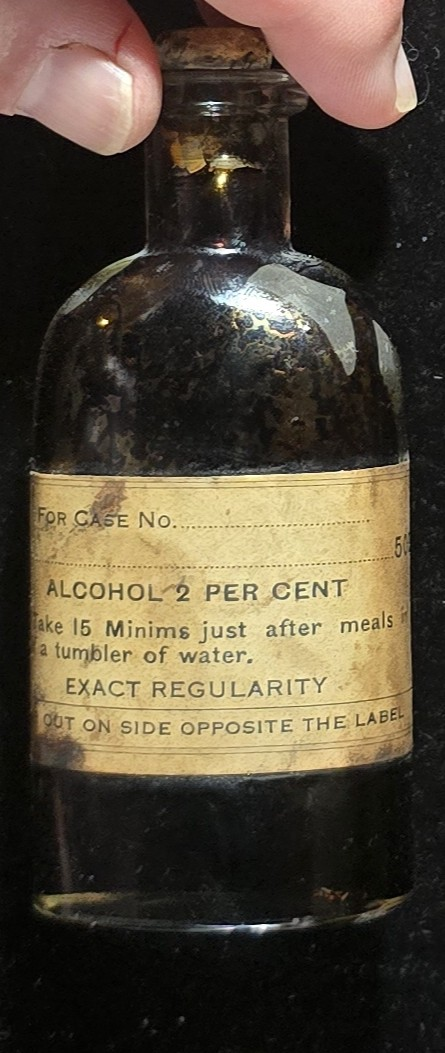
Description
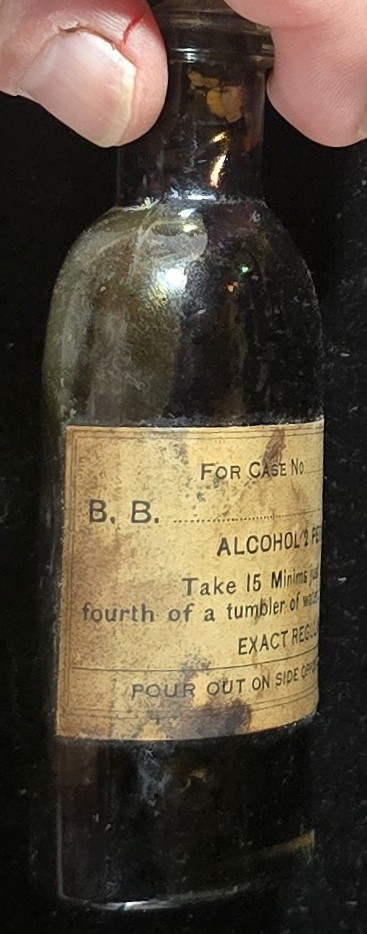
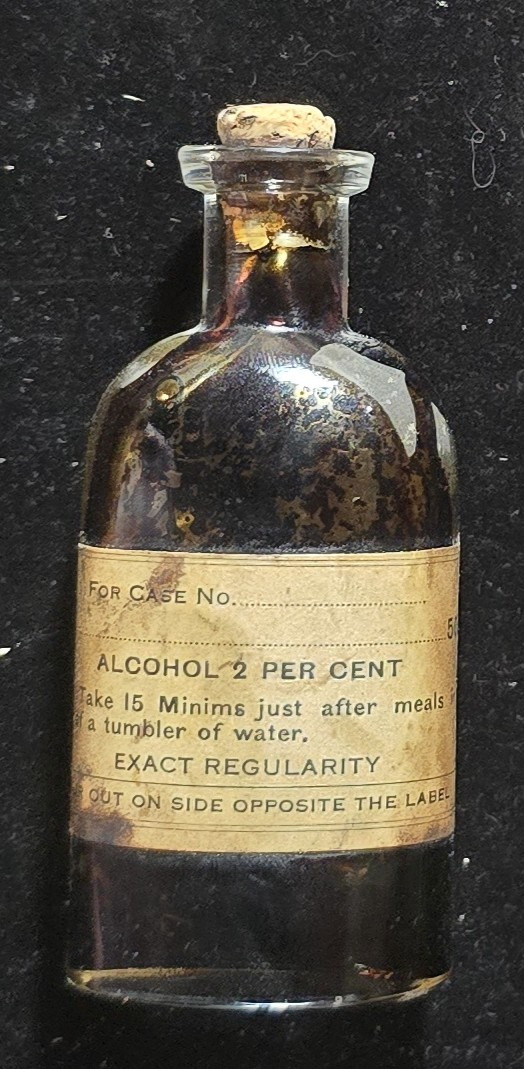
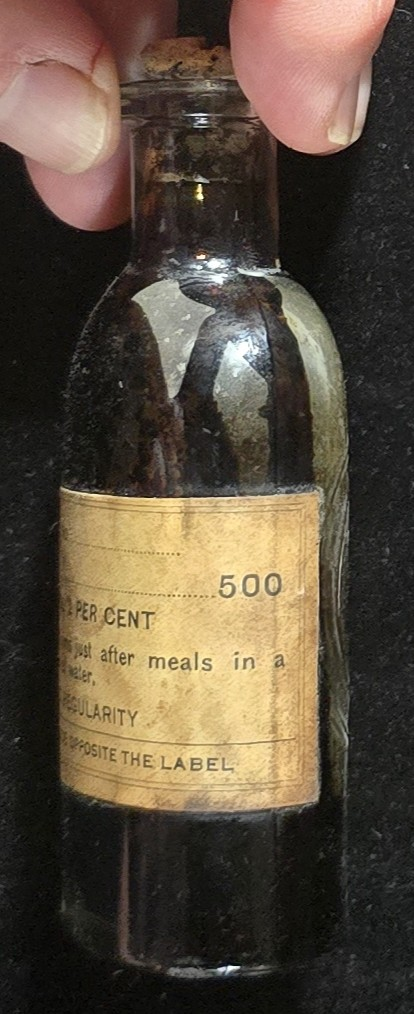
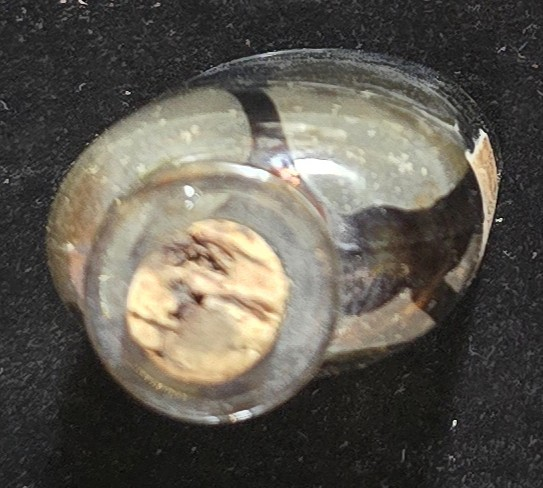
This small, cylindrical glass apothecary bottle features a printed label with typed prescription instructions, noting “ALCOHOL 2 PER CENT” and directing the user to take “15 minims just after meals in a tumbler of water” with “EXACT REGULARITY.” A secondary side label reads: “B.B.” and repeats the dosage instructions in slightly different form.
The bottle is sealed with a cork and shows oxidation and residue consistent with its age, possibly due to iron-based tincture residue or herbal sedimentation. It is entirely unbranded, offering no pharmaceutical manufacturer or proprietary name.
Condition
Glass: Structurally intact, with no chips or cracks; some interior residue and exterior discoloration present
Label: Heavily stained, partially readable; printed in formal block style, typical of the 1920s–1940s
Cork: Original, degraded, but in place; shows signs of age shrinkage and possible leakage
Gallery
Historical context
The inclusion of a low alcohol content (2%), precise dosage in minims (an apothecary unit equal to ~0.06 mL), and the phrase “exact regularity” all suggest this was a therapeutic tonic or regulatory remedy, intended for daily or near-daily use.
During the early 1900s through the 1940s, such formulations were commonly compounded by physicians, druggists, or proprietary health systems. They were often used as:
Digestive aids
Mild sedatives or nerve tonics
Menstrual regulators
Restoratives for chronic fatigue or “neurasthenia”
The dosage and delivery — diluted in a tumbler of water — also suggests the contents were potent or highly active, even at low alcohol content.
The label space for “Case No. ___” and formula code “B.B.” further suggests it may have been part of a numbered case-based treatment system, such as those employed by mail-order tonics, sanitarium programs, or proprietary compounders.
Curious Facts, Ephemera, and Trivia
The bottle’s instructions to “pour out on side opposite the label” were meant to preserve legibility and limit label damage from drips — a small but telling detail in old pharmacy etiquette.
“B.B.” may have been shorthand for “Blood Builder,” “Bitters Base,” or another coded internal formulation type. In many mail-order or homeopathic catalogs, B.B. formulas were vitalizing mixtures intended for long-term use.
15 minims is equal to 0.93 mL, a very small dose, and was standard in prescribing early alkaloid extracts, fluid extracts, or tincture-based homeopathics.
The phrase “EXACT REGULARITY” appears often in historical remedies linked to habit therapy, metabolic treatment, and support for conditions like indigestion, “female irregularities,” or even mild opiate weaning tonics.
The cork stopper, ambering of the fluid, and residue suggest a water-alcohol suspension with botanical components now long degraded.
Why it is in the Cabinet
This unlabeled prescription bottle represents the silent backbone of early personalized and proprietary medicine — remedies made for a single case number, often filled with vague or secretive compounds promising gentle regularity and long-term health. Its anonymity invites investigation, and its specificity—down to the minim—demands respect for the quiet precision of historical practice.
It is also a symbolic artifact of America’s transition from apothecary to pharmaceutical industrialization, when handwritten or numbered prescriptions still walked the line between craft and commerce.
Support Dr. Bebout’s Cabinet of Medical Curiosities
If you enjoy the history, the oddities, and the effort, help keep this cabinet open. Every little bit helps preserve and share the strange wonders of medicine's past.
Buy Me a Ko-fi ☕ Buy Me a Coffee ☕ Tip via PayPal 💵