
Title
W.E. Gray’s Genuine Ointment
Author
Location: Nashville, Tennessee
Image
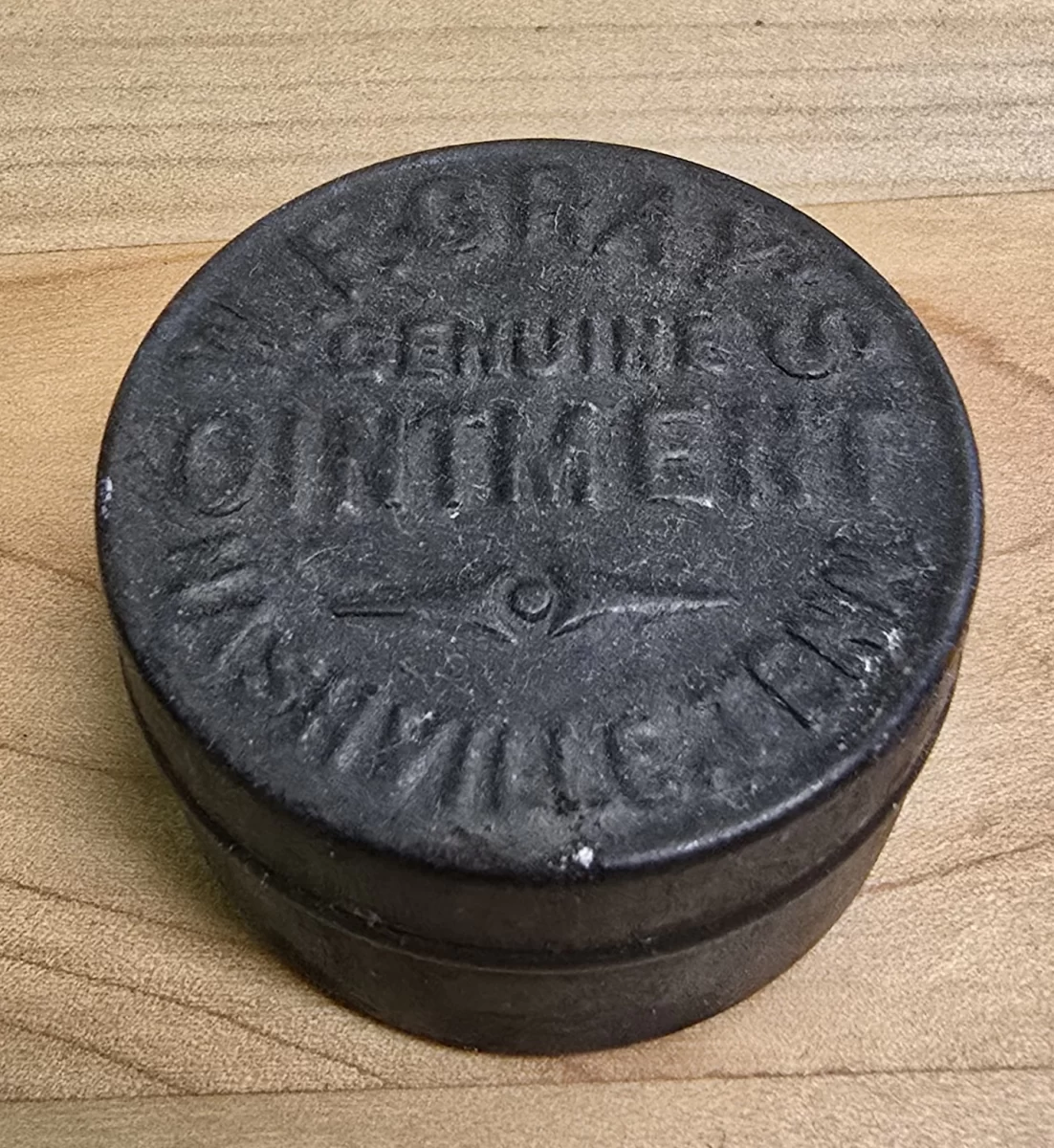
Description
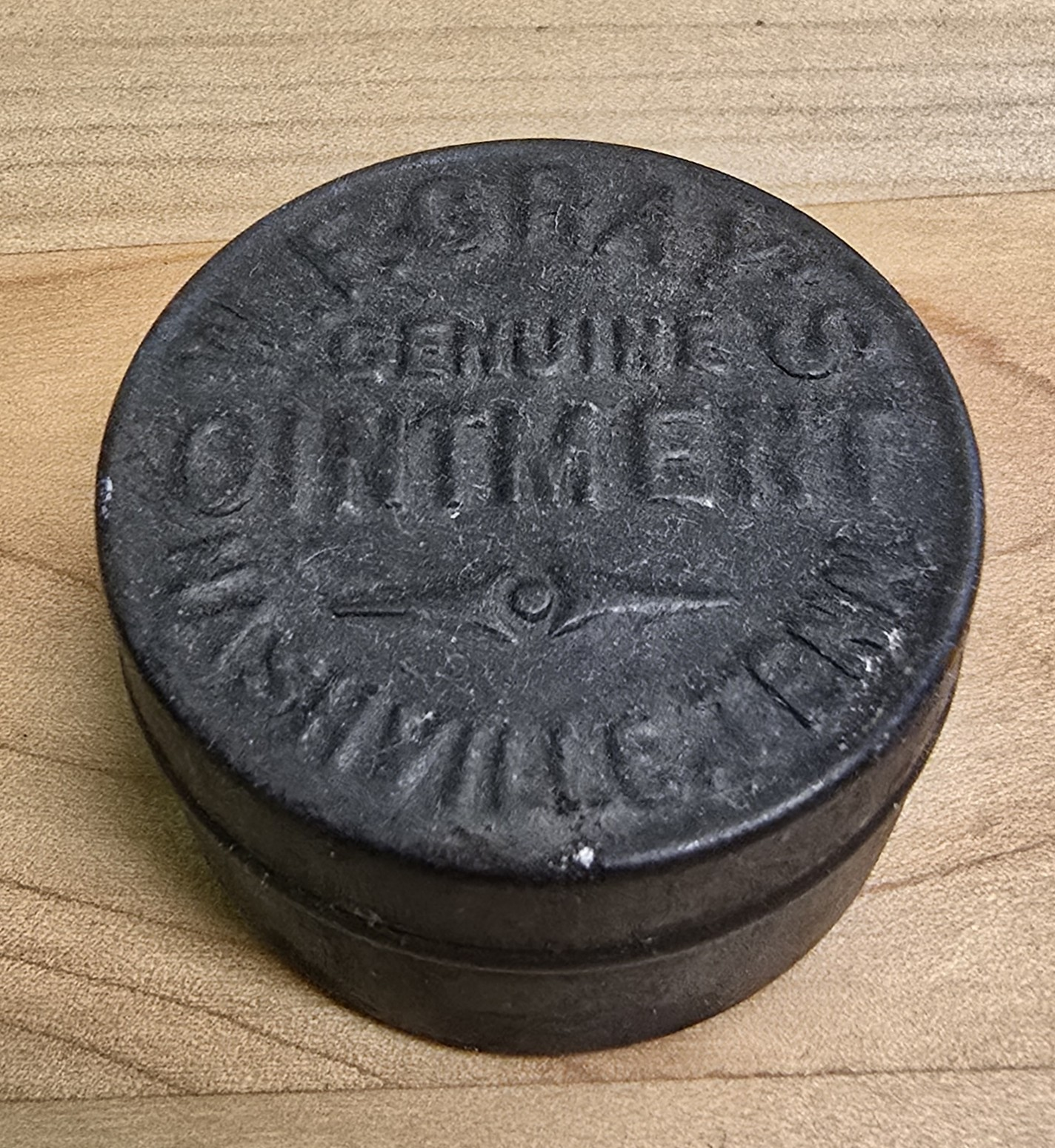
This small black embossed tin reads:
“W.E. GRAY’S GENUINE OINTMENT – NASHVILLE, TENN.”
Likely made of stamped metal with a friction-fit lid, it once contained a traditional medicinal salve—possibly used for skin ailments such as cuts, burns, or rashes.
Condition
Fair.
The tin retains its embossed lettering clearly but shows signs of significant oxidation, minor denting, and finish wear consistent with age. The original contents are no longer present.
Gallery
Historical context
W.E. Gray’s Ointment originated in Nashville, Tennessee, and was sold primarily in the southeastern United States during the early 1900s. Like many regional salves, it likely promised broad relief from common ailments like insect bites, minor infections, eczema, and abrasions. These general-use ointments were often marketed as “cure-alls” before federal labeling regulations tightened in the 1930s with the passage of the Food, Drug, and Cosmetic Act of 1938.
The emphasis on “Genuine” suggests widespread imitation at the time—common for rural patent medicines that gained popularity through local word of mouth rather than national advertising.
Curious Facts, Ephemera, and Trivia
W.E. Gray is believed to have been both the formulator and namesake—a common marketing tactic that lent personal credibility to rural remedies.
These tins were often refilled or reused, making intact originals difficult to find today with legible embossing.
The minimal labeling (no ingredients, instructions, or claims) is a hallmark of pre-FDA-era packaging, when products weren’t yet required to disclose contents or dosages.
The thick-gauge metal construction and compact design made it popular as a pocket salve, not unlike Watkins Salve or Carbolated Vaseline.
Excerpt
A 1914 pharmacy circular from Tennessee lists several locally made ointments as “trusted by generations of country doctors,” often stored in “pocket tins worn smooth from use.”
Why it is in the Cabinet
This embossed tin represents a transitional period in American folk medicine—between home-brewed remedies and mass-produced pharmaceuticals. It is emblematic of how regional branding, simplicity, and mystery once dominated the world of over-the-counter treatments. Its plainness is what makes it special—an artifact of everyday American health care from a vanished era.
Support Dr. Bebout’s Cabinet of Medical Curiosities
If you enjoy the history, the oddities, and the effort, help keep this cabinet open. Every little bit helps preserve and share the strange wonders of medicine's past.
Buy Me a Ko-fi ☕ Buy Me a Coffee ☕ Tip via PayPal 💵