Title
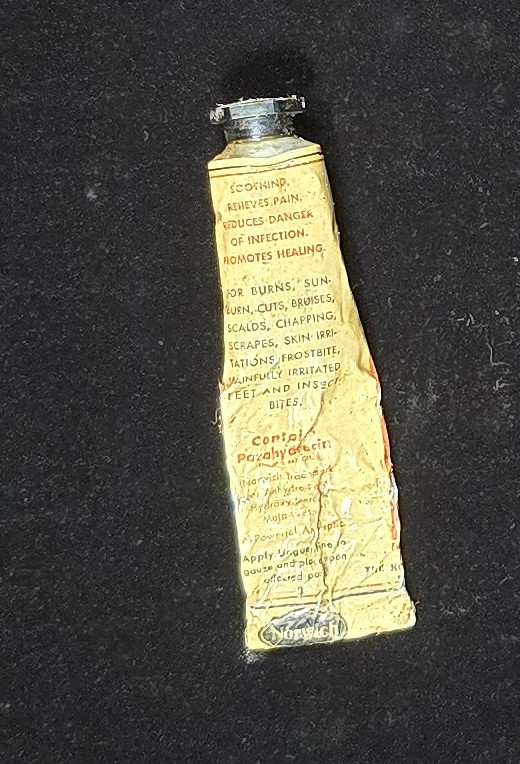
Unguentine Antiseptic Dressing Tube
Image

Description
This vintage tube of Unguentine represents one of the earliest mass-marketed antiseptic ointments in American medicine. Marketed as “the first thought in burns,” Unguentine was a staple in home first-aid kits from the early 20th century onward.
The front label highlights its function as an antiseptic surgical dressing, promoting relief and protection for burns, cuts, abrasions, and other skin irritations. The rear side elaborates on its ability to soothe pain, reduce infection risk, and aid in wound healing. It lists a wide range of uses—from frostbite and sunburn to insect bites and irritated feet.
The active ingredient listed is Parachlorometaxylenol (PCMX), an antiseptic compound known for its antimicrobial properties. Other components likely included lanolin, eucalyptol, and camphor—typical of first aid products of the era.
PCMX remains in use today in various antimicrobial soaps and surgical scrubs, though newer antiseptics have largely taken its place in wound care.
Condition
The aluminum tube shows moderate to heavy wear, with multiple creases and compression from prior use. The printed label remains mostly legible on both sides, despite discoloration and surface wear. The cap is intact, though corroded, and a small amount of residue is likely present inside. Structurally stable but no longer functional for its intended medical use. Condition: Fair
Gallery
Historical context
Introduced in the late 19th century and widely used throughout the 20th, Unguentine was one of the earliest branded antiseptic ointments available over the counter. Marketed heavily as a must-have for burns and skin injuries, it reflects both the rise of consumer-based medicine and the Norwich Pharmacal Company’s role in early American pharmaceutical innovation. The tube exemplifies the shift toward standardized, mass-produced topical treatments and the branding strategies that helped embed them into daily home health care.
Curious Facts, Ephemera, and Trivia
Unguentine was introduced in the 1890s and remains available today in modified formulations.
The brand was originally manufactured by the Norwich Pharmacal Company, which also created Pepto-Bismol.
The name “Unguentine” comes from the word unguent—an old term for ointment.
Why it is in the Cabinet
This well-worn tube of Unguentine captures a pivotal moment in medical consumerism—the transition from home remedies to standardized, branded pharmaceuticals. As one of the earliest over-the-counter antiseptics, Unguentine bridged the gap between physician-directed care and home treatment.
Its longevity and marketing reflect growing public trust in industrial medicine, and its formula speaks to a time when products were both simple and broadly applied.
Support Dr. Bebout’s Cabinet of Medical Curiosities
If you enjoy the history, the oddities, and the effort, help keep this cabinet open. Every little bit helps preserve and share the strange wonders of medicine's past.
Buy Me a Ko-fi ☕ Buy Me a Coffee ☕ Tip via PayPal 💵