
Title
Oil of Sassafras Bottle
Image
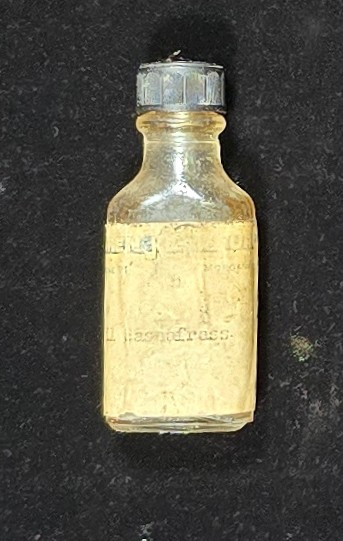
Description
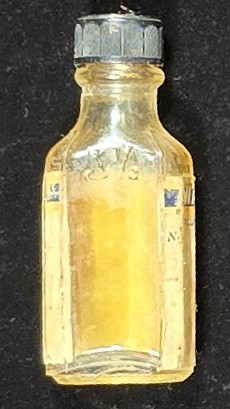
This small bottle of Oil of Sassafras provides a fascinating glimpse into early American pharmaceutical practices. Contained in a sturdy, clear glass bottle with a ribbed black metal screw cap, the bottle still holds some of its original contents—a rare and evocative preservation of a once-popular remedy. The yellowed paper label is fragile but partially legible under angled lighting.
Sourced from the bark and roots of the Sassafras albidum tree, this oil was long believed to have a broad spectrum of medicinal benefits. Used for everything from treating fevers and rheumatism to flavoring root beer, sassafras oil became a staple in 19th- and early 20th-century medicine cabinets.
Related Reading
Safrole – Wikipedia
Condition
Original bottle intact with screw cap; yellowed but mostly legible label; fluid contents partially preserved
Gallery
Historical context
Oil of Sassafras was embraced as a natural blood purifier, stimulant, and antiseptic. It was commonly used in herbal teas, liniments, and over-the-counter tonics. However, the main component of sassafras oil—safrole—was later discovered to be hepatotoxic and carcinogenic in lab studies.
By the 1960s, the U.S. Food and Drug Administration (FDA) banned sassafras oil in food and drug products. Today, “sassafras flavoring” must be safrole-free, and the oil’s role in drug synthesis (notably MDMA) has further restricted its availability.
Curious Facts, Ephemera, and Trivia
Sassafras tea was often brewed as a spring “detox” to cleanse the blood.
Safrole, the active compound in sassafras oil, is structurally related to compounds used in perfume and illicit drug synthesis.
In traditional medicine, sassafras oil was also applied externally to treat lice, rashes, and even toothaches.
Why it is in the Cabinet
This bottle represents the complex legacy of botanical medicine—once heralded as natural and wholesome, now regulated or banned due to scientific advances. It is a time capsule of both trust in nature and the evolution of evidence-based pharmacology. Its contents, labeling, and form reflect both the cultural attitudes and pharmaceutical standards of its time.
Support Dr. Bebout’s Cabinet of Medical Curiosities
If you enjoy the history, the oddities, and the effort, help keep this cabinet open. Every little bit helps preserve and share the strange wonders of medicine's past.
Buy Me a Ko-fi ☕ Buy Me a Coffee ☕ Tip via PayPal 💵