
Title
Boric Acid Containers
Cardboard tubes and tins (c. 1920s–1950s)
Image
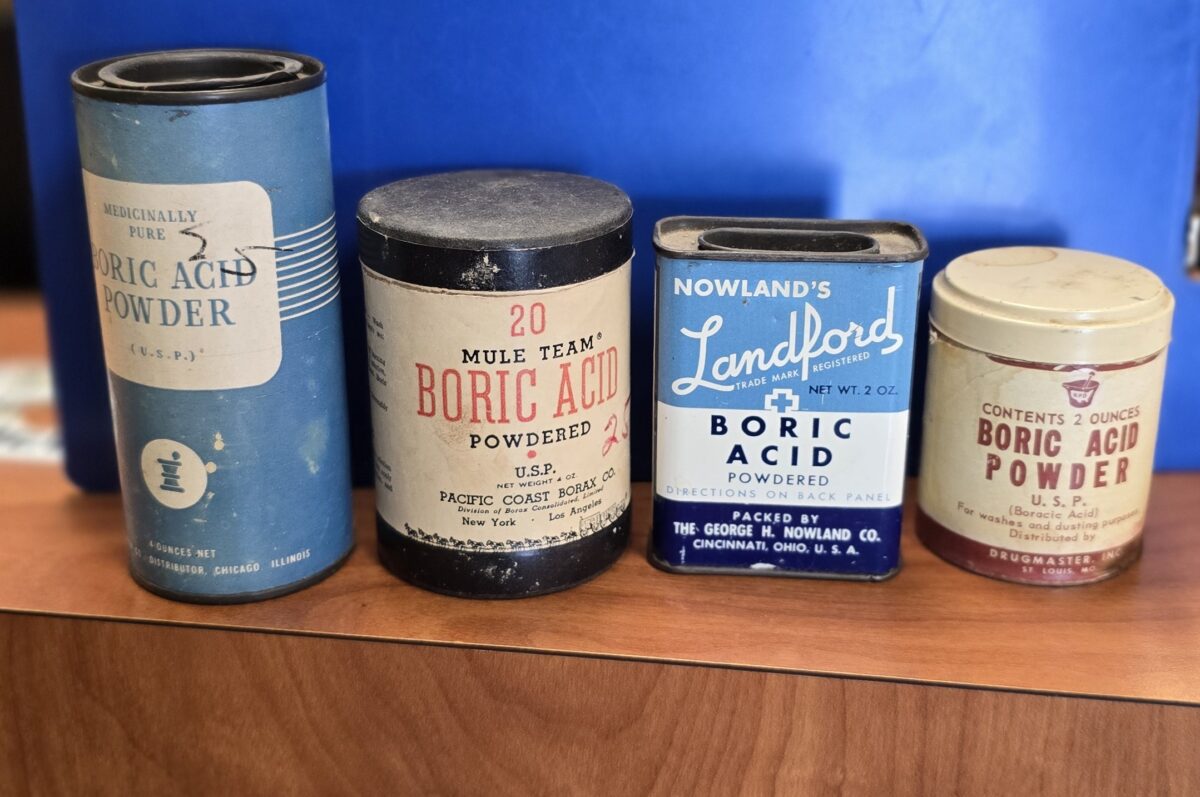
Description
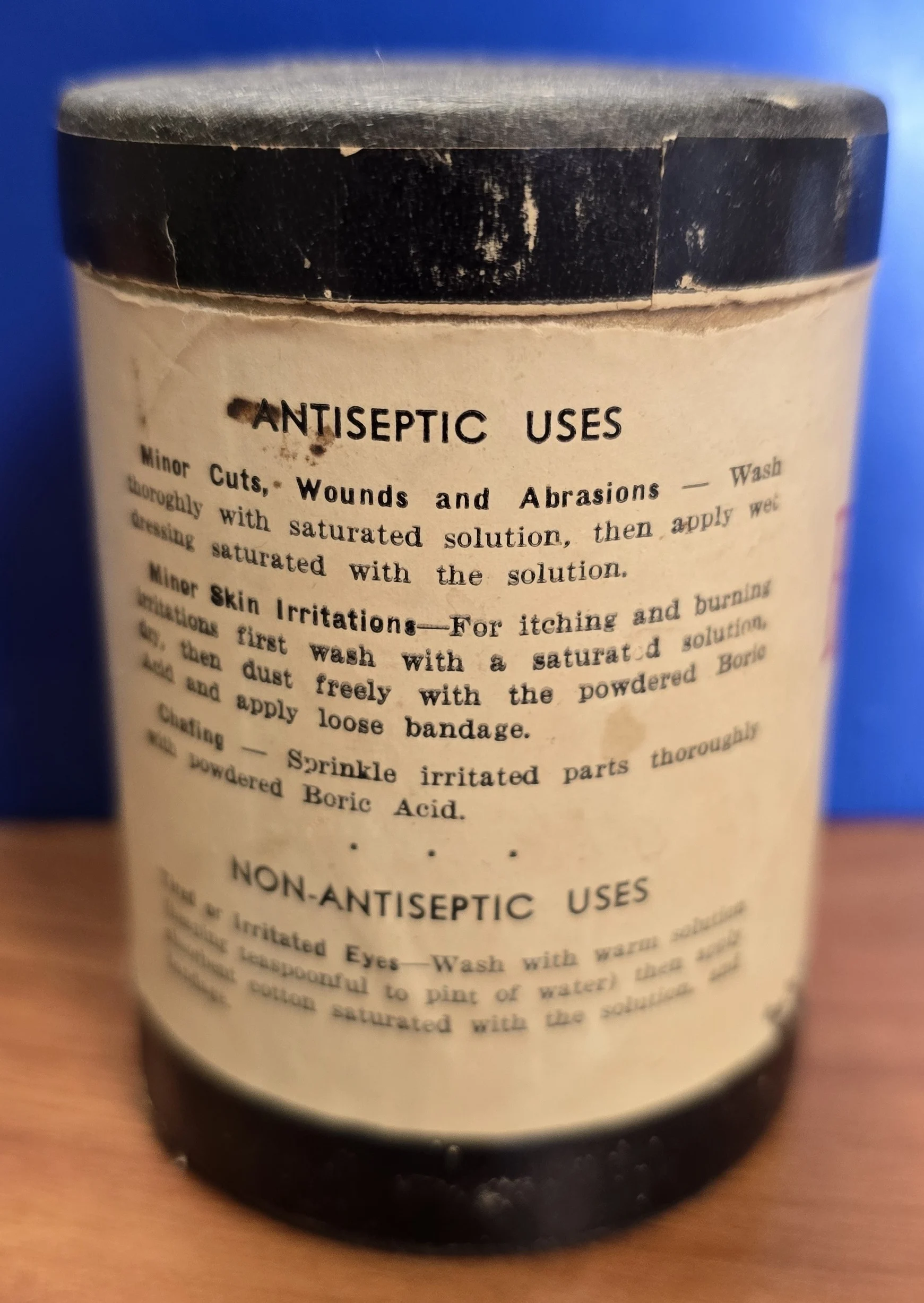
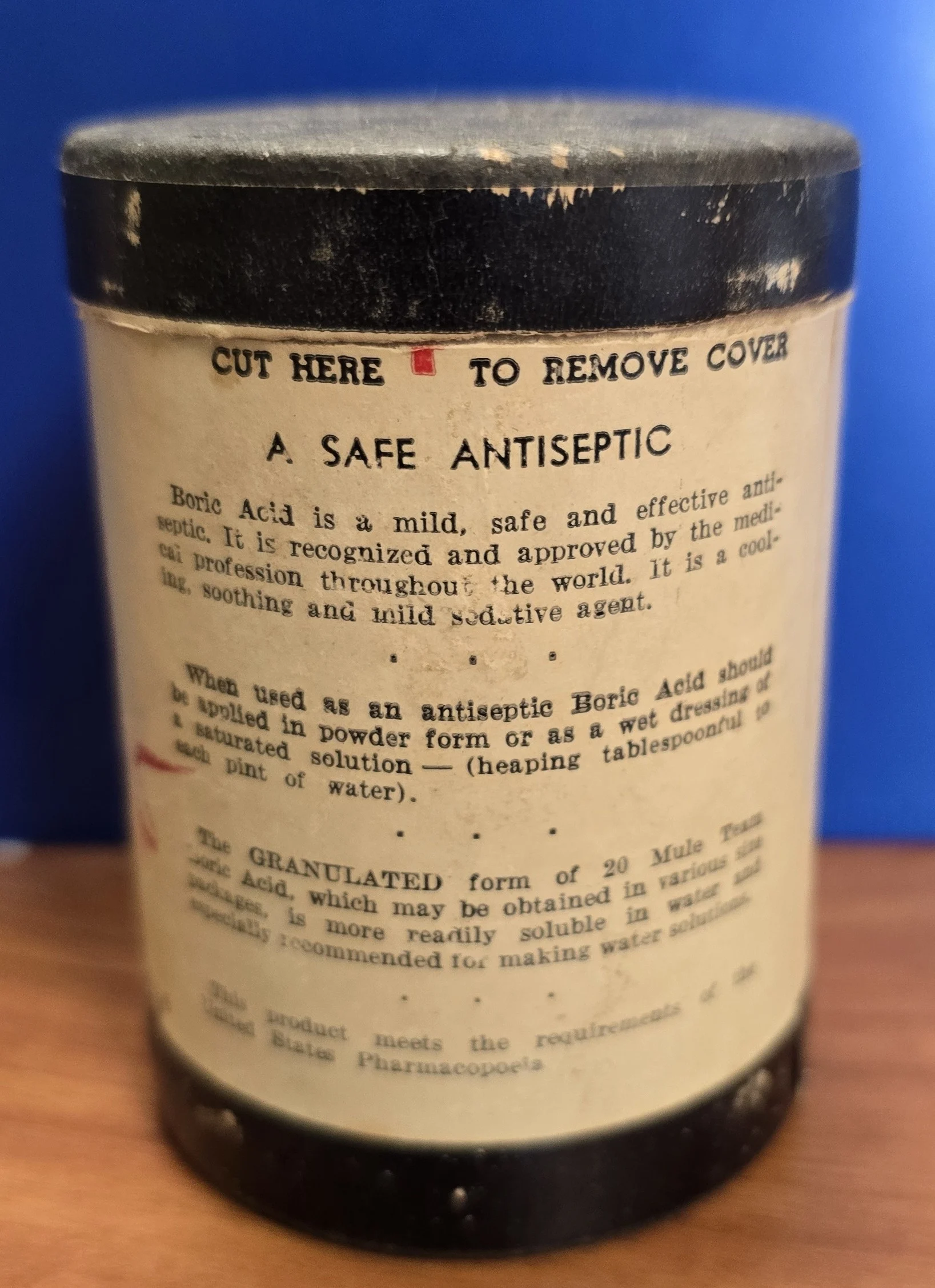
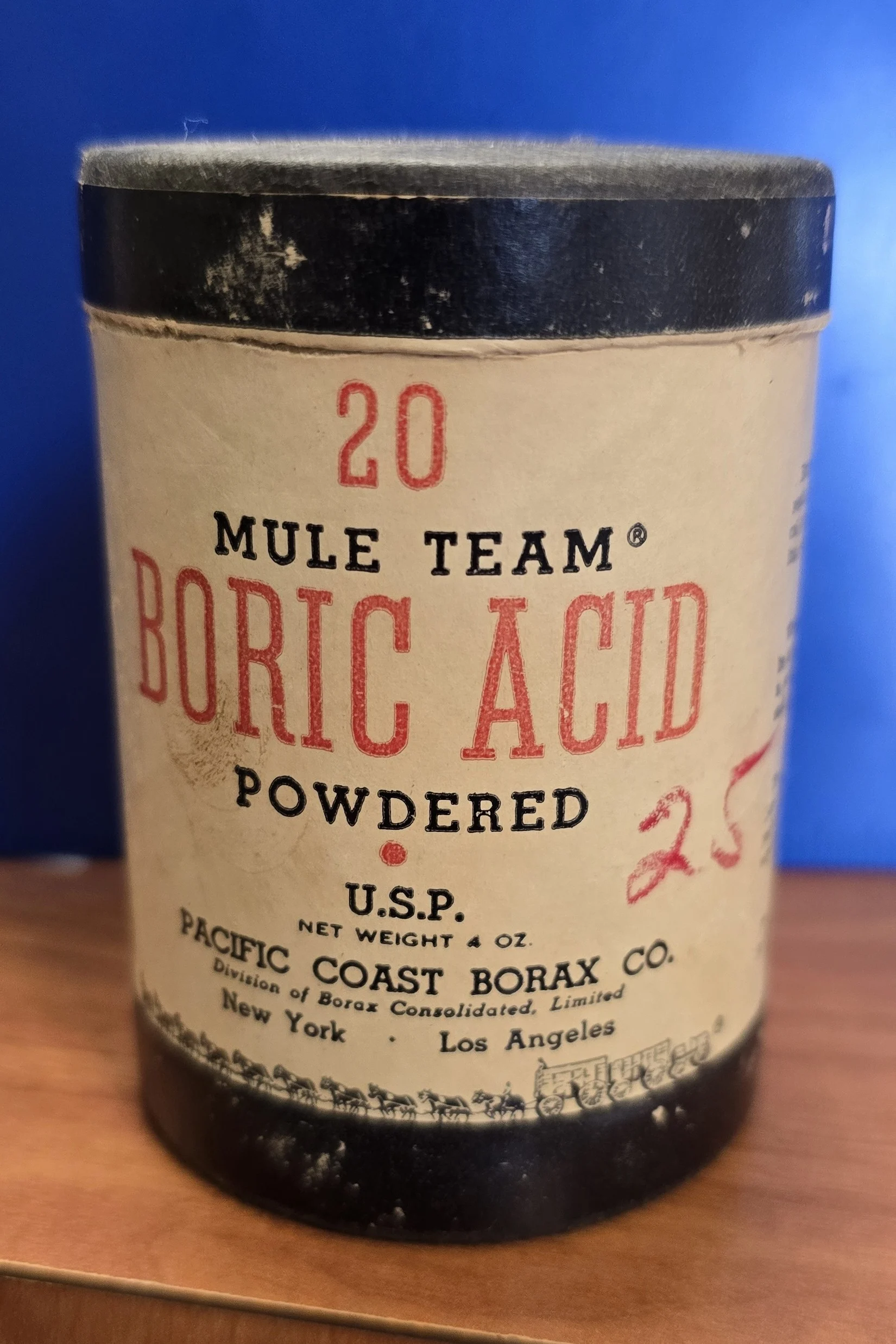
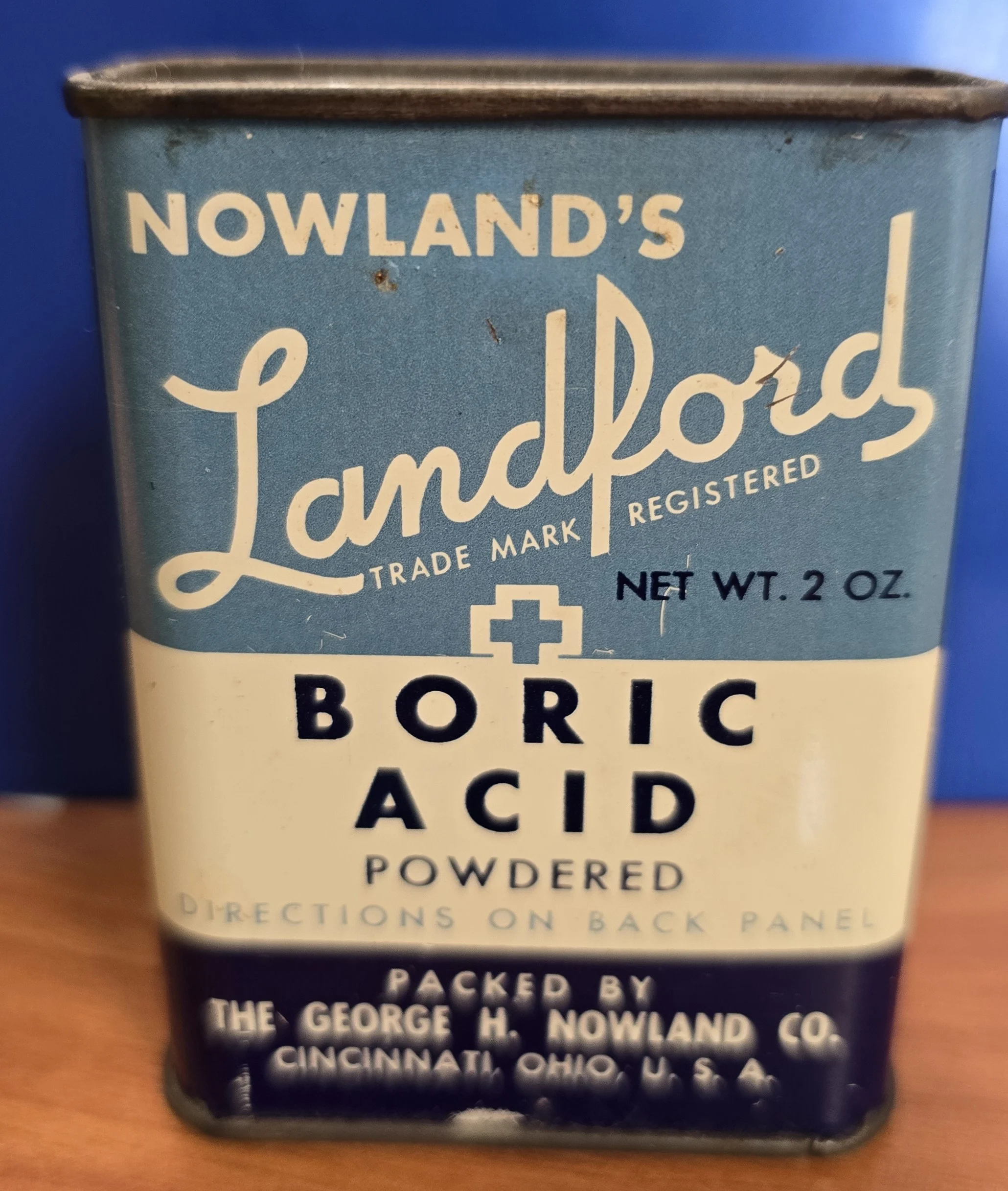
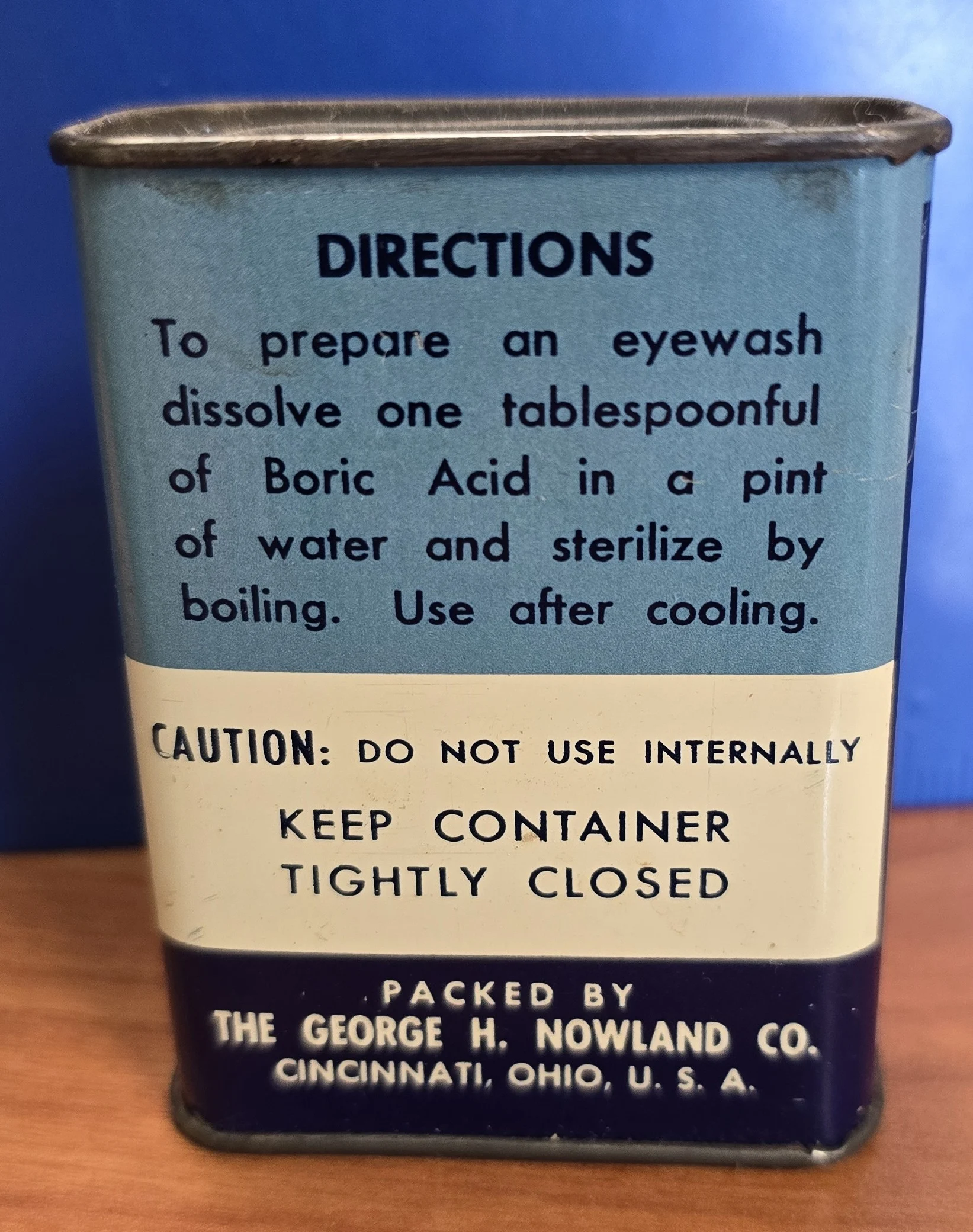
This set of boric acid containers reflects common over-the-counter antiseptic packaging from the early to mid-20th century. The collection includes:
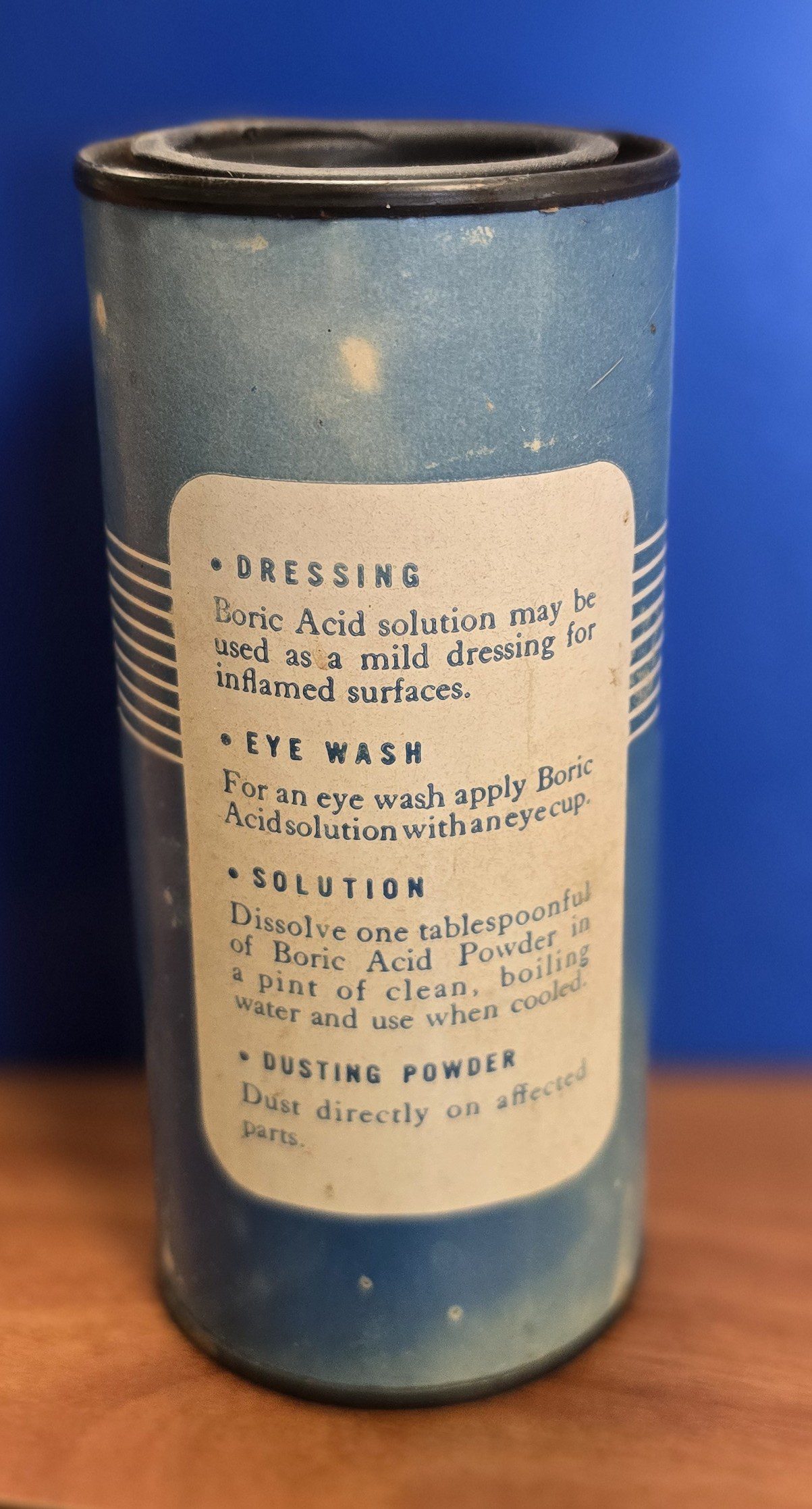
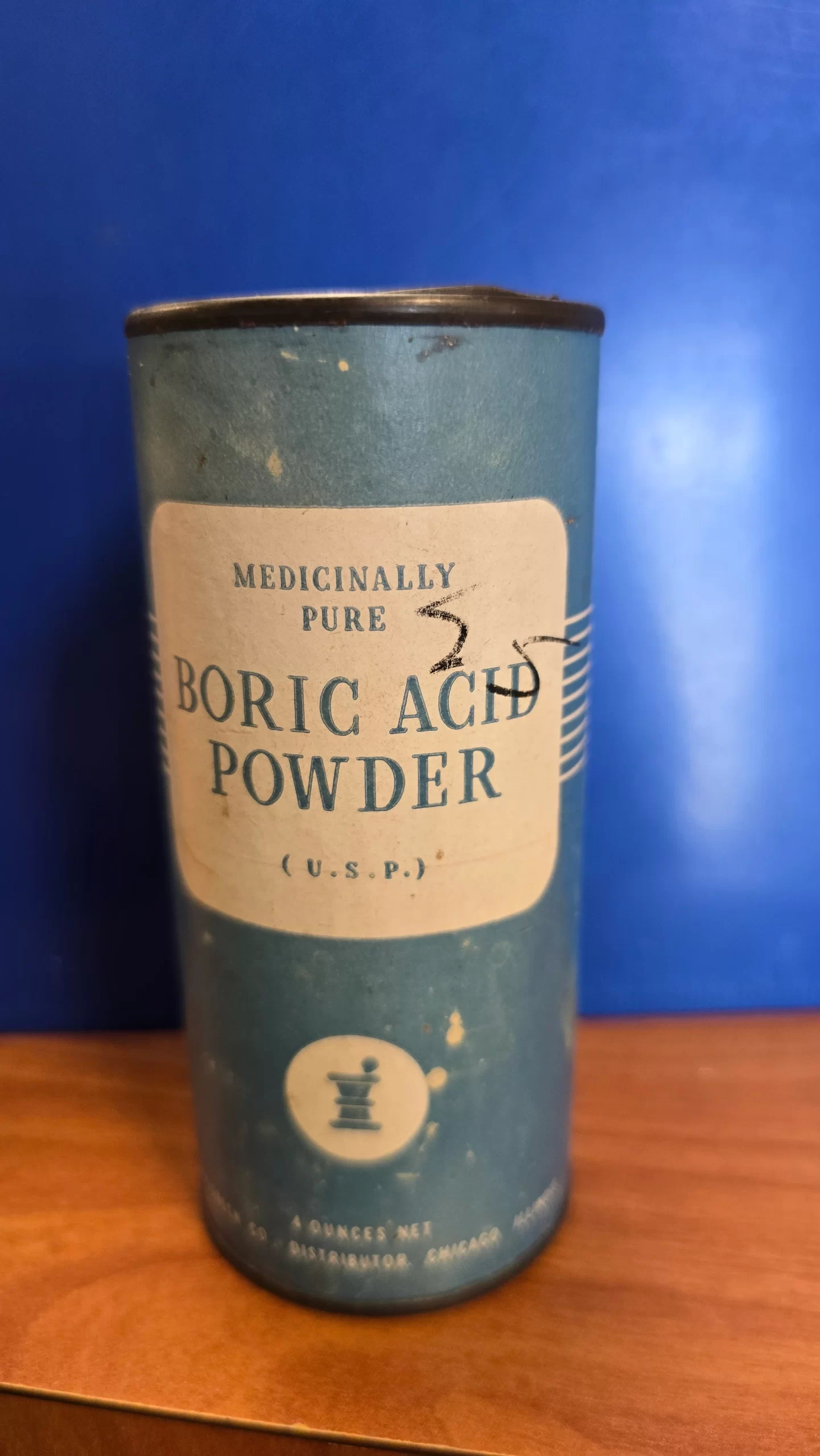
Cylindrical cardboard tubes labeled “Boric Acid Powder” (including Owl Drug Co. and Rexall)
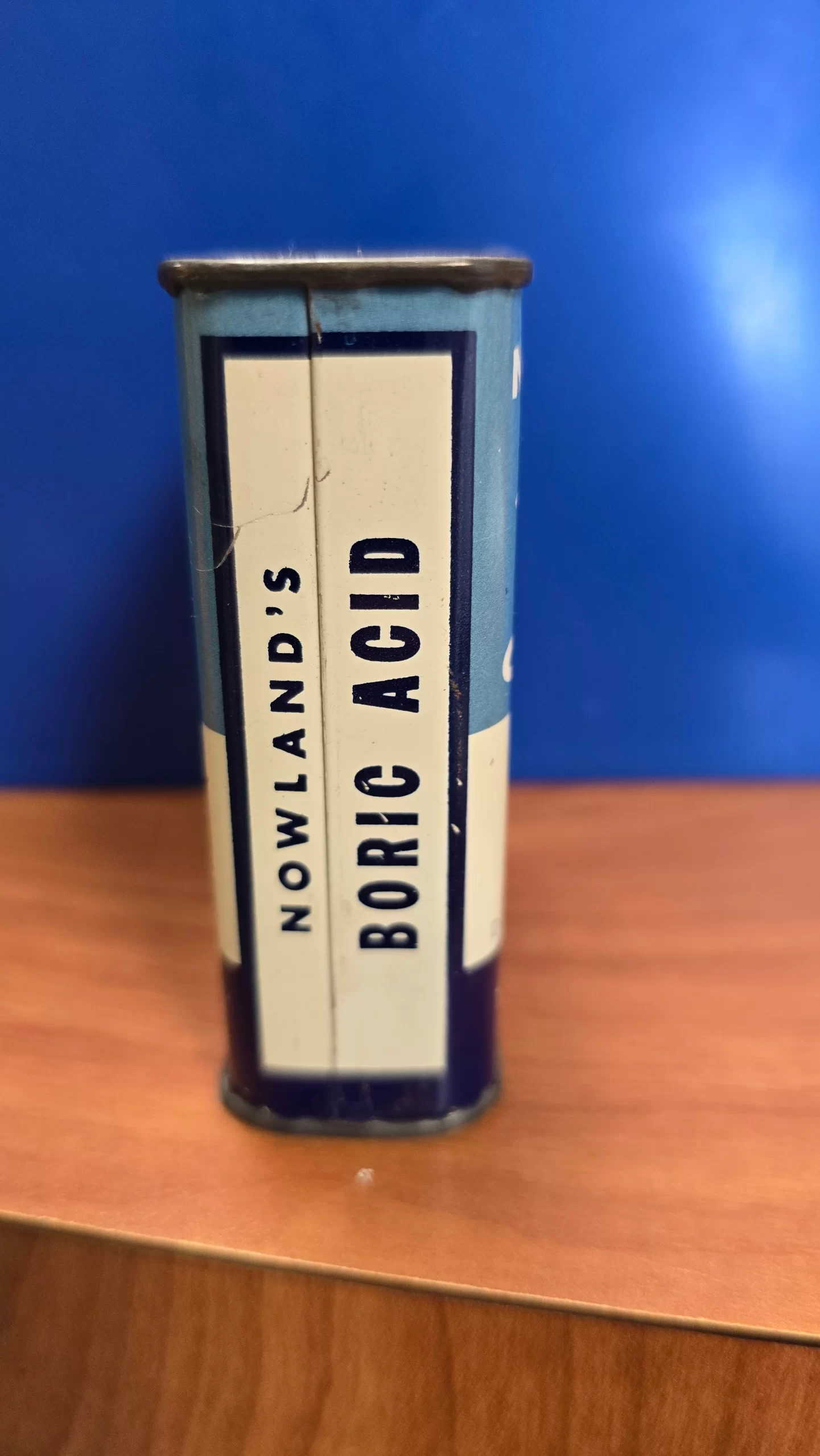
Metal tins with hinged lids and embossed or printed designs
Boric acid (H₃BO₃) was widely used as a mild antiseptic, especially for eye rinses, skin wounds, and fungal infections. It was commonly sold in powder form to be dissolved into 2%–5% solutions for topical use.
Packaging ranged from generic pharmacy-labeled containers to mass-marketed drugstore brands.
Condition
Cardboard tubes: fair to good; some fading and wear
Tins: moderate rusting on edges, labels intact
Gallery

Historical context
Boric acid became a staple in medical kits and household first-aid supplies by the early 1900s. It was included in the U.S. Pharmacopeia as a mild bacteriostatic agent and was especially popular as an eyewash, often recommended by pharmacists for conjunctivitis and general irritation.
Its use declined with the development of antibiotics and tighter FDA regulation of OTC drug labeling. Boric acid is still used today, though with more restricted indications.
Curious Facts, Ephemera, and Trivia
Despite its humble status today, boric acid was even used in early surgical dressings, and was often included in WWI-era field kits as a battlefield antiseptic. It was also used in foot powders and feminine hygiene products—until safety concerns and stricter labeling regulations scaled back its use.
Why it is in the Cabinet
Boric acid was once marketed as a near-universal antiseptic, cheap and trusted enough to sit in nearly every American medicine cabinet from the 1920s through the 1950s.
These containers represent a fascinating moment in medical retail history, when chemicals were sold freely over the counter with minimal oversight—but maximum public trust. Its presence in the Cabinet highlights how common chemicals once treated everything from athlete’s foot to eye infections.
Support Dr. Bebout’s Cabinet of Medical Curiosities
If you enjoy the history, the oddities, and the effort, help keep this cabinet open. Every little bit helps preserve and share the strange wonders of medicine's past.
Buy Me a Ko-fi ☕ Buy Me a Coffee ☕ Tip via PayPal 💵