
Title
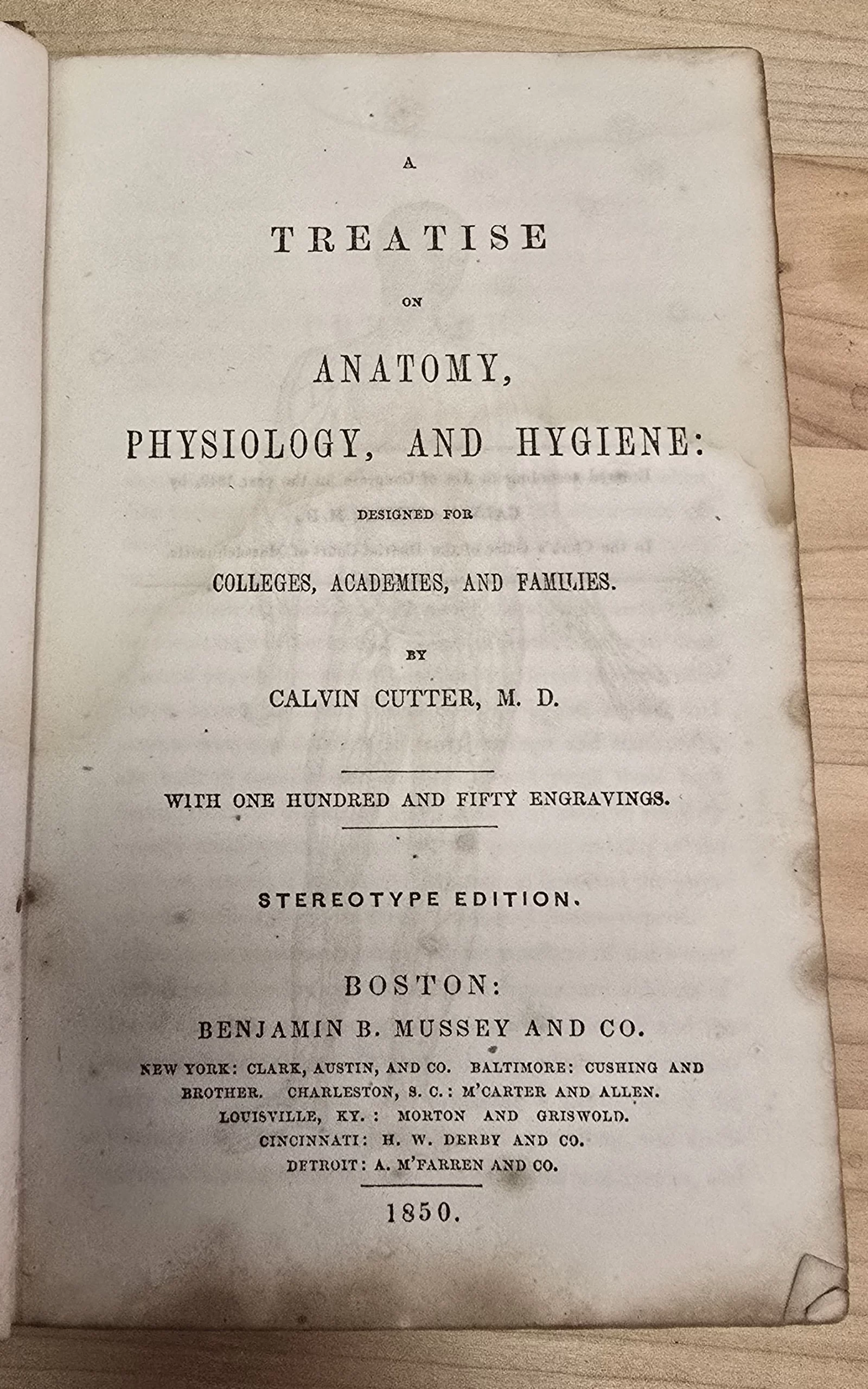
A Treatise on Anatomy, Physiology, and Hygiene (1850 Stereotype Edition)
Author
Calvin Cutter, M.D. Publisher: Benjamin B. Mussey and Co., Boston Date of Publication: 1850
Image
Description
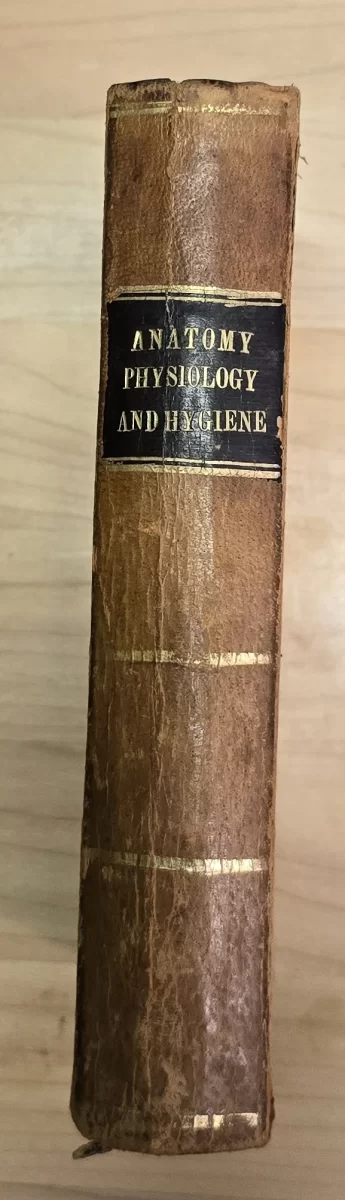
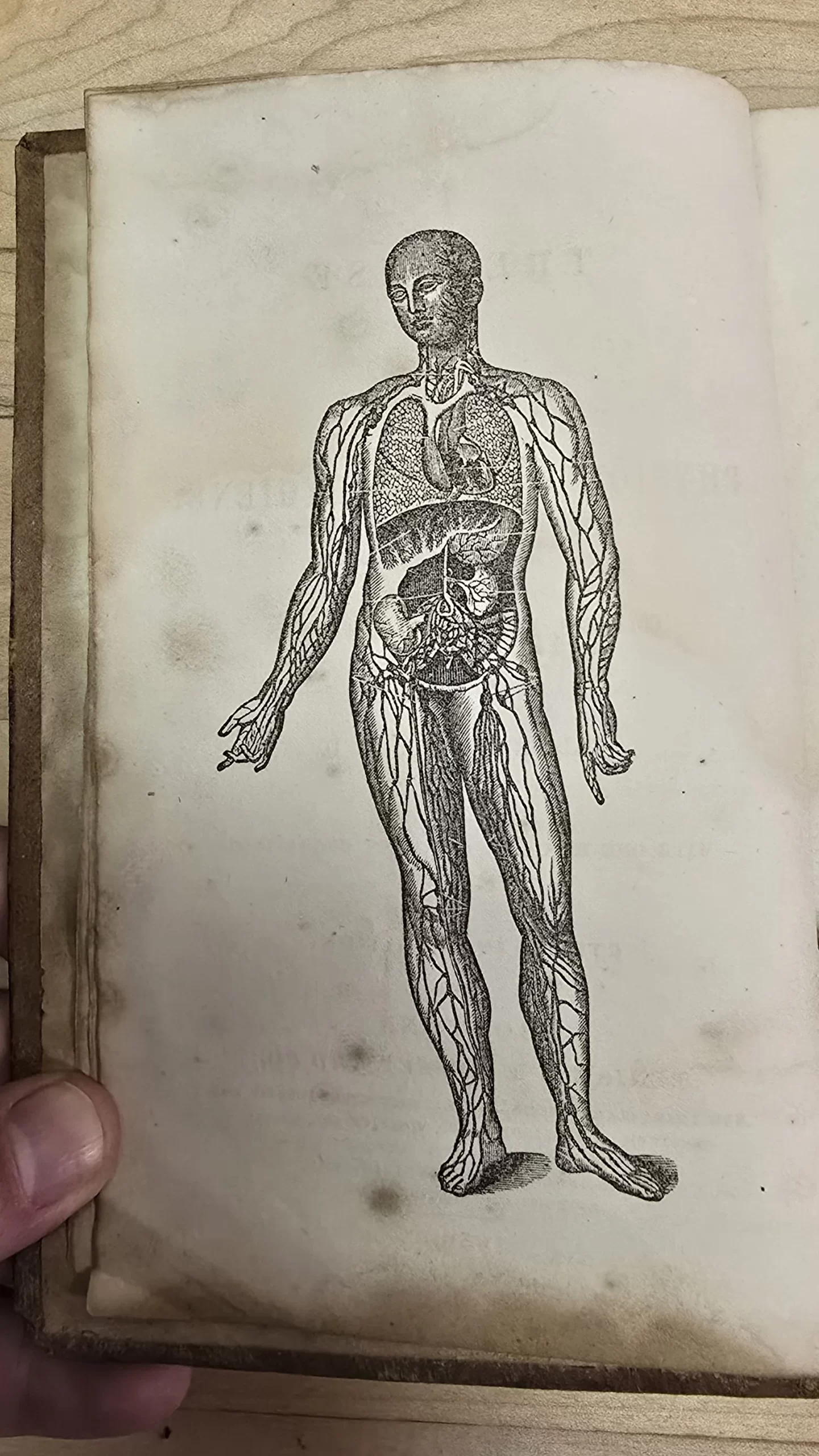
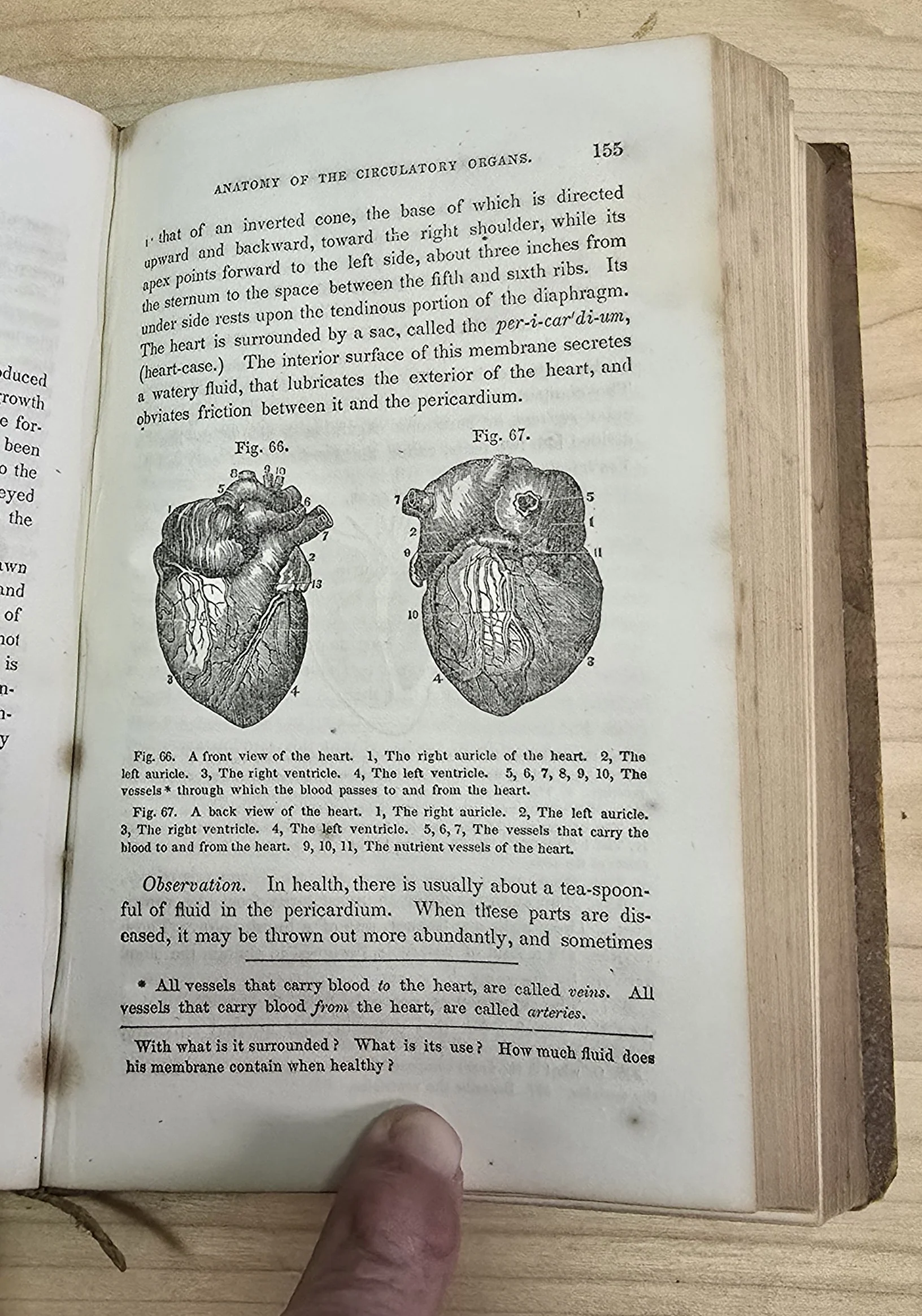
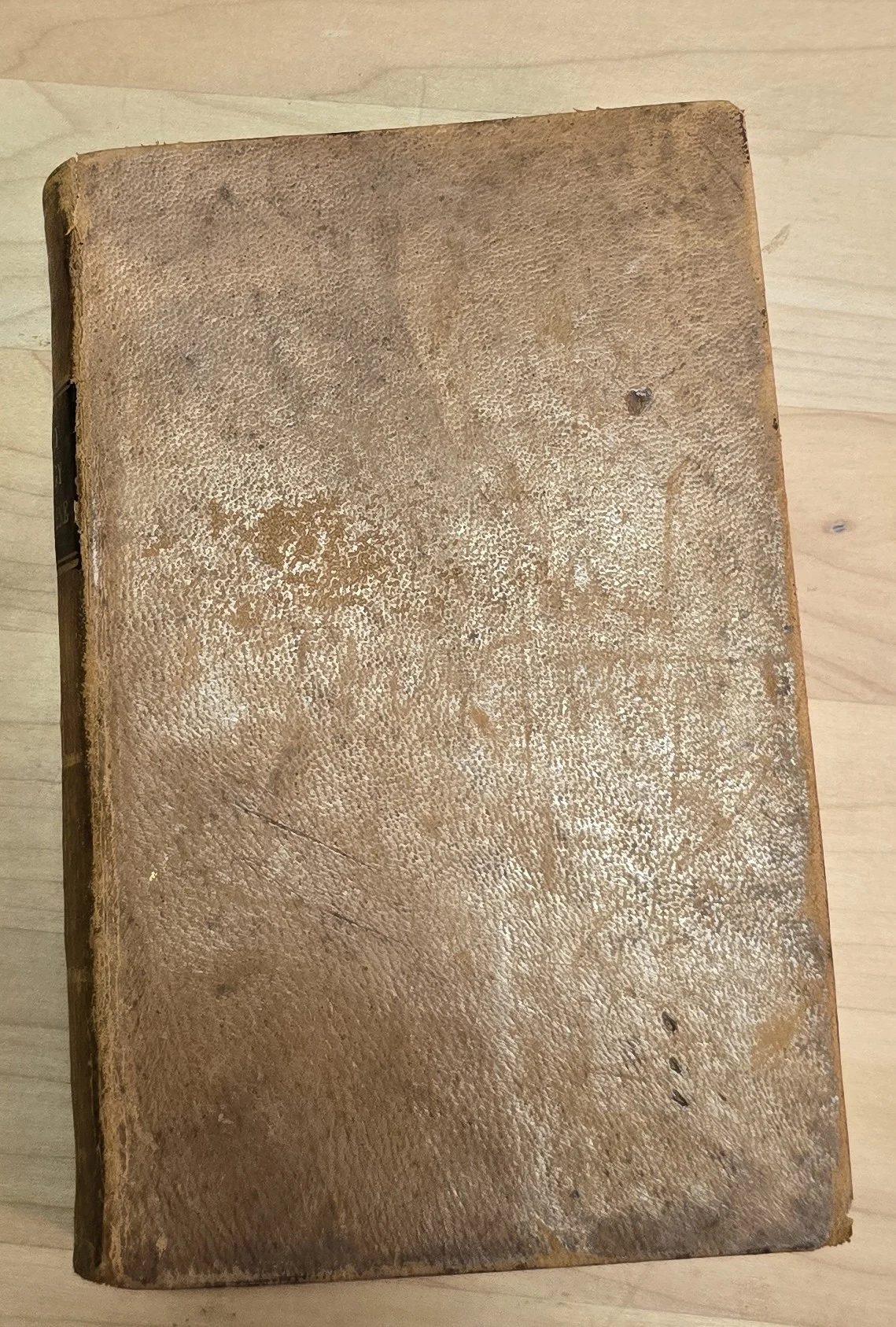
This 1850 stereotype edition of A Treatise on Anatomy, Physiology, and Hygiene by Calvin Cutter, M.D., was intended as an educational manual for colleges, academies, and families. It contains 150 engravings, ranging from anatomical illustrations to depictions of the circulatory and nervous systems. Its compact size, worn leather binding, and heavily aged pages suggest it was well-used in its day. The most notable illustration features a full-body diagram of human anatomy, rendered in remarkable detail for a mid-19th century popular text.
Condition
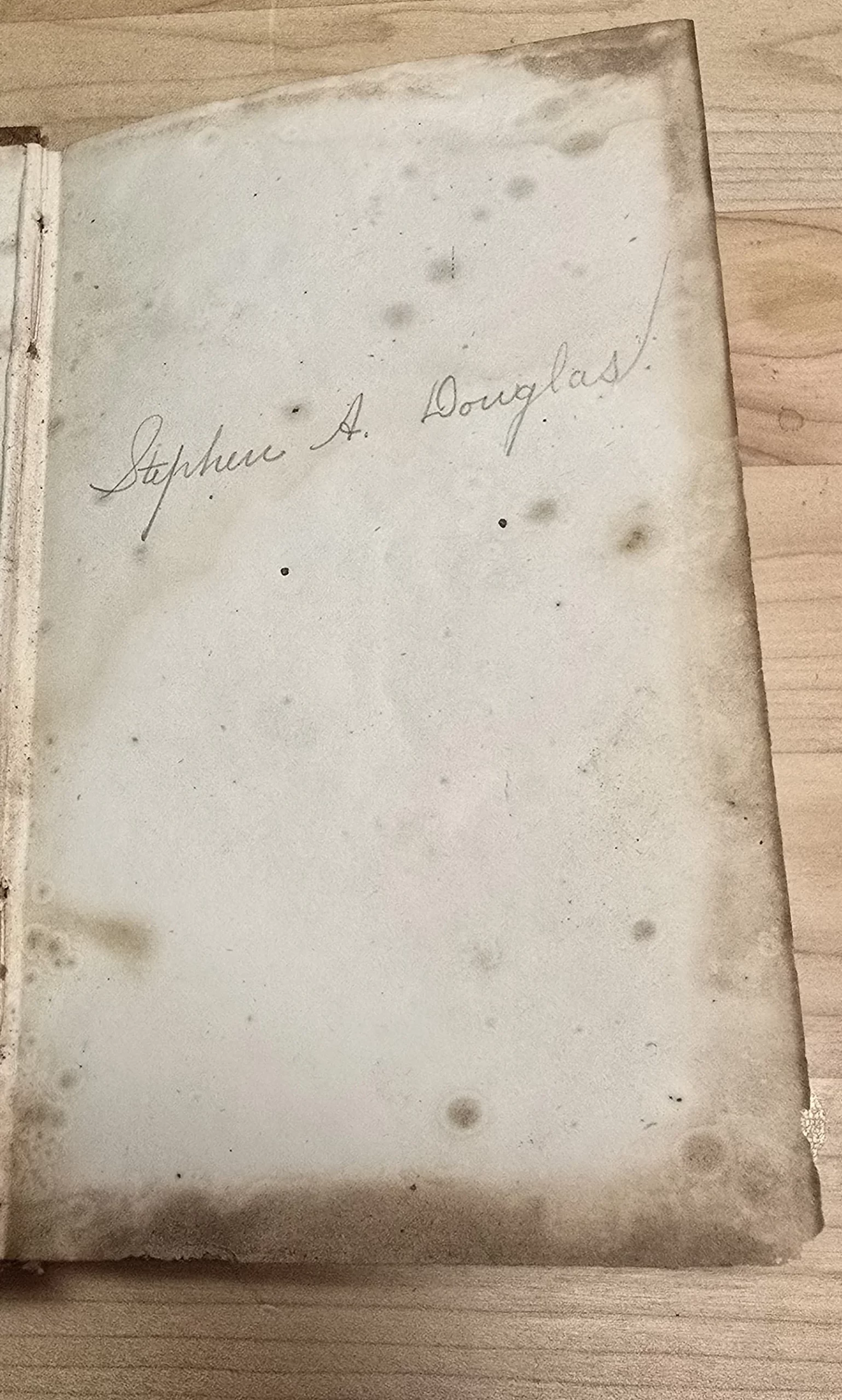
The book shows extensive age-related wear, including foxing, water damage, and dark staining on the endpapers. However, the binding is intact, and the illustrations remain legible. The spine, with a black-and-gold label reading “Anatomy, Physiology and Hygiene,” is still affixed. An inscription in the front reads “Stephen A. Douglas,” which may or may not be linked to the famed 19th-century senator.
Gallery
Historical context
The book shows extensive age-related wear, including foxing, water damage, and dark staining on the endpapers. However, the binding is intact, and the illustrations remain legible. The spine, with a black-and-gold label reading “Anatomy, Physiology and Hygiene,” is still affixed. An inscription in the front reads “Stephen A. Douglas,” which may or may not be linked to the famed 19th-century senator.
Curious Facts, Ephemera, and Trivia
Calvin Cutter was a prolific medical author whose books were widely used in New England schools.
This edition was likely printed using stereotyped plates, a cost-saving technique that allowed reprints without resetting type.
Though marketed to families, it includes graphic depictions of anatomy seldom seen outside formal training.
Excerpt
“All vessels that carry blood to the heart, are called veins. All vessels that carry blood from the heart, are called arteries.”
Why it is in the Cabinet
This volume bridges academic and domestic health education in a time before mass medical schooling. Its practical tone, direct illustrations, and educational framing make it a compelling contrast to more clinical works like Gray’s Anatomy. The possible connection to Stephen A. Douglas adds a layer of curiosity and historical intrigue.
Support Dr. Bebout’s Cabinet of Medical Curiosities
If you enjoy the history, the oddities, and the effort, help keep this cabinet open. Every little bit helps preserve and share the strange wonders of medicine's past.
Buy Me a Ko-fi ☕ Buy Me a Coffee ☕ Tip via PayPal 💵