
Title
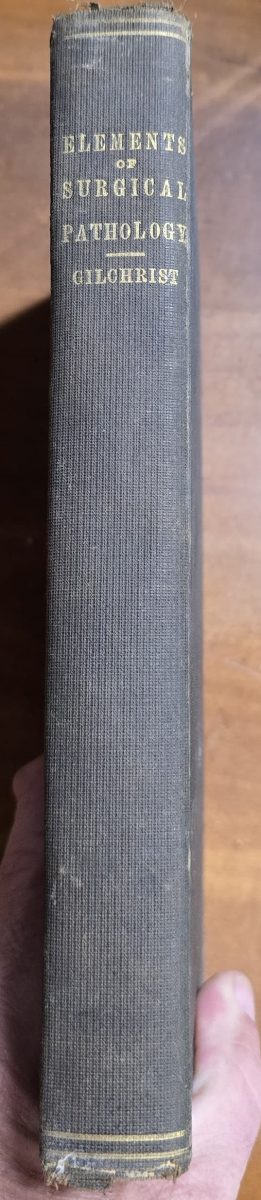
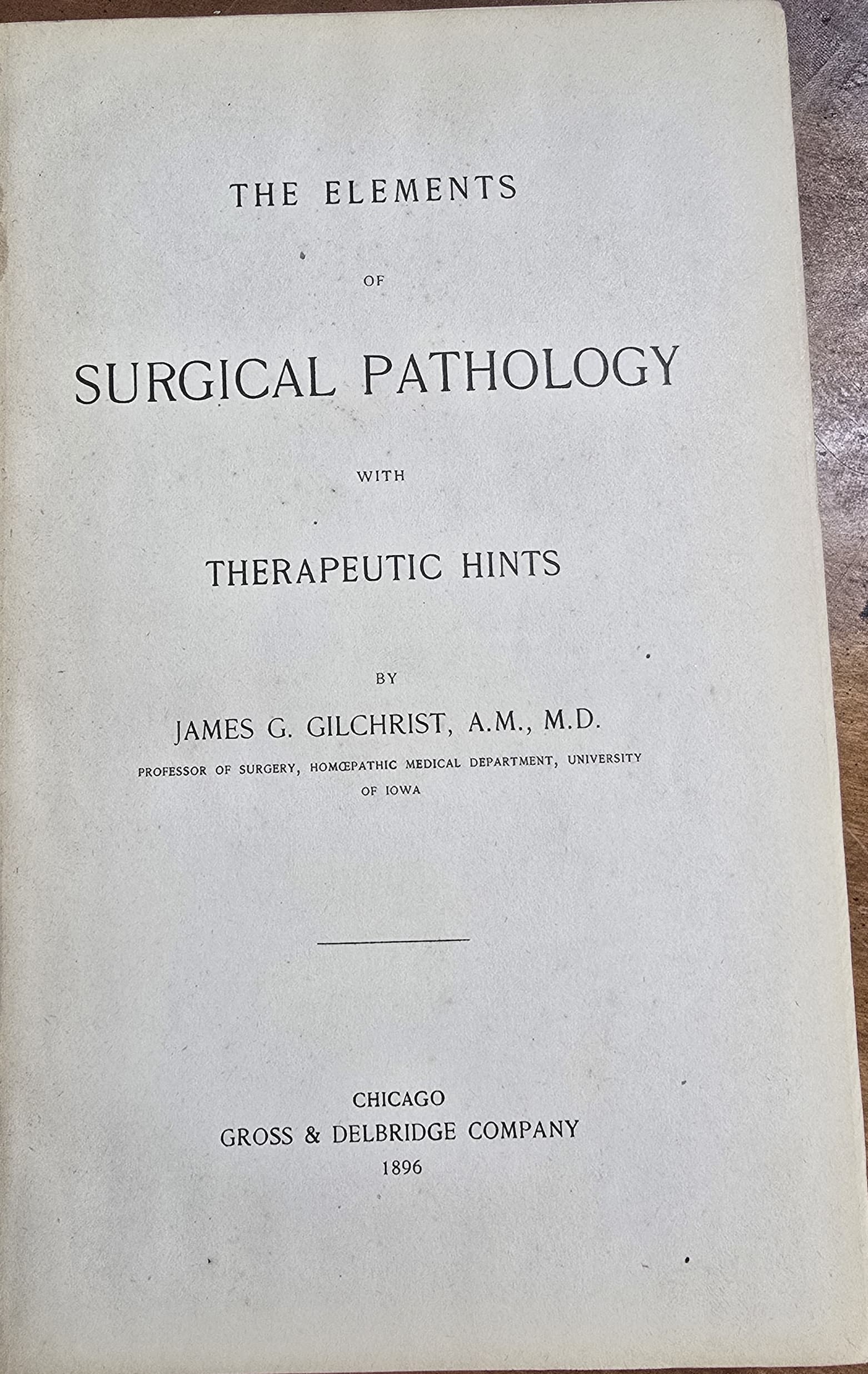
The Elements of Surgical Pathology with Therapeutic Hints
Author
James G. Gilchrist, A.M., M.D.
Professor of Surgery, Homeopathic Medical Department, University of Iowa
Image
Description
A surgical pathology textbook published in 1896 that combines traditional operative insight with homeopathic treatment strategies. Gilchrist presents clinical methods and therapeutic recommendations tailored for both prophylaxis and surgical recovery. His writing bridges two medical ideologies that were often at odds at the time, providing rare insight into late 19th-century American medicine.
Condition
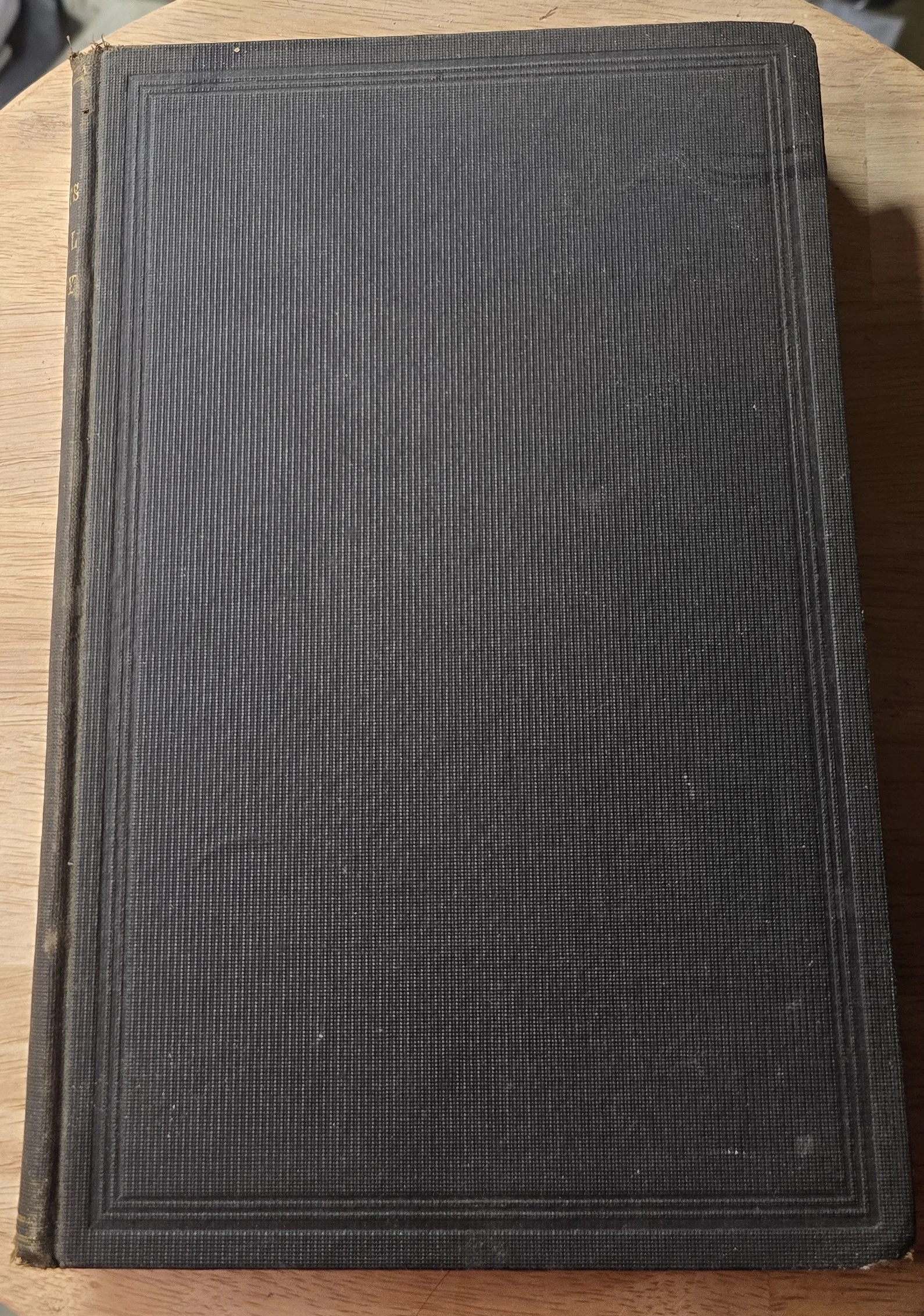
Binding is intact. Spine shows minor fraying on the top and bottom edges. The cover is worn but structurally solid. Pages are clean and legible with only minor yellowing.
Gallery
Historical context
This book was published at the end of the 19th century, a time of deep conflict between allopathic and homeopathic medicine. Gilchrist’s dual role as a surgeon and a homeopath at a major medical school exemplifies the transitional era of American medicine. The volume’s reference to President Garfield’s death further highlights ongoing debates over antisepsis, surgical technique, and treatment ideology during this period.
Curious Facts, Ephemera, and Trivia
The author references President Garfield’s death as a surgical case study—highlighting 19th-century debates over antiseptic practices.
Recommends herbal agents like Hypericum, Arnica, and Ledum in the management of wound trauma and infection.
Offers a unique hybrid perspective uncommon in mainstream surgical texts.
Excerpt
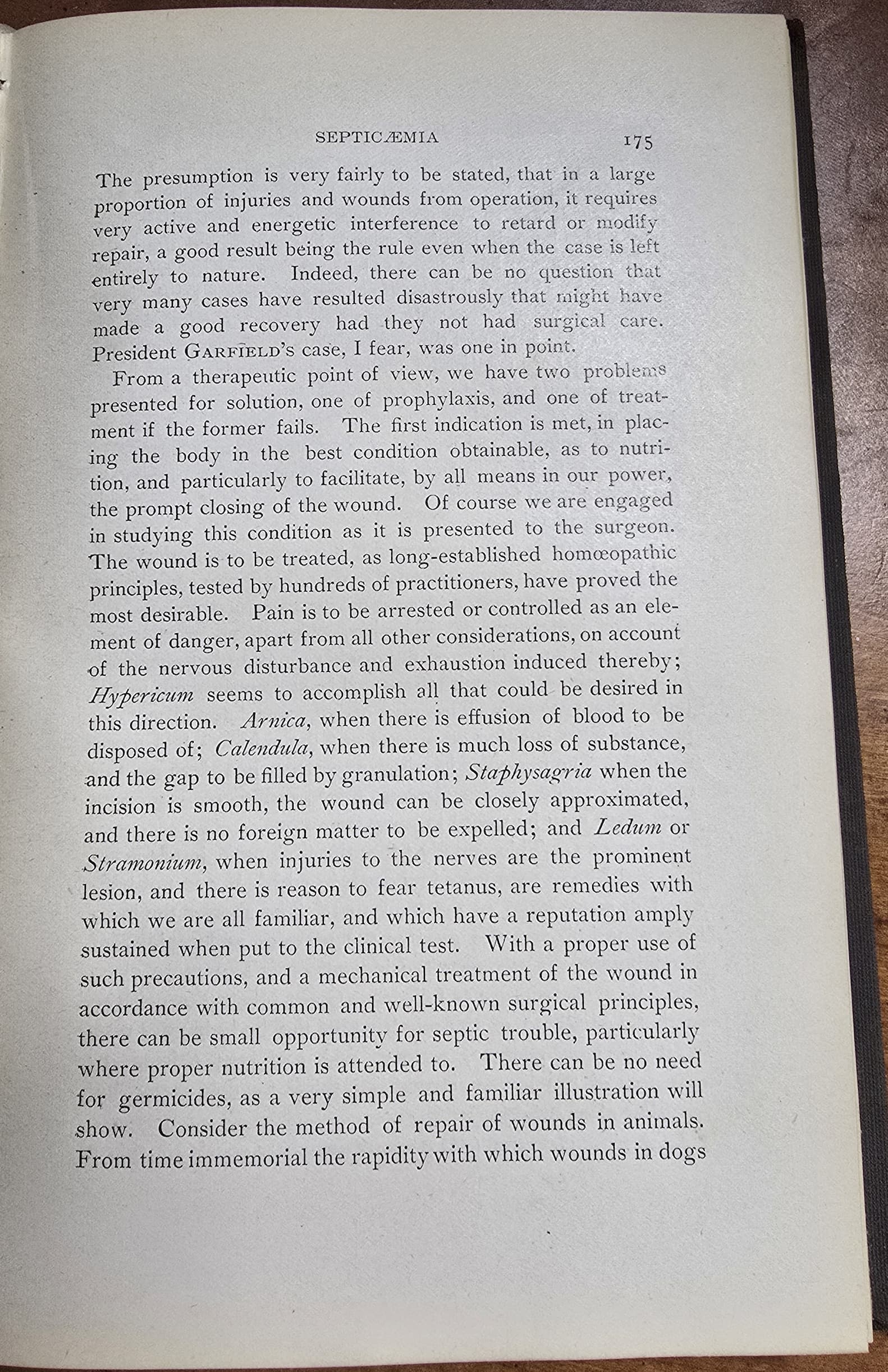
“Indeed, there can be no question that very many cases have resulted disastrously that might have made a good recovery had they not had surgical care. President Garfield’s case, I fear, was one in point.”
“Pain is to be arrested or controlled as an element of danger… Hypericum seems to accomplish all that could be desired in this direction.”
Why it is in the Cabinet
This book represents a peculiar hybrid of homeopathy and surgical tradition at a time when germ theory was still gaining full acceptance. The recommendations for wound healing—ranging from Arnica to closing incisions “when smooth”—reflect both a desire for rational surgery and a reliance on energetically active botanicals. It’s a window into the strange overlap of two clashing schools of thought, and its practical tone makes it a standout relic of a divided profession.
Support Dr. Bebout’s Cabinet of Medical Curiosities
If you enjoy the history, the oddities, and the effort, help keep this cabinet open. Every little bit helps preserve and share the strange wonders of medicine's past.
Buy Me a Ko-fi ☕ Buy Me a Coffee ☕ Tip via PayPal 💵