
Title
What Causes Disease
Author
P. L. Clark, B.S.M.D.
Image
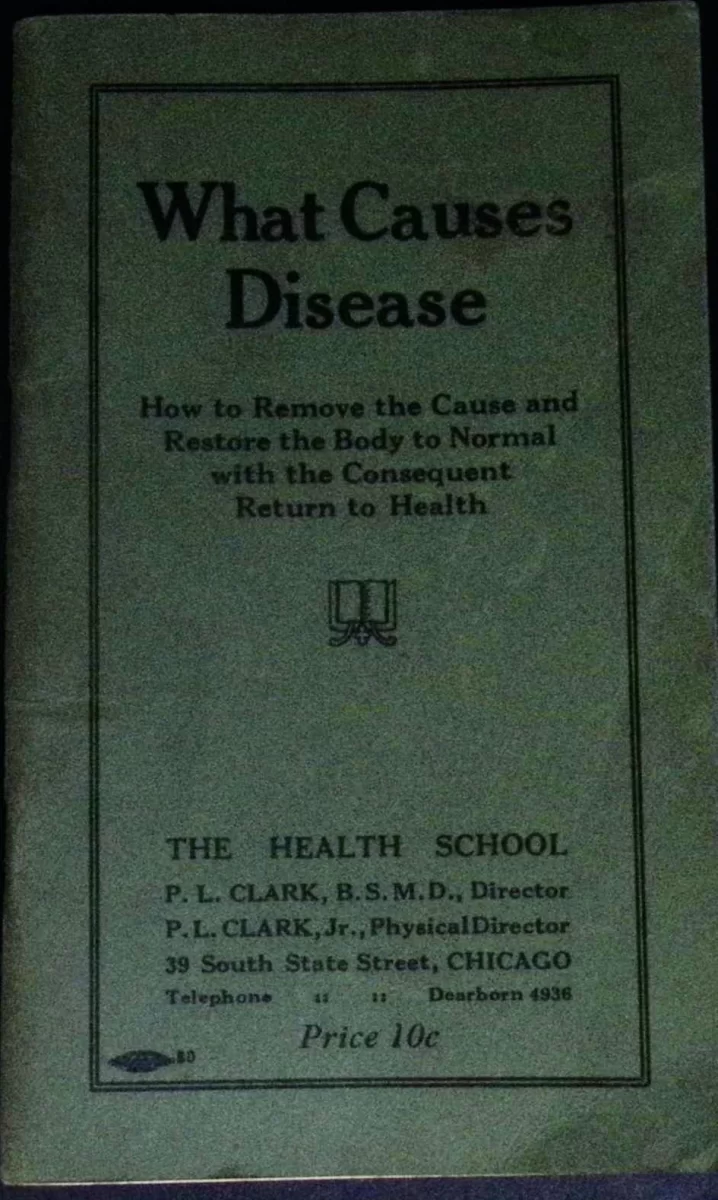
Description
Published by The Health School of Chicago in the early 1920s, What Causes Disease is an illustrated health reform booklet promoting the teachings of P. L. Clark. The work rejects germ theory as the primary cause of disease and instead argues that illness results from “acidosis” and “toxicosis” caused by improper diet and lifestyle habits. Throughout the booklet, Clark attacks mainstream medicine, vaccination programs, serum therapy, and public health authorities while advocating exercise, sanitation, dietary reform, and personal responsibility for health.
Part medical manifesto, part promotional literature, and part social commentary, the booklet offers a fascinating glimpse into the alternative health movements that flourished in America following the 1918 influenza pandemic. The publication also served as an advertisement for Clark’s correspondence-based Health School, which promised individualized instruction to restore health through natural methods.
Download the Original Publication
A complete PDF scan of What Causes Disease is available for research, educational, and historical study purposes.
This scan is provided as part of Dr. Bebout’s Cabinet of Medical Curiosities to preserve and share historically significant medical literature, health reform publications, and examples of fringe medical thought from the nineteenth and early twentieth centuries.
Condition
Original paper-covered booklet. Complete. Light age-related wear and toning consistent with an inexpensive publication intended for everyday use. Interior pages remain highly readable with several striking illustrations preserved in excellent condition.
Gallery
Historical context
The early twentieth century witnessed intense public debate regarding vaccination, germ theory, sanitation, and modern medicine. While scientific medicine was becoming increasingly organized and influential, numerous competing health movements promoted alternative explanations for disease. Natural hygiene advocates, physical culture enthusiasts, fasting proponents, and dietary reformers often rejected conventional medical treatments in favor of lifestyle-based approaches.
What Causes Disease represents this period perfectly. Written only a few years after the devastating influenza pandemic of 1918–1919, the booklet captures widespread skepticism toward vaccines, serums, and institutional medicine that existed alongside rapidly advancing medical science.
Curious Facts, Ephemera, and Trivia
- Clark repeatedly refers to vaccines and serums as “dirty soups.”
- The booklet claims that germs are the product of disease rather than its cause.
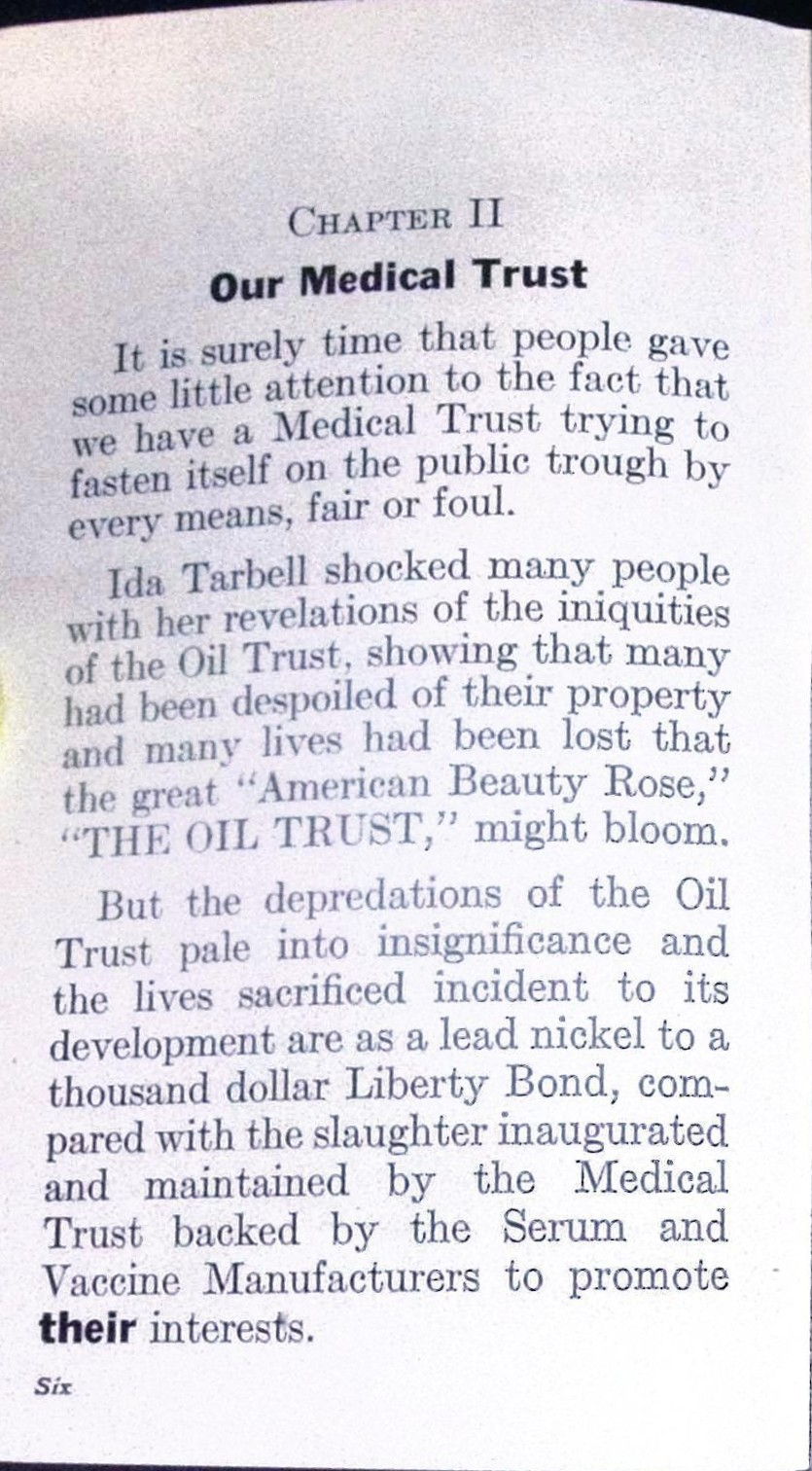
- Several chapters attack the medical profession as a commercialized “Medical Trust.”
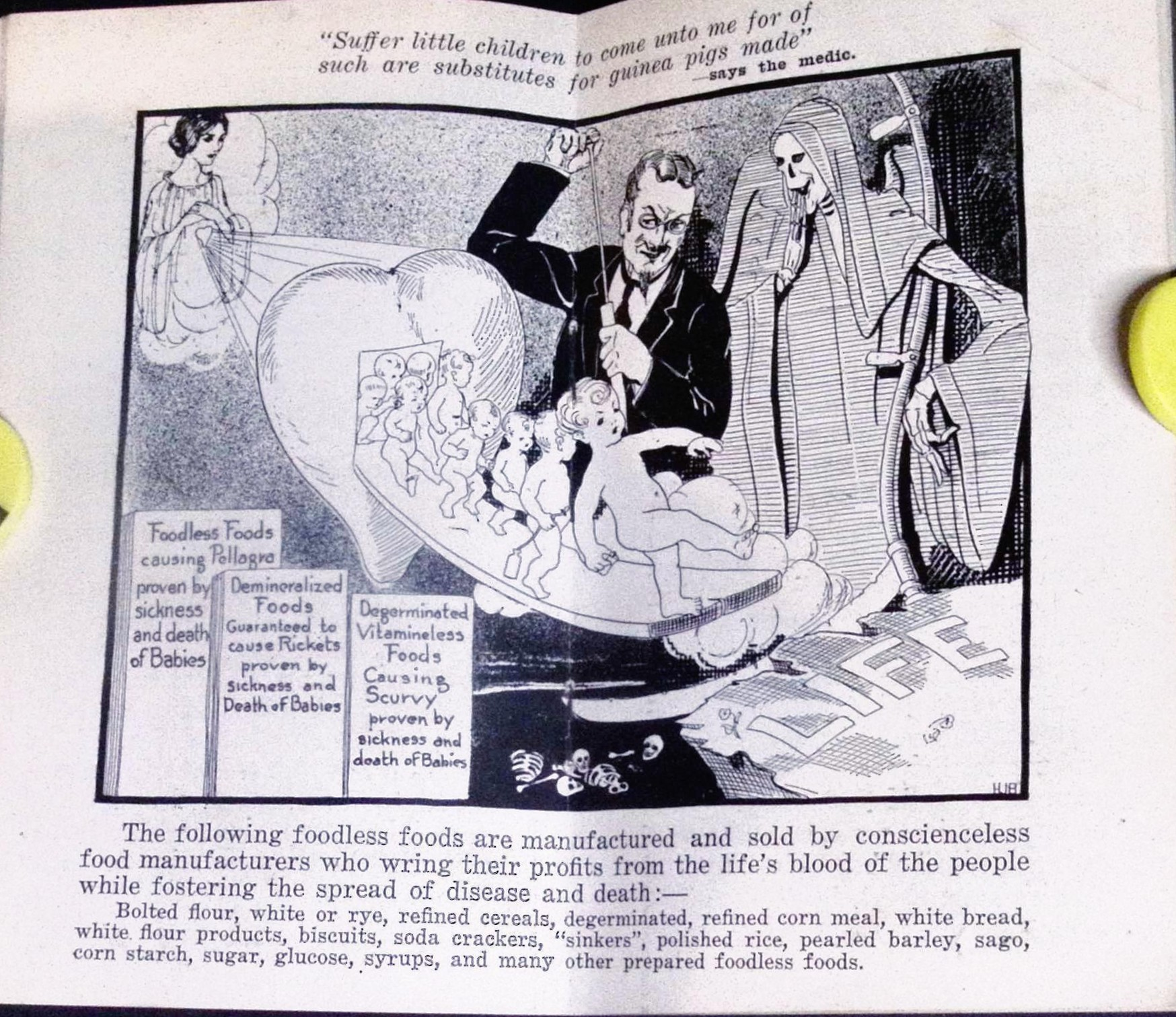
- One of the most memorable illustrations depicts orphan children being used as substitutes for guinea pigs in medical experiments.
- The publication functioned as both a health tract and a marketing piece for a Chicago-based correspondence school.
- The cover price was only ten cents, making it affordable to a wide audience seeking alternatives to conventional medical care.
Excerpt
“The true cause of disease is not mentioned in any medical text nor known nor taught in any medical school in the world so not knowing the cause it is of course impossible for the medical profession to cure disease.”
Why it is in the Cabinet
Medical history is more than the story of accepted science. It is also the story of competing ideas, public fears, and the continual search for answers. This booklet preserves a moment when alternative health movements openly challenged vaccination, germ theory, and mainstream medicine. Although its conclusions have not stood the test of time, it serves as an important reminder that debates surrounding public health, medical authority, and disease causation are far older than many people realize.
The dramatic illustrations, provocative claims, and unapologetic criticism of organized medicine make this a fascinating artifact of early twentieth-century fringe medical thought and an excellent example of health reform ephemera.
Support Dr. Bebout’s Cabinet of Medical Curiosities
If you enjoy the history, the oddities, and the effort, help keep this cabinet open. Every little bit helps preserve and share the strange wonders of medicine's past.
Buy Me a Ko-fi ☕ Buy Me a Coffee ☕ Tip via PayPal 💵