
Title
Tiemann Surgical Instrument Kit in Wooden Case
Author
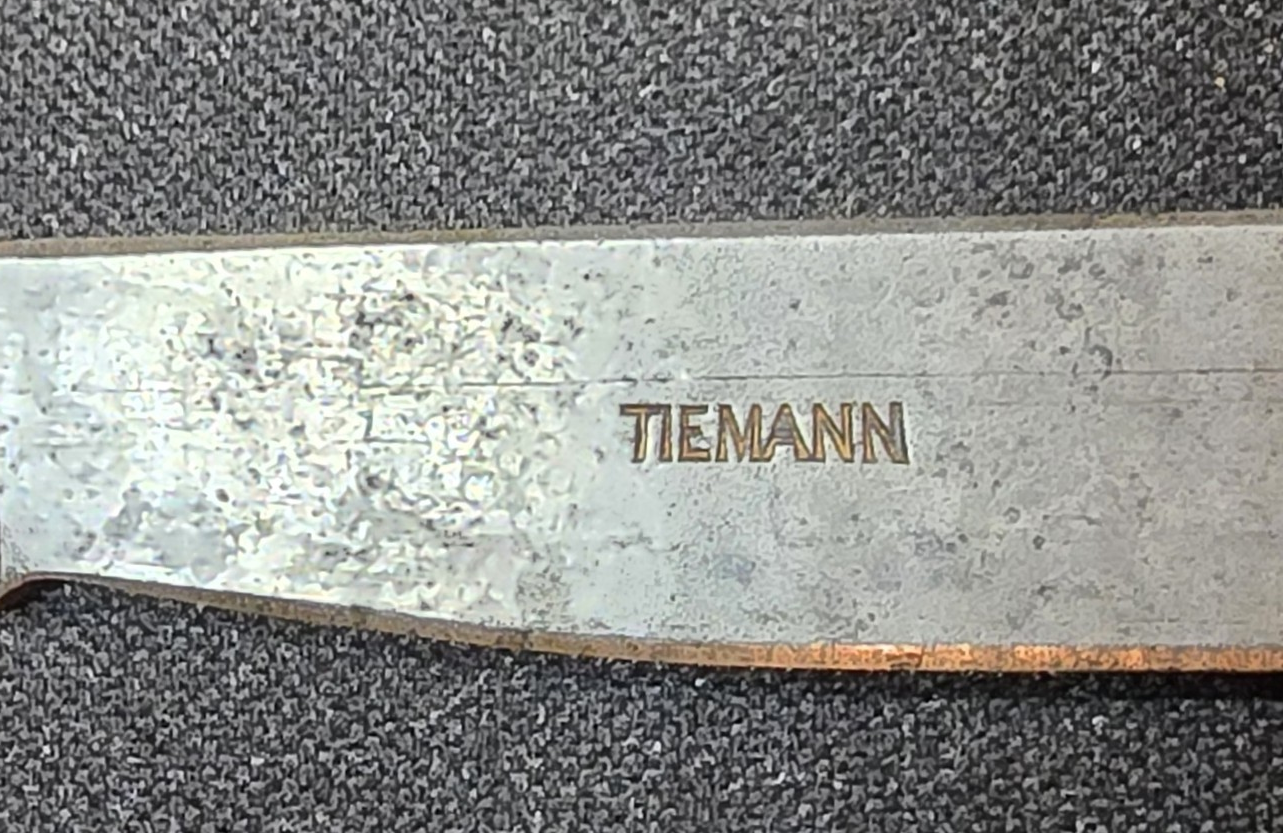
Manufactured by Tiemann & Co., New York
Image
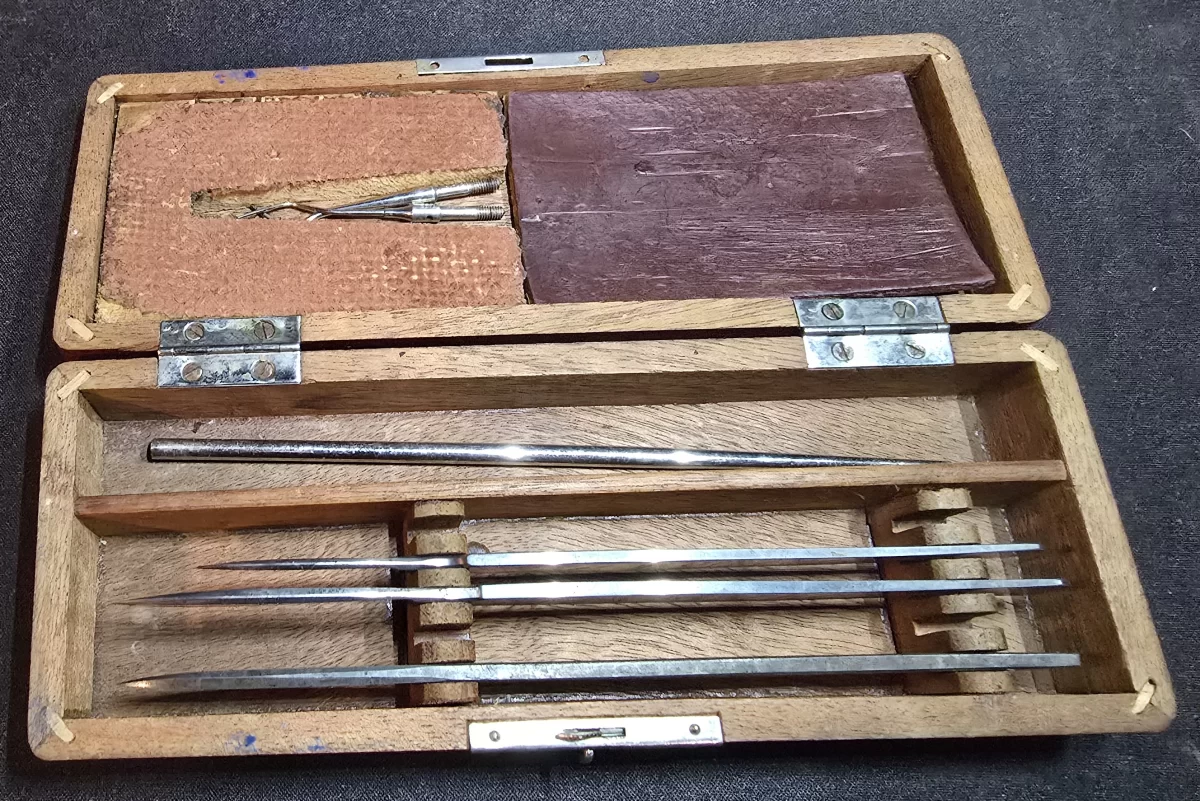
Description
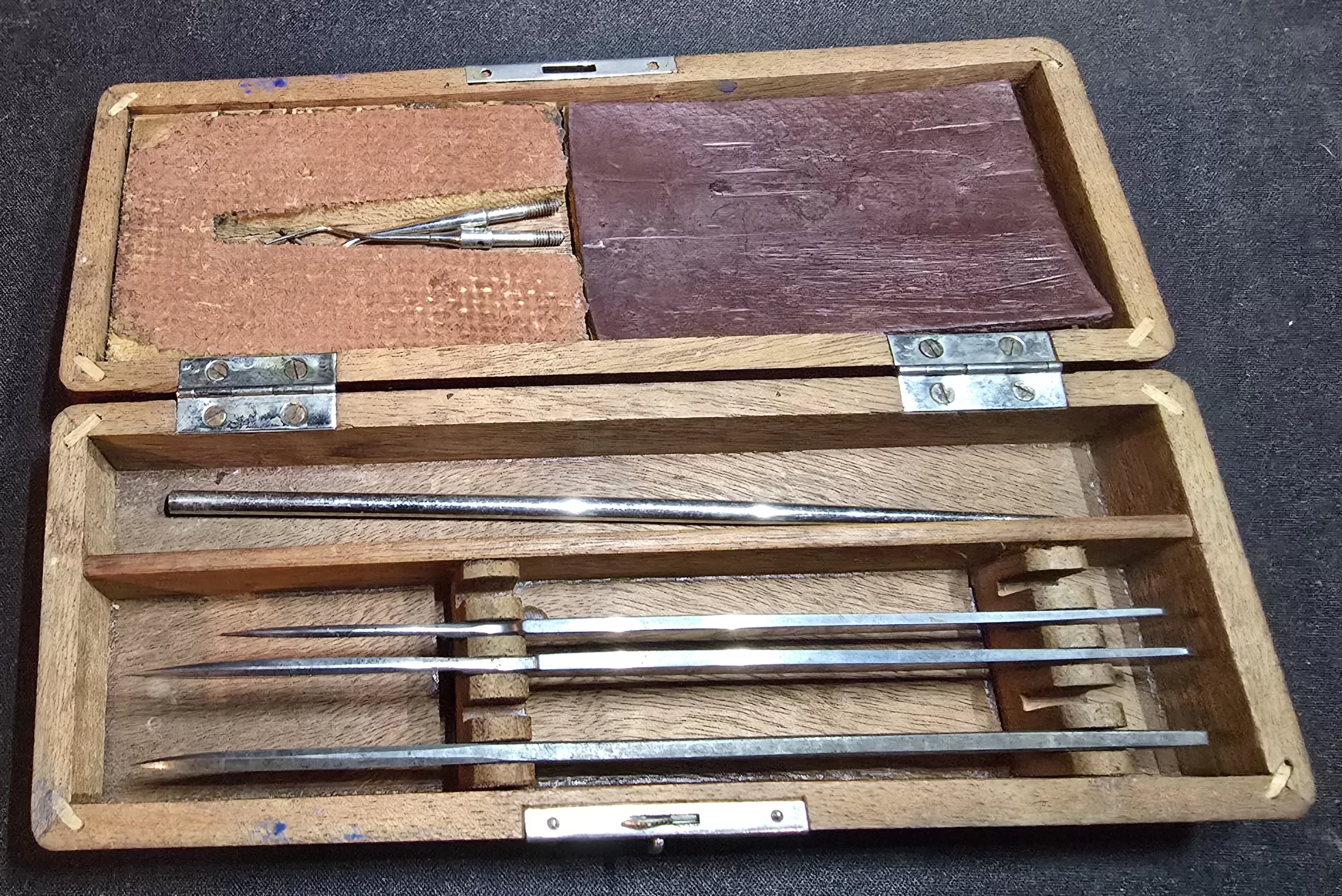
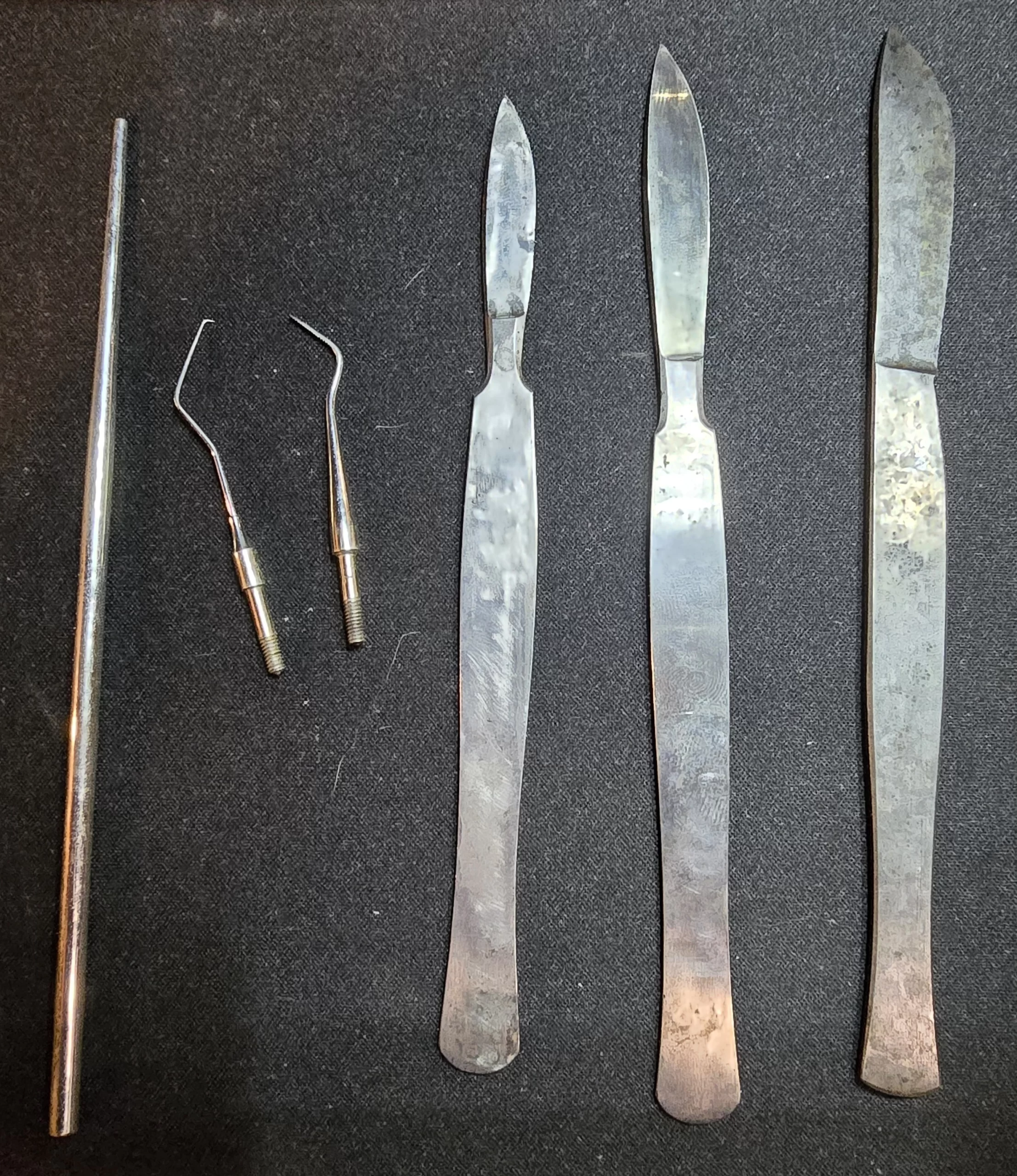
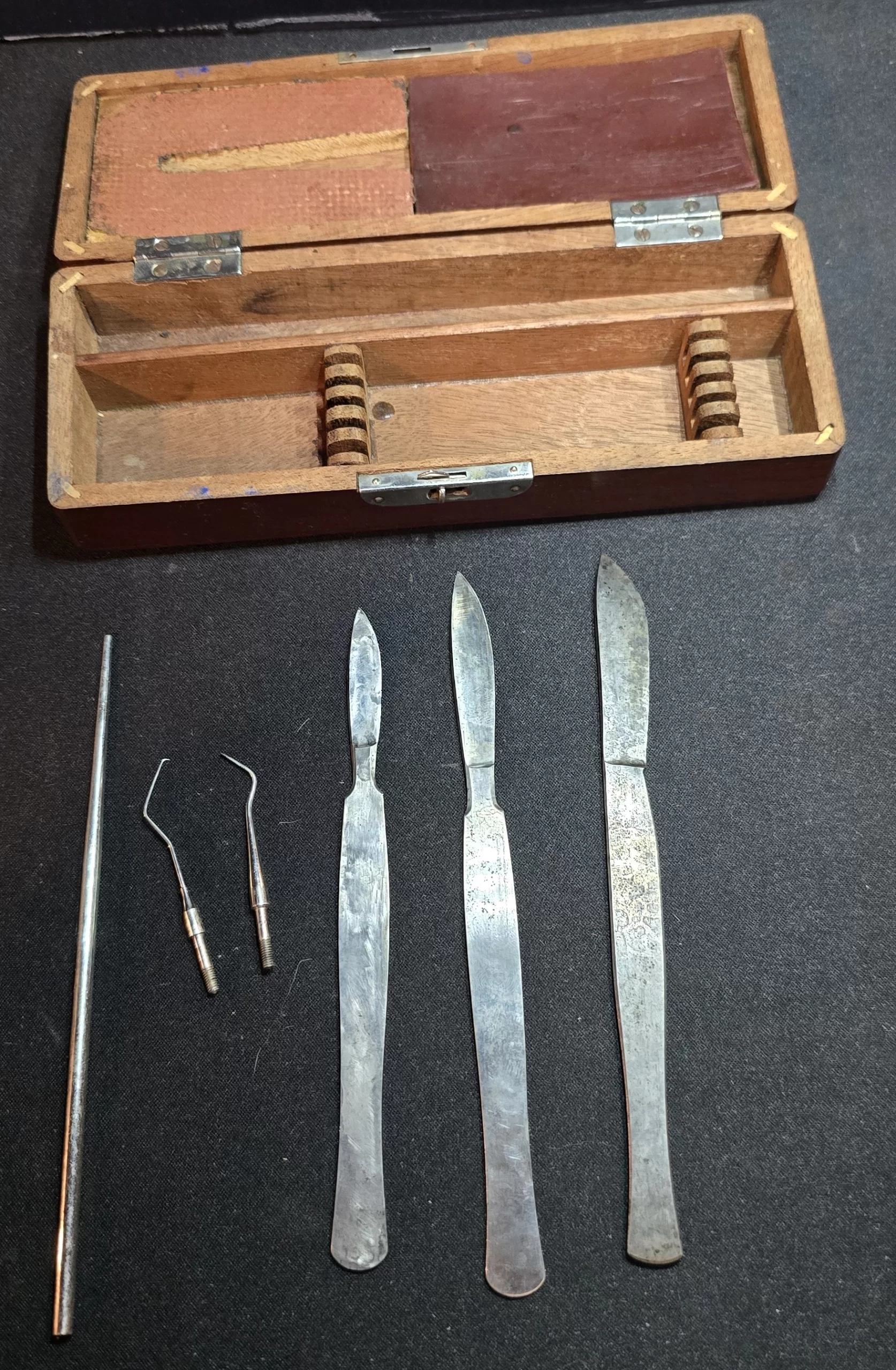
This late 19th to early 20th century surgical instrument kit was manufactured by Tiemann & Co., one of the most respected American makers of surgical and medical instruments during the Victorian and early modern medical era. The compact wooden carrying case contains several steel surgical knives or scalpels of varying blade profiles, interchangeable threaded instrument tips, and long probe-like instruments arranged in fitted compartments.
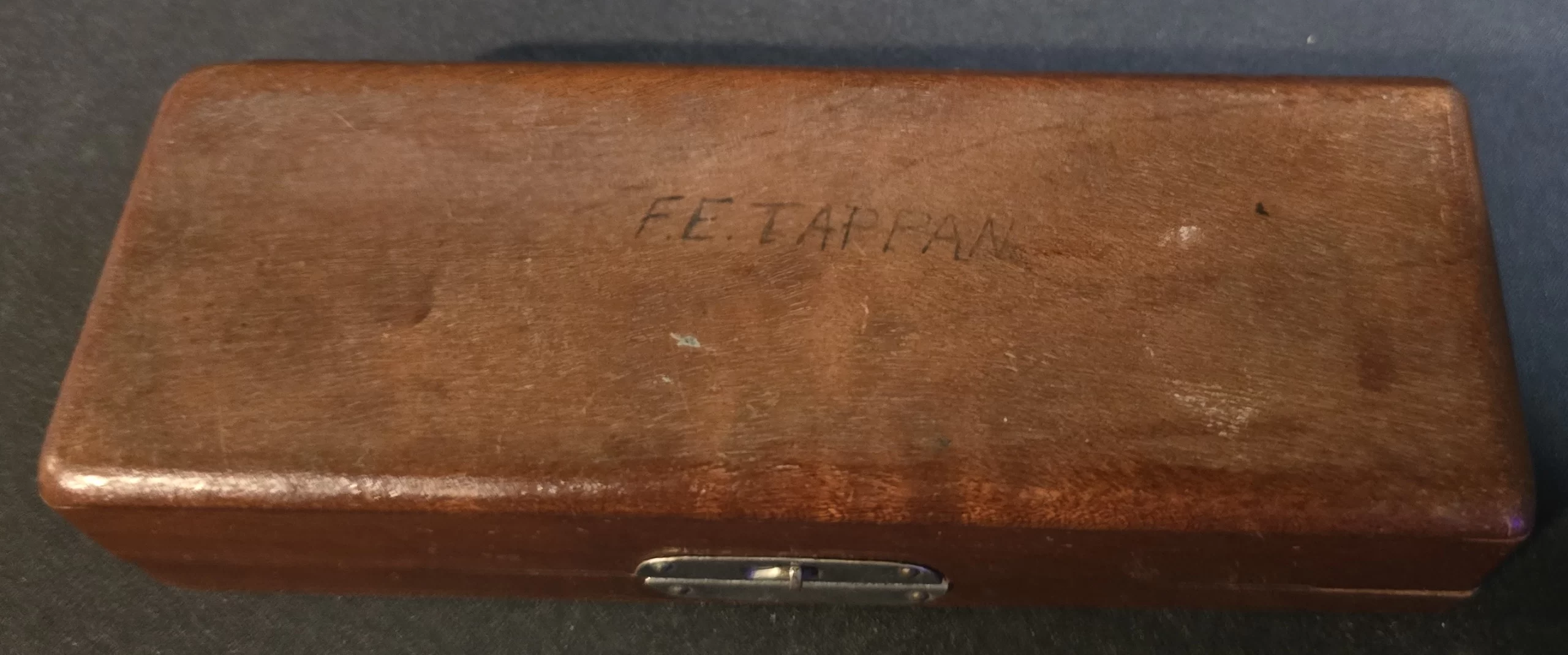
The interior retains remnants of its original felt or velvet lining, and the exterior bears a handwritten ownership inscription reading “F.E. Tapman” (or similar), likely identifying the physician or medical student who once owned the kit. The knives remain remarkably sharp despite their age, reflecting the quality of surgical steel and the expectation that instruments of the era would be repeatedly sharpened, sterilized, and reused throughout a physician’s career.
The exact specialty use of the kit is uncertain, but it was likely intended for minor surgery, dissection, ENT work, ophthalmic procedures, or general medical practice. The varying blade shapes and interchangeable components suggest a practical field or office surgical set rather than a decorative display piece.
Condition
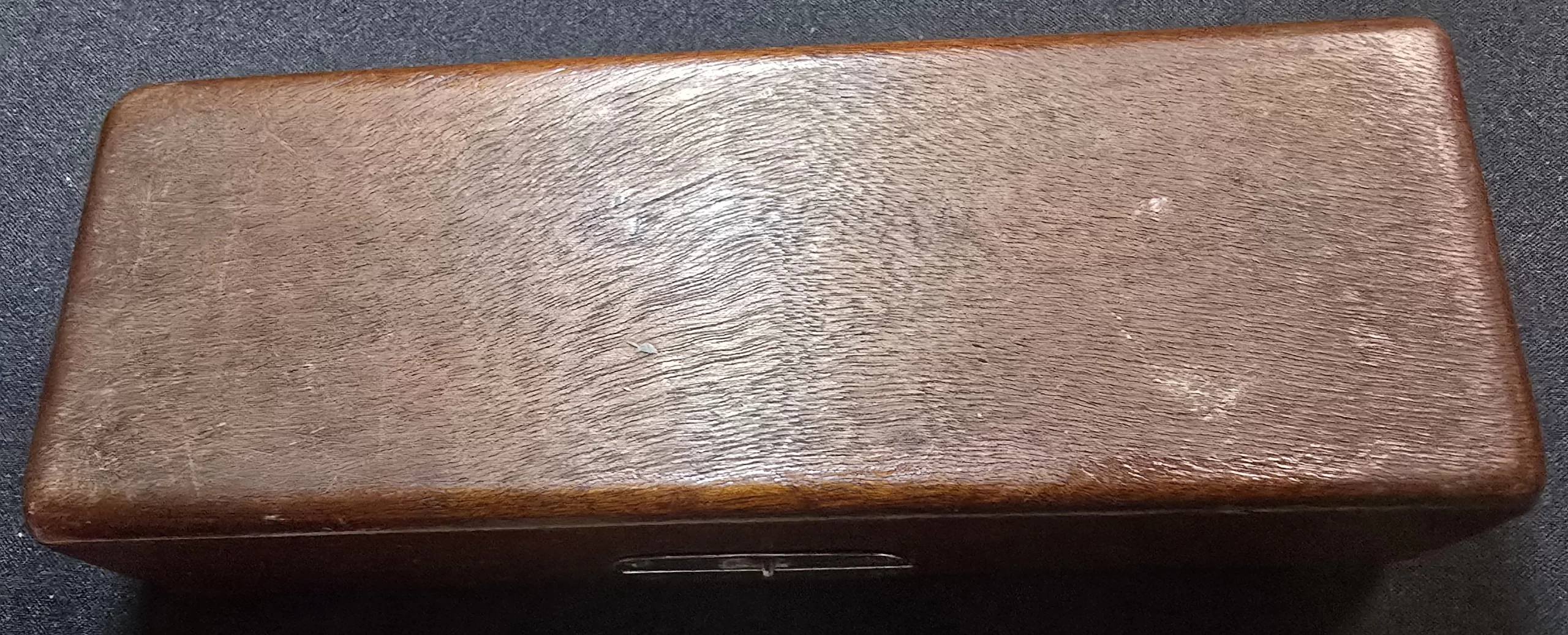
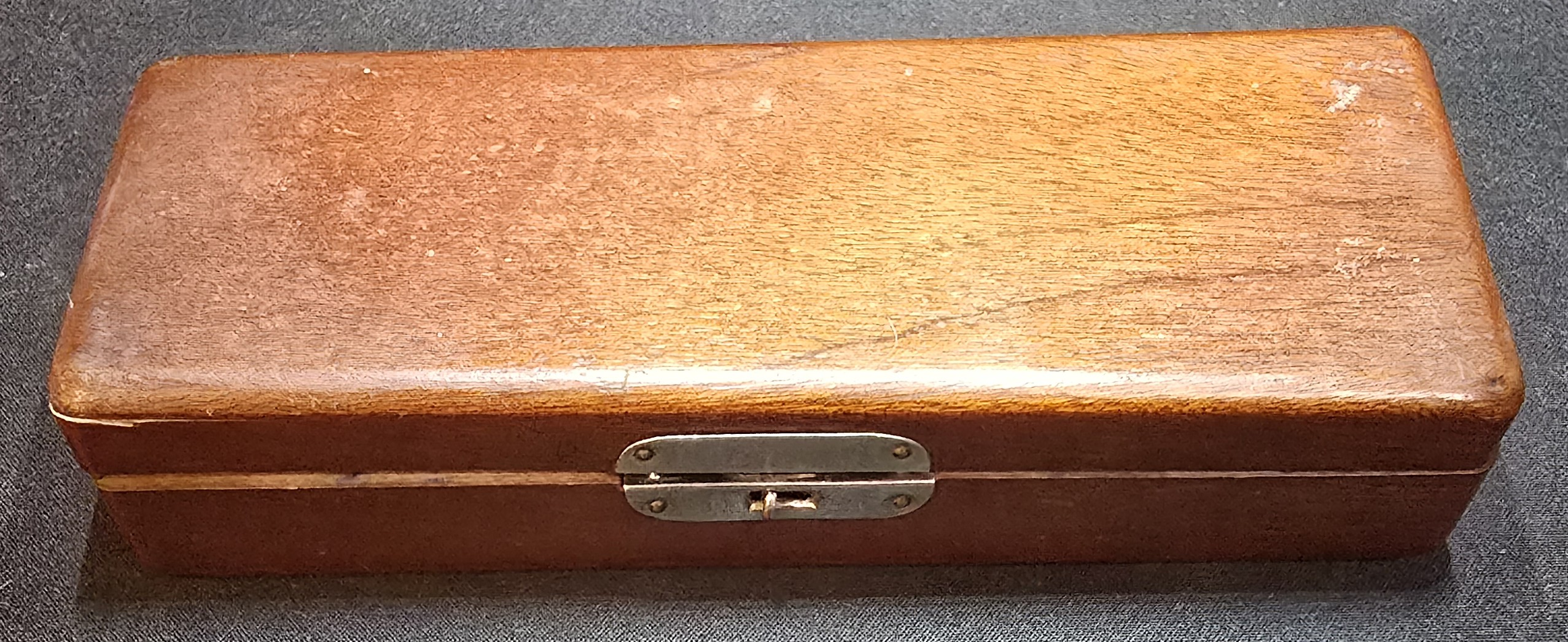
Complete wooden case with moderate age wear, scratches, and handling marks consistent with age and medical use. Interior lining shows wear and deterioration. Instruments retain original patina and oxidation with scattered spotting and surface discoloration. Several blades remain extremely sharp. The set appears partially incomplete but retains strong historical integrity and display appeal.
Gallery
Historical context
George Tiemann & Co. was founded in New York in the 19th century and became one of the premier American manufacturers of surgical, dental, orthopedic, and military medical instruments. Tiemann instruments were widely used by physicians and surgeons during a period when medicine was transitioning from crude pre-antiseptic surgery into more modern operative practice.
Before disposable instruments became standard, surgical tools were valuable professional investments that were maintained, sharpened, and reused for decades. Compact surgical kits like this were often carried directly to homes, clinics, or hospital wards by physicians making house calls or performing office procedures.
Curious Facts, Ephemera, and Trivia
- Surgical instruments from this era were frequently hand-finished and made from high-quality carbon steel capable of taking extremely fine edges.
- Razor-sharp scalpels were considered essential because faster, cleaner incisions reduced tissue trauma and patient suffering before modern anesthesia and antibiotics.
- Tiemann supplied instruments during the Civil War era and later became one of the dominant American surgical instrument houses.
- Many surviving antique surgical kits have been over-polished by collectors. This example retains its original aged appearance and authentic medical character.
Excerpt
“Not every antique medical instrument tells you what it was used for. Some simply sit there quietly and let your imagination do the rest.”
Why it is in the Cabinet
This set represents the reality of historical medicine — practical, reusable, personal, and slightly intimidating. The worn case, surviving sharpness, and evidence of long-term use give the impression of a real working physician’s instrument kit rather than a decorative curiosity. It captures the transition period between Victorian medicine and the beginnings of modern surgery, making it a perfect fit for the Cabinet of Medical Curiosities.
Support Dr. Bebout’s Cabinet of Medical Curiosities
If you enjoy the history, the oddities, and the effort, help keep this cabinet open. Every little bit helps preserve and share the strange wonders of medicine's past.
Buy Me a Ko-fi ☕ Buy Me a Coffee ☕ Tip via PayPal 💵