
Title
Dr. Hartshorn’s Jaundice Bitters (No. 42)
Author
Dr. Hartshorn
Image
Description
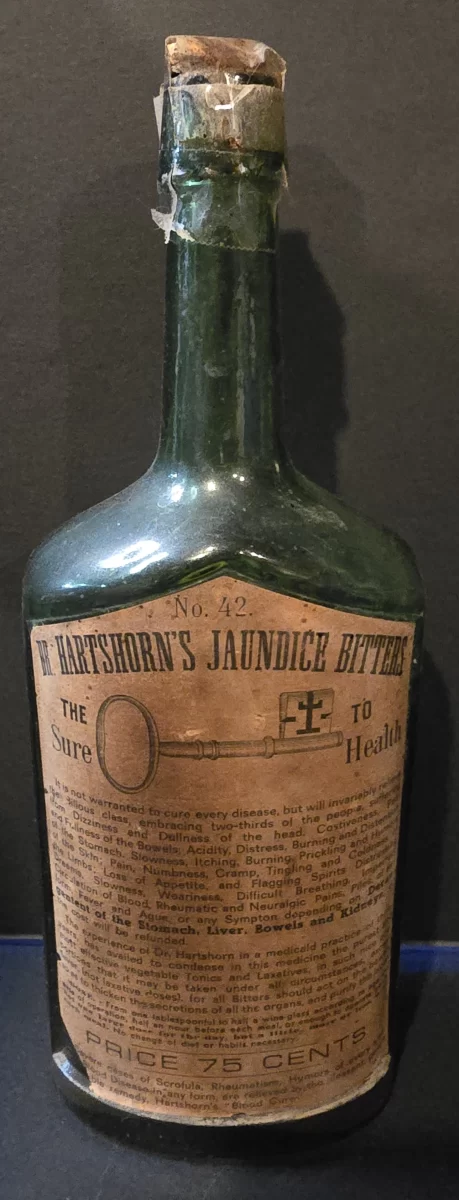
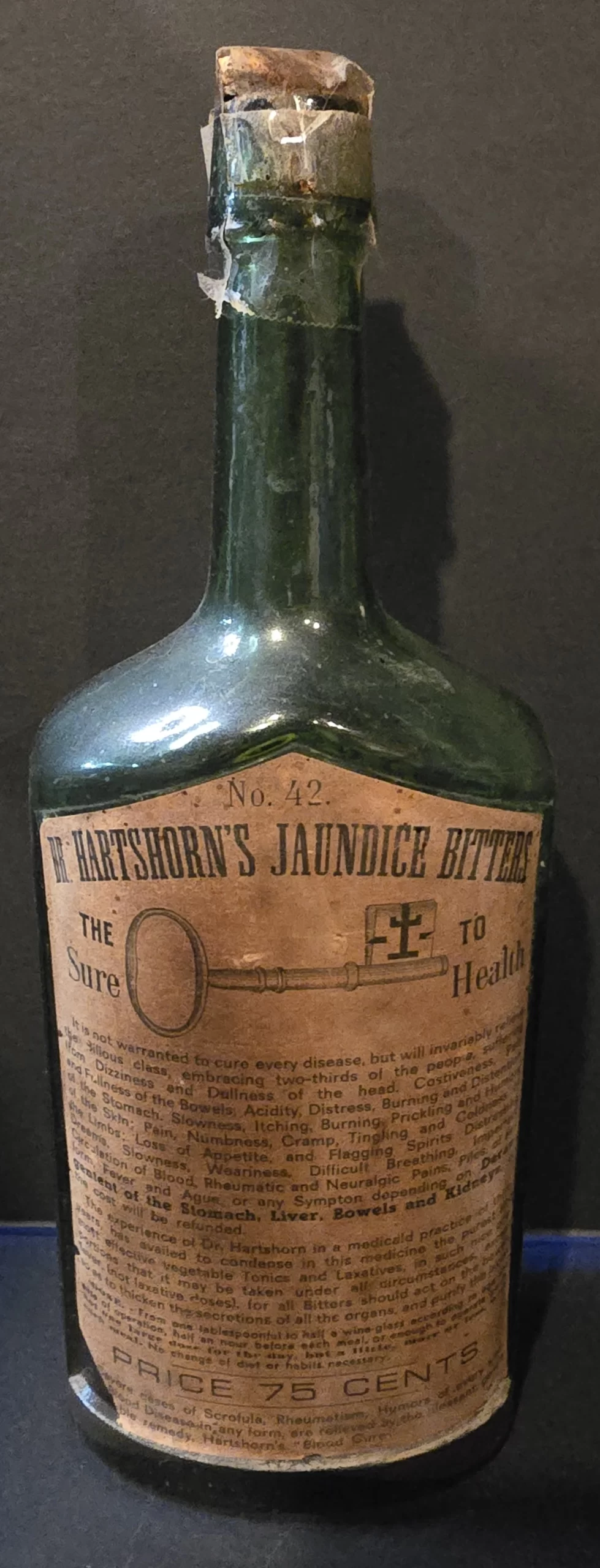
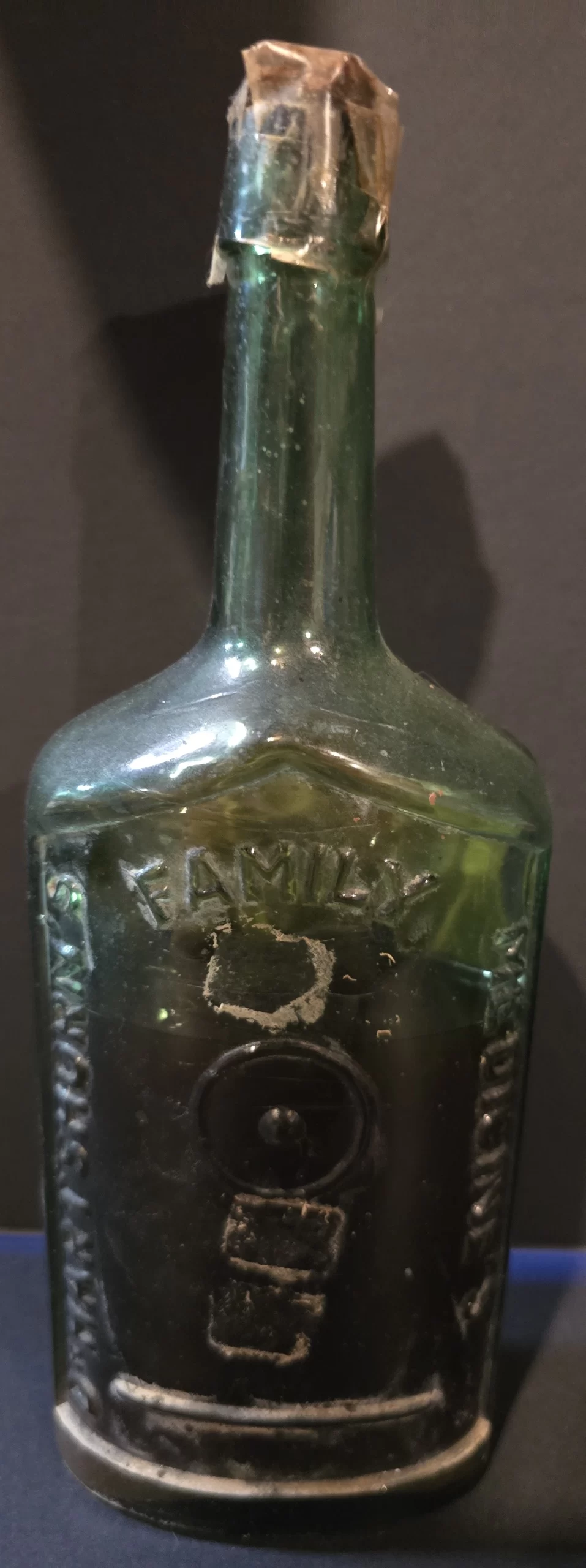
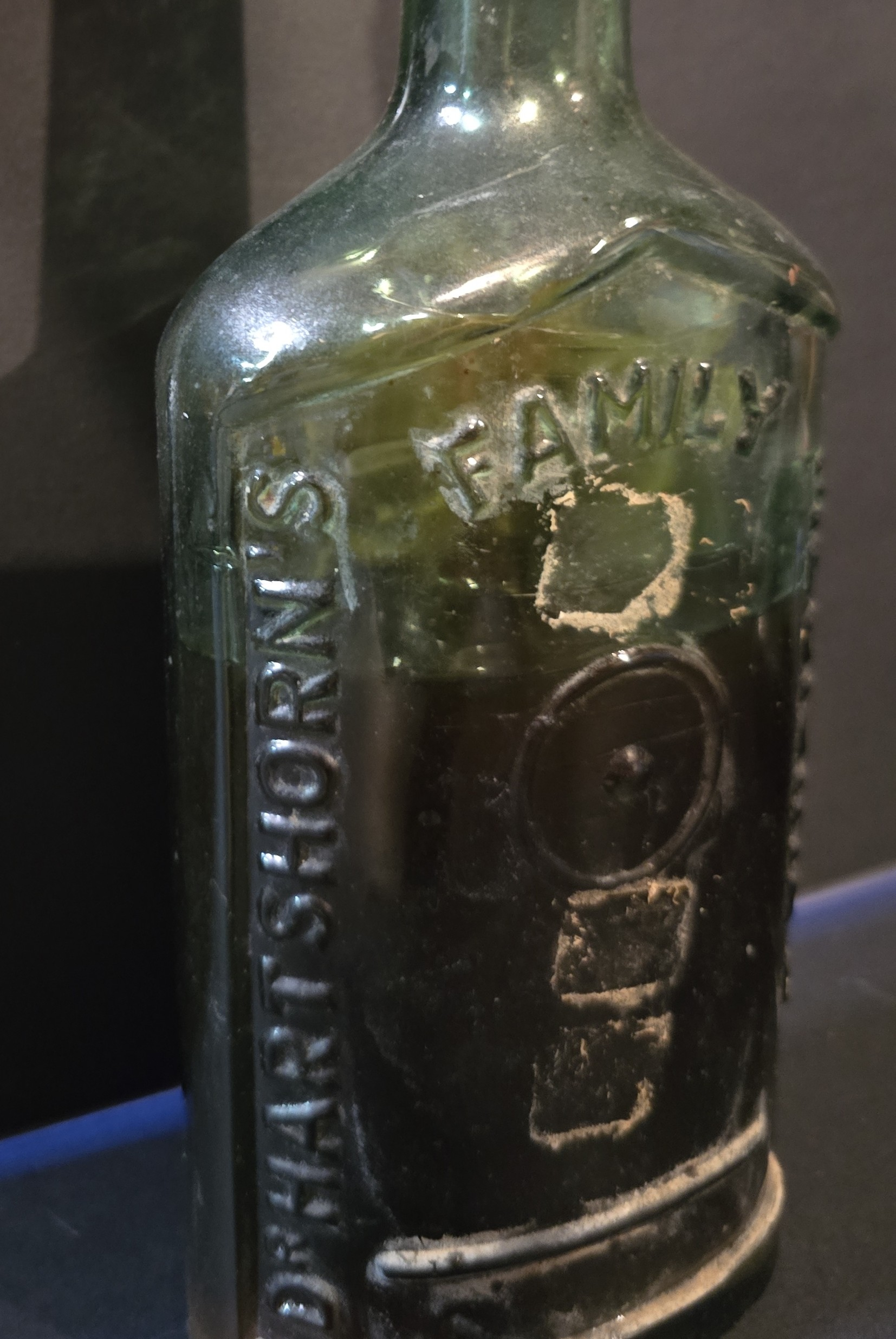
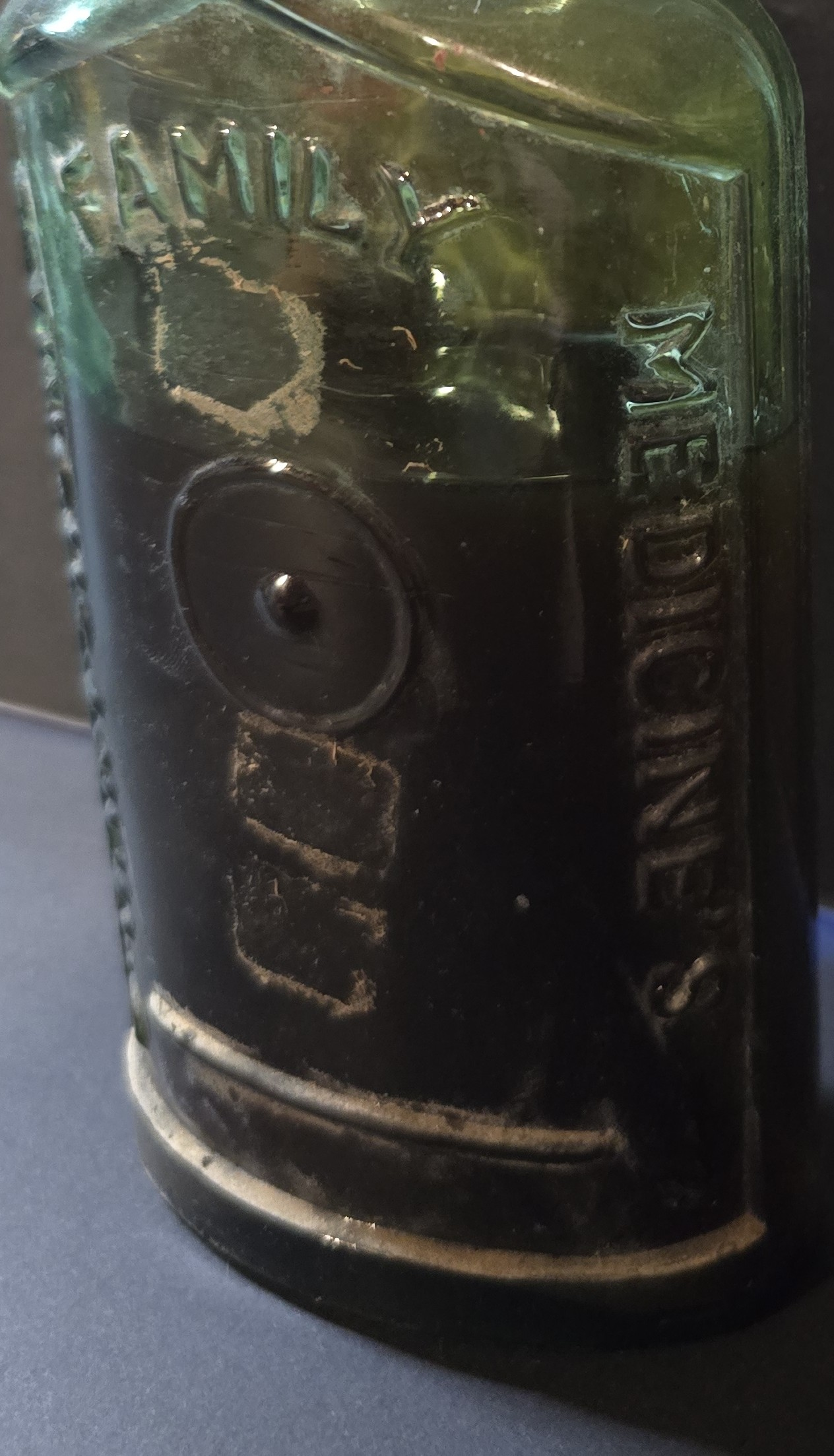
Dr. Hartshorn’s Jaundice Bitters is a late 19th-century patent medicine bottle, embossed “DR. HARTSHORN’S FAMILY MEDICINE” and retaining a partially intact original paper label. The bottle is green-tinted glass with a rectangular panel body, sloped shoulders, and a long neck designed for cork closure, with remnants of the original paper seal still present.
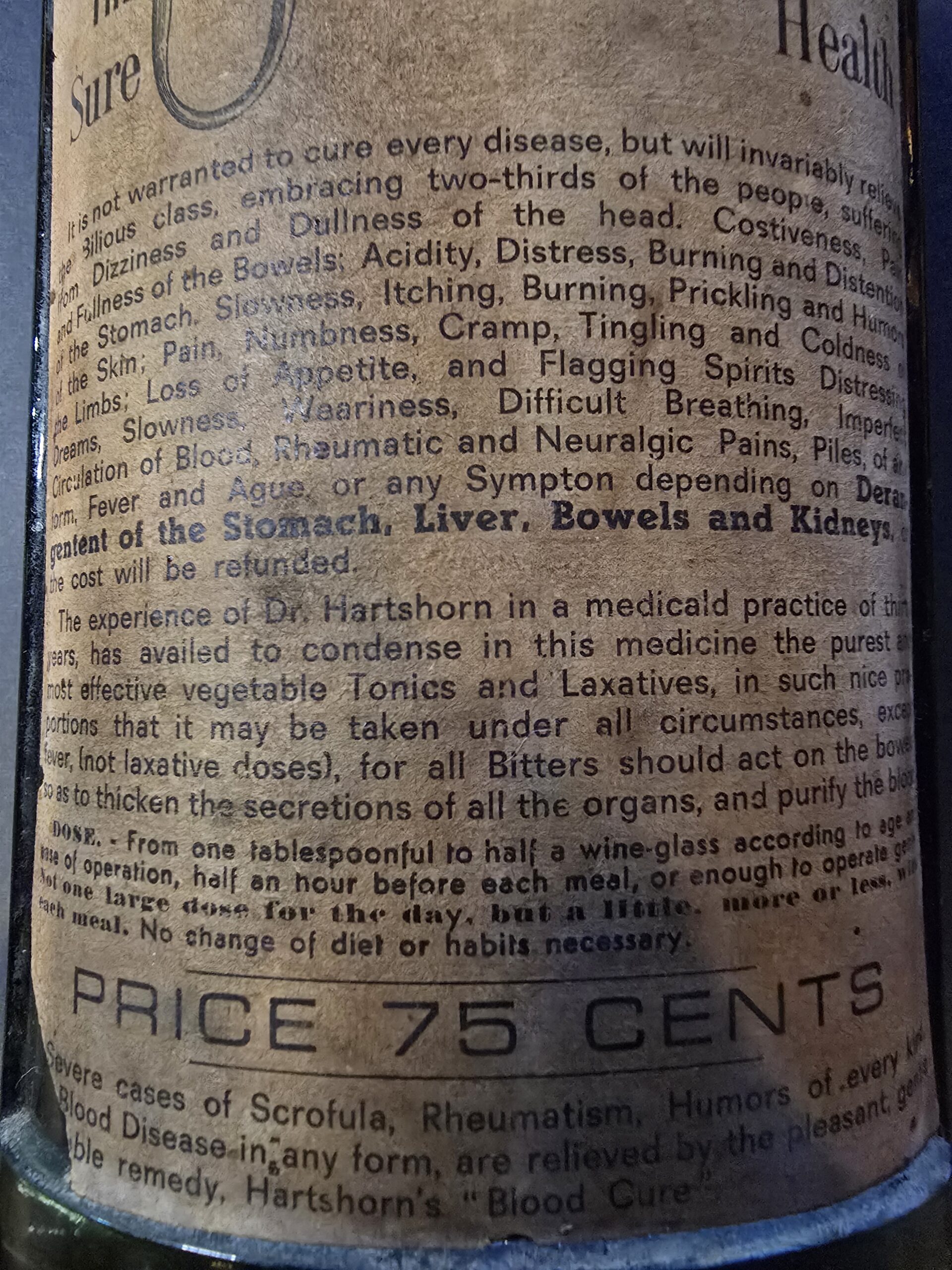
The label identifies the preparation as “No. 42” and promotes it as a treatment for disorders of the stomach, liver, bowels, and kidneys, along with associated systemic symptoms such as numbness, tingling, and general debility. The language reflects typical pre-regulation patent medicine marketing, presenting a wide range of indications to appeal to a broad consumer base.
Dosage instructions recommend administration by the tablespoon or wineglass, consistent with alcohol-based bitters formulations of the period. The listed retail price of seventy-five cents indicates it was marketed as a substantial household remedy.
Condition
Original paper label present with moderate wear, staining, and edge loss consistent with age. Embossing is strong and clearly legible. Bottle intact with no visible cracks; cork and paper seal remnants remain at the neck. Surface residue present consistent with age and storage.
Gallery
Historical context
Patent medicines such as Dr. Hartshorn’s Jaundice Bitters were widely marketed in the United States during the late 19th century prior to federal regulation. Bitters formulations commonly contained alcohol combined with herbal extracts and were promoted as treatments for digestive, hepatic, and general systemic complaints. The broad therapeutic claims reflect the absence of regulatory oversight prior to the Pure Food and Drug Act of 1906, after which such labeling practices became restricted.
Curious Facts, Ephemera, and Trivia
The labeling includes a disclaimer stating it is not warranted to cure every disease, followed by claims covering a wide range of symptoms affecting multiple organ systems. The designation “No. 42” suggests a numbered formulation system, a marketing tactic often used to imply scientific legitimacy. The dosing instructions using a wineglass measure further support its classification as a bitters-style preparation.
Excerpt
“It is not warranted to cure every disease, but will invariably relieve the Bilious class…”
“…any symptom depending on derangement of the stomach, liver, bowels and kidneys…”
“Price 75 cents”
Why it is in the Cabinet
This piece represents a classic example of late 19th-century patent medicine, combining embossed glass, original labeling, and broad therapeutic claims. It illustrates the marketing strategies and medical practices of the period prior to regulatory oversight and serves as a representative example of bitters formulations marketed as cure-all remedies.
Support Dr. Bebout’s Cabinet of Medical Curiosities
If you enjoy the history, the oddities, and the effort, help keep this cabinet open. Every little bit helps preserve and share the strange wonders of medicine's past.
Buy Me a Ko-fi ☕ Buy Me a Coffee ☕ Tip via PayPal 💵