
Title
Atlas and Epitome of Otology
Author
Gustav Brühl, M.D.; with Prof. Dr. A. Politzer; edited by S. MacCuen Smith, M.D.
Image
Description
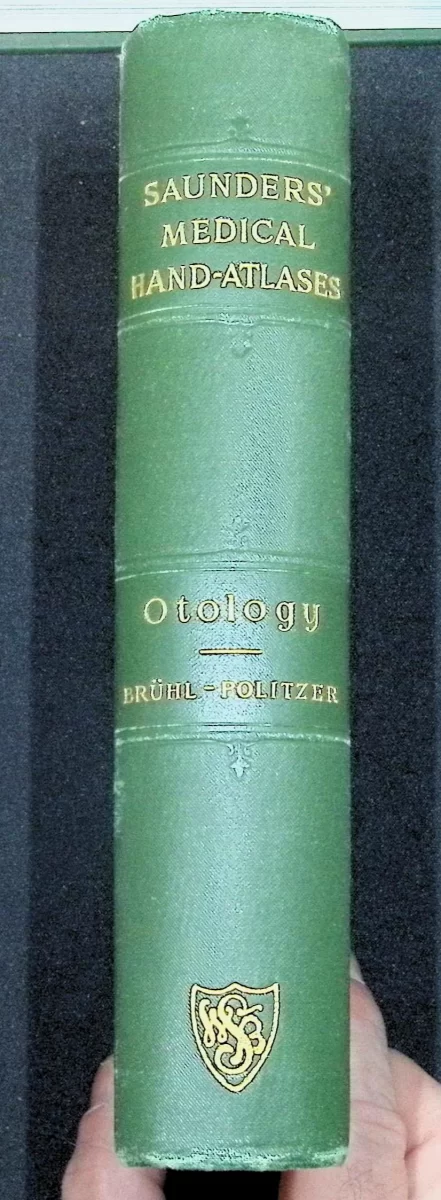
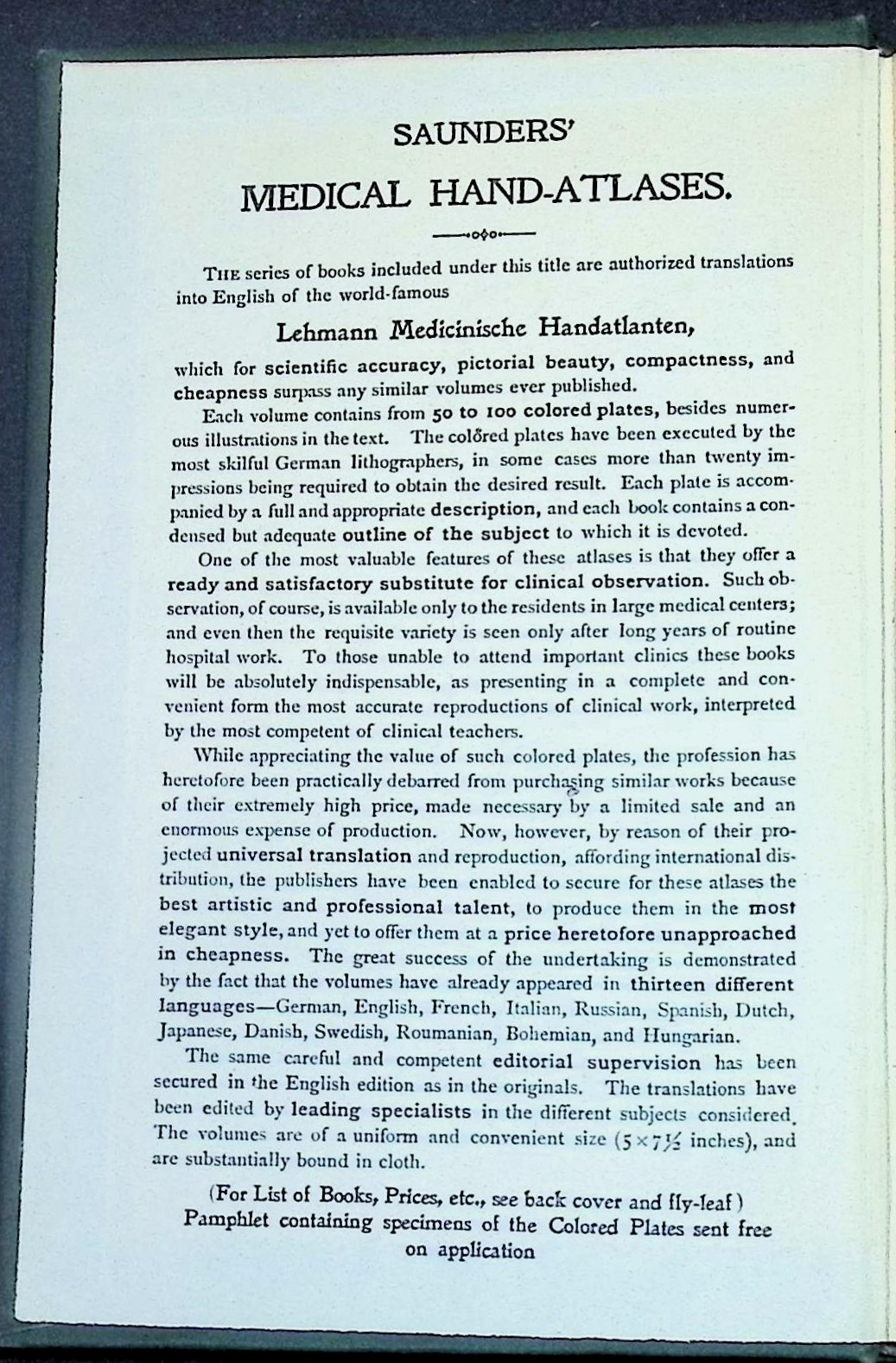
Atlas and Epitome of Otology (1903) is part of the Saunders’ Medical Hand-Atlases series, a collection of compact, highly illustrated medical references translated from the German Lehmann Medicinische Handatlanten. This volume focuses specifically on the anatomy, physiology, examination, and pathology of the ear.
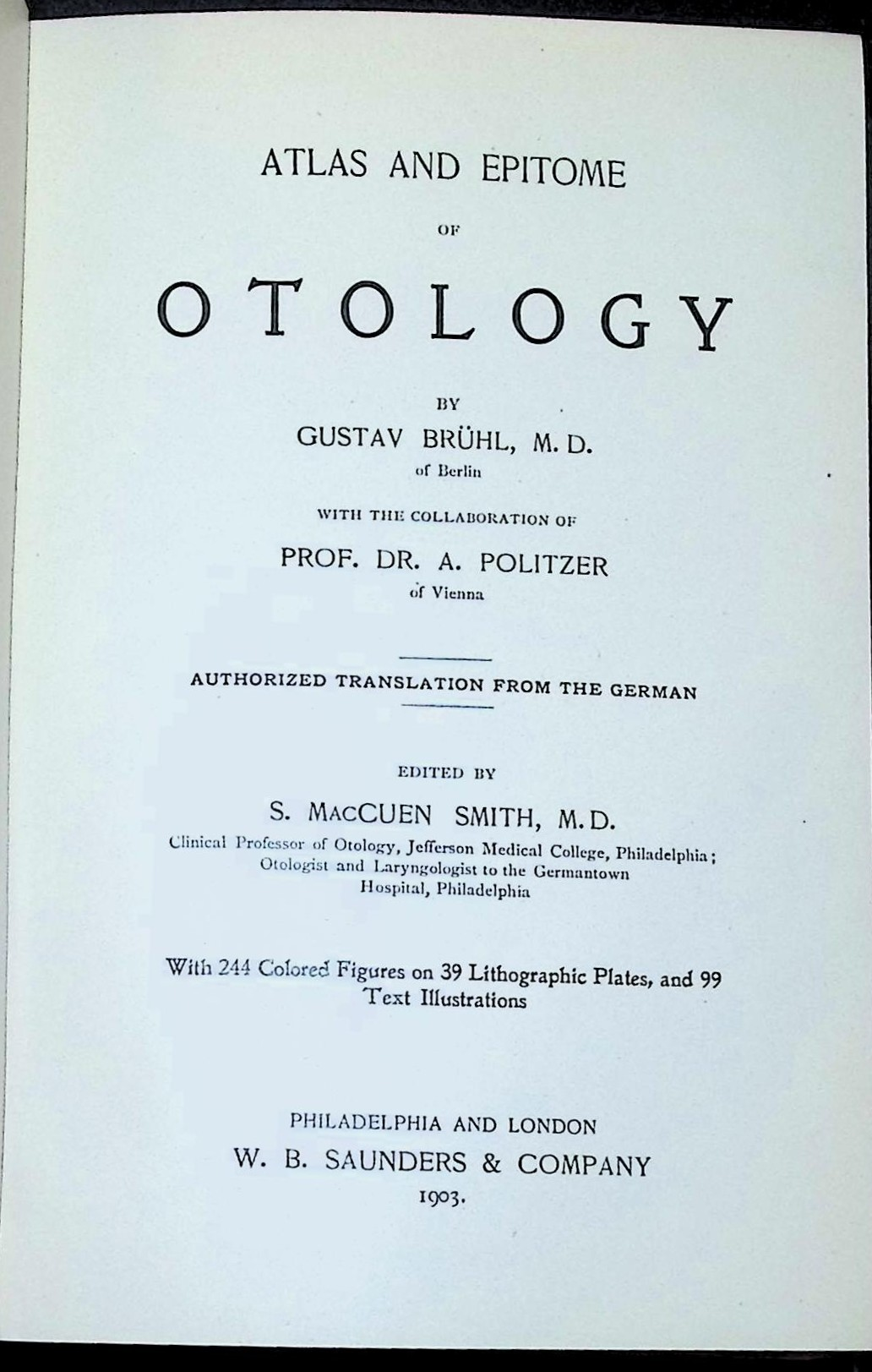
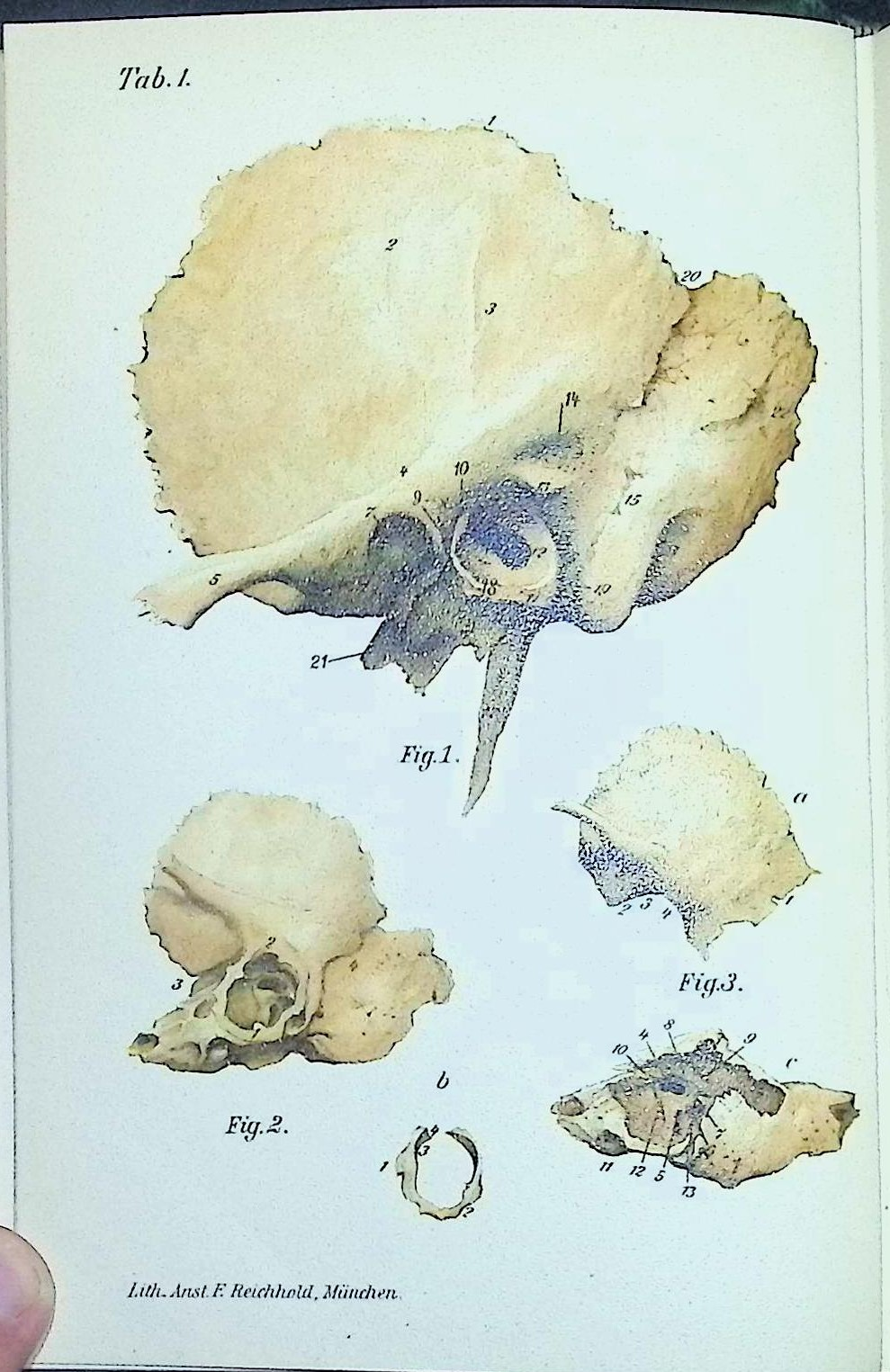
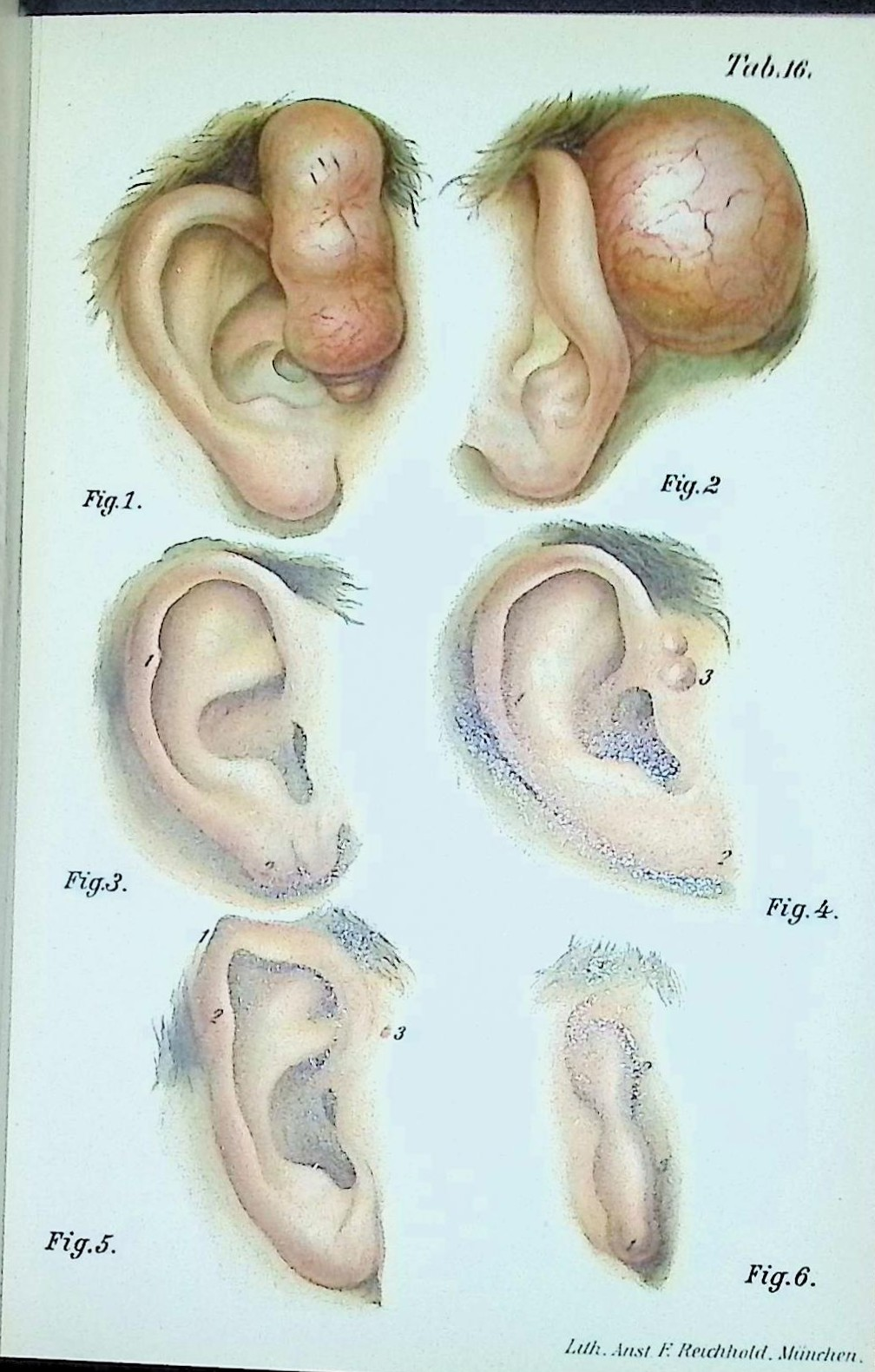
Authored by Gustav Brühl of Berlin with collaboration from Adam Politzer of Vienna—one of the most influential figures in otology—the work was edited for English-speaking physicians by S. MacCuen Smith of Jefferson Medical College. The book contains 244 colored figures across 39 lithographic plates along with 99 text illustrations, combining concise explanatory text with detailed visual material.
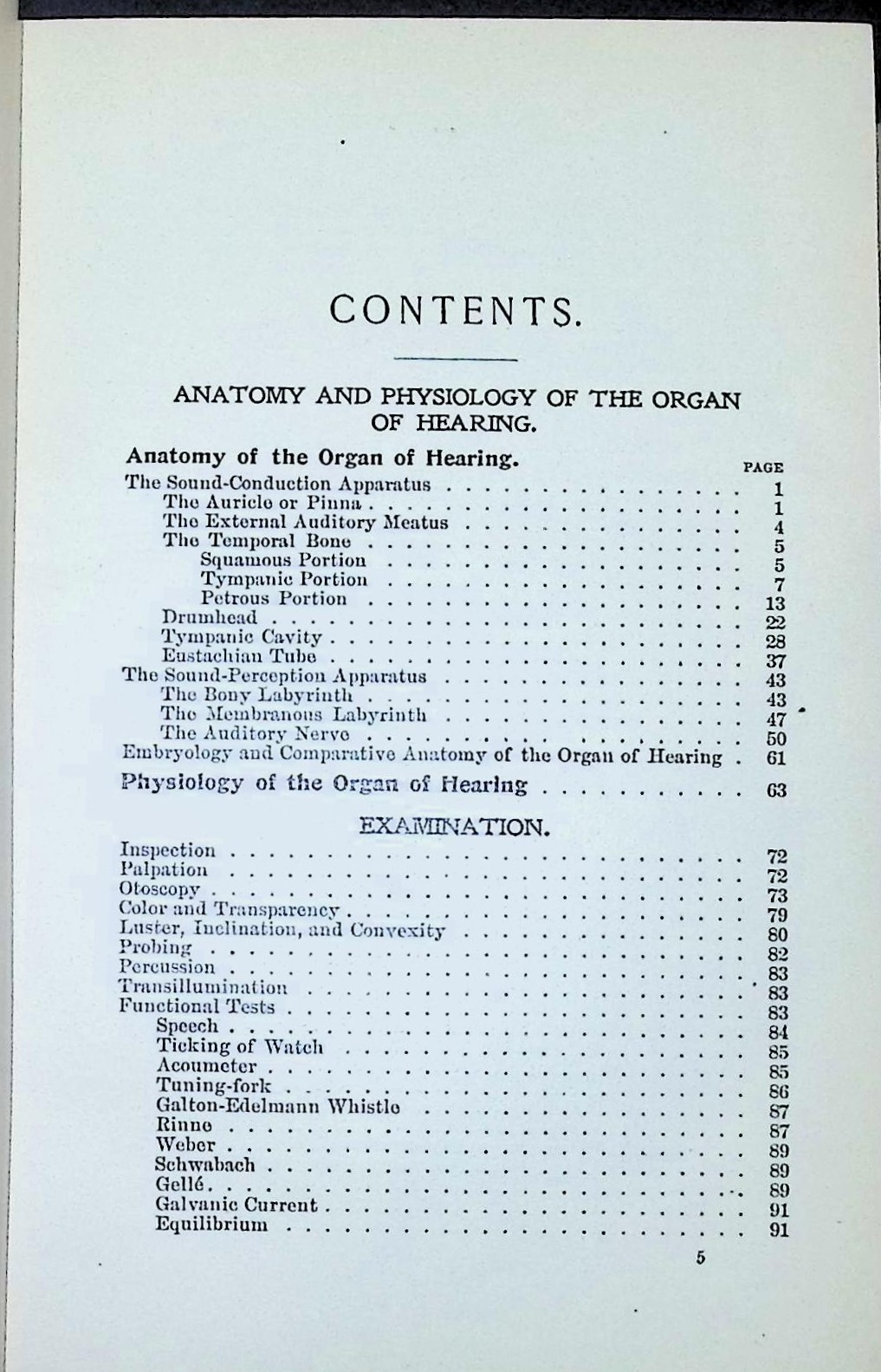
The atlas covers both the sound-conduction and sound-perception systems, including the external ear, tympanic cavity, ossicles, Eustachian tube, and inner ear structures. It also outlines clinical examination techniques such as otoscopy, tuning fork tests (Rinne, Weber, Schwabach), and early functional hearing assessments.
As intended by the series, the book provides a portable alternative to large-format atlases, offering high-quality clinical illustrations in a format accessible to practicing physicians and students.
Condition
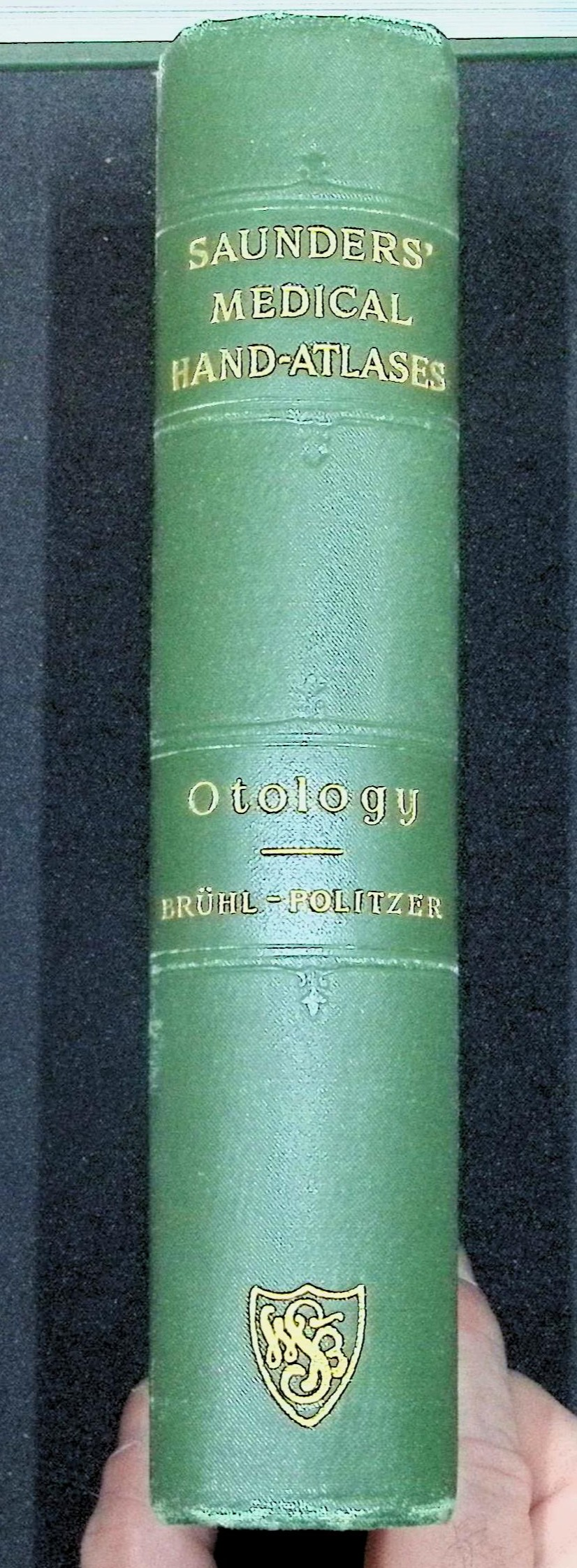
Green cloth hardcover with gilt spine lettering. Binding intact and stable with mild edge wear and light rubbing consistent with age. Interior pages are clean with strong print and well-preserved lithographic plates. Overall very good condition for a 1903 illustrated medical atlas.
Gallery
Historical context
At the turn of the 20th century, otology had developed into a distinct medical specialty. The increasing complexity of anatomical understanding and clinical examination created demand for visual teaching tools. The Saunders Hand-Atlas series filled this need by translating respected German works into English and distributing them internationally at a lower cost than traditional large atlases.
The involvement of Adam Politzer is particularly significant. Politzer was a foundational figure in modern ear medicine, and his work helped standardize diagnostic and therapeutic approaches in otology during the late 19th century.
Curious Facts, Ephemera, and Trivia
These atlases were essentially the “portable high-end textbooks” of their time—advertised as cheaper alternatives to massive multi-volume works but still requiring skilled lithographers and multiple print impressions for each color plate.
Also worth noting: the book casually lists how many languages the series had already been translated into. That wasn’t bragging—it was marketing. Medicine was globalizing, and Saunders wanted a piece of that pie.
Excerpt
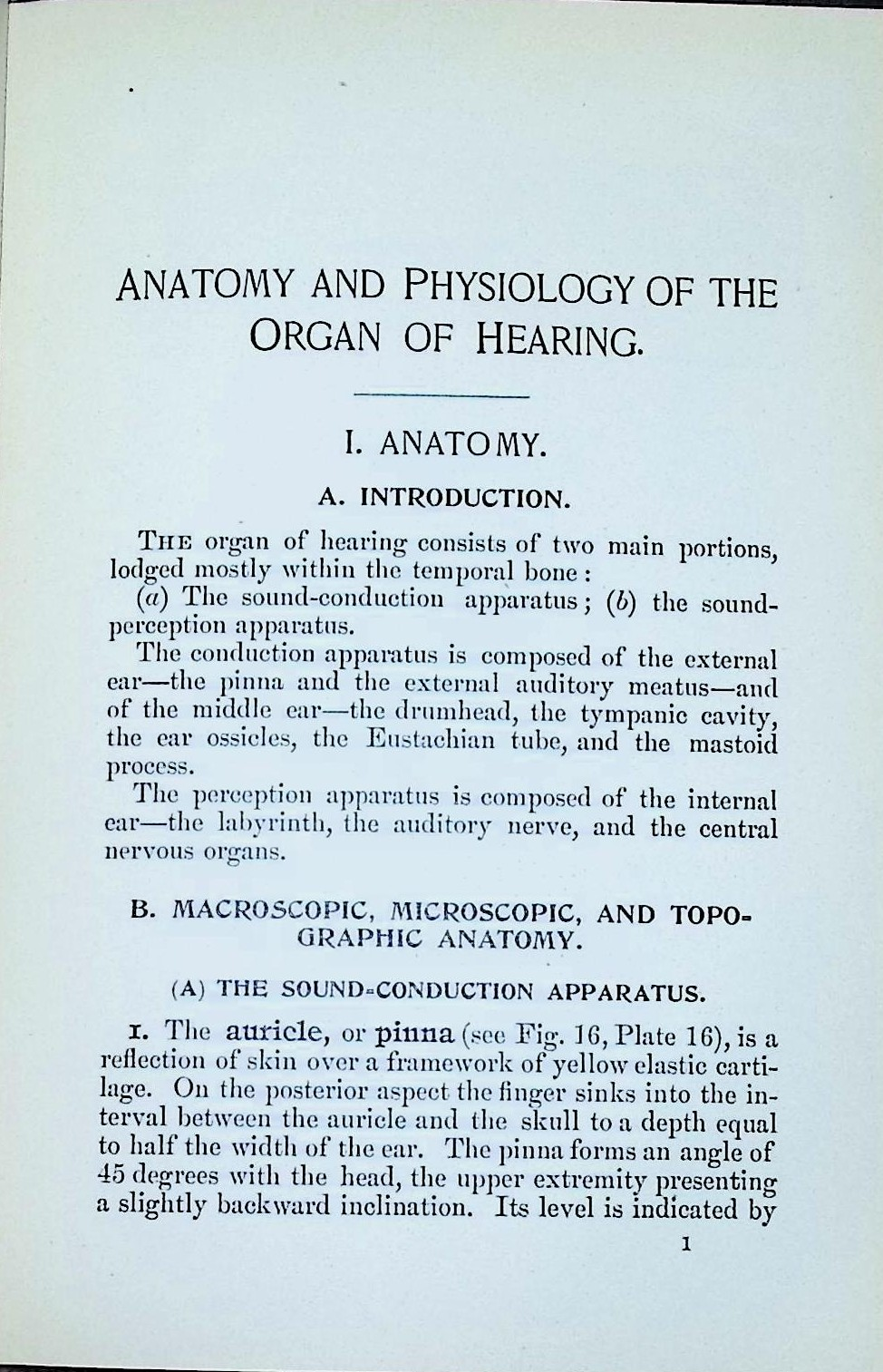
“The organ of hearing consists of two main portions, lodged mostly within the temporal bone: (a) the sound-conduction apparatus; (b) the sound-perception apparatus.”
Why it is in the Cabinet
This is exactly the kind of piece that defines the Cabinet—compact, specialized, and visually striking. It represents the moment when medical knowledge shifted from bulky reference tomes to portable, image-driven teaching tools. The plates alone justify its place, but the Politzer connection gives it real historical weight.
Viewing the Digital Version on This Site
A digitized version of this work (Otology) is available to view directly on this site. Providing access to the full text and plates allows for detailed study while preserving the original volume from unnecessary handling.
Support Dr. Bebout’s Cabinet of Medical Curiosities
If you enjoy the history, the oddities, and the effort, help keep this cabinet open. Every little bit helps preserve and share the strange wonders of medicine's past.
Buy Me a Ko-fi ☕ Buy Me a Coffee ☕ Tip via PayPal 💵