
Title
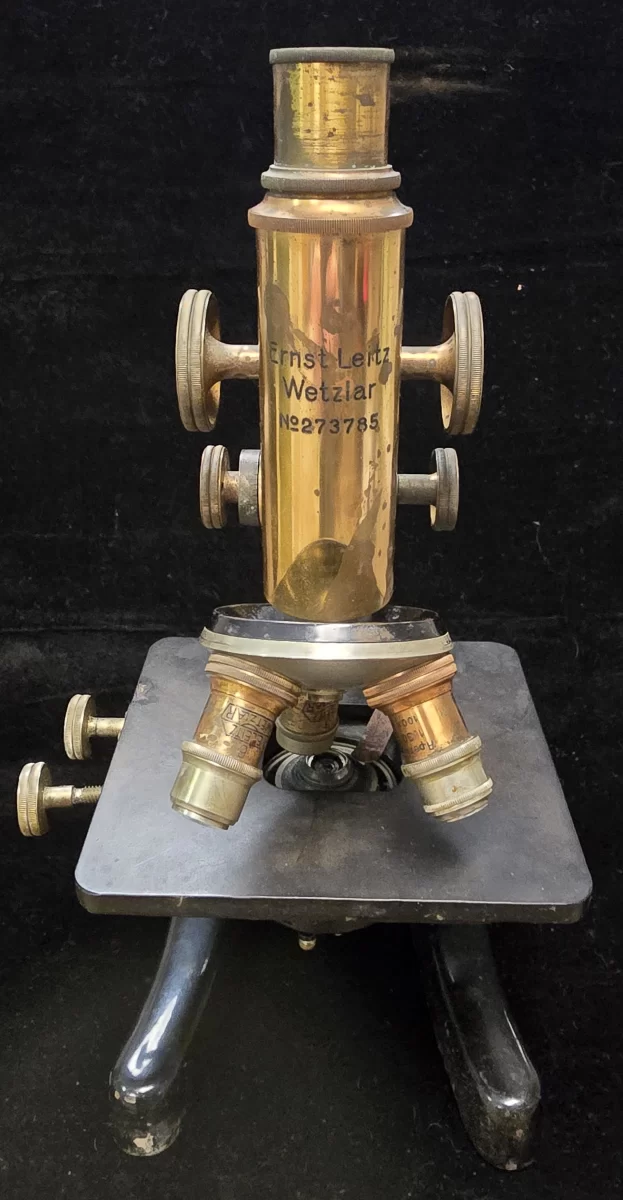
Ernst Leitz Wetzlar Monocular Compound Microscope with Case
Author
Ernst Leitz, Wetzlar, Germany
Image
Description
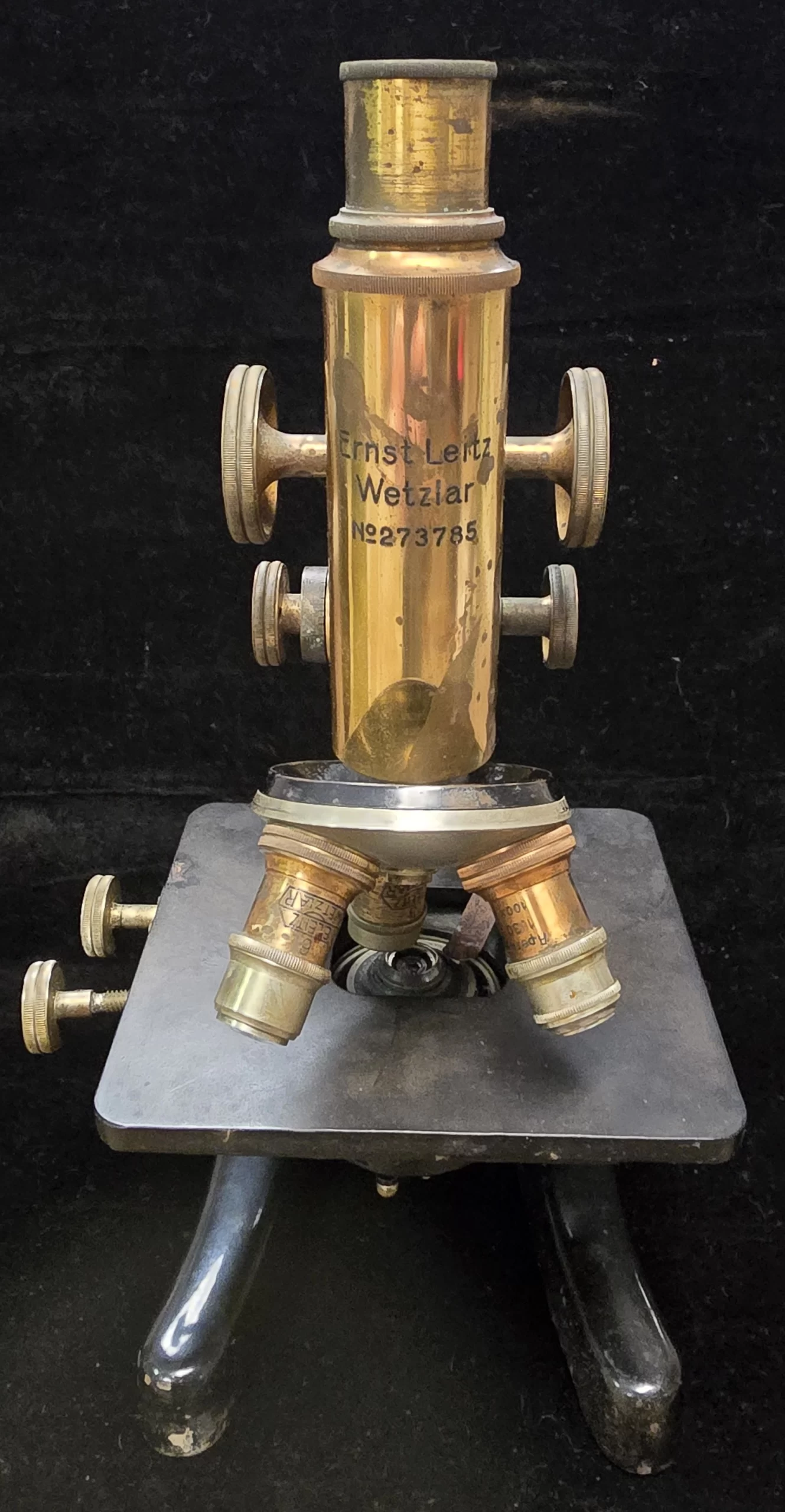
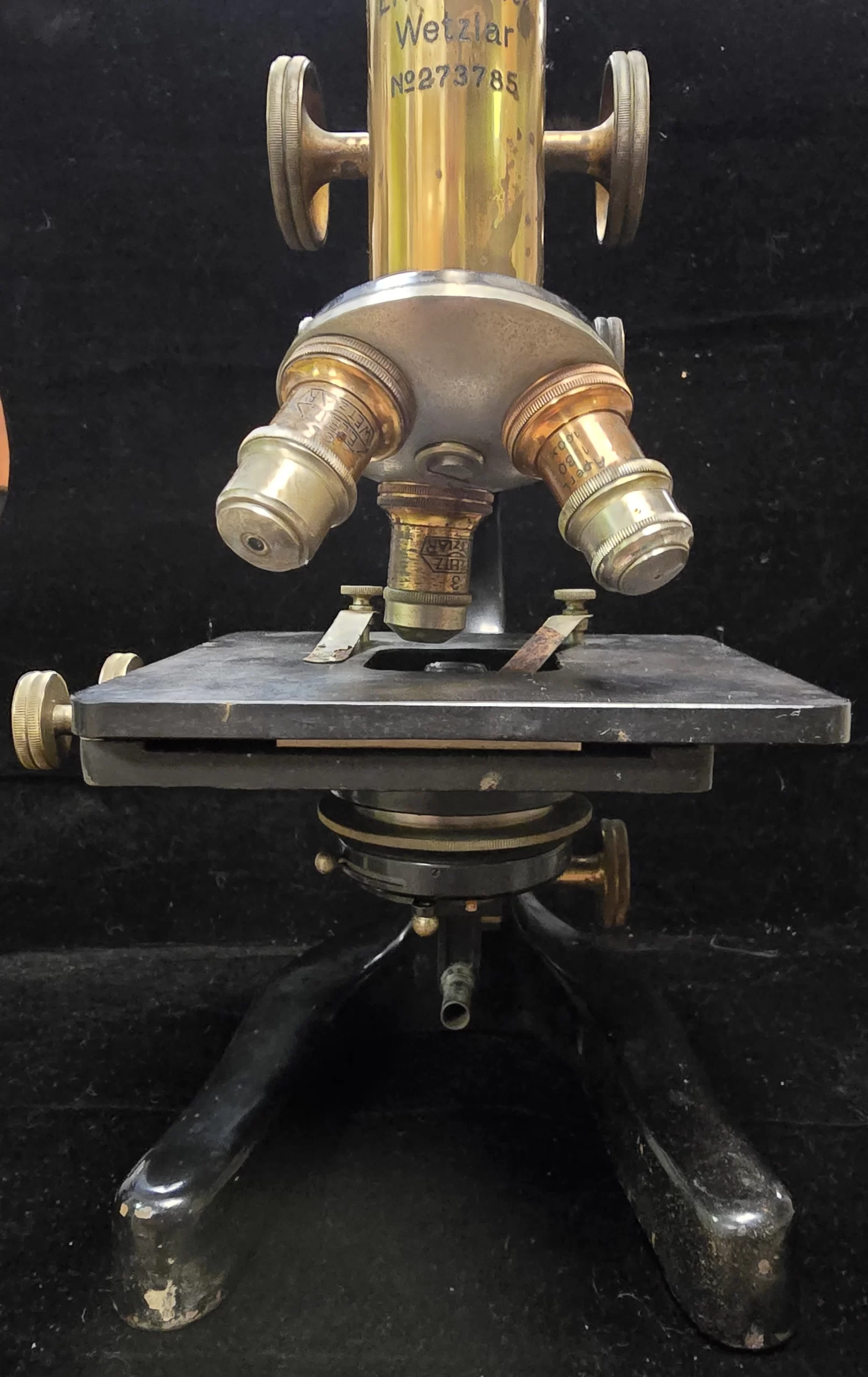
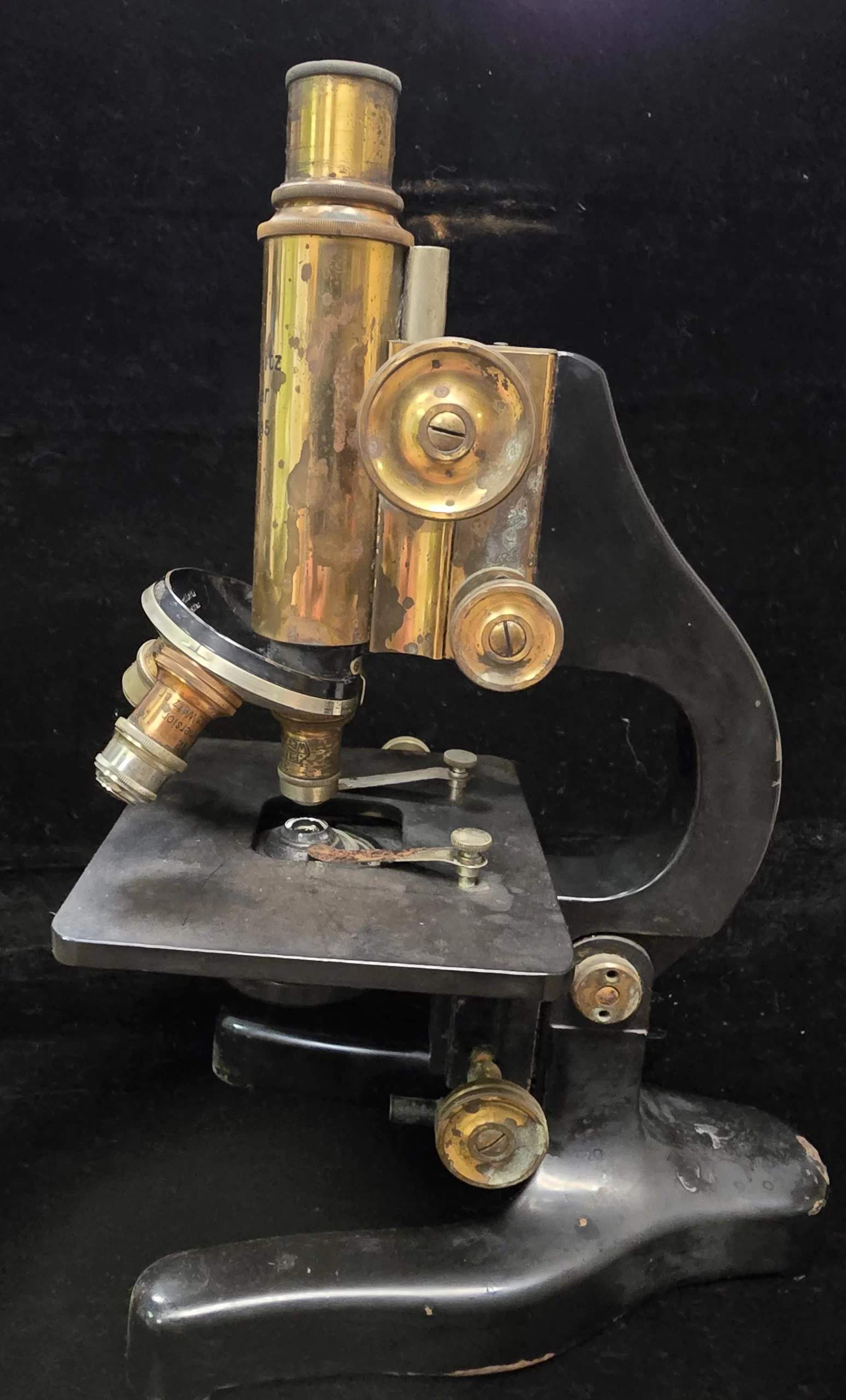
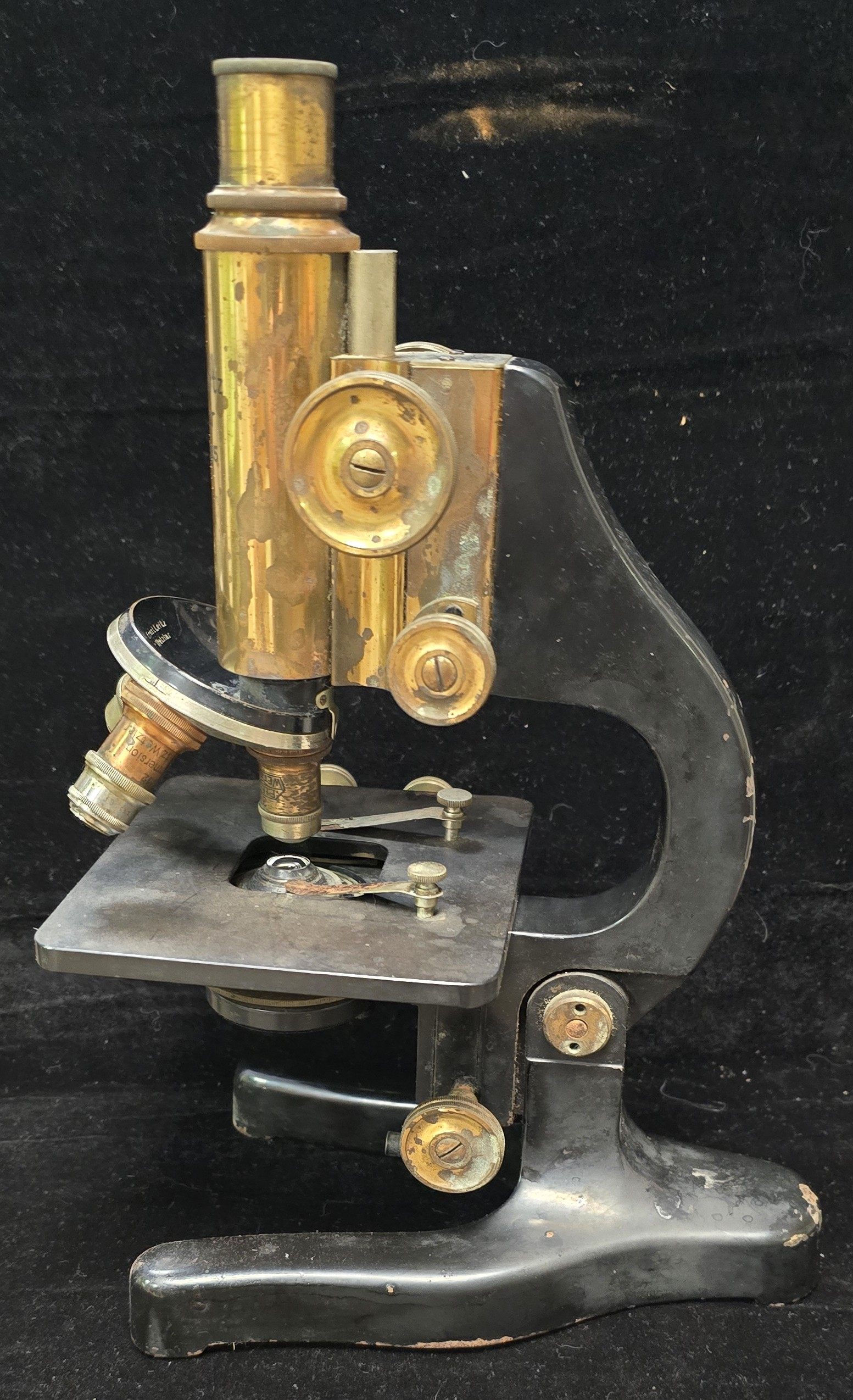
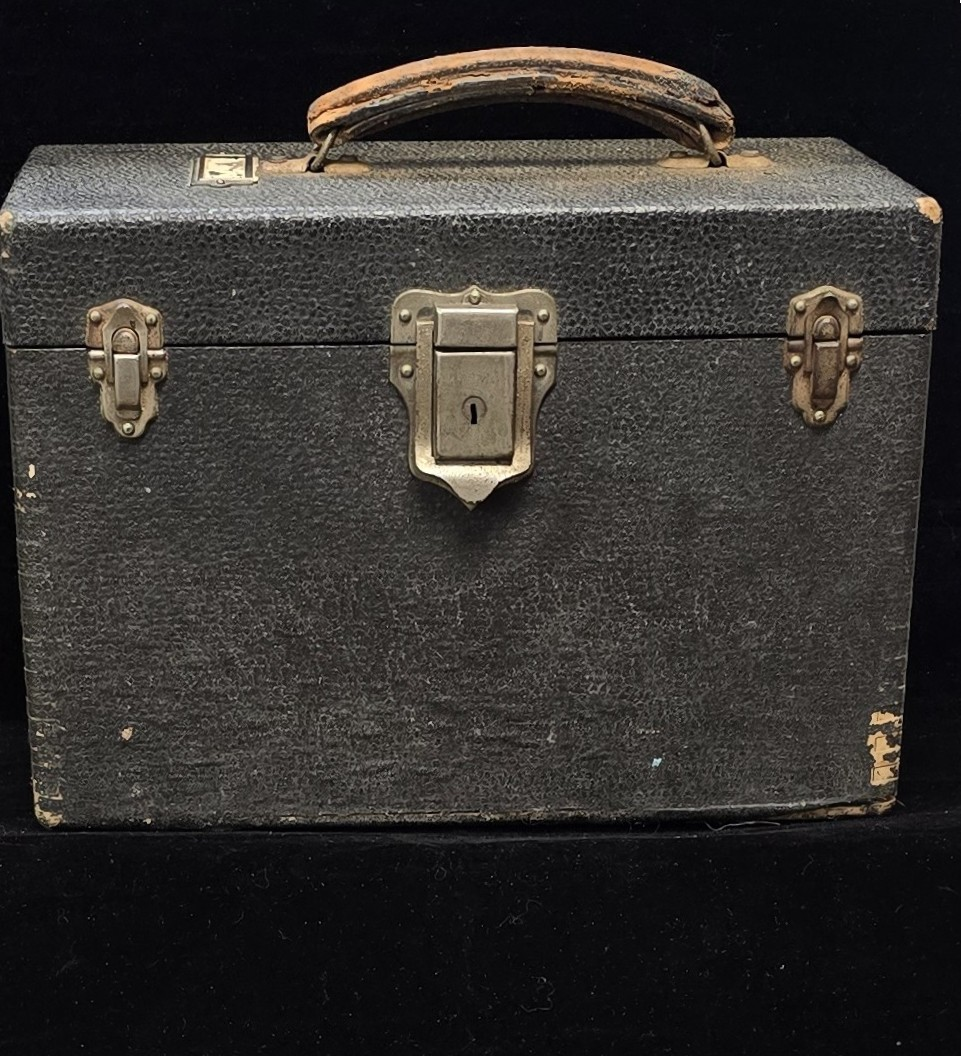
This antique monocular compound microscope was manufactured by Ernst Leitz of Wetzlar, Germany, one of the best-known names in European optical and scientific instrument making. The tube is marked “Ernst Leitz Wetzlar No. 273785”, and the instrument retains a handsome black-and-brass finish with a triple nosepiece and three Leitz objectives. The eyepiece is marked 10x, and the microscope still has its original hard case, giving it strong display appeal as well as historical value.
The serial number places this microscope at approximately 1926, which fits the instrument’s transitional appearance: still elegant and partly brass in character, but already moving into the black-lacquered, more modern laboratory style seen in the 1920s. Comparable institutional and collector references place nearby Leitz serial numbers in the mid-1920s, including no. 232678 at about 1925 and no. 237868 at about 1926.
This example appears to be a practical laboratory or teaching microscope rather than a deluxe research stand. It has the solid, workmanlike look of a real user instrument—the sort of microscope that actually earned its keep.
Condition
Good antique condition with honest age wear. The microscope retains its original case and major optical/mechanical components visible in the photographs, including eyepiece, stage, nosepiece, and three objectives. Brass surfaces show tarnish, spotting, finish loss, and handling wear. The black finish on the base and stand shows scuffing, edge wear, and paint loss. Stage clips show oxidation and rust, and there is visible surface grime consistent with age and storage. I do not see evidence here that it has been recently restored or polished, which is honestly better than somebody “improving” it into a shiny historical crime scene.
Gallery
Historical context
Ernst Leitz of Wetzlar was one of the great German makers of microscopes and precision optical instruments. The company built its reputation in the nineteenth century and became internationally respected for quality microscopy long before the Leica name became famous in photography. Collector serial-number tables for Leitz run from the 1850s into the twentieth century and place this microscope’s number squarely in the mid-1920s.
By the 1920s, microscopes like this were standard equipment in teaching labs, medical settings, and scientific work. This was the era when bacteriology, pathology, and laboratory medicine had long moved from curiosity to necessity. A microscope such as this would have been a routine working instrument in the world of stains, slides, sputum, smears, and nervous medical students pretending they definitely saw the thing they were supposed to see.
Curious Facts, Ephemera, and Trivia
Leitz microscopes are especially collectible because they bridge two worlds: scientific utility and precision industrial design. Even when they are not the rarest stands, they have a presence that cheaper student scopes just do not. The brass-and-black combination is a killer look.
Nearby documented examples help anchor the dating. One museum example with serial no. 237868 is dated around 1926, and another with no. 232678 is dated around 1925. Your microscope at no. 273785 fits very comfortably in that same mid-1920s zone.
The original fitted case matters. A lot. Cases got separated, wrecked, or tossed over the years, usually by somebody who thought, “It’s just an old box.”
Excerpt
Tube marked: “Ernst Leitz Wetzlar No. 273785”
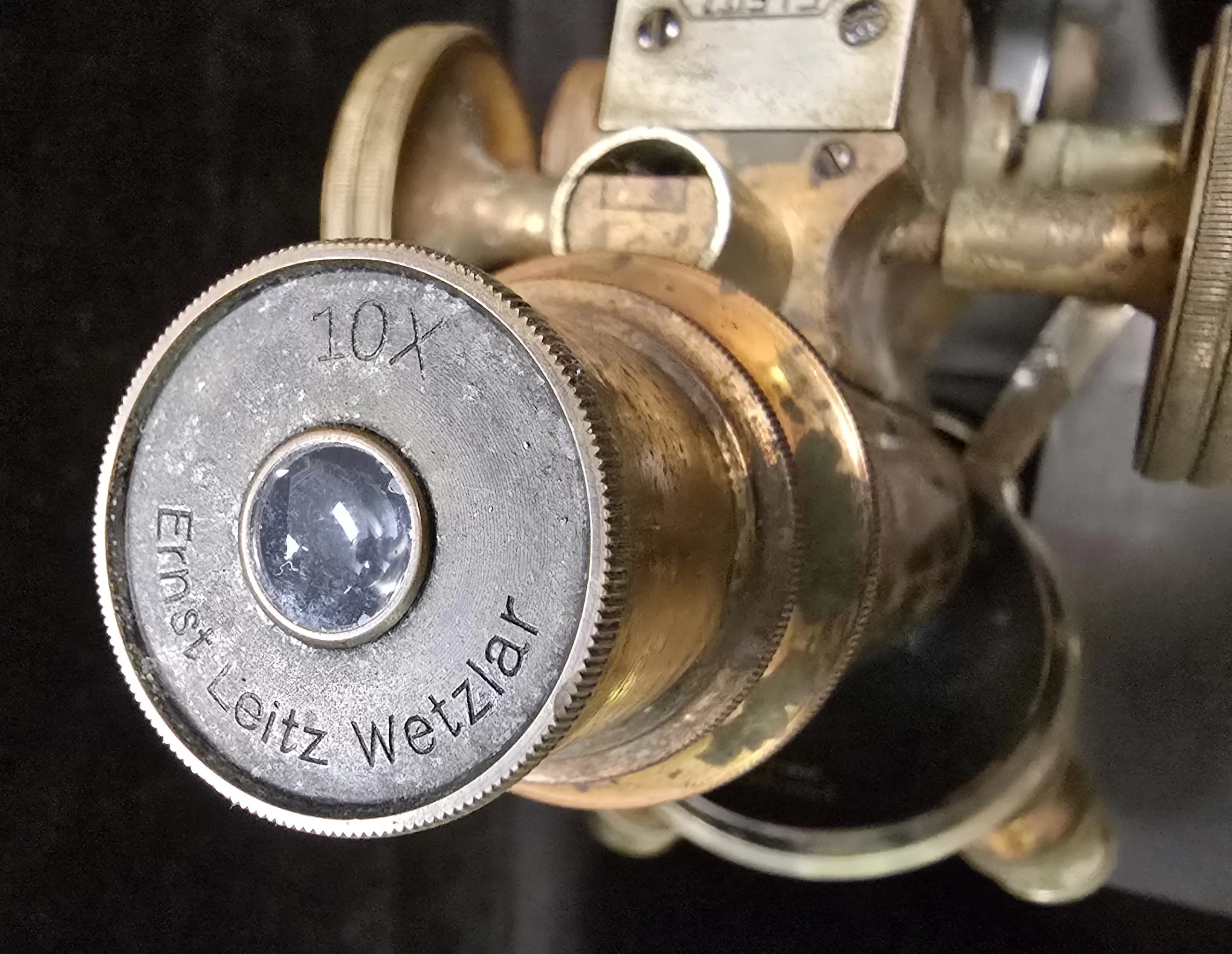
Eyepiece marked: “10x Ernst Leitz Wetzlar”
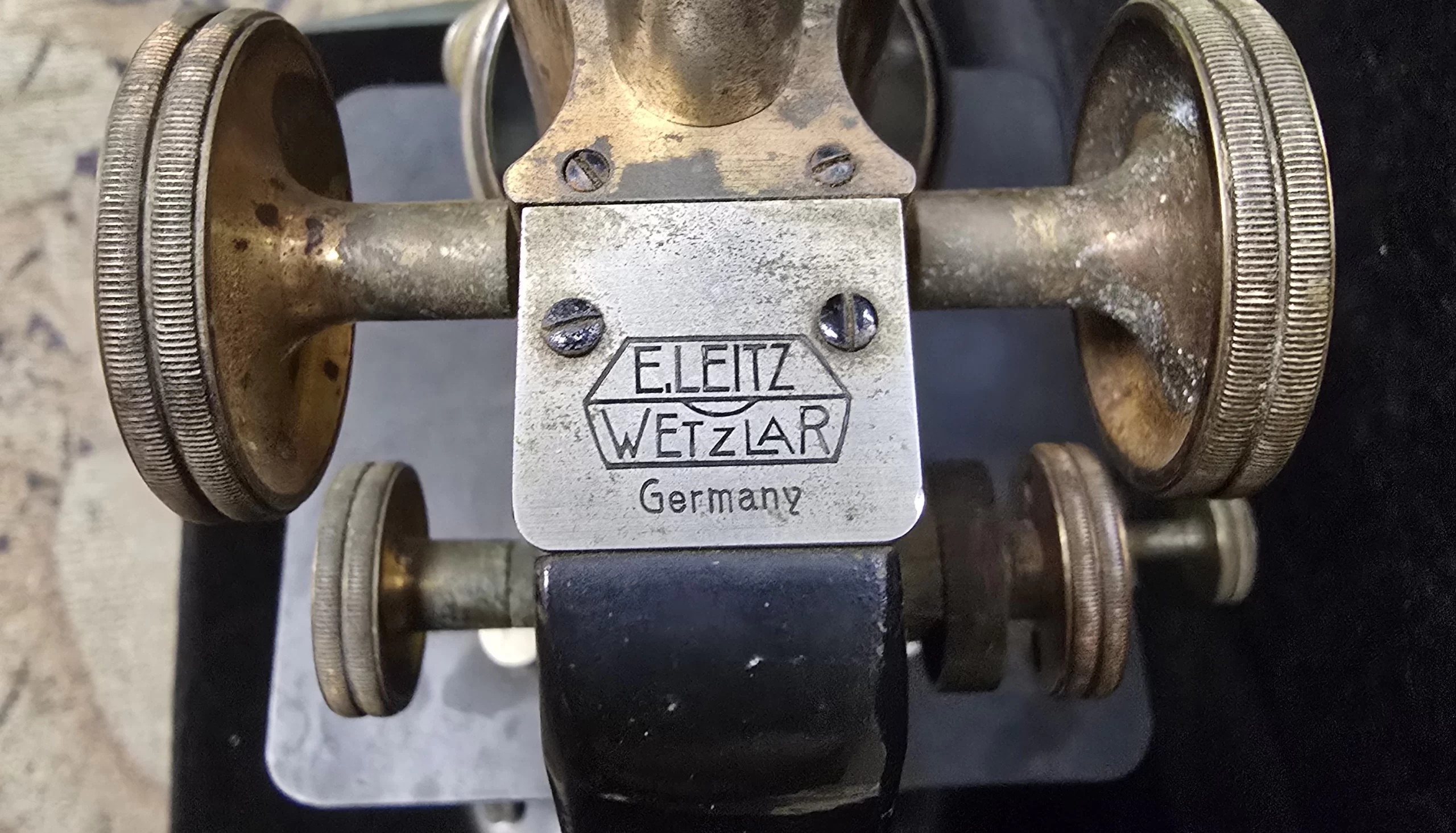
Rear plate marked: “E. Leitz Wetzlar Germany”
Why it is in the Cabinet
This is exactly the kind of object that belongs in the Cabinet: real medical-scientific history, built to be used, not merely admired. It has the right look, the right name, the right age, and enough surviving originality to tell its story without needing a salesman to do the talking. A vintage Leitz microscope is one of those pieces that instantly says medicine, laboratory science, and old-school craftsmanship all at once.
Support Dr. Bebout’s Cabinet of Medical Curiosities
If you enjoy the history, the oddities, and the effort, help keep this cabinet open. Every little bit helps preserve and share the strange wonders of medicine's past.
Buy Me a Ko-fi ☕ Buy Me a Coffee ☕ Tip via PayPal 💵