
Title
Jennings-Style Mouth Gag (Self-Retaining Oral Retractor), nickel-plated steel, c. 1890–1925
Author
Not applicable (instrument). Maker not visible in provided photos (no stamp/etching seen).
Image
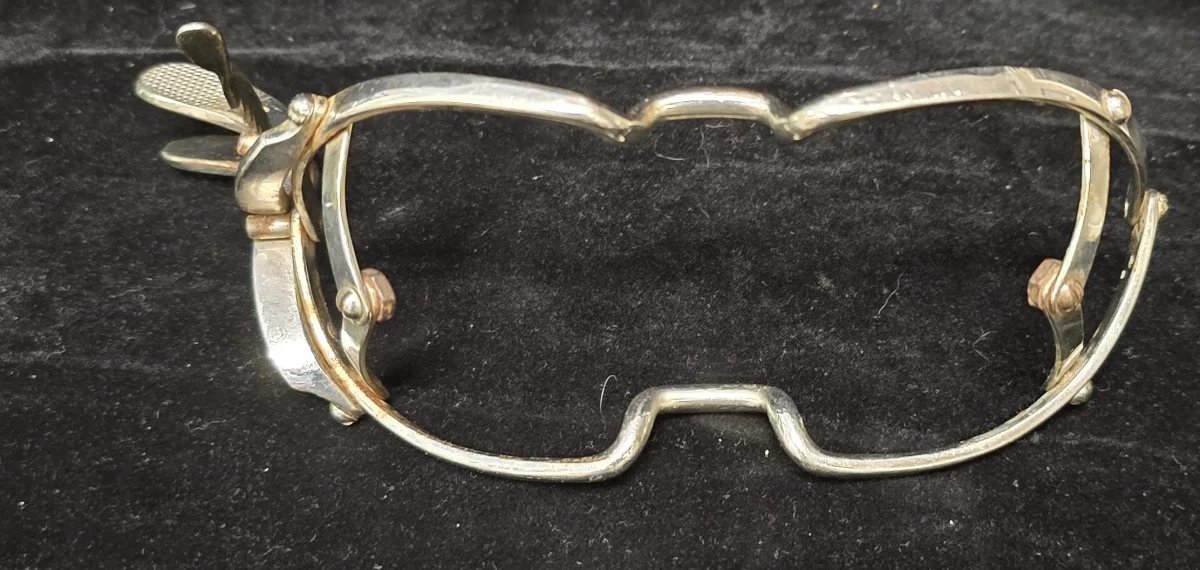
Description
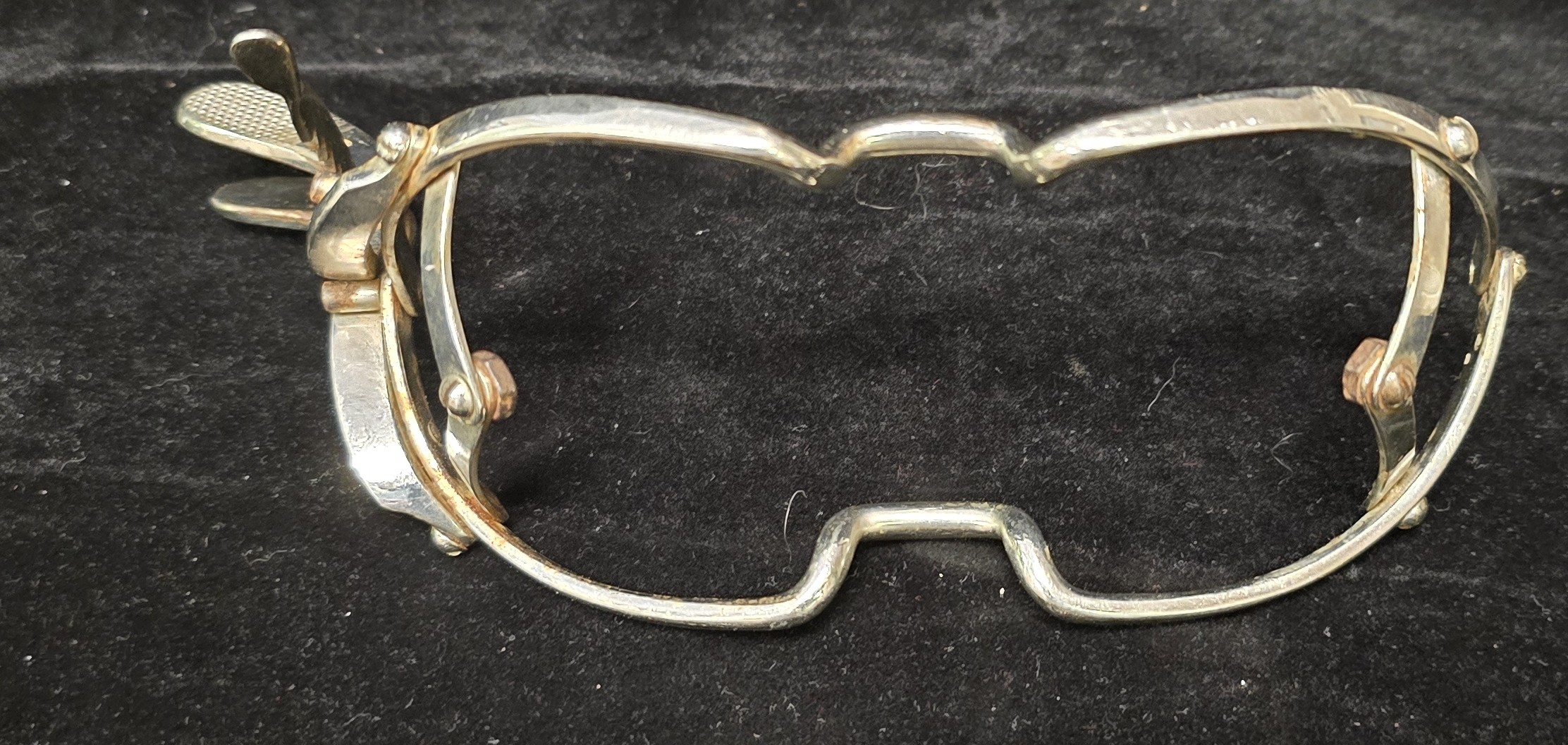
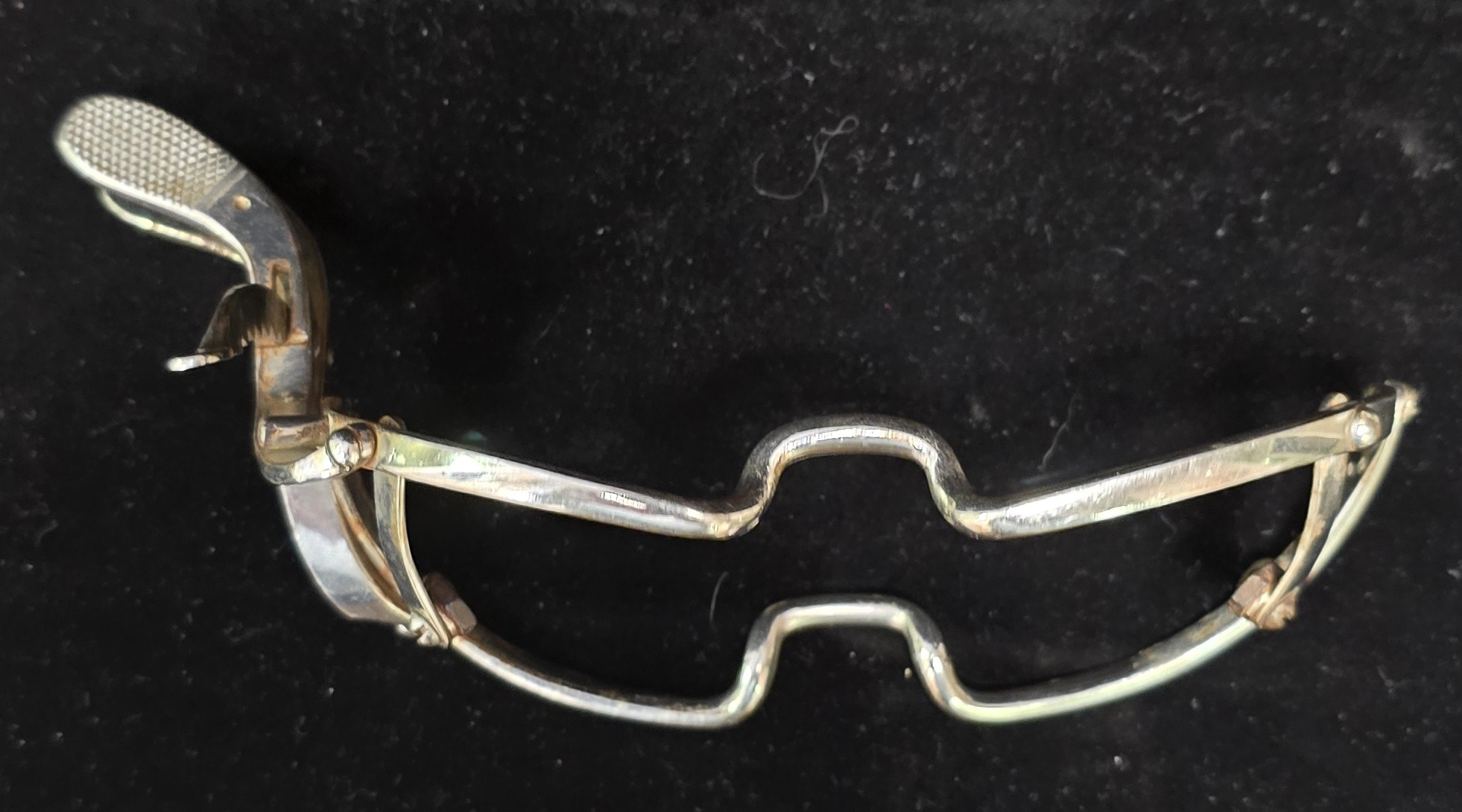
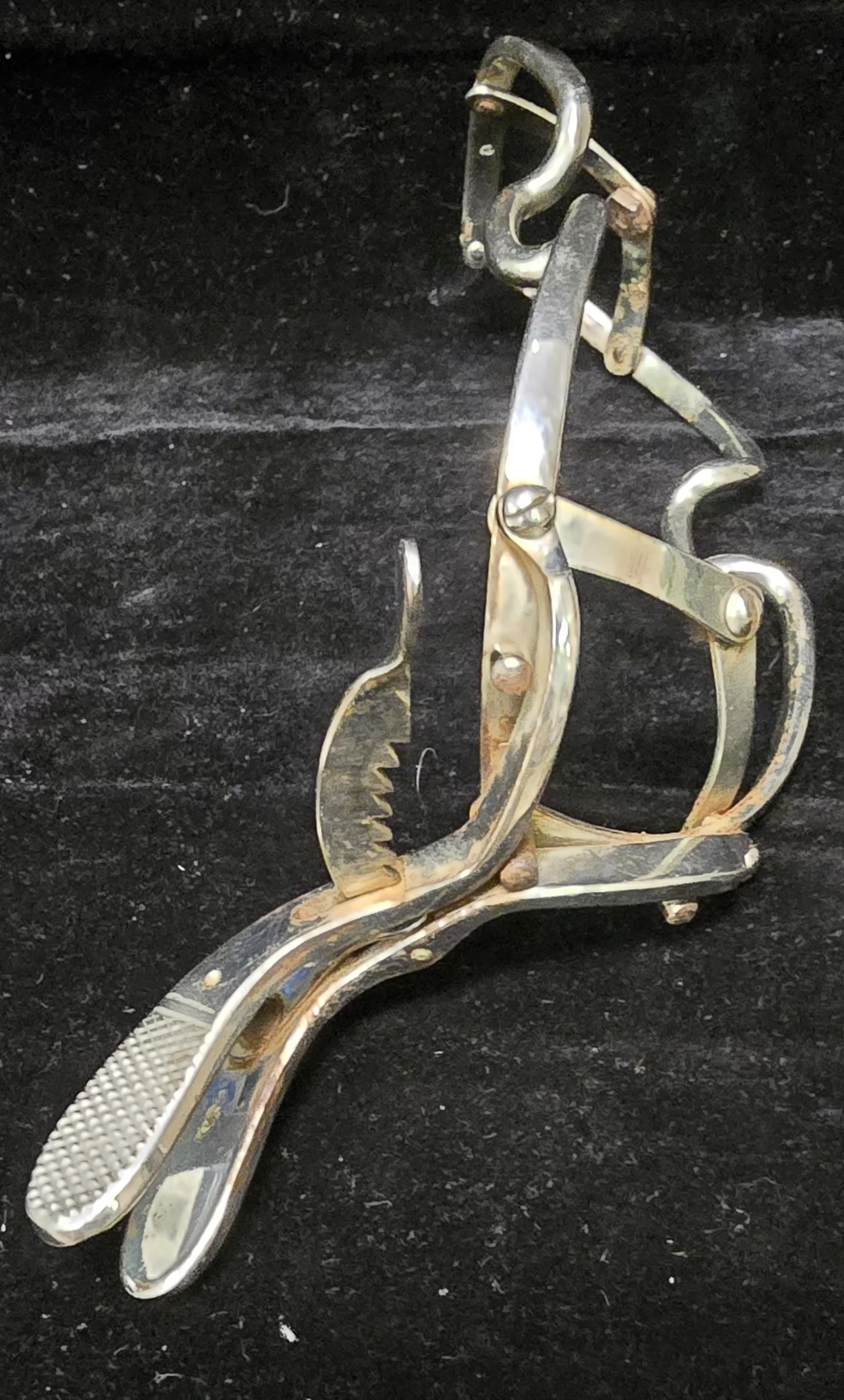
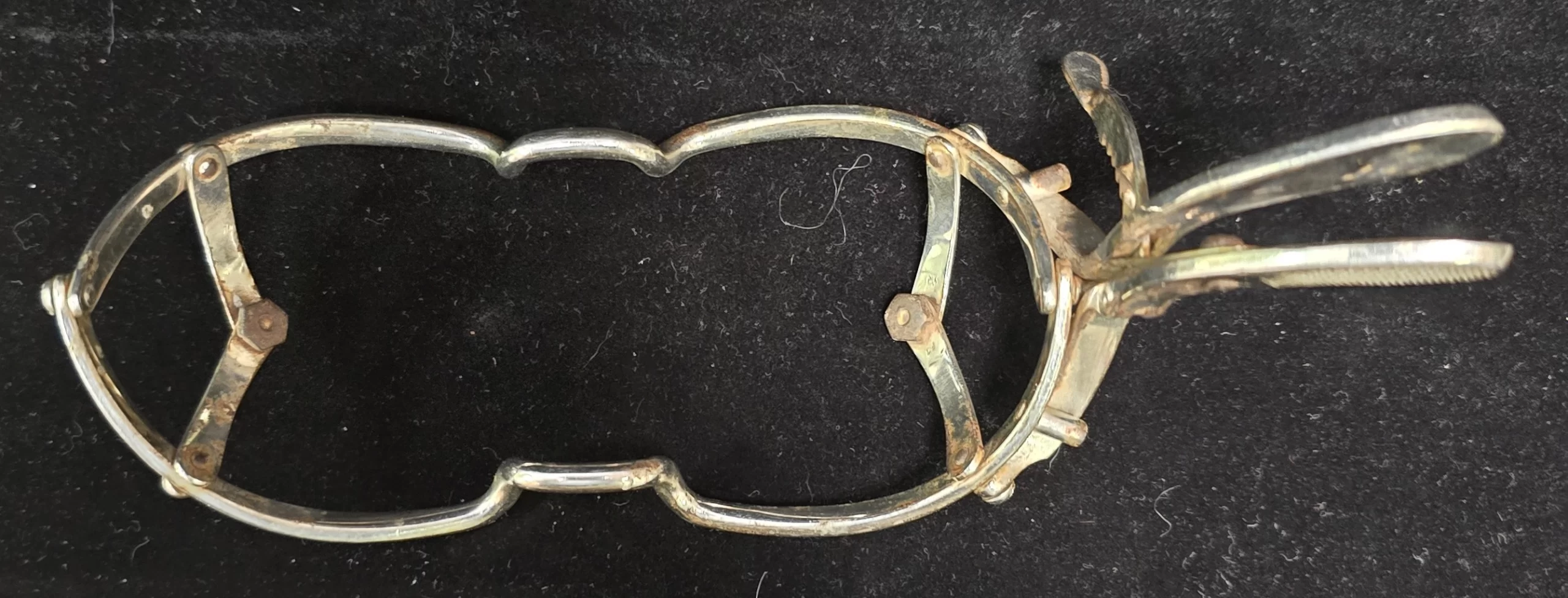
This is a Jennings-style mouth gag, a self-retaining oral retractor designed to hold the jaws open and maintain exposure of the oral cavity and oropharynx during procedures such as early tonsil surgery, oral surgery, and other ENT/dental work. The defining features of this pattern are present: an oval facial frame that stabilizes the instrument externally, an internal bite/jaw blade (with serrated grip surface), and a ratcheting lever mechanism with a textured thumb plate that allows controlled opening and then locks into position.
In practical use, the frame braces against the face while the internal blade and linkage apply steady opening force. This is not a gentle tool — it is a functional restraint device used to create an unobstructed field when hands and assistants were limited and when anesthesia and airway management were far less refined than today.
The instrument appears complete and functional based on the visible components: external frame, internal blade, hinged linkage, and ratchet/locking lever.
Condition
Nickel plating shows age-appropriate wear with scattered dulling and surface oxidation/patina, especially around joints and contact points. Joints, pivots, and fasteners appear intact with no visible cracks or missing linkages in the photos provided. Serrated bite surface remains well-defined. Overall condition is good antique condition with cosmetic wear consistent with use and age.
Gallery
Historical context
The Jennings-style mouth gag belongs to the era when mechanical exposure and restraint instruments were central to surgery. Before modern suction, lighting, endotracheal anesthesia norms, and disposable airway adjuncts, a tool like this helped a surgeon maintain access to the throat and oral cavity with fewer hands. These gags are closely associated with the practical realities of early ENT and oral surgery: limited airway control, heavy reliance on assistants, and instruments designed for speed and control rather than comfort.
Curious Facts, Ephemera, and Trivia
The serrated bite surface isn’t decorative — it’s there to resist slipping once the patient clenches or shifts.
The ratchet mechanism turns “hold this open” into “hold this open until we’re done,” which is exactly why these are memorable museum pieces.
Instruments like this often appear in old surgical catalogs under “mouth gags,” “oral specula,” or “tonsil instruments,” sometimes with multiple blade options depending on intended use.
Excerpt
“Self-retaining” is the polite catalog term for “this thing will keep working whether the patient likes it or not.”
Why it is in the Cabinet
Because it is a brutally honest example of practical historical medicine: clever mechanics solving a real surgical problem in an era that didn’t have today’s airway safety margin or patient comfort expectations. It’s also visually striking — the silhouette reads instantly as “surgical,” even to non-medical visitors, and it tells a story without needing a label.
Support Dr. Bebout’s Cabinet of Medical Curiosities
If you enjoy the history, the oddities, and the effort, help keep this cabinet open. Every little bit helps preserve and share the strange wonders of medicine's past.
Buy Me a Ko-fi ☕ Buy Me a Coffee ☕ Tip via PayPal 💵