
Title
The Philosophy of Sleep
Author
Robert Macnish
Image
Description
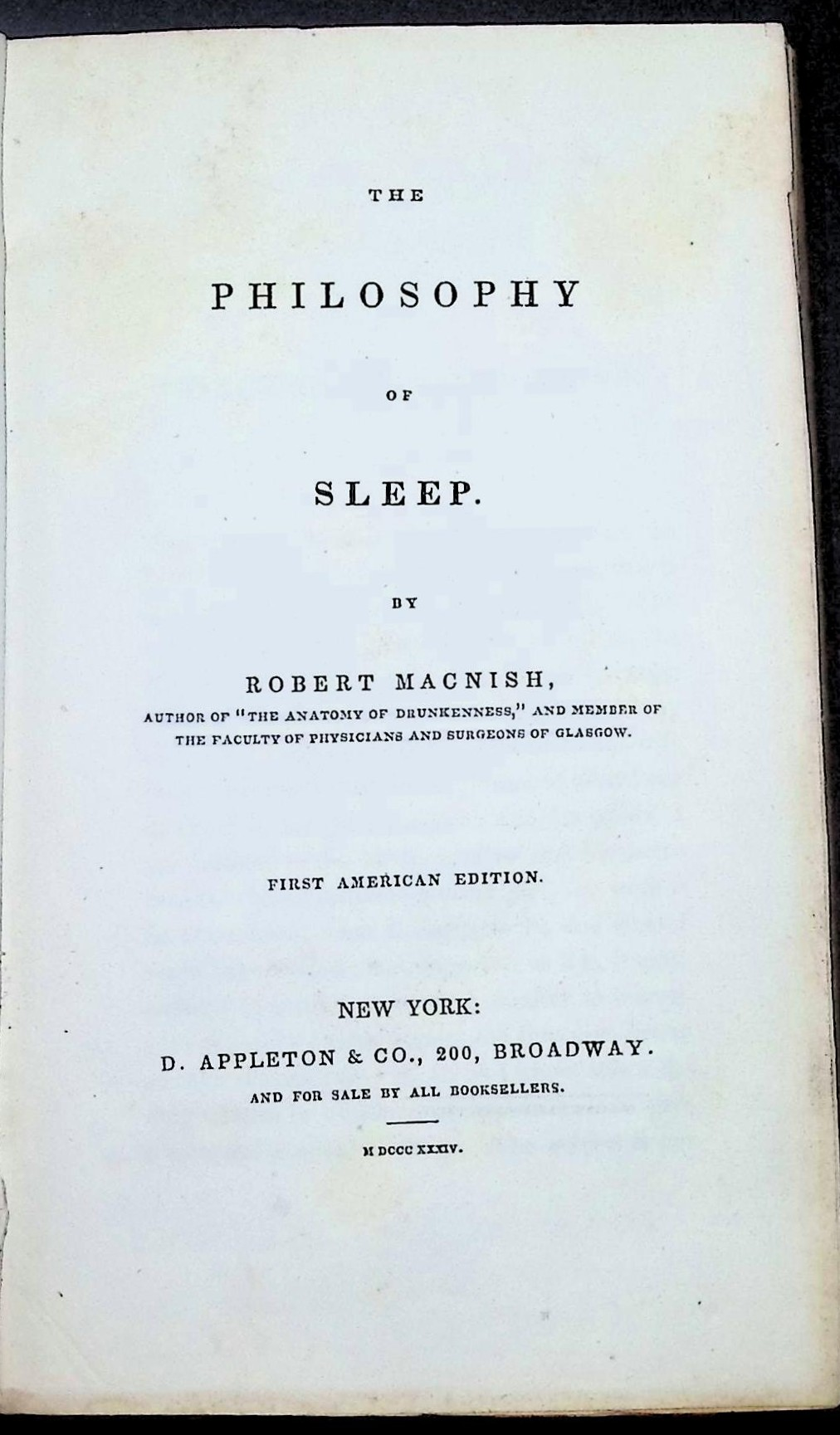
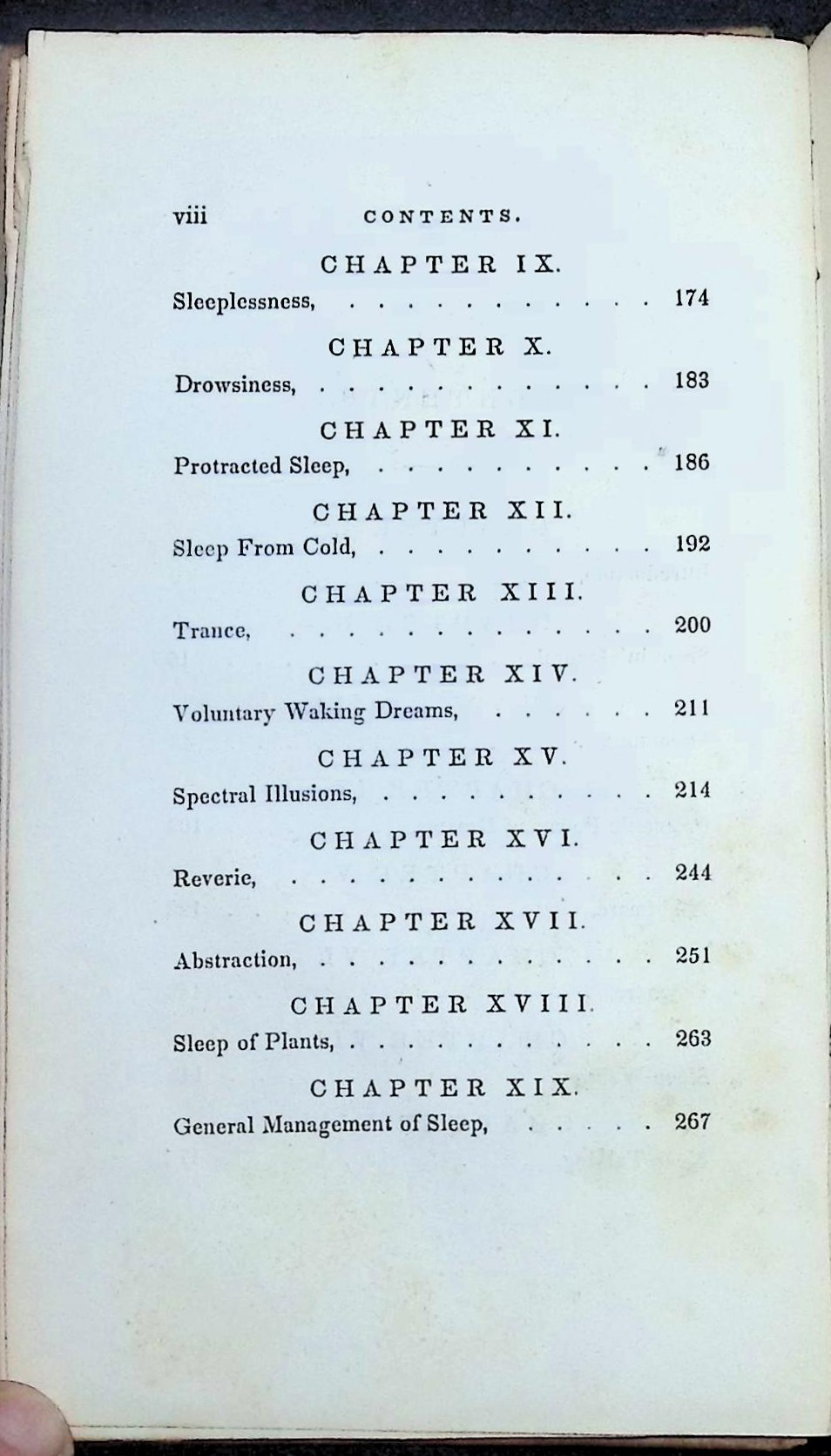
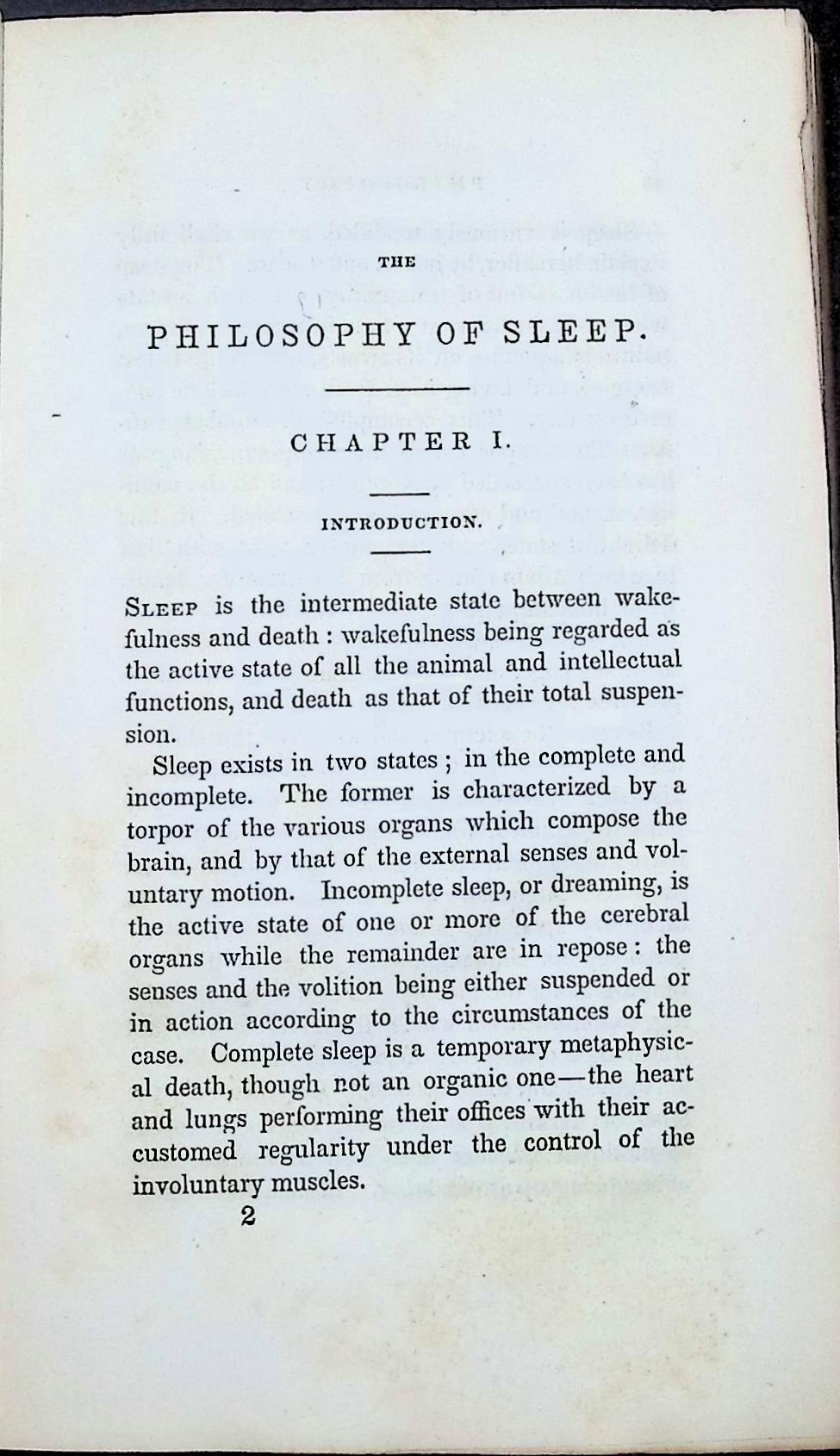
The Philosophy of Sleep is a 19th-century medical-philosophical work exploring sleep as a physiologic state and a cultural mystery. This copy is the First American Edition, published in New York by D. Appleton & Co., 200 Broadway, dated 1834 (M DCCC XXXIV). Macnish frames sleep as an “intermediate state between wakefulness and death,” then expands into topics that blend physiology, observation, and period beliefs—dreaming, nightmare/daymare, somnambulism, trance states, and “spectral illusions.”
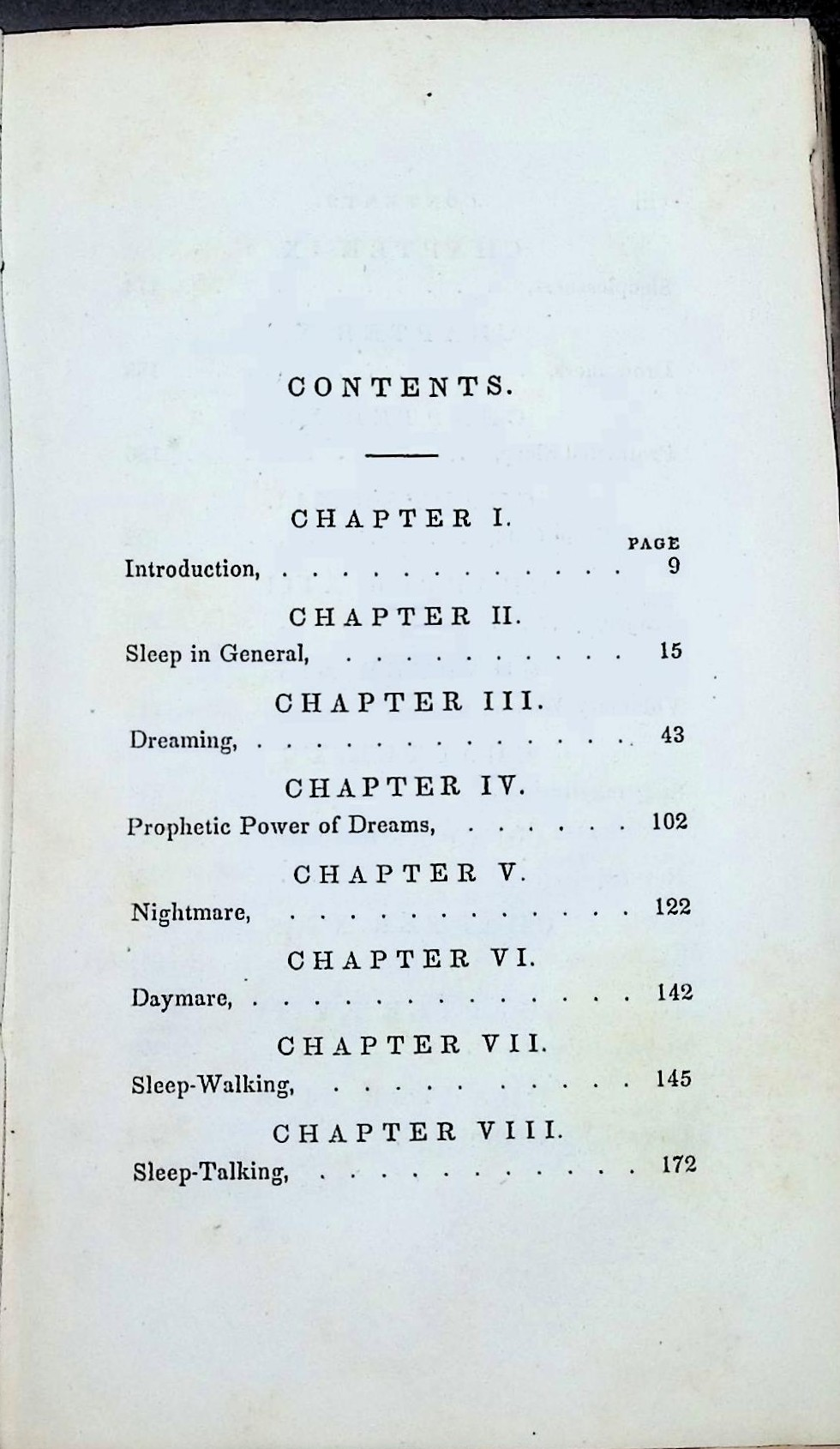
The table of contents reads like a Victorian sleep clinic that wandered into the supernatural aisle: chapters cover Dreaming, Prophetic Power of Dreams, Nightmare, Daymare, Sleep-Walking, Sleep-Talking, Sleeplessness, Drowsiness, Protracted Sleep, Sleep From Cold, Trance, Voluntary Waking Dreams, Spectral Illusions, Reverie, Abstraction, Sleep of Plants, and General Management of Sleep. It’s an early American printing that captures how physicians and educated readers tried to explain the mind and body before modern neuroscience and sleep medicine existed.
Condition
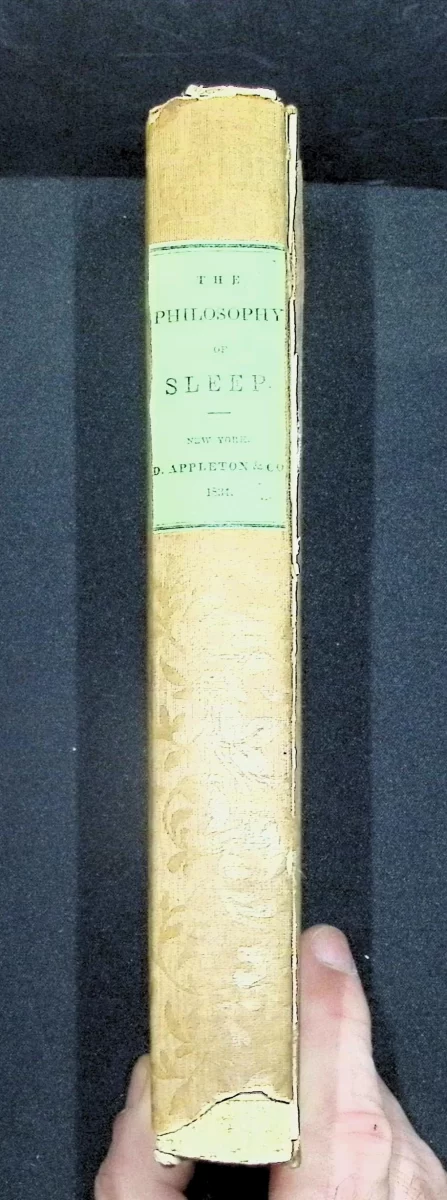
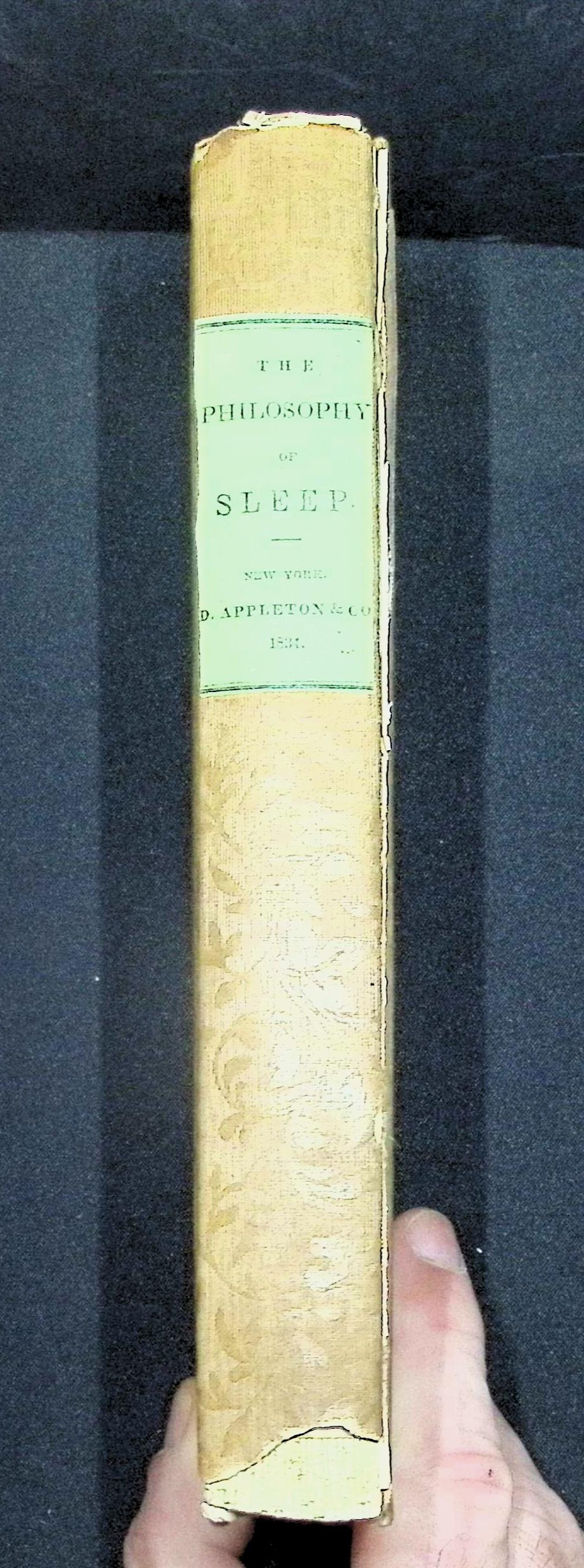
Original cloth binding with printed paper spine label intact. Noticeable wear at spine ends and along the joint edges, with visible splitting/tearing at the lower spine area; interior pages appear clean with light age toning/foxing consistent with age. Text block appears serviceable based on photos.
Gallery
Historical context
Published in 1834, this sits in the pre-EEG, pre-psychoanalysis era when “sleep science” was still a mix of physiology, moral philosophy, and reported phenomena. Works like this are valuable snapshots of how medicine tried to systematize dreaming, parasomnias, and altered states long before modern diagnostic categories existed.
Curious Facts, Ephemera, and Trivia
The book treats daymare as its own topic—basically a daylight cousin to nightmare (a very on-brand 1800s concept).
The scope is unusually broad for the period: it places sleep disorders (insomnia, drowsiness, prolonged sleep) alongside trance, spectral experiences, and plant “sleep.”
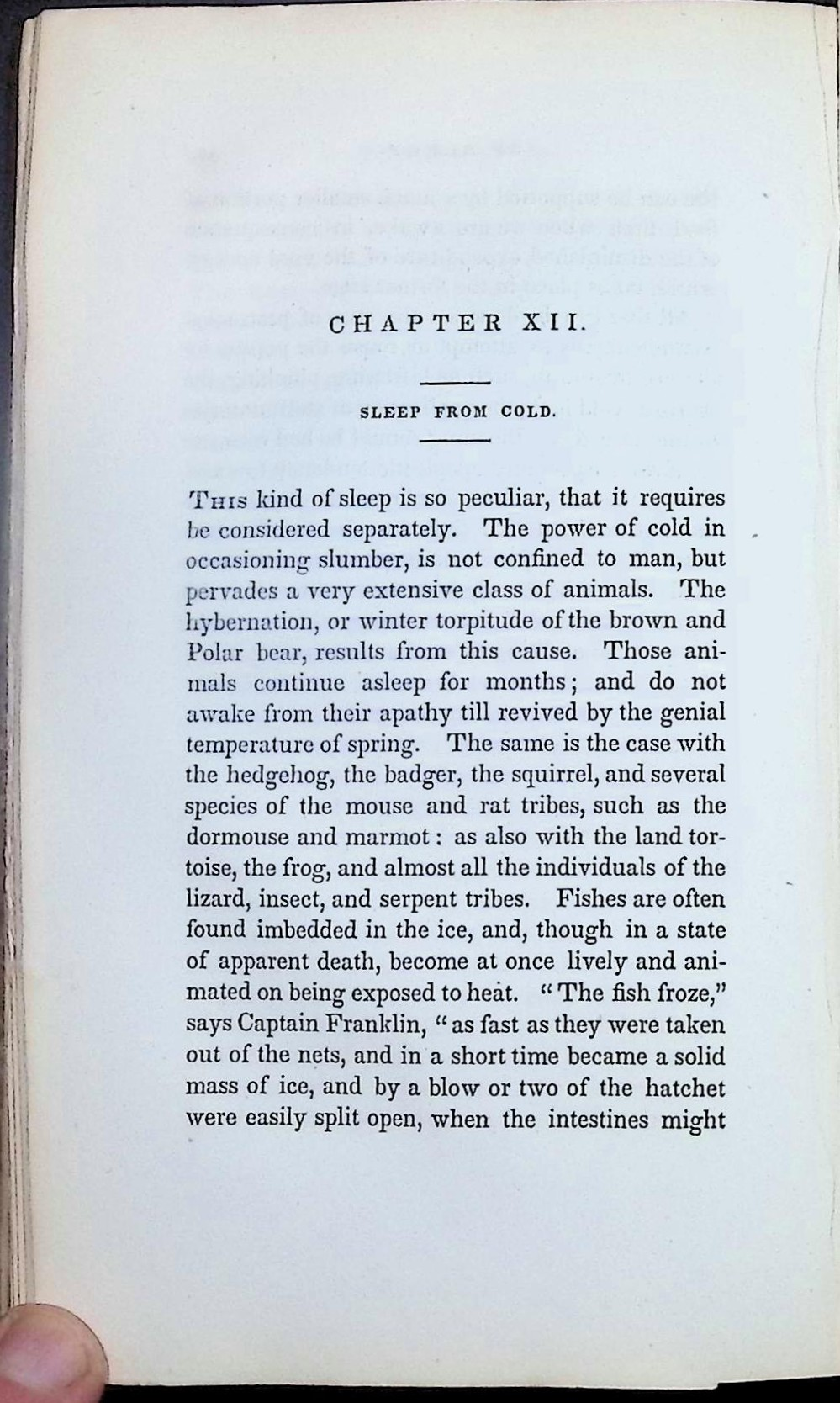
“Sleep from cold” includes hibernation and cold-induced torpor across species—an early popular-medical approach to comparative physiology.
Excerpt
“Sleep is the intermediate state between wakefulness and death…”
Why it is in the Cabinet
Because this is the kind of book that shows medicine mid-transition: one foot in observation and physiology, the other in the era’s fascination with dreams, trance, and the strange edges of consciousness. It’s a perfect Cabinet piece for anyone who likes their medical history with a little fog on the moor.
Digital Edition and Download
A fully digitized copy of this 1834 First American Edition of The Philosophy of Sleep has been preserved and is available for download directly from this site.
The original text has been scanned and archived to ensure long-term preservation and accessibility for researchers, collectors, and students of early medical thought. Providing direct access to historical works like this aligns with the mission of the Cabinet: preserving and sharing medical history rather than allowing it to fade into obscurity.
You may download the digital edition below:
Download The Philosophy of Sleep (1834) – PDF
Support Dr. Bebout’s Cabinet of Medical Curiosities
If you enjoy the history, the oddities, and the effort, help keep this cabinet open. Every little bit helps preserve and share the strange wonders of medicine's past.
Buy Me a Ko-fi ☕ Buy Me a Coffee ☕ Tip via PayPal 💵