
Title
Atwood’s Vegetable Physical Jaundice Bitters
Author
Moses Atwood
Image
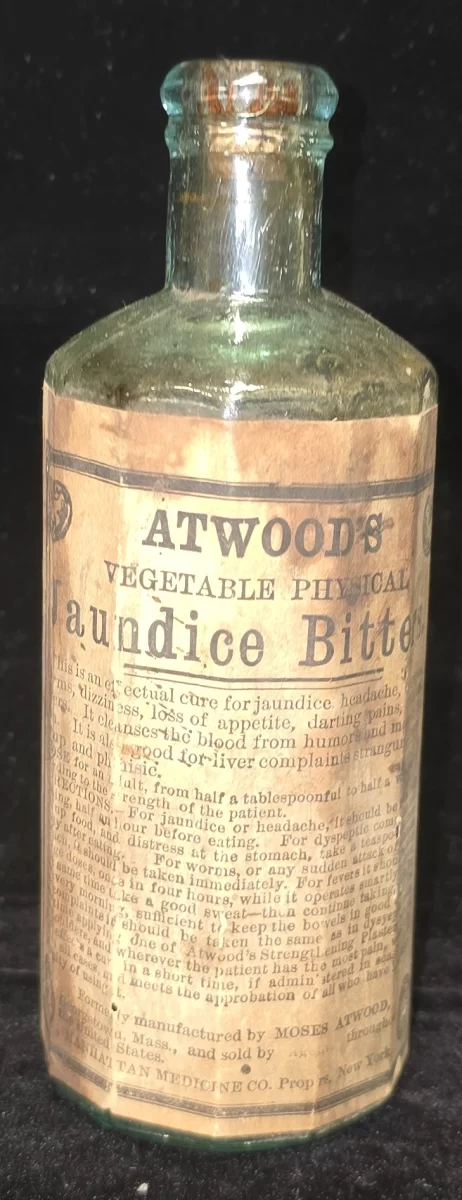
Description
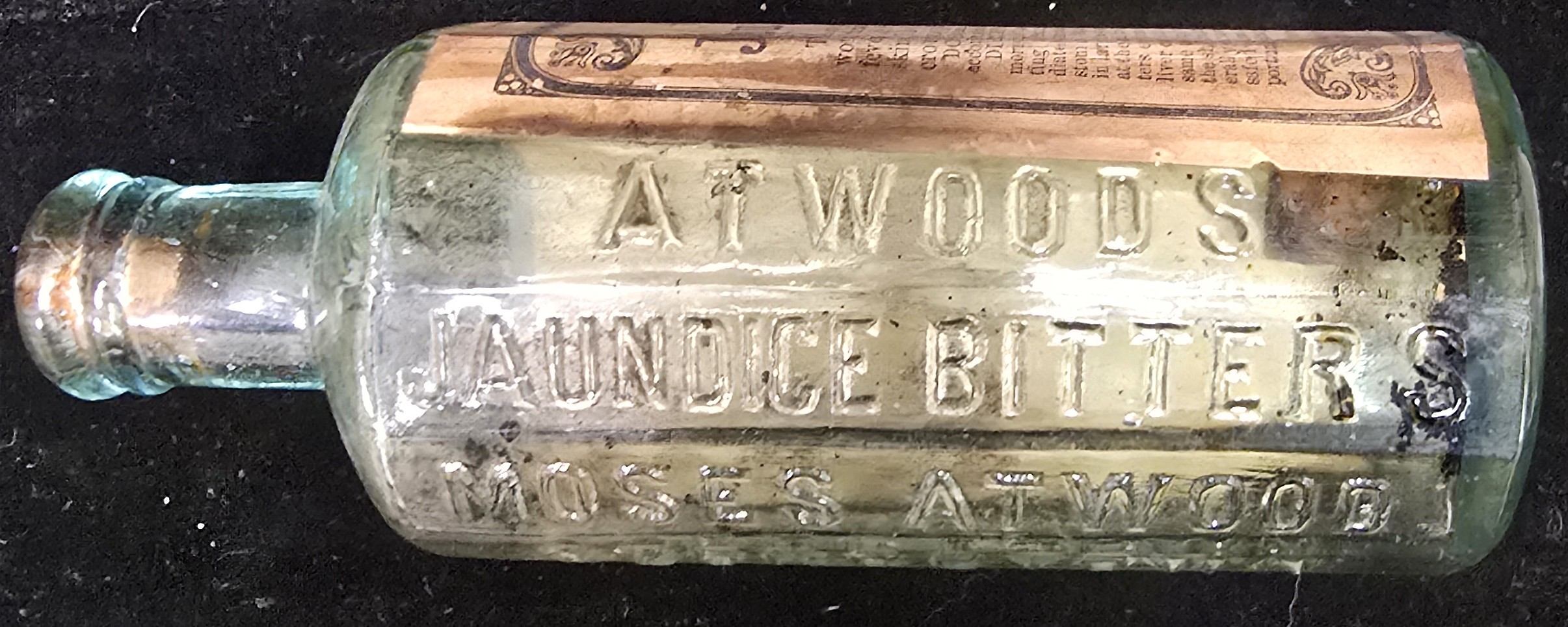
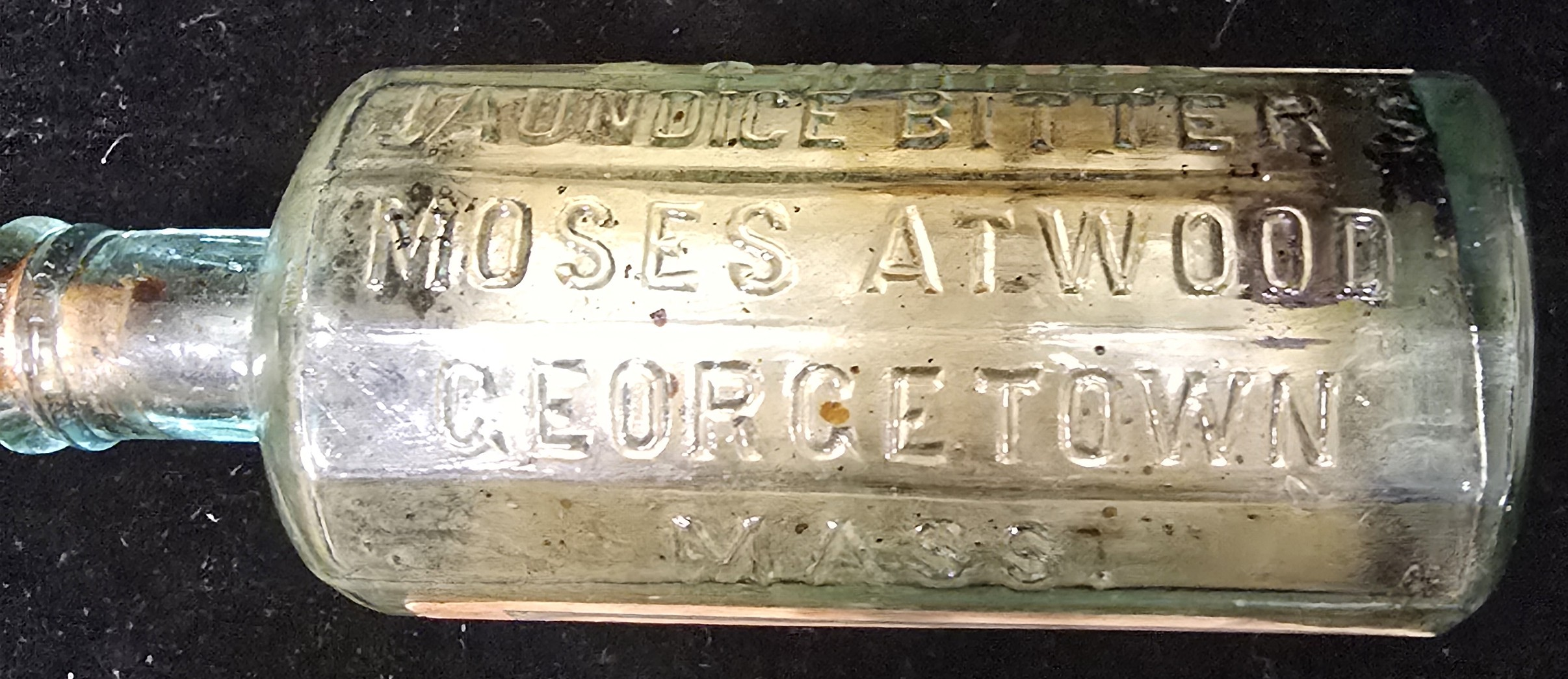
This is an original embossed aqua glass bottle of Atwood’s Vegetable Physical Jaundice Bitters, manufactured by Moses Atwood of Georgetown, Massachusetts. The bottle features strong panel embossing reading:
“ATWOOD’S JAUNDICE BITTERS – MOSES ATWOOD – GEORGETOWN MASS.”
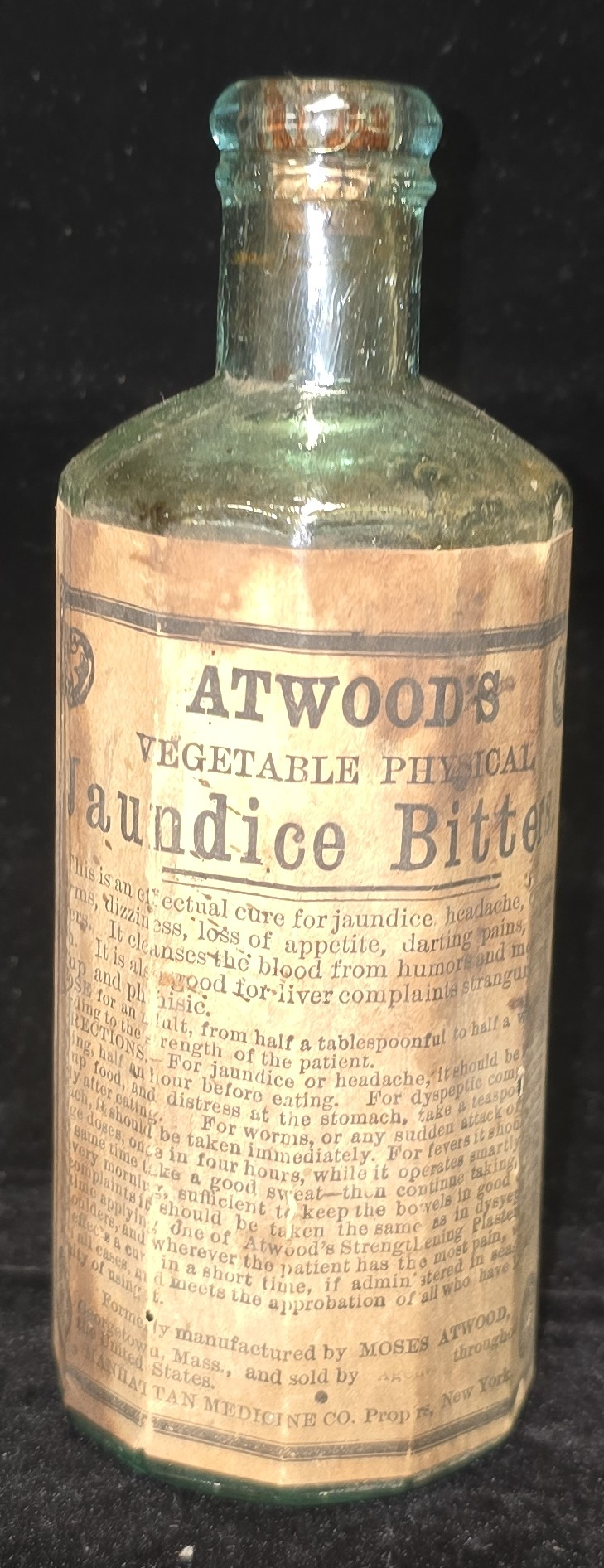
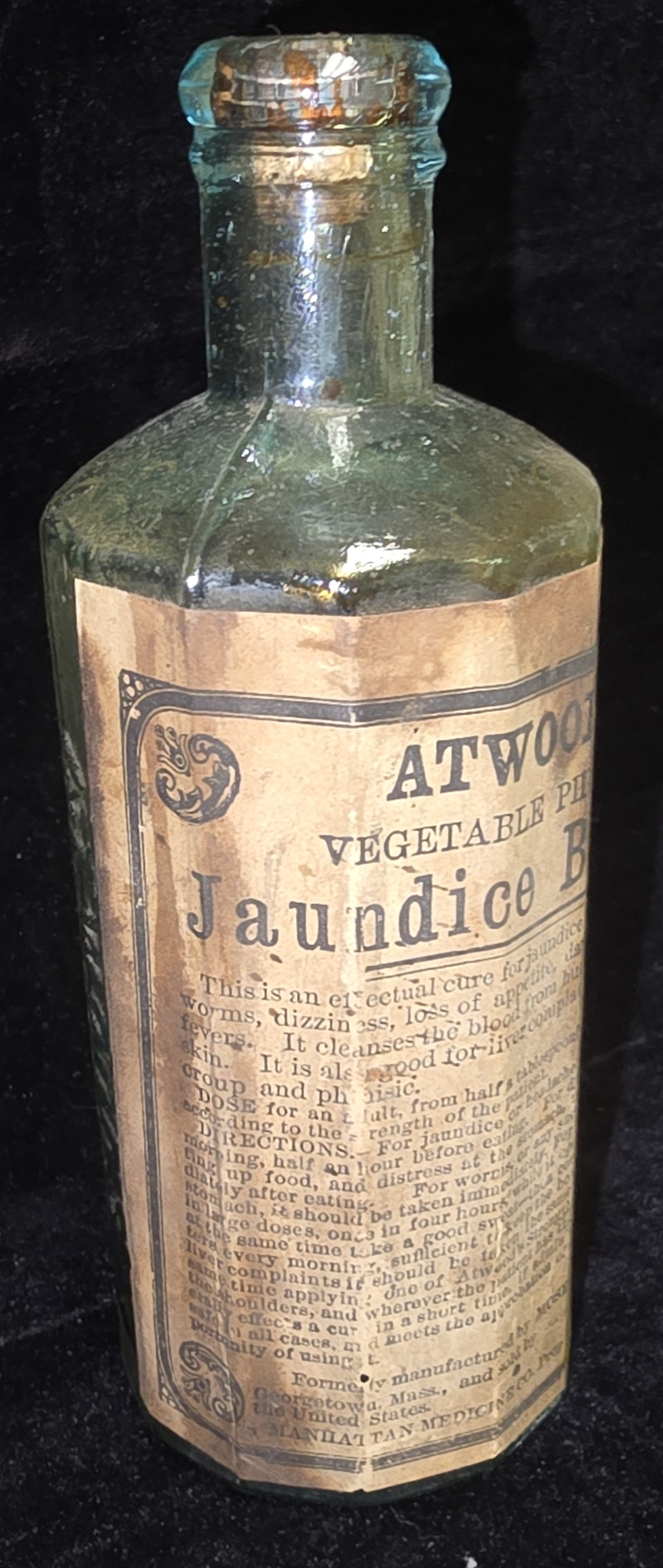
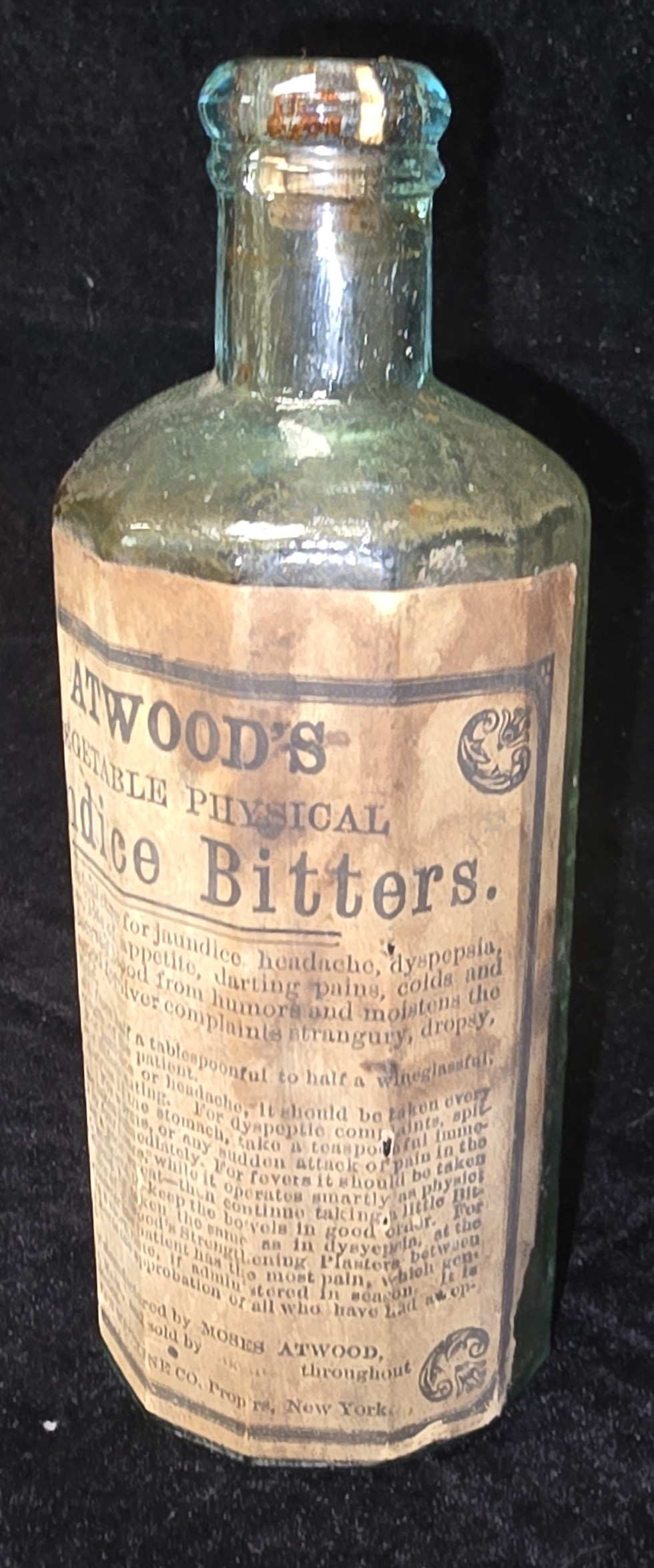
The surviving paper label identifies the product as a cure for jaundice, headache, worms, dizziness, loss of appetite, darting pains, and liver complaints. It further claims to cleanse the blood of humors and improve general health. Dosage instructions recommend tablespoon quantities, consistent with 19th-century bitters formulations.
The product was later sold by the Manhattan Medicine Company of New York, suggesting expansion and commercialization beyond its original New England base.
The bottle is typical of mid-to-late 19th century patent medicine production, with applied top, thick glass, and strong embossing intended to discourage imitation and reinforce brand identity.
Condition
Original embossed aqua glass bottle with intact and legible paper label. Label shows expected age toning, staining, and minor edge wear consistent with 19th-century survival. Glass exhibits surface wear and minor staining but no visible cracks or structural damage. Overall excellent display condition with rare label survival.
Gallery
Historical context
Atwood’s Bitters originated in Georgetown, Massachusetts in the mid-1800s and became one of the more widely distributed New England patent bitters. Like many “physical bitters,” it targeted digestive complaints and liver dysfunction—conditions broadly attributed to imbalances of bile and humors.
Jaundice in the 19th century was not well differentiated etiologically. Whether from hepatitis, obstruction, infection, or hemolysis, it was treated with purgatives, tonics, and herbal bitters designed to stimulate bile flow and “cleanse the system.”
The transition to Manhattan Medicine Co. distribution reflects a common pattern in patent medicine history: small regional formulation evolving into mass-market branding.
Curious Facts, Ephemera, and Trivia
“Physical” in 19th-century labeling often implied a purgative effect.
• The heavy embossing served both marketing and anti-counterfeiting purposes.
• Surviving labeled examples are significantly less common than dug bottles without paper.
• The formula likely contained strong bitter botanicals such as gentian or similar hepatic stimulants.
Excerpt
“This is an effectual cure for jaundice… It cleanses the blood from humors and is good for liver complaints…”
Why it is in the Cabinet
This piece represents the intersection of humoral theory, early hepatology misunderstanding, and aggressive 19th-century pharmaceutical marketing. The combination of deep embossing and surviving label makes it an excellent educational display artifact demonstrating how digestive and hepatic complaints were commercialized long before laboratory medicine clarified etiology.
Support Dr. Bebout’s Cabinet of Medical Curiosities
If you enjoy the history, the oddities, and the effort, help keep this cabinet open. Every little bit helps preserve and share the strange wonders of medicine's past.
Buy Me a Ko-fi ☕ Buy Me a Coffee ☕ Tip via PayPal 💵