
Title
Fulton’s Renal Compound for Bright’s Disease
Author
John J. Fulton Company, San Francisco, California
Image
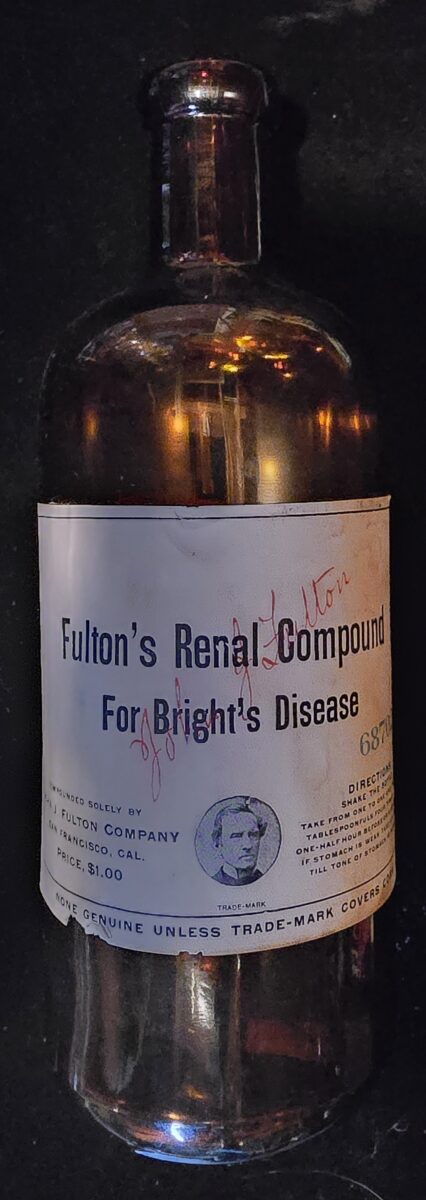
Description
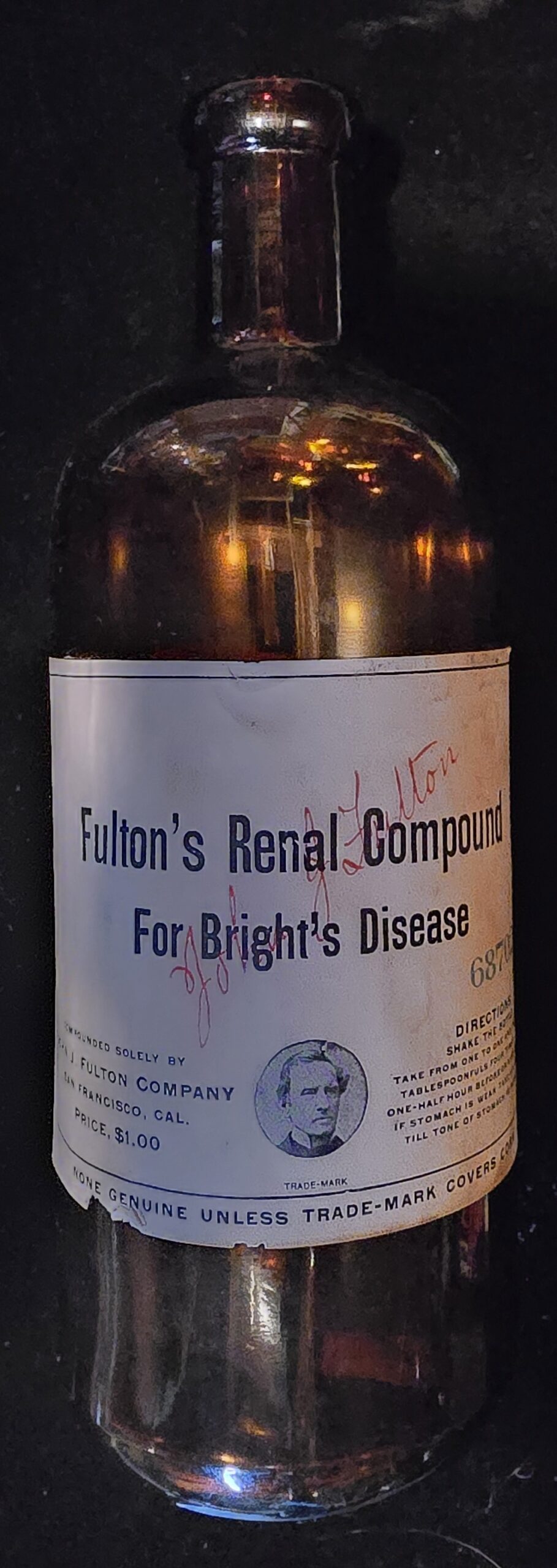
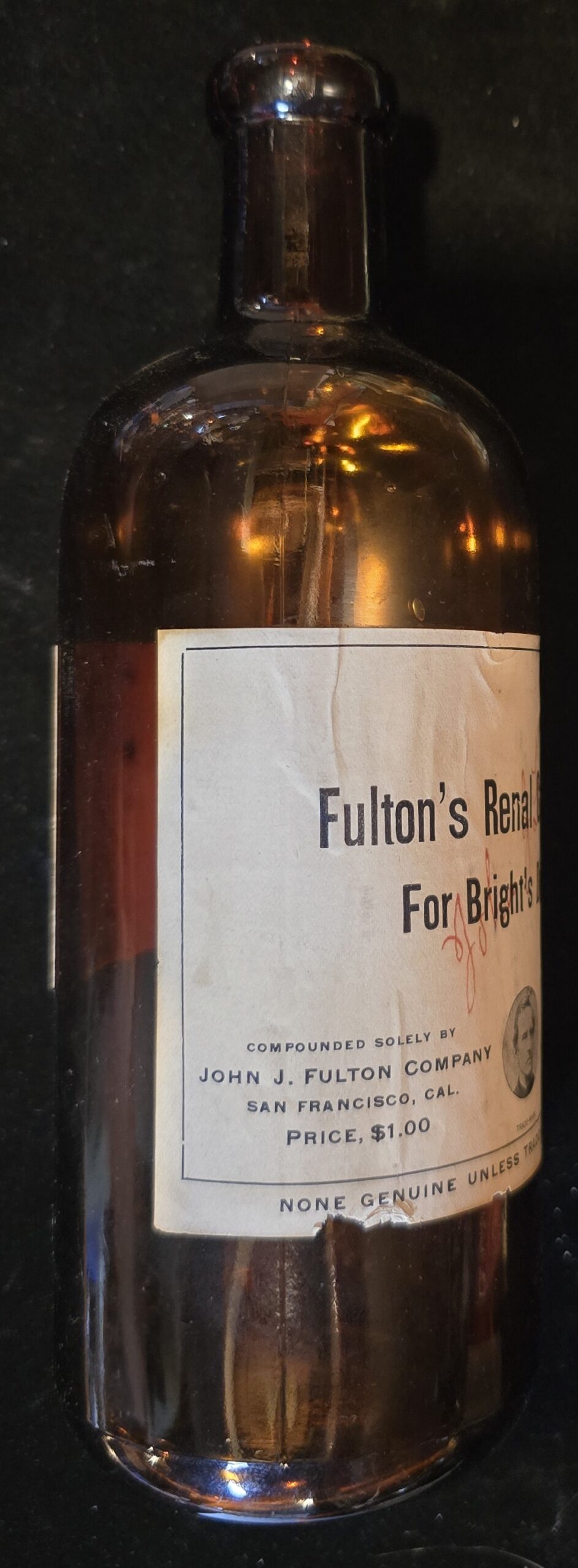
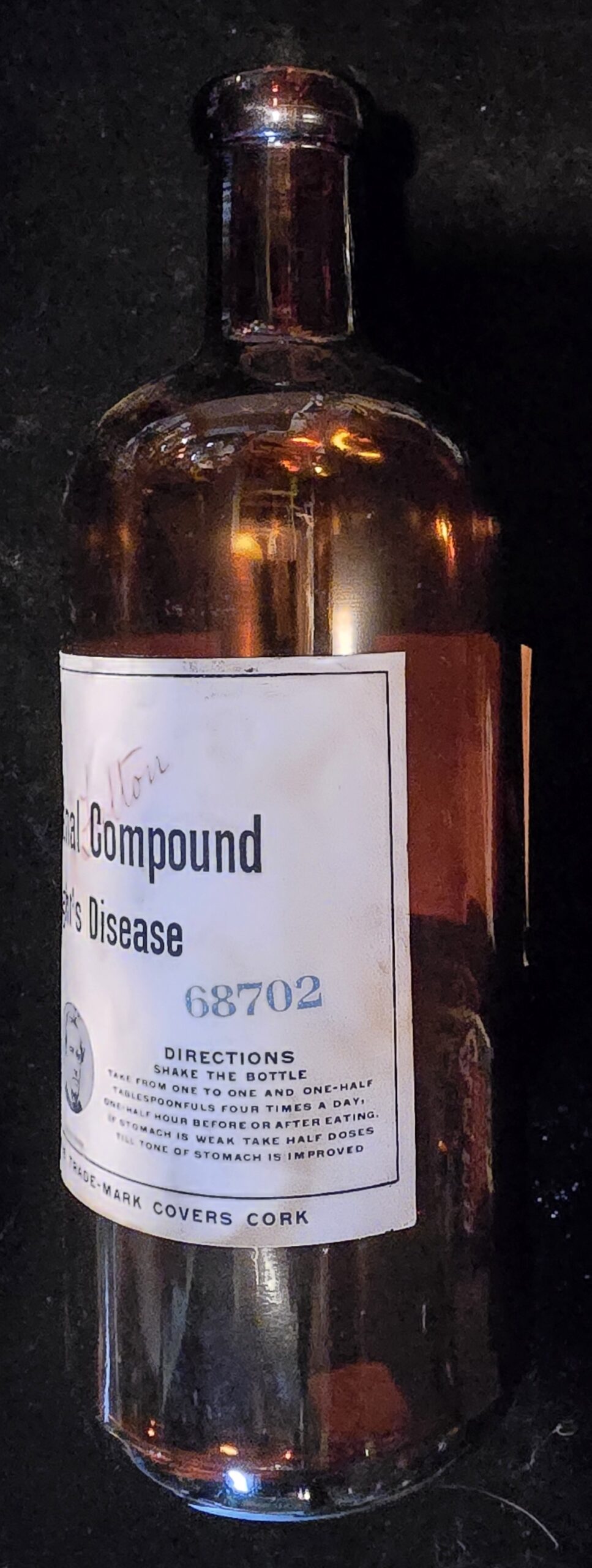
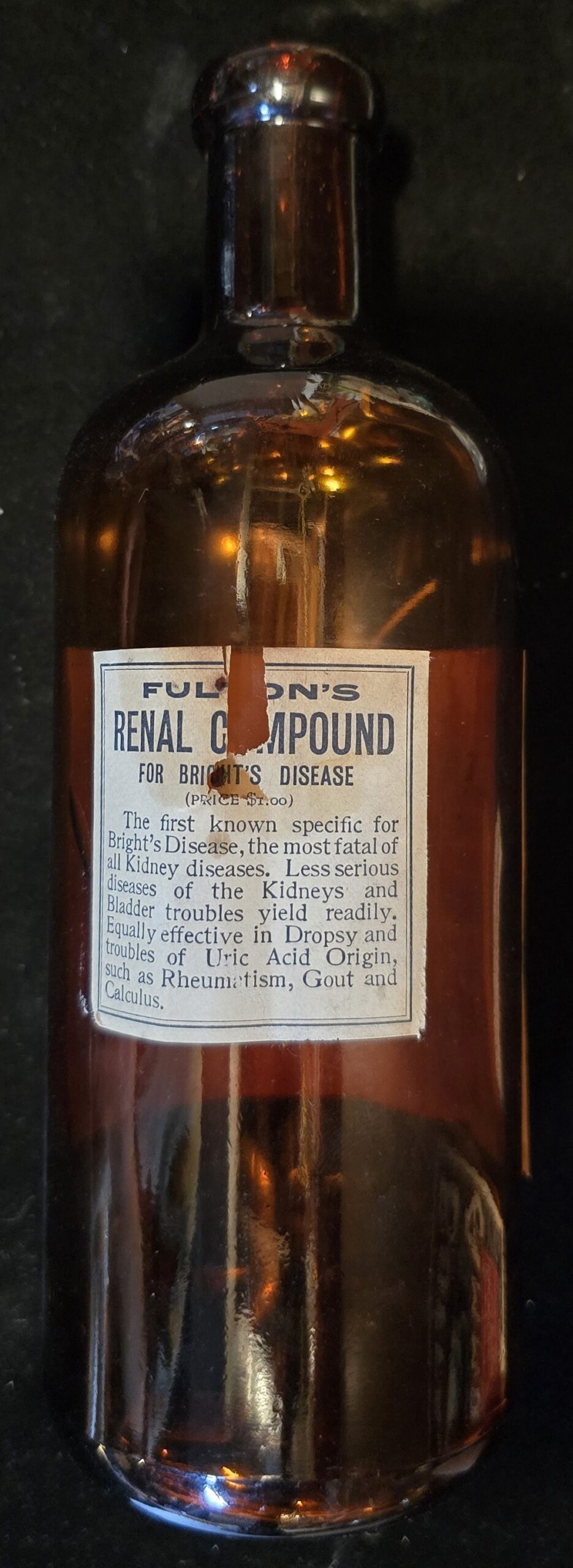
An original amber glass bottle of Fulton’s Renal Compound, a proprietary late-19th-century pharmaceutical marketed specifically for Bright’s Disease, the historical umbrella term for chronic nephritis. The paper label boldly advertises the preparation as “the first known specific for Bright’s Disease, the most fatal of all kidney diseases,” extending its claimed efficacy to dropsy, uric-acid disorders, rheumatism, gout, and calculus.
The bottle retains its original printed label with portrait medallion and dosage instructions. Directions advise repeated tablespoon dosing and emphasize continued use until “tone of stomach is improved,” reflecting the era’s blending of renal, metabolic, and digestive pathology. The stated retail price of $1.00 places the product firmly in the premium patent-medicine market of the period.
Condition
Original amber bottle with no cracks or chips observed. Label remains largely intact with expected age-related toning, light edge wear, and handling creases. Minor staining and ink annotations present. Overall a solid, display-worthy example.
Gallery
Historical context
“Bright’s Disease,” named for Richard Bright in the early 19th century, encompassed what we now recognize as various forms of chronic kidney disease. Before laboratory diagnostics and dialysis, prognosis was grim, and therapeutic options were largely empirical. Proprietary compounds like Fulton’s Renal Compound thrived in this environment, offering specificity and certainty where orthodox medicine could not.
By the late 1800s, renal remedies commonly overlapped with treatments for dropsy, gout, and rheumatism—conditions understood as disturbances of fluid balance or uric acid. Fulton’s product reflects this transitional period between humoral thinking and emerging organ-based pathology.
Curious Facts, Ephemera, and Trivia
“Trade-mark covers cork” language was intended to deter refilling and counterfeiting.
The product’s claim as the “first known specific” is classic patent-medicine hyperbole.
Bright’s Disease was one of the most feared diagnoses of the era due to its slow, inexorable course.
Excerpt
“The first known specific for Bright’s Disease, the most fatal of all kidney diseases. Less serious diseases of the kidneys and bladder troubles yield readily.”
Why it is in the Cabinet
This bottle perfectly illustrates how serious, often terminal diseases were addressed before modern nephrology. It represents the intersection of desperation, marketing confidence, and incomplete medical understanding—and does so with unusually explicit disease targeting.
Support Dr. Bebout’s Cabinet of Medical Curiosities
If you enjoy the history, the oddities, and the effort, help keep this cabinet open. Every little bit helps preserve and share the strange wonders of medicine's past.
Buy Me a Ko-fi ☕ Buy Me a Coffee ☕ Tip via PayPal 💵