
Title
Dr. Hand’s Pleasant Physic (For Children and Adults)
Author
Dr. D. B. Hand, M.D.
Image
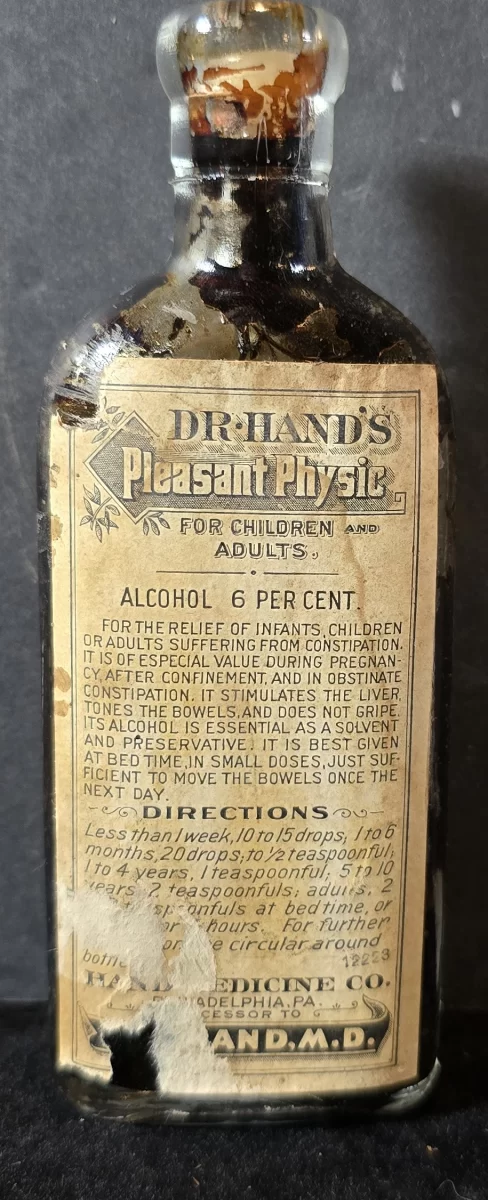
Description
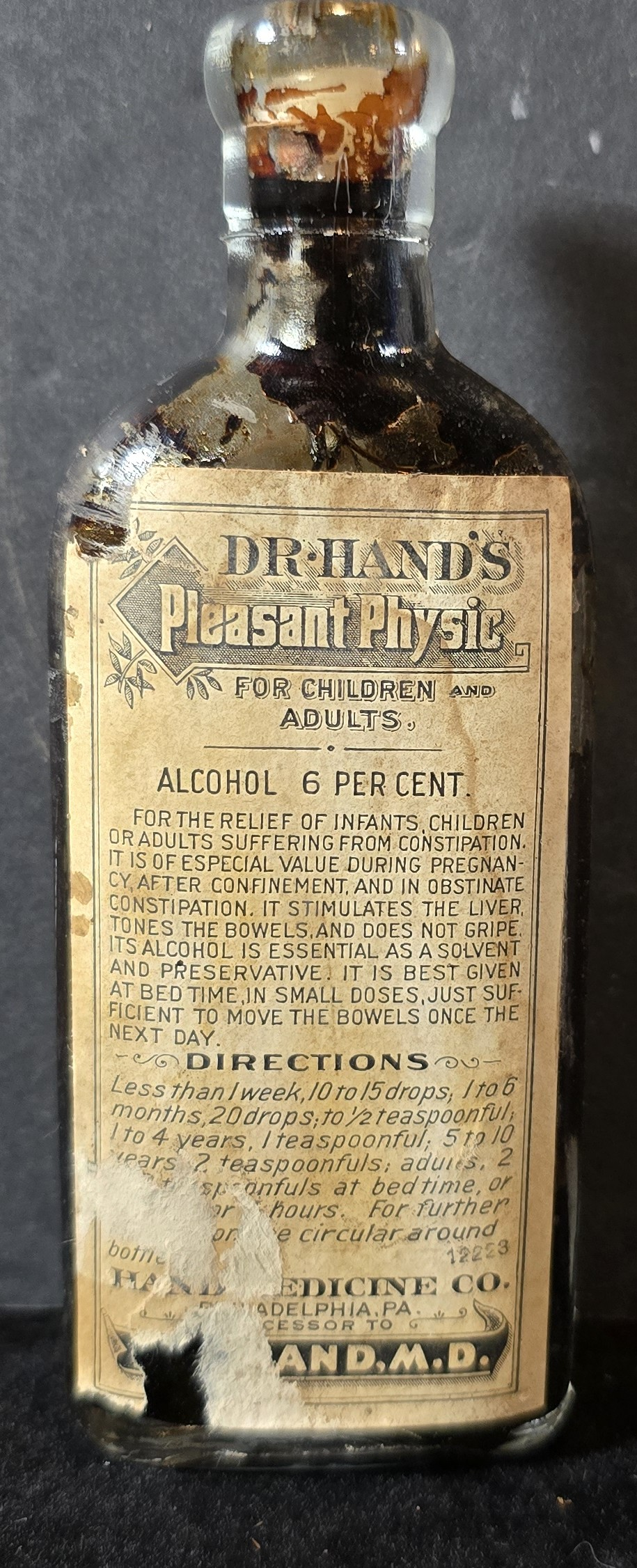
Dr. Hand’s Pleasant Physic was a late-19th-century proprietary laxative marketed explicitly for infants, children, and adults—a point emphasized repeatedly on the label. Described as a “pleasant” physic, it promised relief from constipation without griping, while simultaneously “stimulating the liver” and “toning the bowels.”
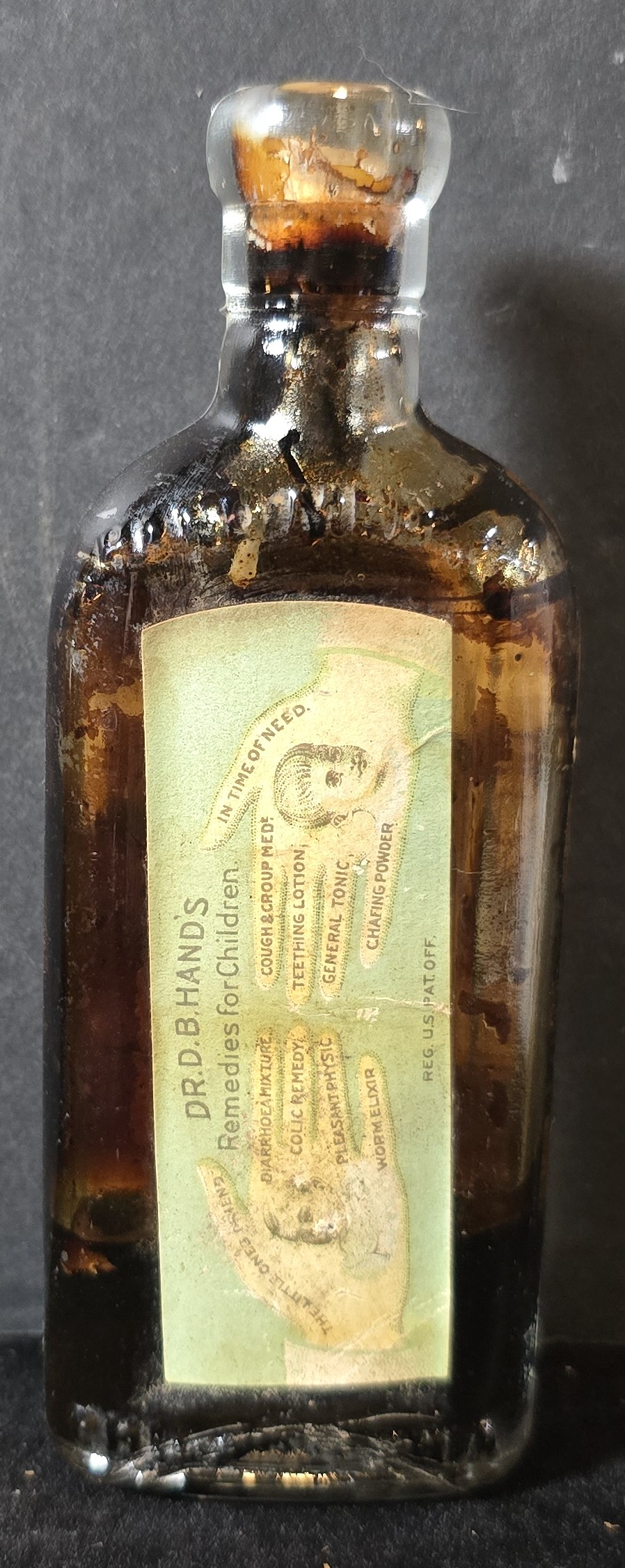
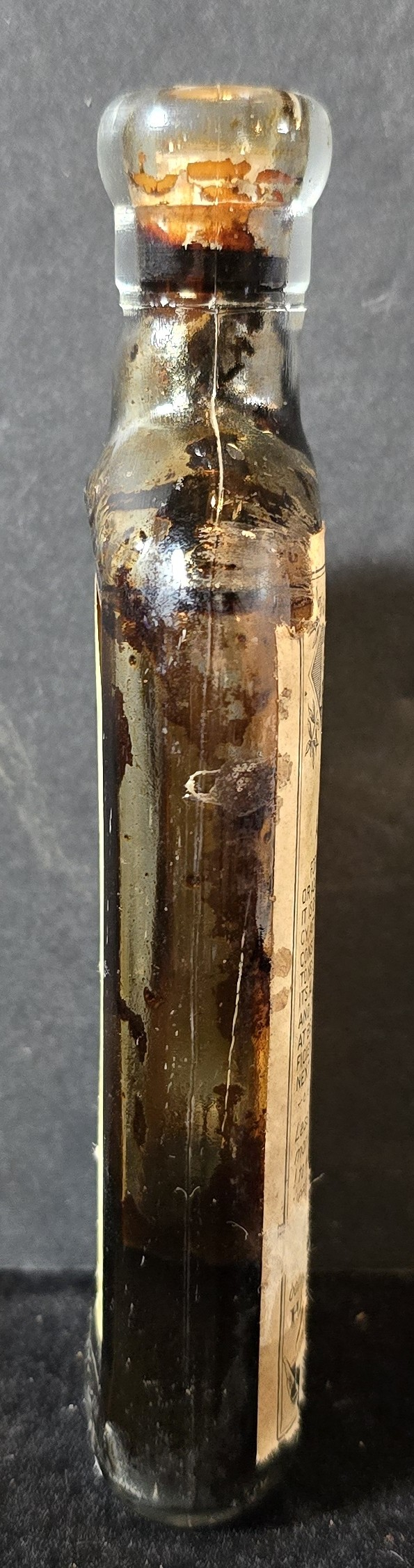
The formula openly declared 6% alcohol, justified on the label as both solvent and preservative. Dosage instructions scale from drops for infants to teaspoonfuls for adults, with specific guidance for bedtime administration to ensure bowel movement the following day. The bottle is a narrow, cylindrical, amber-toned glass example with a ground glass stopper, bearing extensive original label text on both front and reverse.
Condition
Original bottle with intact ground glass stopper. Heavy surface staining and internal residue consistent with age and original contents. Paper label remains largely legible with edge loss, staining, and abrasion, particularly at the lower margin. No cracks noted; expected wear for a late-19th-century pharmaceutical bottle.
Gallery
Historical context
“Physics” were a staple of 19th-century domestic medicine, rooted in the prevailing belief that regular bowel evacuation was essential to health. Products like Dr. Hand’s Pleasant Physic occupied a middle ground between household remedy and physician-endorsed medicine, frequently dosed to children for ailments ranging from constipation to general malaise. Alcohol-based laxatives remained common until early 20th-century regulatory reforms reshaped pharmaceutical labeling and formulation standards.
Curious Facts, Ephemera, and Trivia
The label explicitly recommends use during pregnancy and after confinement, reflecting period obstetric practice.
Alcohol is framed not as an active drug, but as a necessary and beneficial component.
The phrase “does not gripe” was a key marketing reassurance aimed at parents.
The product line was part of a broader range of Dr. Hand’s Remedies for Children, suggesting brand trust built around pediatric use.
Excerpt
“Its alcohol is essential as a solvent and preservative. It is best given at bed time, in small doses, just sufficient to move the bowels once the next day.”
Why it is in the Cabinet
This bottle is a clean, unfiltered example of how routine pediatric care once relied on alcohol-based laxatives with confidently stated claims and dosing instructions. It illustrates the normalization of pharmacologic intervention in infancy and childhood—and how medical authority was communicated directly through packaging rather than professional oversight.
Support Dr. Bebout’s Cabinet of Medical Curiosities
If you enjoy the history, the oddities, and the effort, help keep this cabinet open. Every little bit helps preserve and share the strange wonders of medicine's past.
Buy Me a Ko-fi ☕ Buy Me a Coffee ☕ Tip via PayPal 💵