
Title
Cushman’s Menthol Inhaler
Author
H. D. Cushman
Image
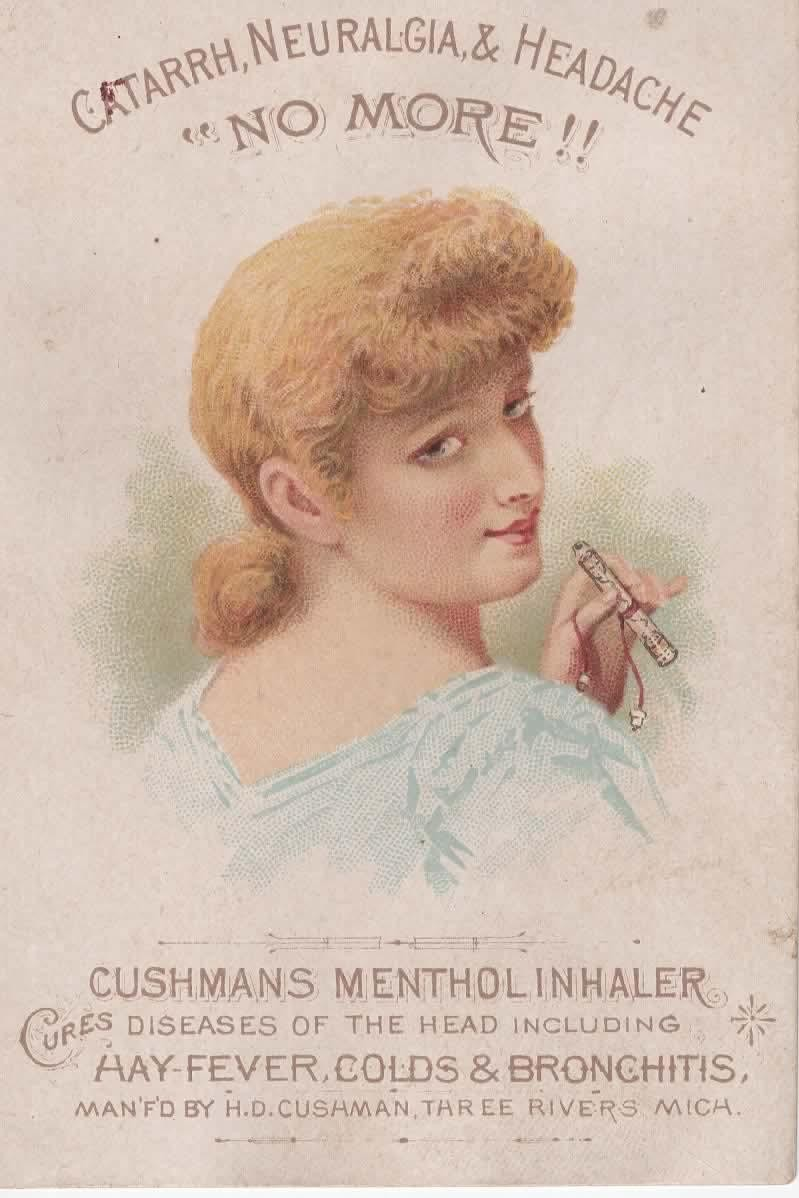
Description
Cushman’s Menthol Inhaler was a late-19th-century pocket medical device marketed for the treatment of catarrh, headache, neuralgia, hay fever, colds, and bronchitis. The inhaler consisted of a small cylindrical tube containing crystallized menthol dissolved in oil of peppermint, inhaled through the nose for symptomatic relief. Sold for 50 cents, it was promoted as clean, portable, long-lasting, and suitable for frequent use. Advertising emphasized its convenience, safety, and non-narcotic nature, while presenting it as a near-universal remedy for diseases of the head and upper airways.
Condition
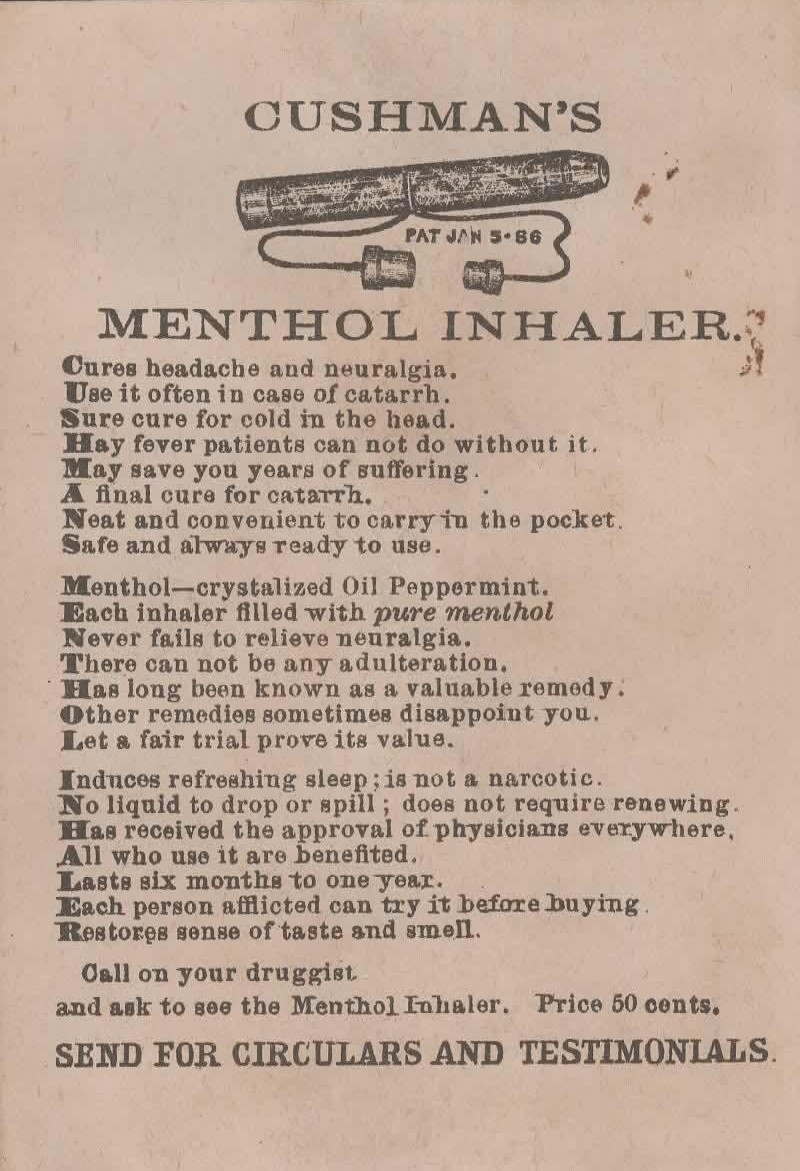
Advertising card and circular show moderate age toning, light surface soiling, and scattered edge wear consistent with late-19th-century paper ephemera. Text and imagery remain clear and legible, with no major losses.
Gallery
Historical context
Menthol inhalers emerged in the late 1800s as consumer medical devices aimed at relieving nasal congestion and head discomfort through sensory stimulation rather than pharmacologic cure. Prior to the Pure Food and Drug Act of 1906, manufacturers freely advertised expansive therapeutic claims without regulatory oversight. Cushman’s Menthol Inhaler reflects this era’s blending of legitimate symptomatic relief with exaggerated promises, positioning menthol’s cooling sensation as evidence of curative power.
Curious Facts, Ephemera, and Trivia
The inhaler advertises a patent date of January 5, 1886.
Claims include restoring the senses of taste and smell and inducing refreshing sleep.
The product was marketed as physician-approved despite the lack of formal regulatory standards.
Menthol inhalers remain in use today in simplified form, though with far more limited claims.
Excerpt
“Cures headache and neuralgia. Use it often in case of catarrh. Hay fever patients cannot do without it.”
Why it is in the Cabinet
This piece exemplifies the transition from traditional remedies to mass-market consumer medical products, illustrating how sensory relief was marketed as cure in the pre-regulation era. Its strong visual presentation and bold claims make it an excellent teaching artifact for understanding medical advertising and patient expectations in the late 19th century.
Support Dr. Bebout’s Cabinet of Medical Curiosities
If you enjoy the history, the oddities, and the effort, help keep this cabinet open. Every little bit helps preserve and share the strange wonders of medicine's past.
Buy Me a Ko-fi ☕ Buy Me a Coffee ☕ Tip via PayPal 💵