
Title
Chandler’s Double Distilled Witch Hazel
Author
Chandler Medicine Co.
Image
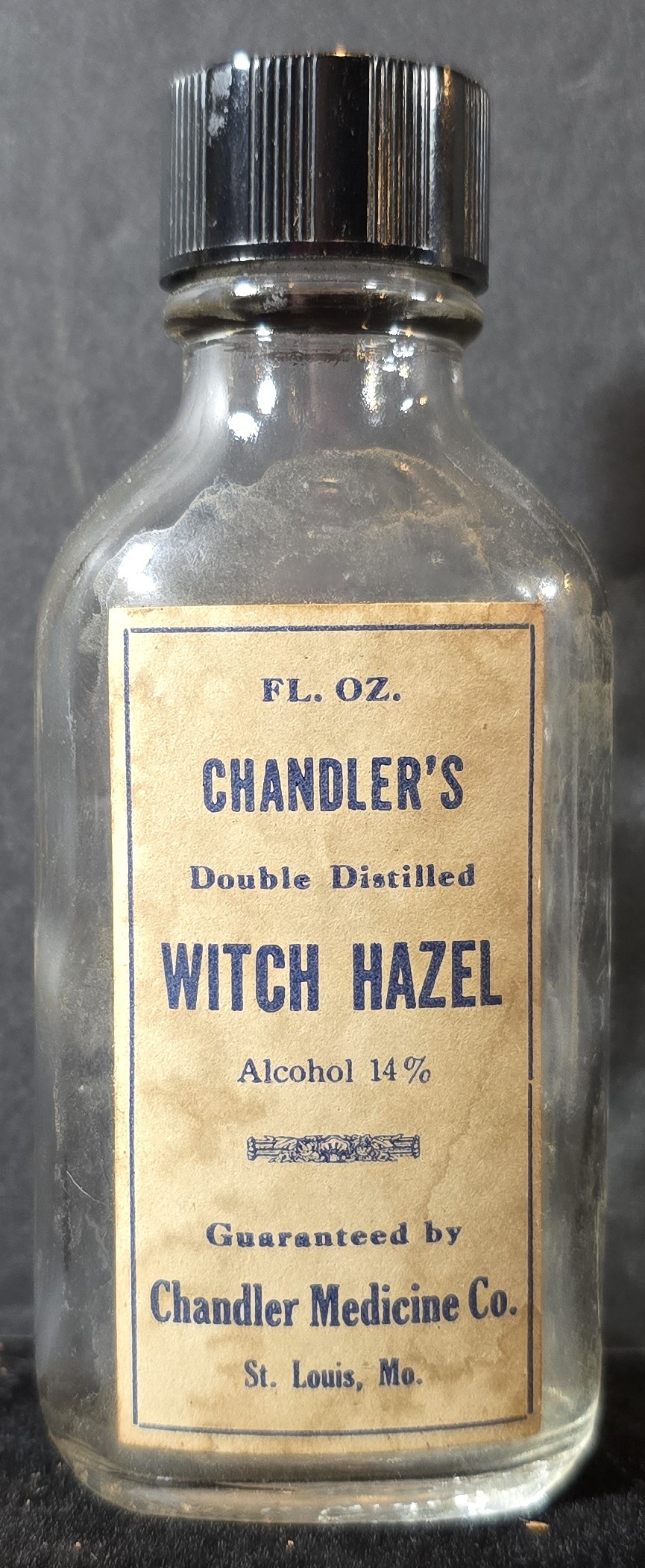
Description
This bottle of Chandler’s Double Distilled Witch Hazel represents a commercially standardized preparation of a long-standing botanical remedy. Witch hazel (Hamamelis virginiana) had been widely used in American households throughout the 19th century as an astringent and topical treatment for minor wounds, skin irritation, and inflammation. By the early 20th century, manufacturers such as the Chandler Medicine Company were marketing witch hazel as a refined, dependable pharmaceutical product rather than a home-prepared extract.
The paper label emphasizes “double distillation” and clearly states an alcohol content of 14 percent, underscoring the growing importance of purity, consistency, and preservation. Alcohol functioned both as a solvent for plant compounds and as a stabilizing agent, allowing the product to be shipped and stored without rapid degradation. The bottle reflects the transition of witch hazel from folk medicine into mainstream drugstore inventory.
Condition
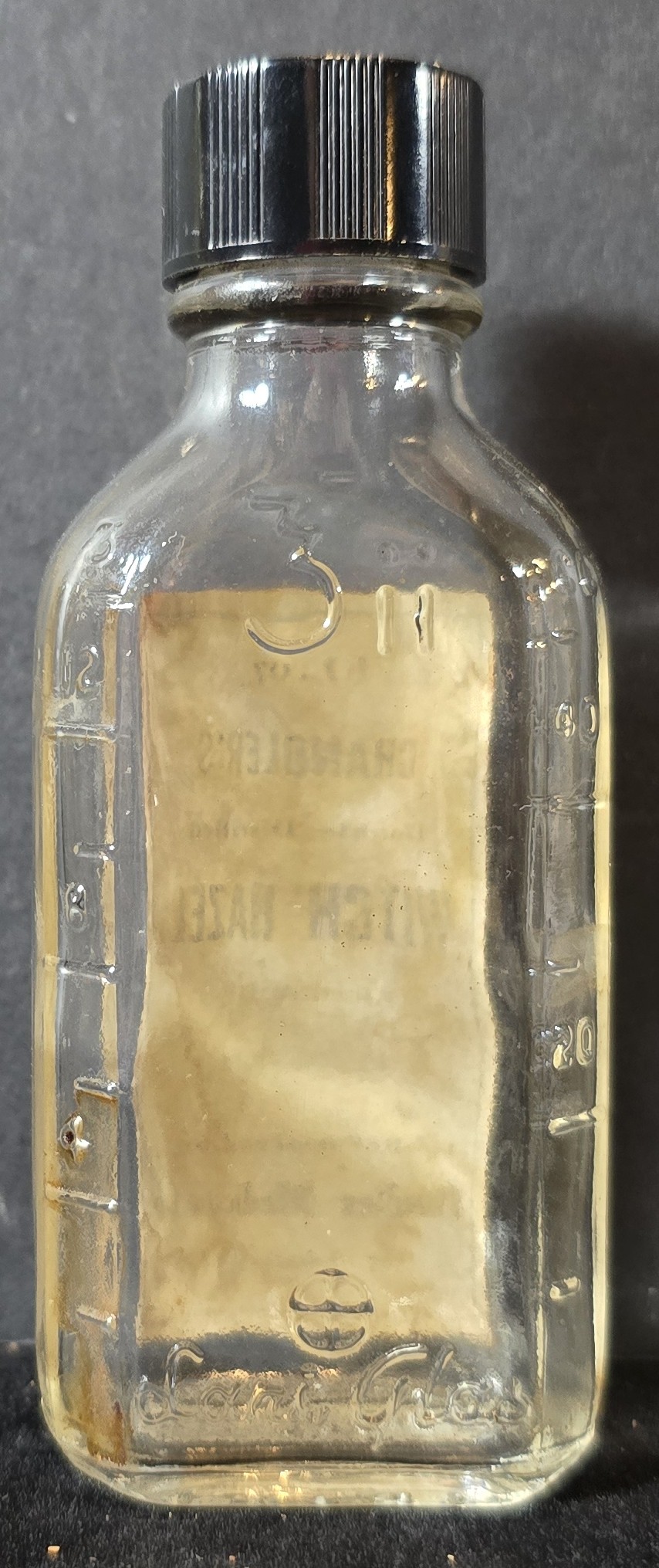
Clear molded glass bottle with original ribbed screw cap present. Paper label remains intact and legible with moderate age toning, edge wear, and surface discoloration consistent with age. Light internal residue visible. No cracks or chips observed.
Gallery
Historical context
Witch hazel occupied a unique position in American medicine, bridging traditional herbal practice and emerging pharmaceutical regulation. Following the Pure Food and Drug Act of 1906, manufacturers increasingly disclosed alcohol content and emphasized distillation and purity to reassure consumers. Products like Chandler’s Witch Hazel illustrate how botanical remedies were standardized and marketed alongside chemically synthesized drugs during the early 20th century.
Curious Facts, Ephemera, and Trivia
Witch hazel was commonly recommended for cuts, bruises, hemorrhoids, and skin irritation.
Declaring alcohol percentage on labels became more common after federal oversight increased.
St. Louis was a major regional center for pharmaceutical manufacturing and distribution.
Excerpt
“Double Distilled Witch Hazel — Alcohol 14%.”
Why it is in the Cabinet
This bottle demonstrates the commercialization and regulation of a traditional household remedy. It illustrates how familiar botanical medicines were reframed through branding, labeling, and chemical disclosure to meet modern expectations of safety and reliability, making it a representative artifact of early 20th-century pharmacy practice.
Support Dr. Bebout’s Cabinet of Medical Curiosities
If you enjoy the history, the oddities, and the effort, help keep this cabinet open. Every little bit helps preserve and share the strange wonders of medicine's past.
Buy Me a Ko-fi ☕ Buy Me a Coffee ☕ Tip via PayPal 💵