
Title
Caroid® Tooth Powder
Author
American Ferment Division, Breon Laboratories Inc.
(Subsidiary of Sterling Drug, New York, N.Y.)
Image
Description
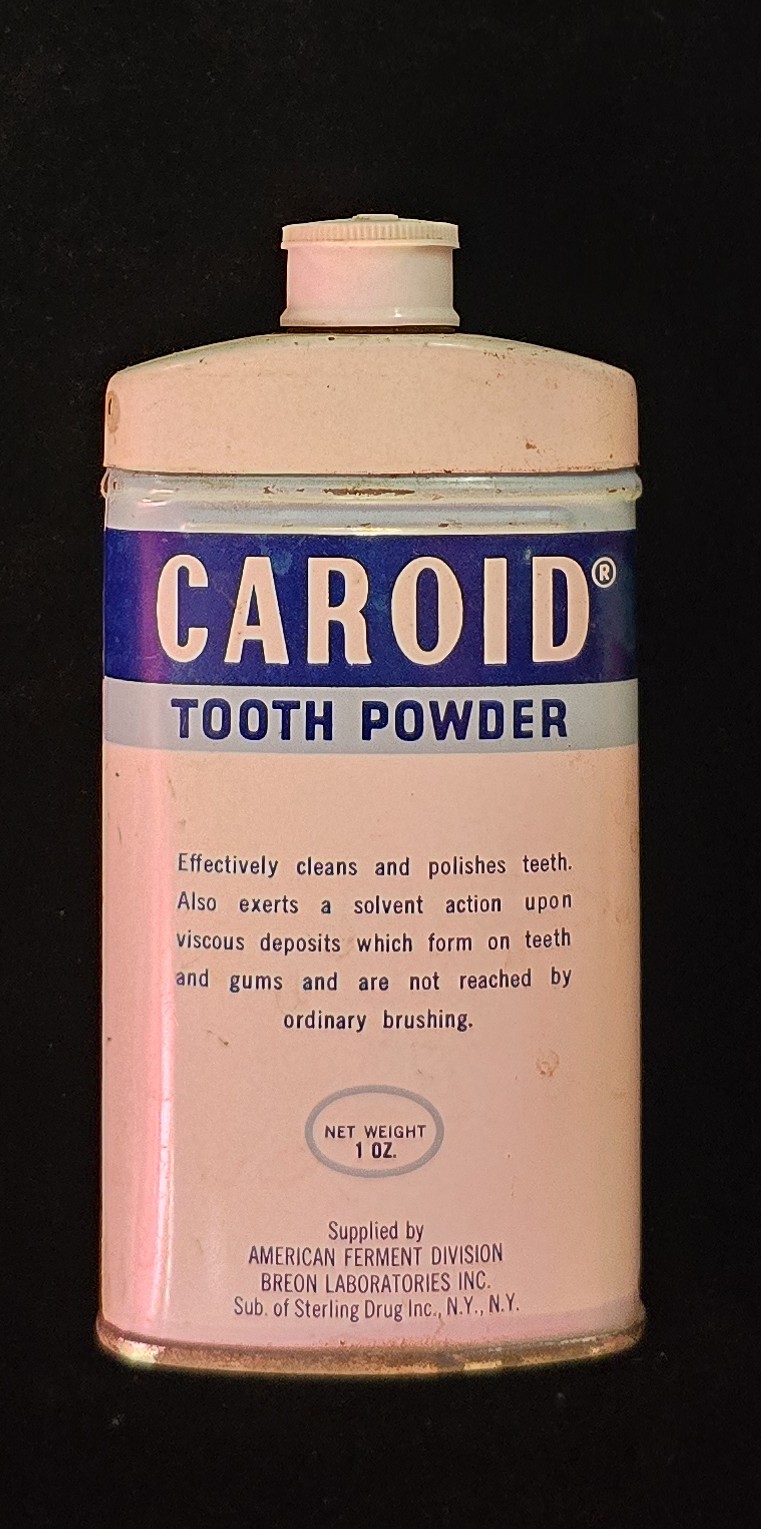
Caroid® Tooth Powder is a mid-20th-century enzymatic dentifrice marketed for both cosmetic and therapeutic oral hygiene. The product was promoted as capable of cleaning and polishing teeth while exerting a solvent action on “viscous deposits” on teeth and gums that ordinary brushing could not remove. Unlike modern toothpaste formulations, Caroid relied on enzymatic activity rather than abrasives alone.
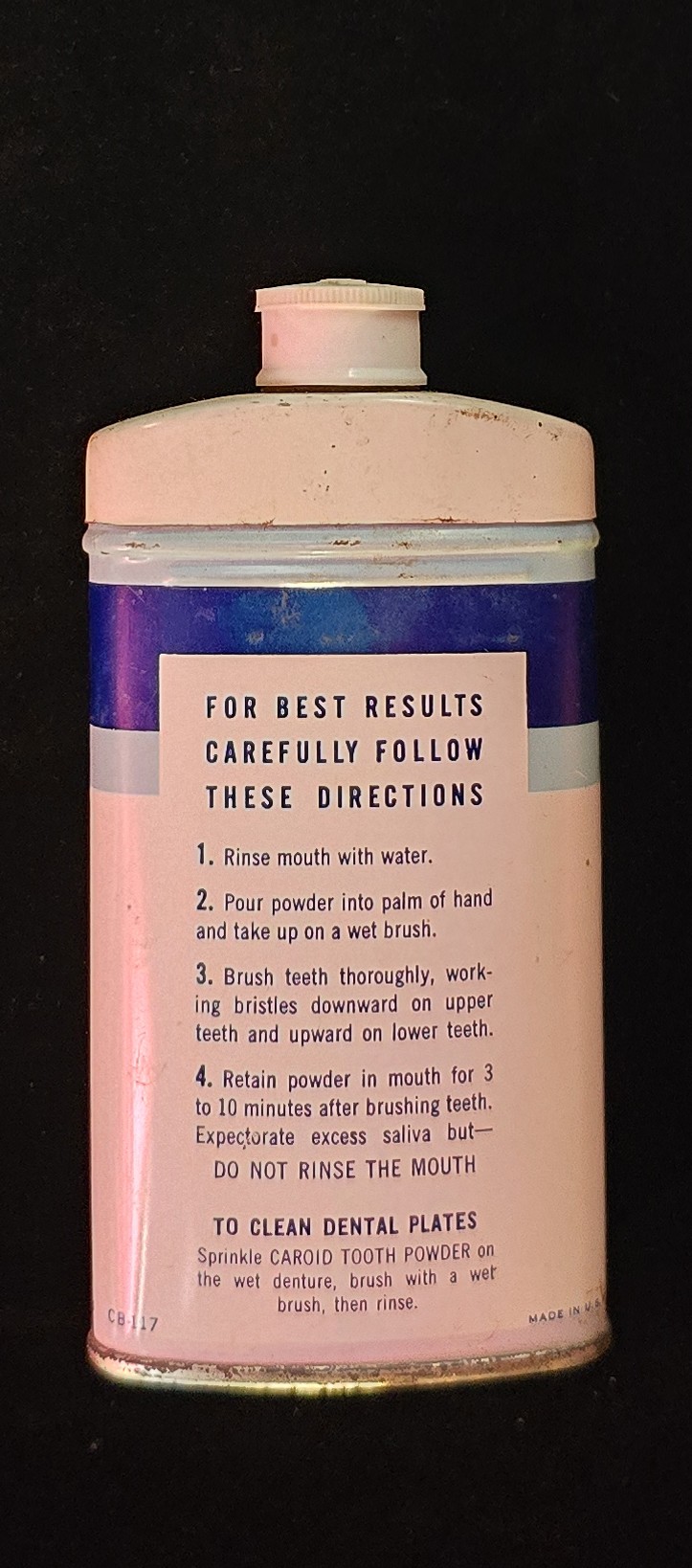
The container is a cylindrical plastic bottle with a screw-top dispenser, labeled with full usage instructions and dosage guidance. Directions instruct users not only to brush with the powder, but to retain it in the mouth for three to ten minutes after brushing and explicitly not rinse, underscoring its intended chemical action on oral deposits rather than simple mechanical cleaning.
Caroid was supplied by the American Ferment Division of Breon Laboratories, reflecting a period when fermentation science and enzyme-based therapies were aggressively applied across medicine, dentistry, and consumer health products.
Condition
Original container with intact screw cap. Front and rear labels are complete and legible, with minor surface wear, light scuffing, and age-related discoloration. No structural damage observed. Overall condition is very good and display-worthy.
Gallery
Historical context
During the mid-20th century, enzymes were widely promoted as modern, scientific solutions capable of dissolving biological debris more effectively than traditional mechanical methods. In dentistry, this led to the development of enzymatic tooth powders and rinses intended to break down plaque, proteinaceous deposits, and oral secretions.
Caroid Tooth Powder reflects this transitional moment in dental hygiene, when chemical and biological processes were emphasized alongside — and sometimes over — routine brushing. While enzymatic dentifrices eventually fell out of favor as understanding of plaque biology evolved, they represent an important chapter in the professionalization and commercialization of dental care.
Curious Facts, Ephemera, and Trivia
Users were instructed not to rinse after brushing, allowing prolonged chemical exposure in the mouth.
Caroid products were also marketed in digestive and medical formulations, not just dentistry.
The product straddles the line between personal hygiene and therapeutic intervention.
Enzyme-based dentifrices briefly enjoyed mainstream medical endorsement before declining.
Excerpt
“Retain powder in mouth for 3 to 10 minutes after brushing teeth… DO NOT RINSE THE MOUTH.”
Why it is in the Cabinet
Caroid Tooth Powder illustrates a period of medical confidence in enzymatic solutions and chemical intervention in everyday health practices. It represents how scientific enthusiasm translated directly into daily routines, sometimes with instructions that feel startling by modern standards. As a complete, well-preserved example of mid-century dental therapeutics, it earns its place as a tangible reminder of how oral hygiene once blurred into medical treatment.
Support Dr. Bebout’s Cabinet of Medical Curiosities
If you enjoy the history, the oddities, and the effort, help keep this cabinet open. Every little bit helps preserve and share the strange wonders of medicine's past.
Buy Me a Ko-fi ☕ Buy Me a Coffee ☕ Tip via PayPal 💵