
Title
The Art of Compounding
Author
Wilbur L. Scoville, Ph.G.
Image
Description
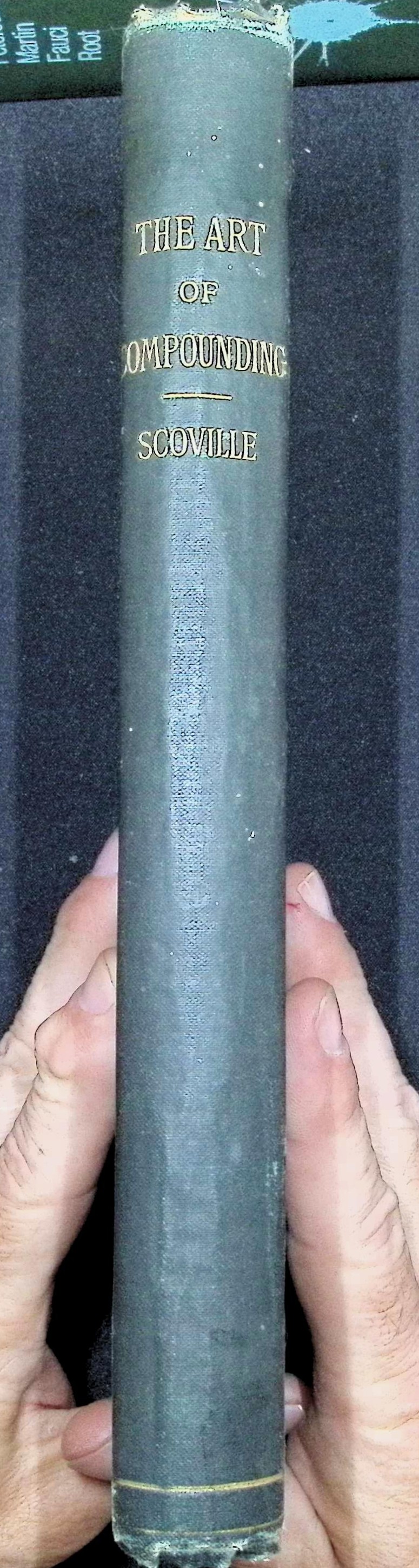
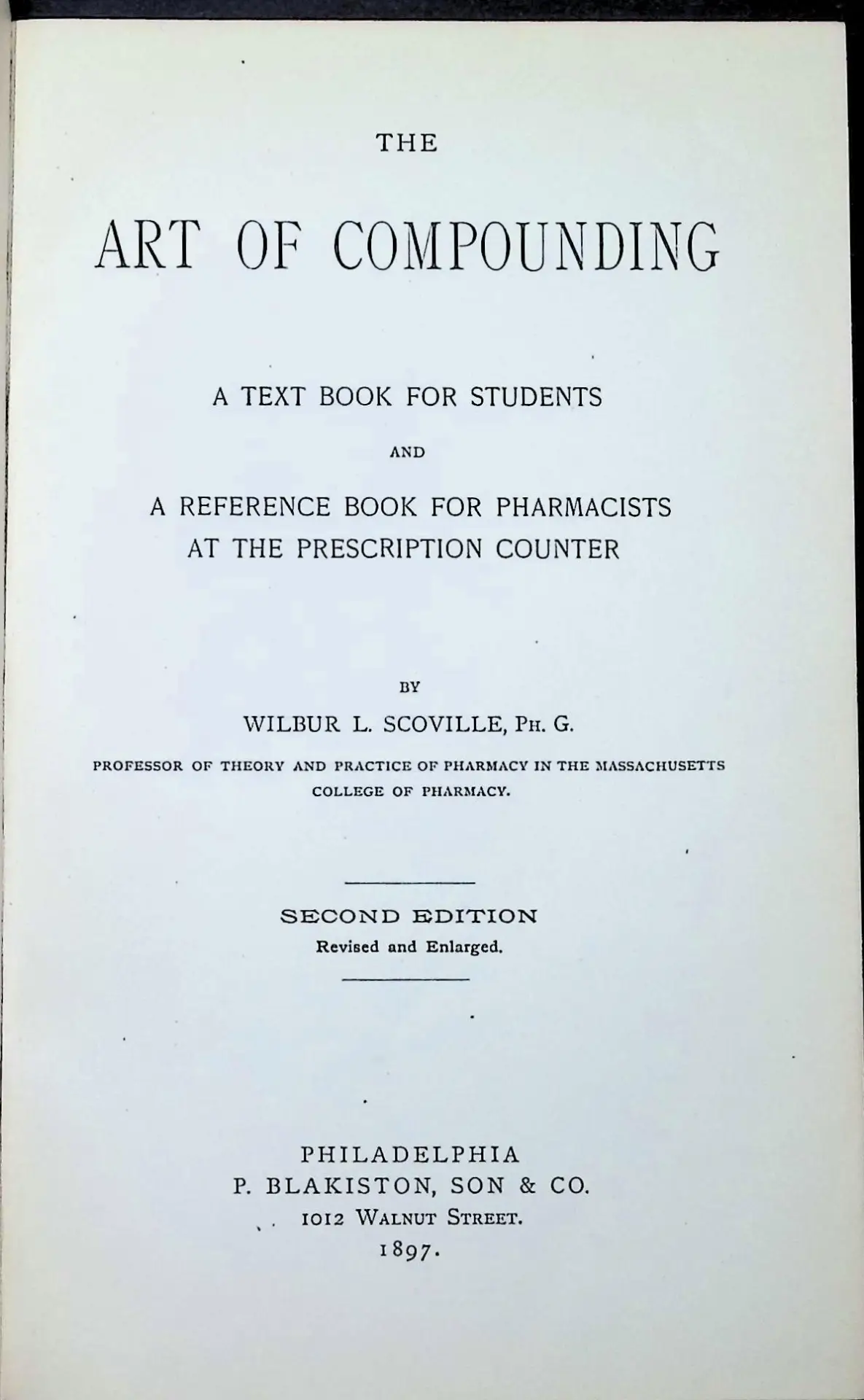
Published in 1897, The Art of Compounding is exactly what the title promises: a practical, no-nonsense manual for pharmacists who actually made medicines. Written for students and working pharmacists alike, this book focuses on the real, hands-on craft of extemporaneous pharmacy—emulsions, lozenges, tablets, pastils, mixtures, suspensions, and all the sticky, error-prone things that happened behind the prescription counter before factory-sealed pills took over the world.
Scoville doesn’t romanticize the work. He explains why preparations fail, why mixtures separate, and why technique matters more than brute force. Reading it today feels less like a history lesson and more like standing beside a late-19th-century pharmacist while he mutters about someone shaking an emulsion wrong.
Condition
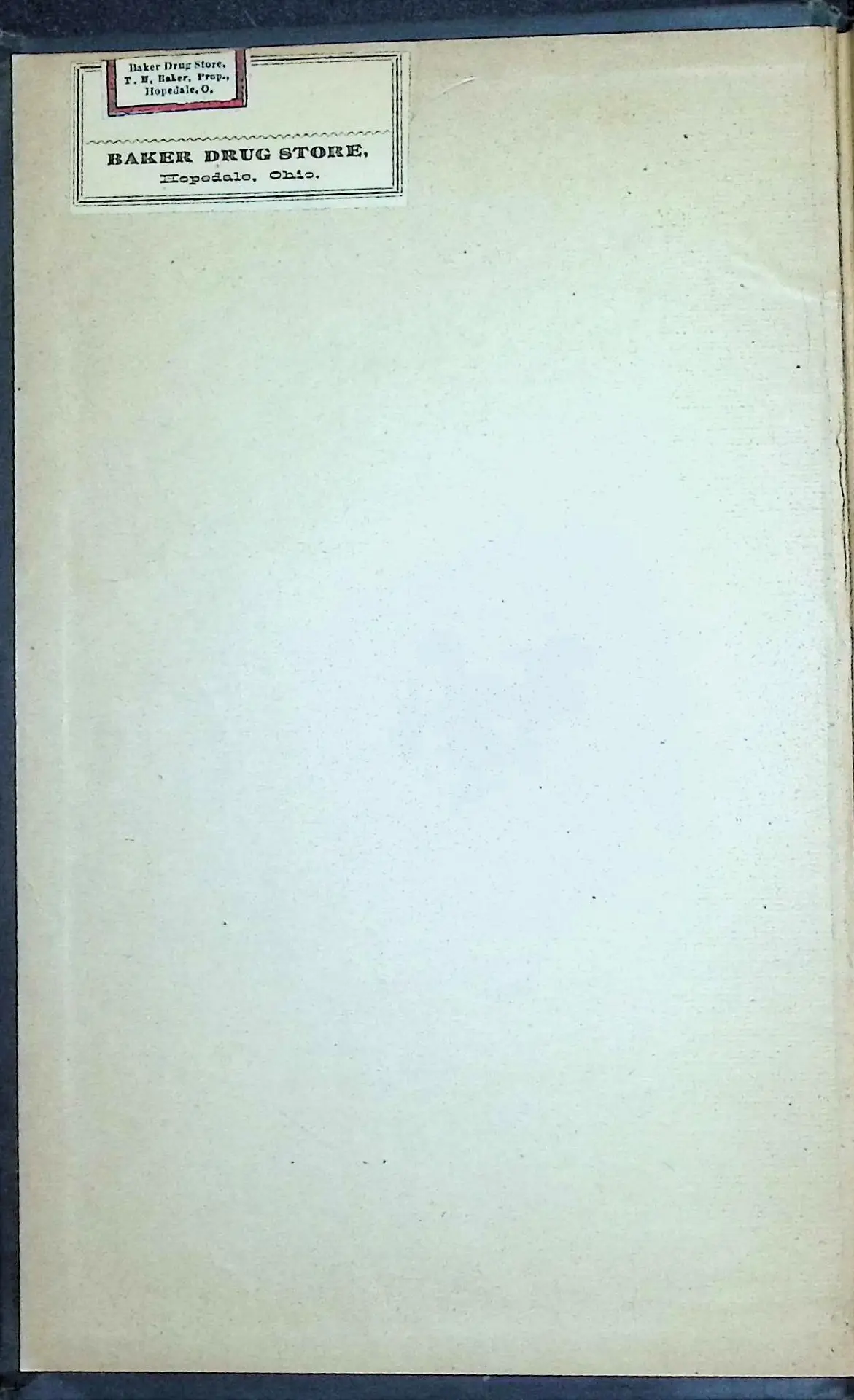
Original cloth-bound volume with intact spine and gilt lettering. Expected age-related wear, light surface scuffing, and mild toning to interior pages. Previous pharmacy ownership label present (“Baker Drug Store, Hopedale, Ohio”), adding period authenticity. No structural damage noted.
Gallery
Historical context
This book sits at the turning point between artisan pharmacy and industrial drug manufacturing. In 1897, pharmacists were still expected to understand chemistry, physics, and material behavior well enough to create reliable medicines by hand. Scoville—then a professor at the Massachusetts College of Pharmacy—wrote this text to standardize competence at a time when a bad emulsion wasn’t just inconvenient, it was a professional embarrassment.
Within a few decades, much of this knowledge would become optional. Factory tablets replaced mortars, pestles, and judgment. This book captures the moment just before that skillset began to disappear.
Curious Facts, Ephemera, and Trivia
Scoville is the same Wilbur L. Scoville later associated (indirectly, through family and era) with the Scoville heat scale—though this book is about emulsions, not peppers.
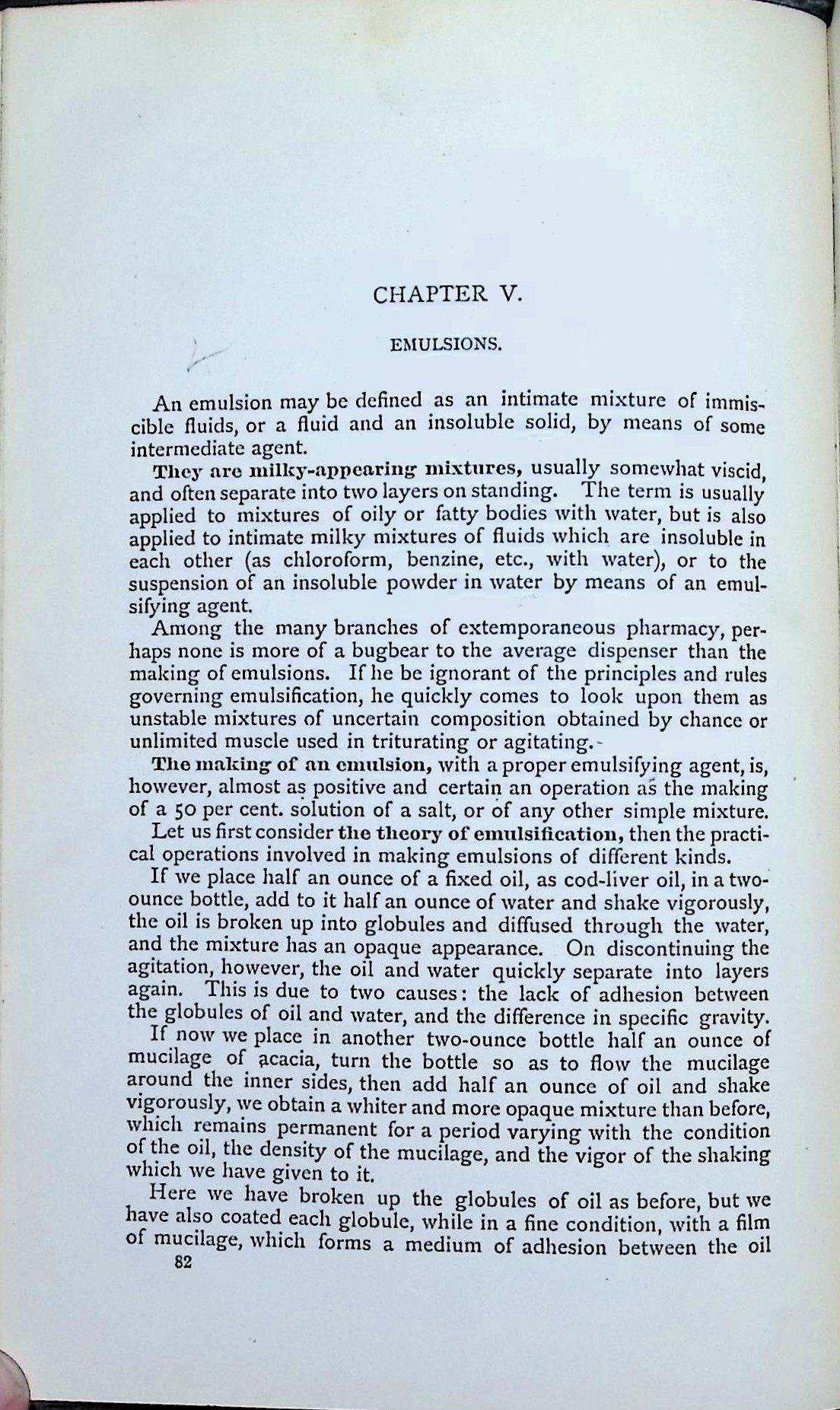
The chapter on emulsions reads like a polite takedown of pharmacists who relied on “unlimited muscle” instead of understanding surface chemistry.
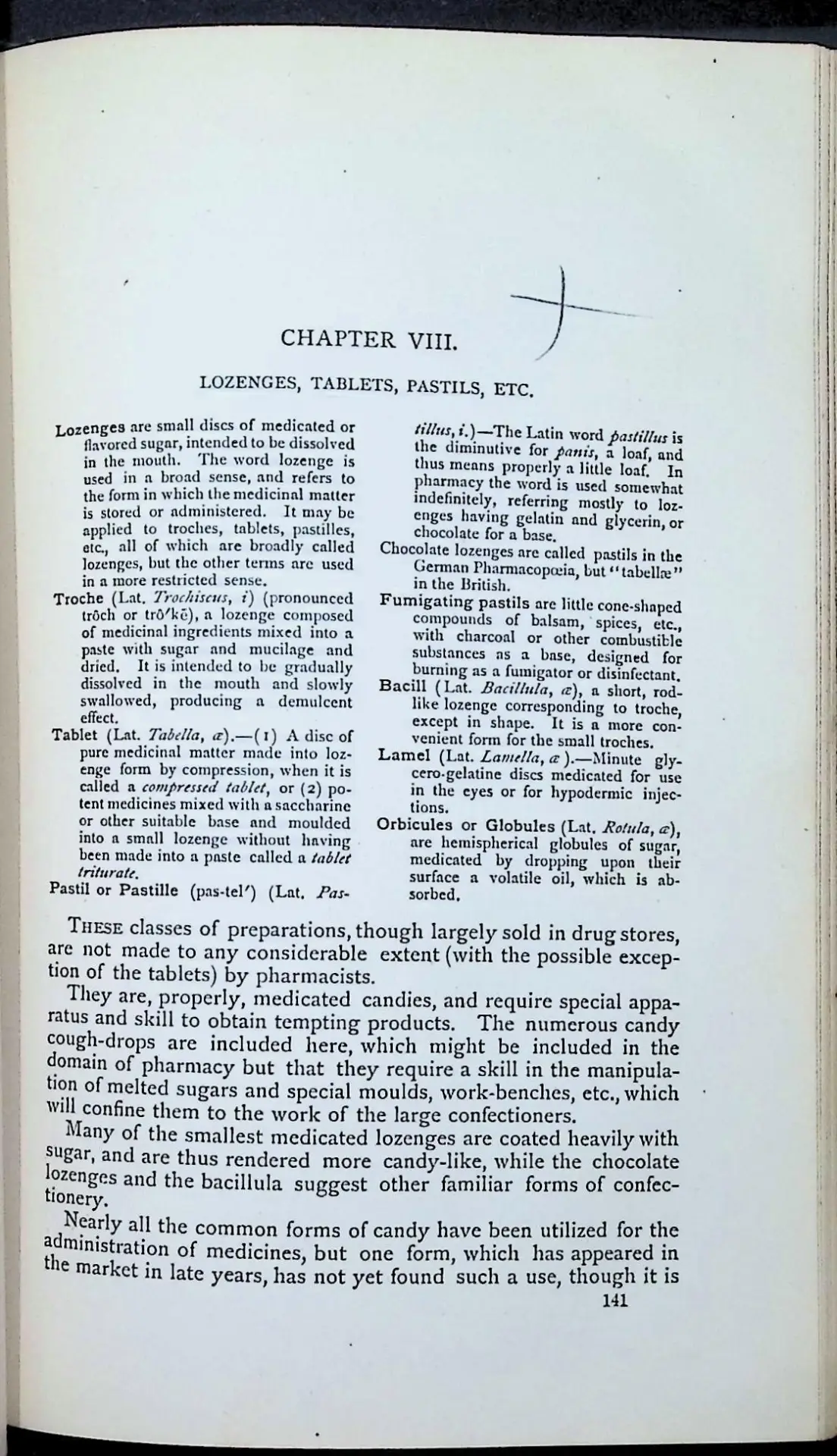
Lozenges, troches, pastils, and medicated candies are discussed with the casual assumption that pharmacists made them—because they did.
Pharmacy candy wasn’t a gimmick; it was a dosage form.
Excerpt
“Among the many branches of extemporaneous pharmacy, perhaps none is more of a bugbear to the average dispenser than the making of emulsions…”
Translation: if you didn’t understand what you were doing, your medicine looked fine—until it didn’t.
Why it is in the Cabinet
Because this is real pharmacy. Not labels, not marketing, not compliance modules—craft. This book documents a level of professional expectation that modern practitioners rarely see, let alone practice. It belongs here as a reminder that medicine once required hands, judgment, and humility… and occasionally cleaning oil off the counter after a failed emulsion.
View the Digital Edition
A digitized copy of The Art of Compounding (1897) is available for online viewing through a link below. The digital version preserves the original pagination and formatting, allowing close examination of Scoville’s instructional text on emulsions, lozenges, tablets, and other forms of extemporaneous pharmacy.
This digital access is provided for historical reference and research purposes and complements the physical volume held in the Cabinet.
Support Dr. Bebout’s Cabinet of Medical Curiosities
If you enjoy the history, the oddities, and the effort, help keep this cabinet open. Every little bit helps preserve and share the strange wonders of medicine's past.
Buy Me a Ko-fi ☕ Buy Me a Coffee ☕ Tip via PayPal 💵