
Title
Compazine® (Prochlorperazine) Complete Multi-Form Pharmaceutical Kit
Author
Smith Kline & French Laboratories
Image
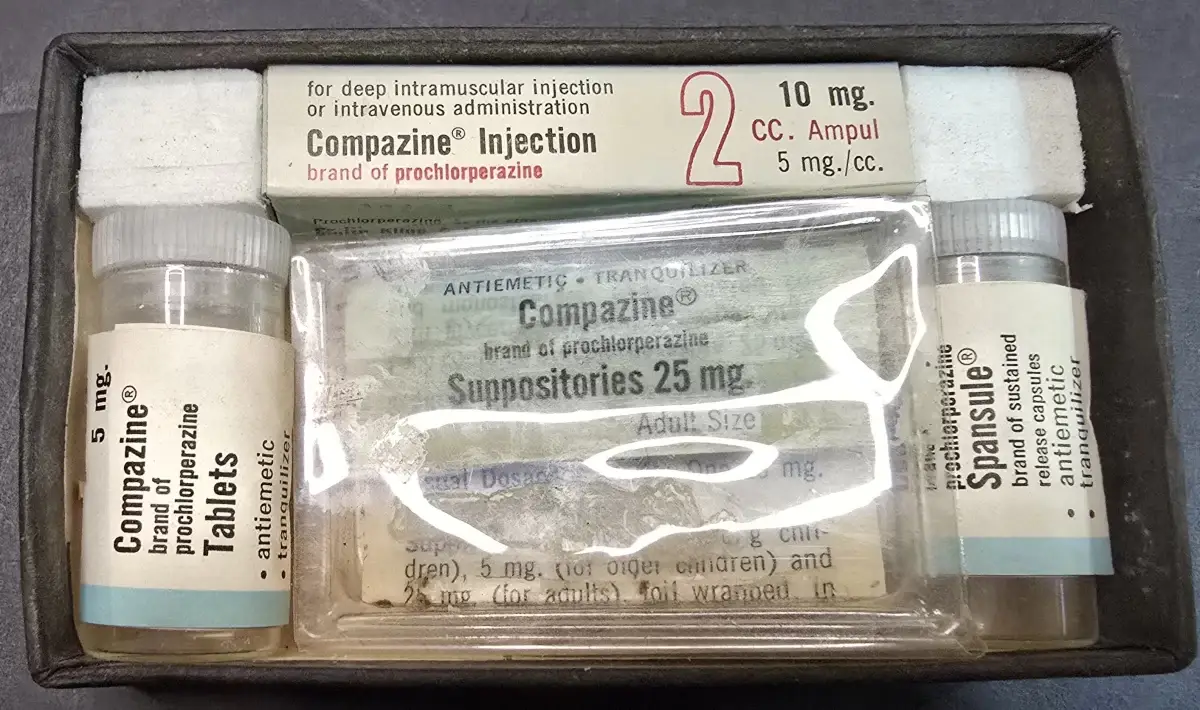
Description
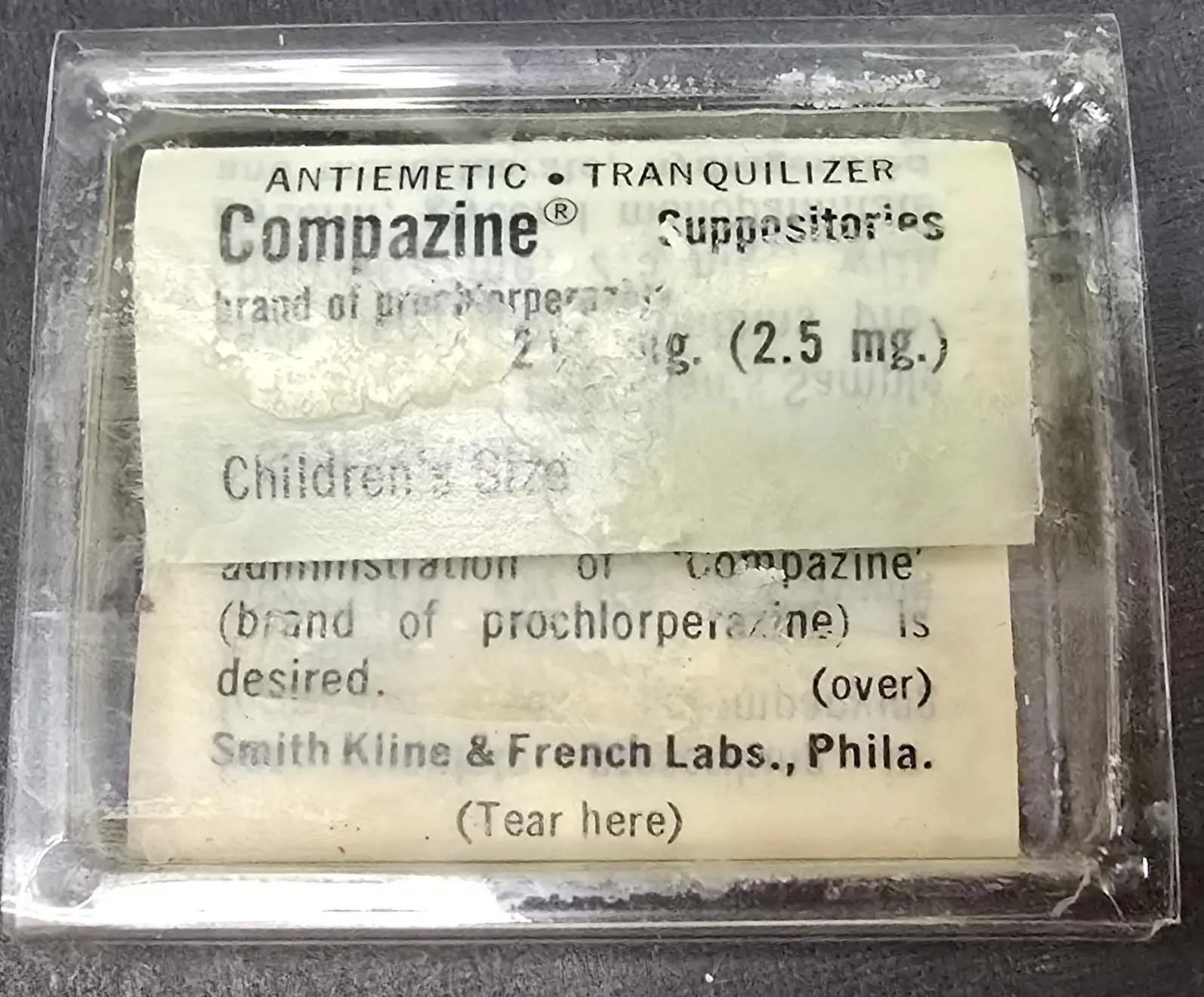
This boxed pharmaceutical kit contains multiple dosage forms of Compazine®, the trade name for prochlorperazine, a phenothiazine derivative introduced in the early 1950s. The kit includes injectable ampules for deep intramuscular or intravenous use, oral tablets, sustained-release Spansule® capsules, and rectal suppositories in both adult and pediatric dosing.
Compazine was marketed as both an antiemetic and tranquilizer, reflecting mid-20th-century therapeutic thinking that grouped nausea, agitation, and psychogenic symptoms under shared neurochemical control. This boxed presentation illustrates how hospitals and physicians maintained ready access to multiple administration routes depending on patient condition, age, and severity of symptoms.
Condition
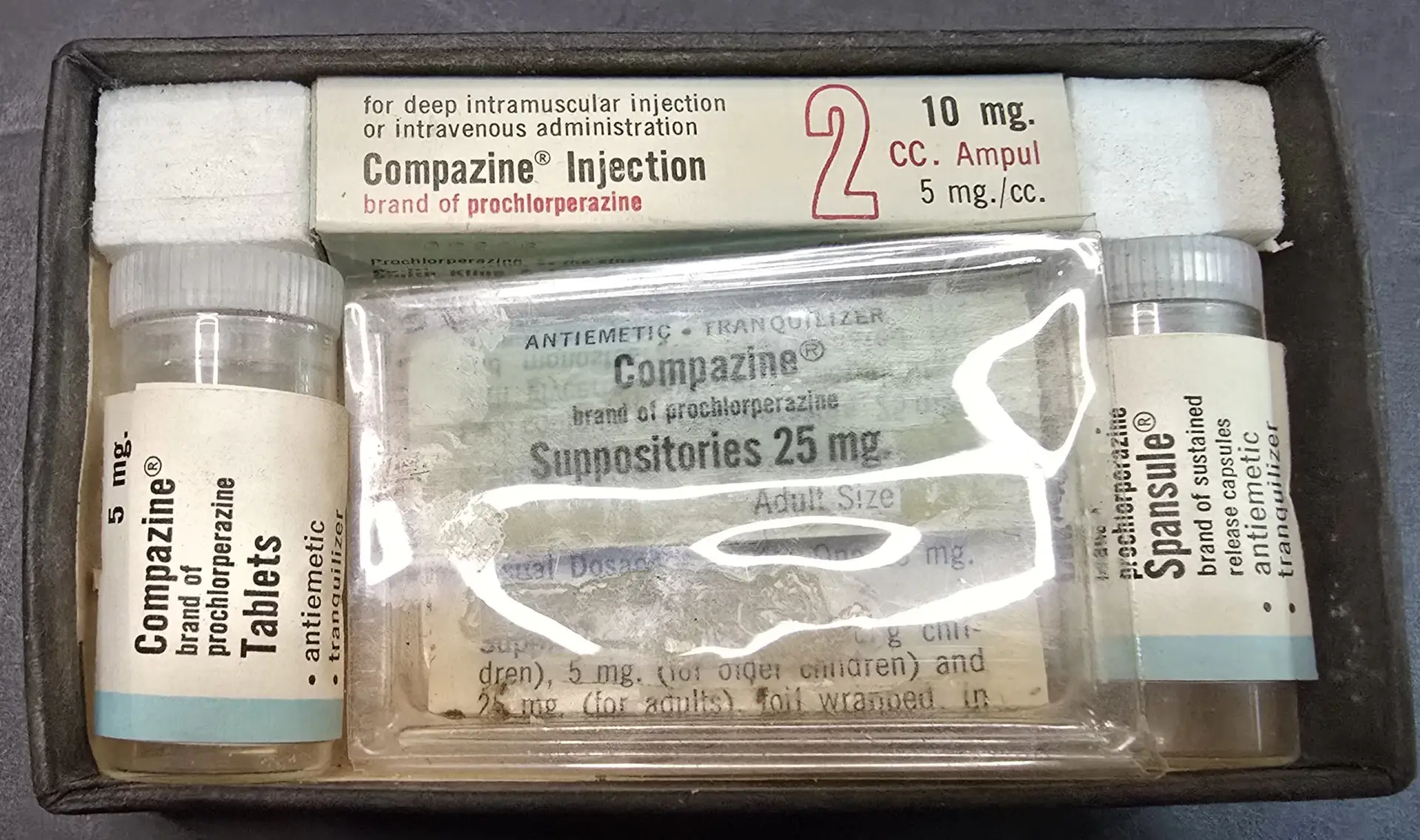
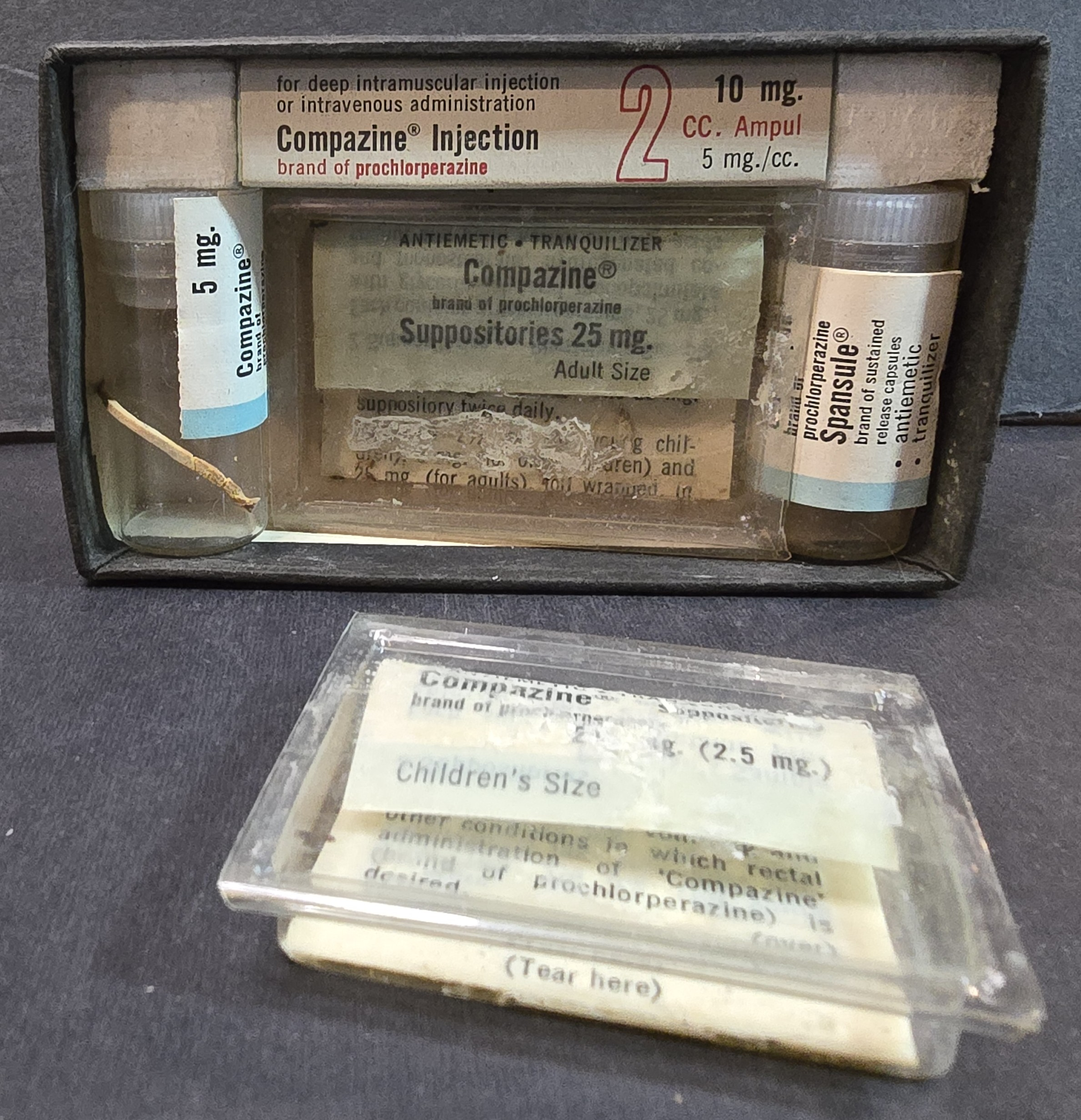
Complete boxed set with original containers and printed inserts present. Labels remain legible with expected age-related discoloration, internal blister and paper materials show compression and residue consistent with age and storage. Box structure intact with light surface wear.
Gallery
Historical context
Prochlorperazine emerged during the rapid post-war expansion of phenothiazine drugs, following the success of chlorpromazine. Compazine quickly became a mainstay for treatment of severe nausea and vomiting, particularly in postoperative care, oncology, migraine management, and psychiatric settings.
The inclusion of rectal suppositories—especially pediatric dosing—reflects a period when alternative administration routes were routinely used to bypass vomiting, altered mental status, or poor oral tolerance.
Curious Facts, Ephemera, and Trivia
Early Compazine marketing emphasized its “tranquilizing” properties as much as its antiemetic effect.
Rectal administration was commonly taught and expected in hospital care, including pediatric wards.
Spansule® technology represented an early sustained-release innovation, marketed aggressively in the 1950s–60s.
Compazine later fell out of favor due to extrapyramidal side effects and the rise of newer antiemetics.
Excerpt
“Antiemetic – Tranquilizer.”
— Packaging language used prominently on Compazine labeling
Why it is in the Cabinet
This kit captures a transitional moment in pharmaceutical history: aggressive symptom control, multi-route dosing, and broad therapeutic claims packaged into a single physician-ready system. It’s honest medicine from an era that hadn’t yet learned humility about dopamine blockade.
Support Dr. Bebout’s Cabinet of Medical Curiosities
If you enjoy the history, the oddities, and the effort, help keep this cabinet open. Every little bit helps preserve and share the strange wonders of medicine's past.
Buy Me a Ko-fi ☕ Buy Me a Coffee ☕ Tip via PayPal 💵