
Title
Colchici Semina Apothecary Jar
Author
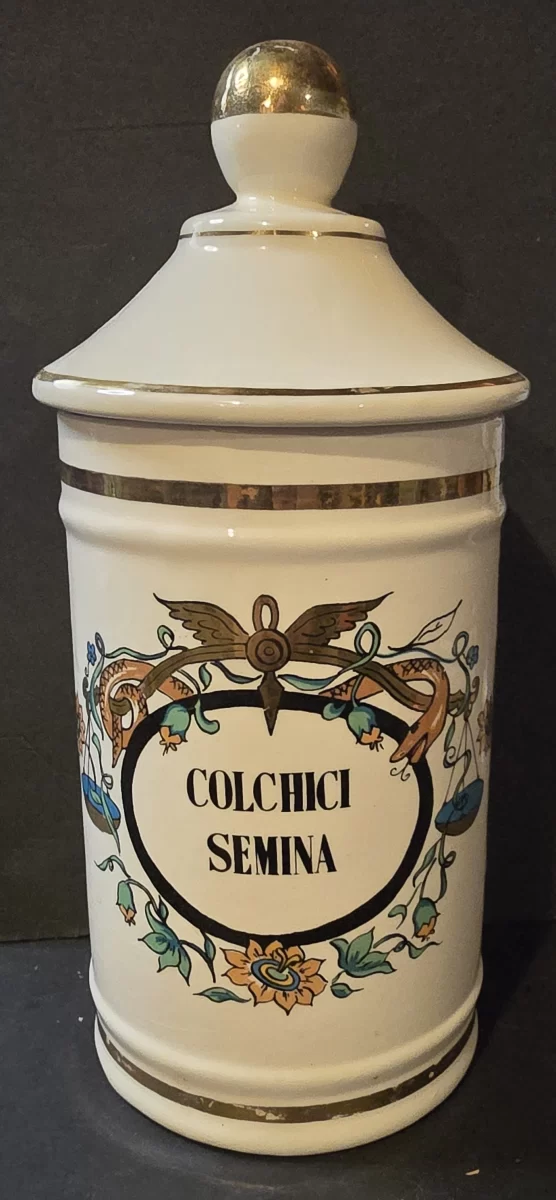
Title on Jar: COLCHICI SEMINA
Translation: Colchicum seeds
Date: Late 19th to early 20th century (c. 1880s–1910s)
Origin: Continental Europe (likely Italy, France, or Central Europe)
Image
Description
This is a porcelain apothecary storage jar labeled “Colchici Semina,” intended for the storage of colchicum (autumn crocus) seeds, a potent botanical drug used historically in the treatment of gout, rheumatism, and inflammatory conditions.
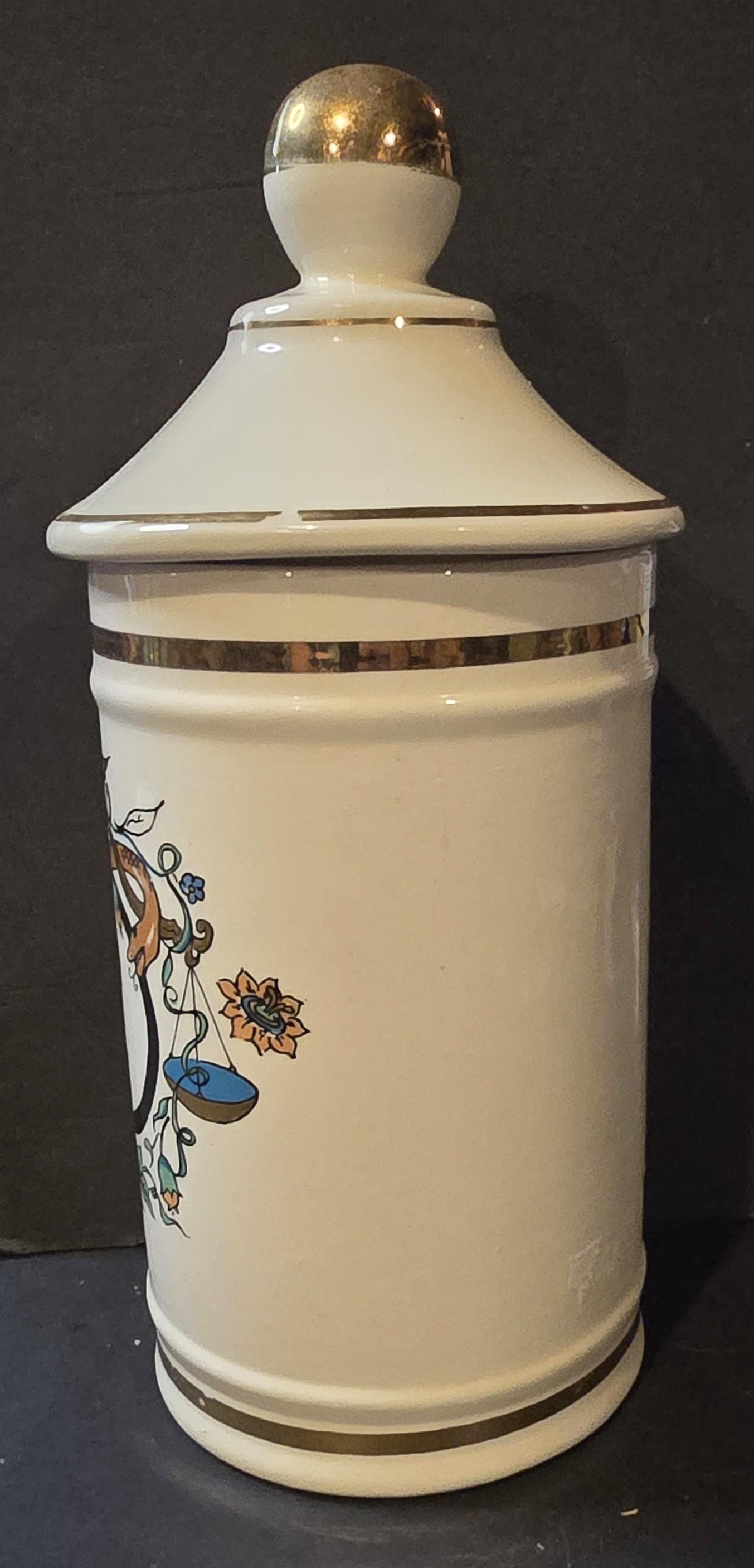
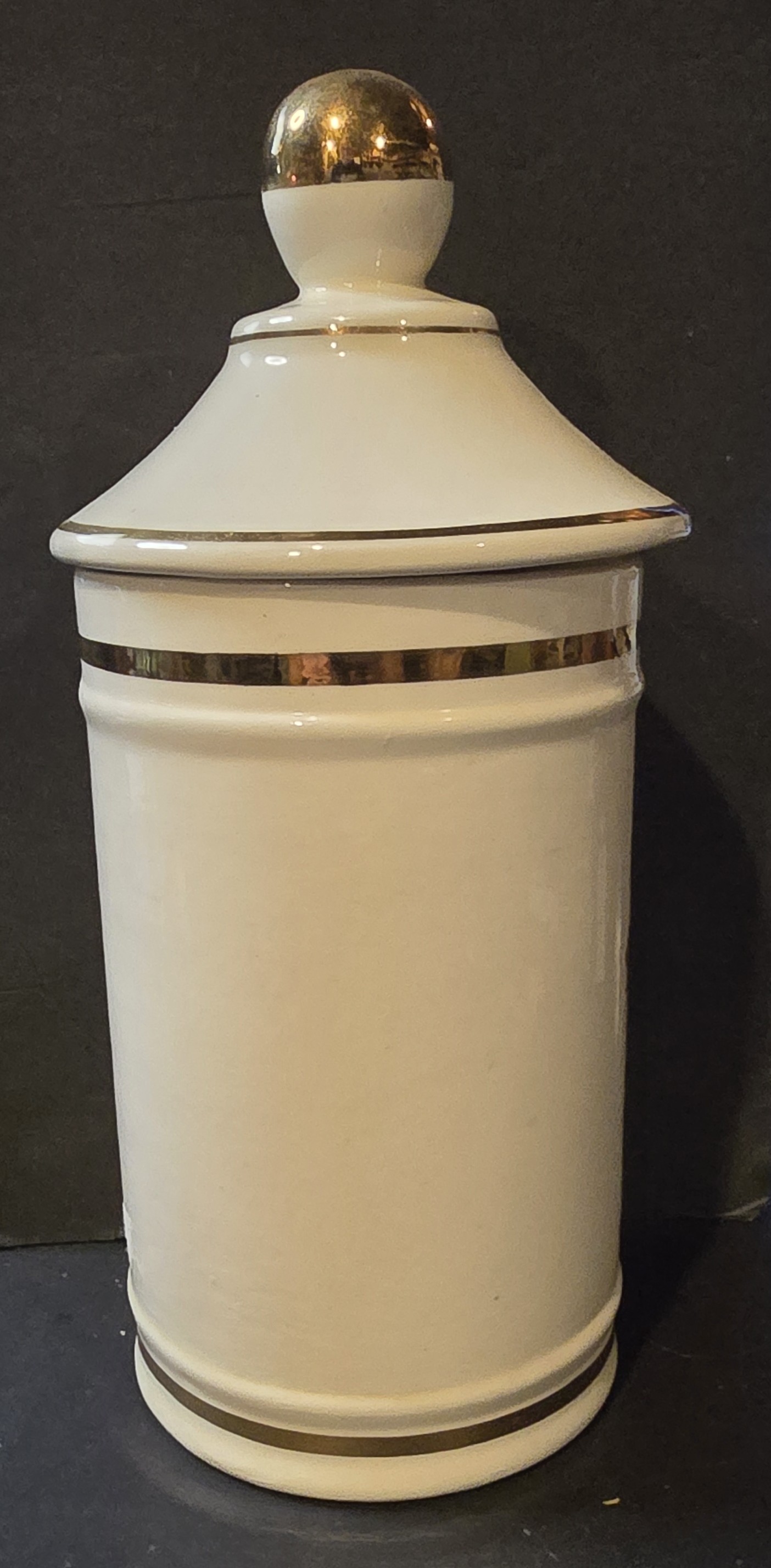
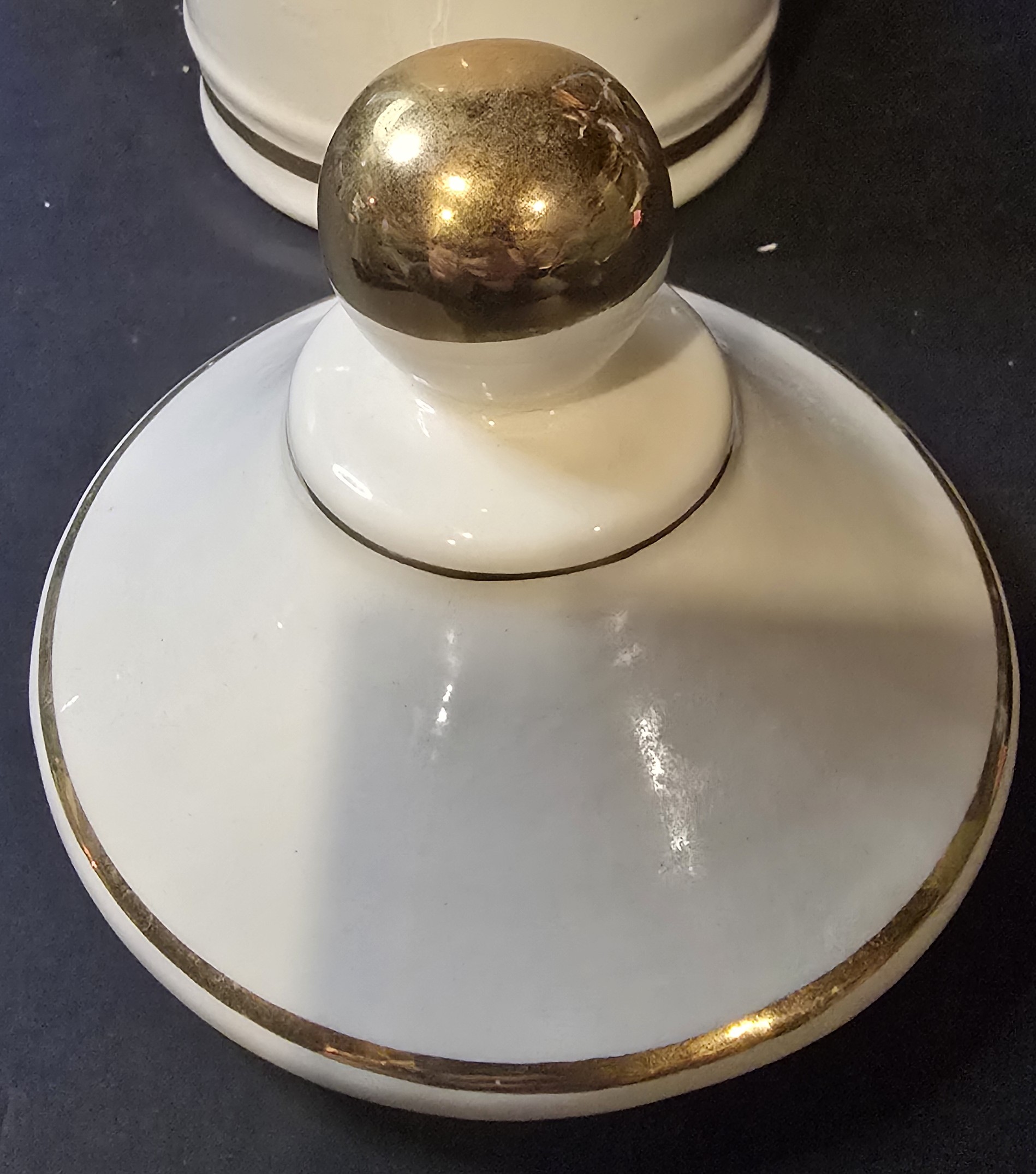
The jar features a cylindrical white-glazed body with an ornate polychrome cartouche, gilt accents, and a matching domed lid topped with a gilded finial. Decorative bands and classical pharmacy ornamentation reflect late 19th-century European apothecary aesthetics, where function and visual authority were inseparable.
Colchicum preparations were effective but narrow in therapeutic window. Apothecaries handled this drug with care, and its presence in a dedicated, clearly labeled vessel reflects both its importance and its danger.
Condition
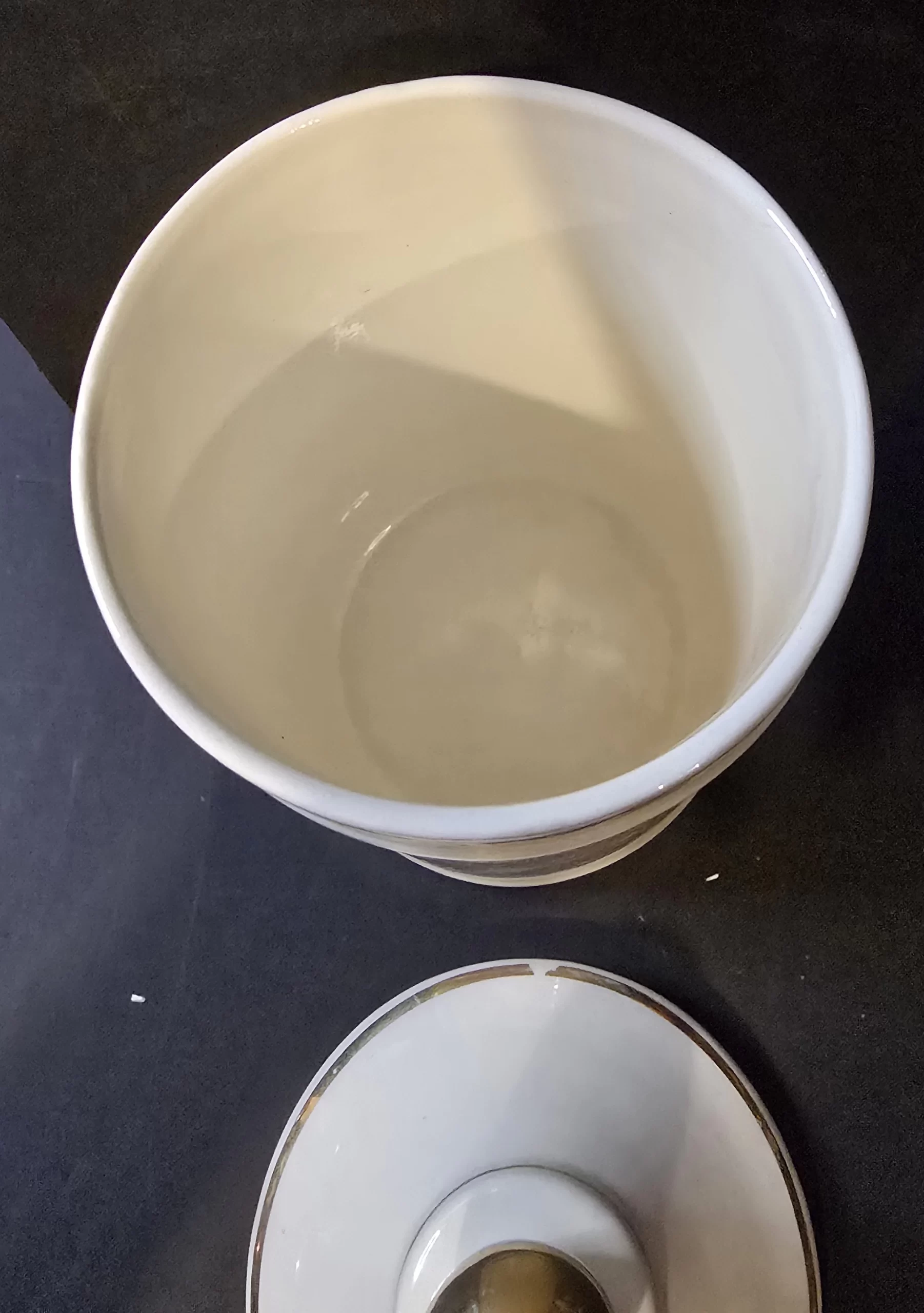
Porcelain body is intact with no visible cracks or repairs. Glaze remains glossy with minor surface wear and light scuffing consistent with age and handling. Gilt trim shows expected wear and thinning, particularly along rims and finial. Interior is clean with light discoloration consistent with historic storage. Lid fits properly. Overall condition is very good, display-grade, with honest age-related wear.
Gallery

Historical context
Colchicum has been used medicinally since antiquity, with references dating back to ancient Greek and Roman medicine. By the 18th and 19th centuries, it was firmly established as a standard treatment for gout, though its toxicity was well recognized.
“Colchici Semina” refers specifically to the seeds of Colchicum autumnale, which contain colchicine — a compound still used today in refined, controlled doses. In the pre-modern pharmacy, dosing relied heavily on experience, restraint, and respect for the drug.
This jar represents a period when botanical pharmacology straddled effectiveness and risk, and when storage, labeling, and presentation were part of medical safety.
Curious Facts, Ephemera, and Trivia
Colchicine interferes with microtubule formation — a mechanism not understood until the 20th century. Apothecaries knew only that it worked, and that too much of it could be disastrous.
The ornate decoration wasn’t just decorative flair. Apothecary jars were meant to signal legitimacy, professionalism, and trust to patients standing on the other side of the counter.
Excerpt
The bulb-like corms of C. autumnale contain colchicine, a useful drug with a narrow therapeutic index.
Why it is in the Cabinet
This jar embodies medicine’s long flirtation with poisons that work. Colchicum is ancient, effective, and unforgiving — and this vessel is a reminder that pharmacy once relied as much on judgment as on measurement.
It belongs in the Cabinet because it bridges antiquity and modern pharmacology, showing that some dangerous ideas survived because they actually helped.
Support Dr. Bebout’s Cabinet of Medical Curiosities
If you enjoy the history, the oddities, and the effort, help keep this cabinet open. Every little bit helps preserve and share the strange wonders of medicine's past.
Buy Me a Ko-fi ☕ Buy Me a Coffee ☕ Tip via PayPal 💵