
Title
Neo-Arsphenamine (Novarsenobenzol Billon), 0.6-Gram Ampule Set
Author
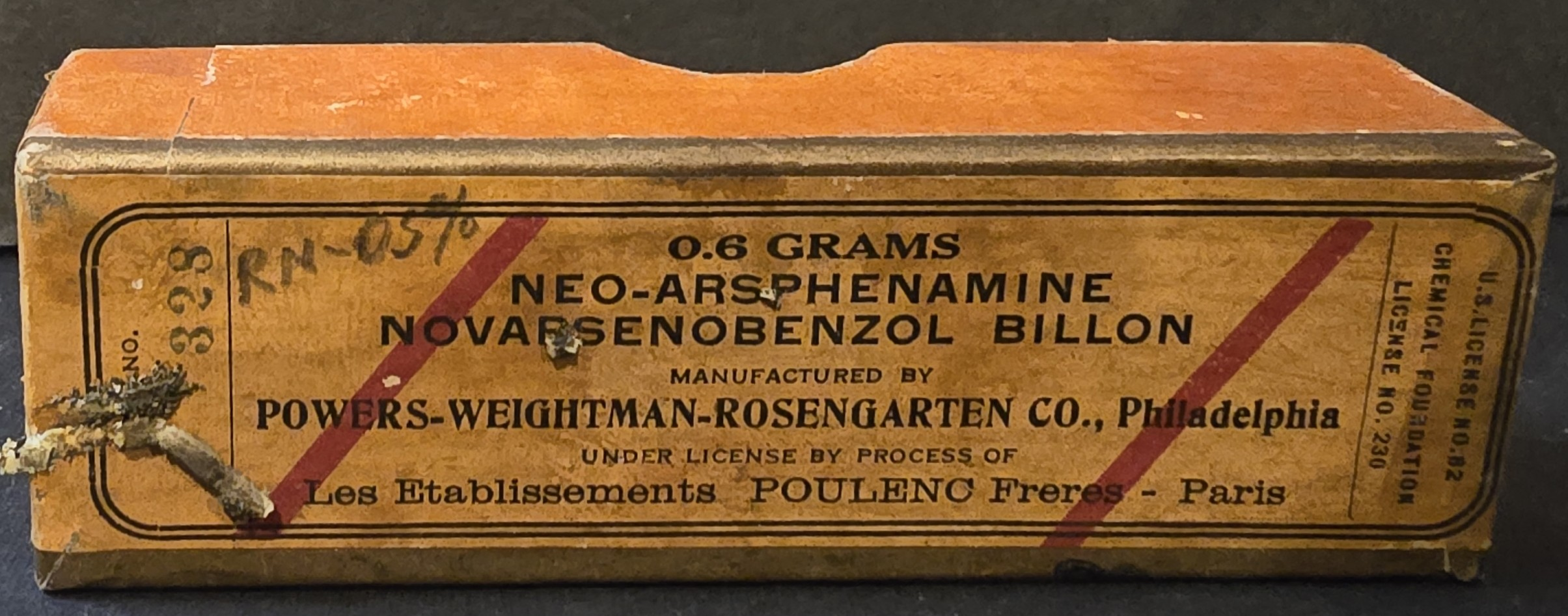
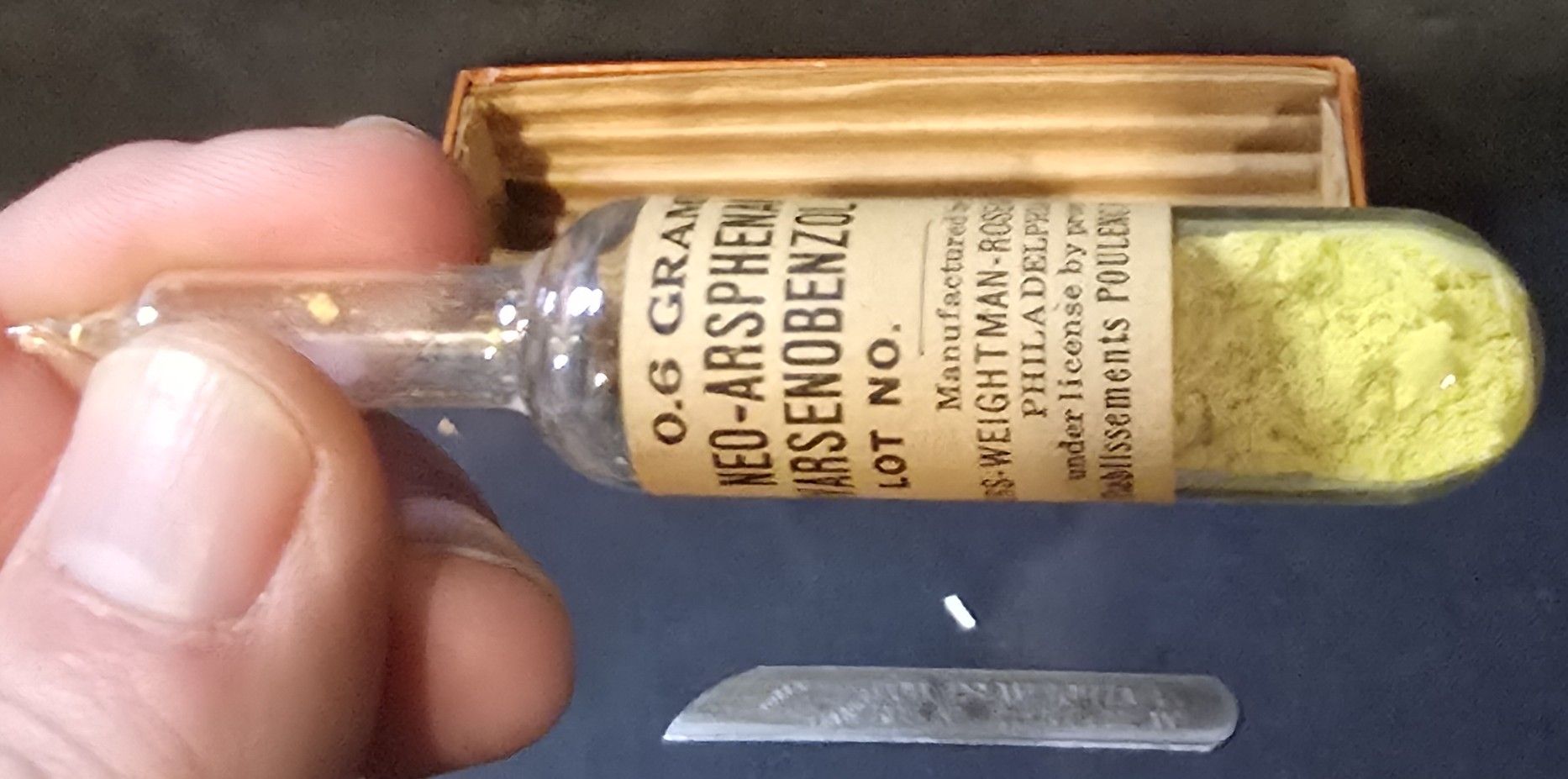
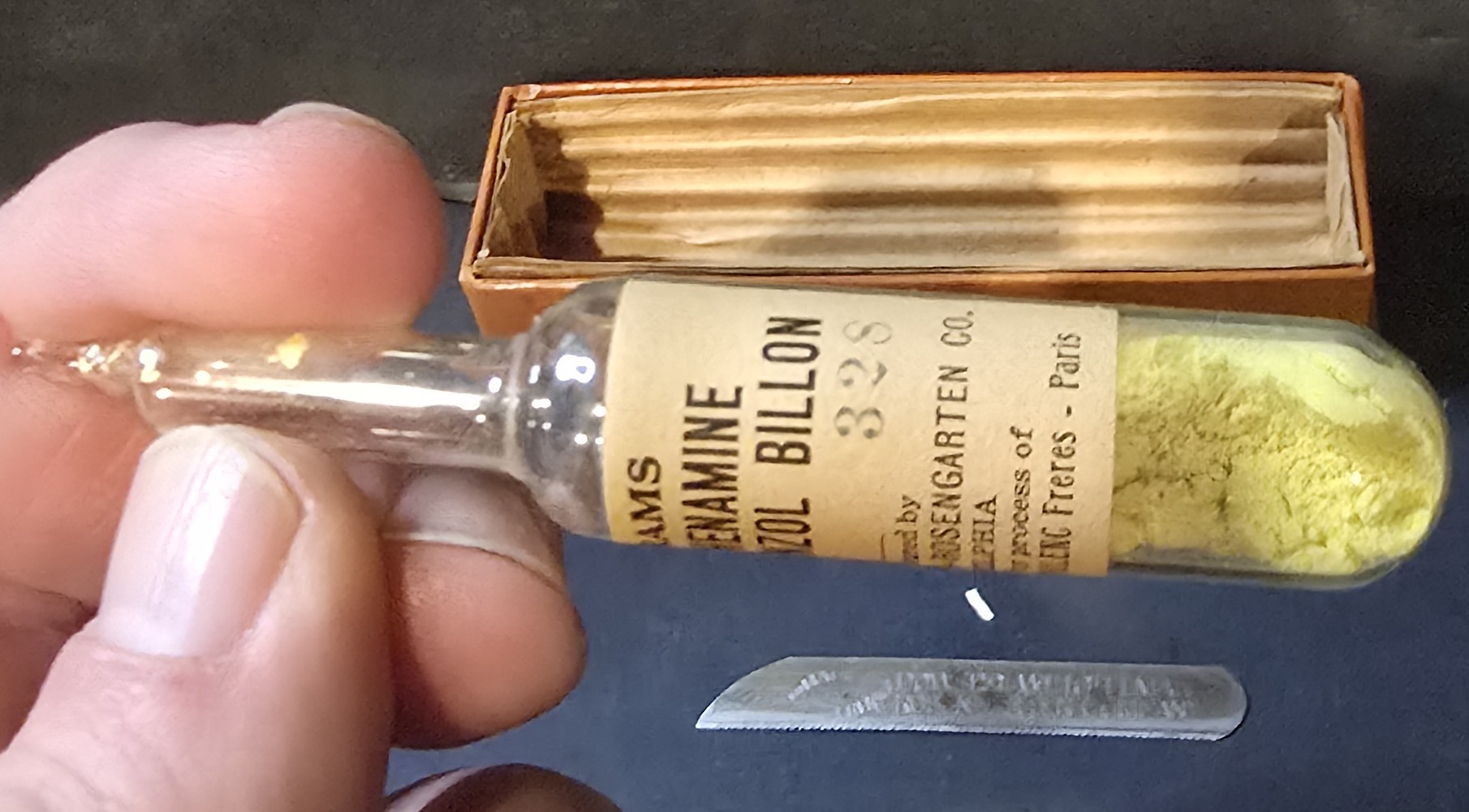
Manufacturer: Powers-Weightman-Rosengarten Co., Philadelphia
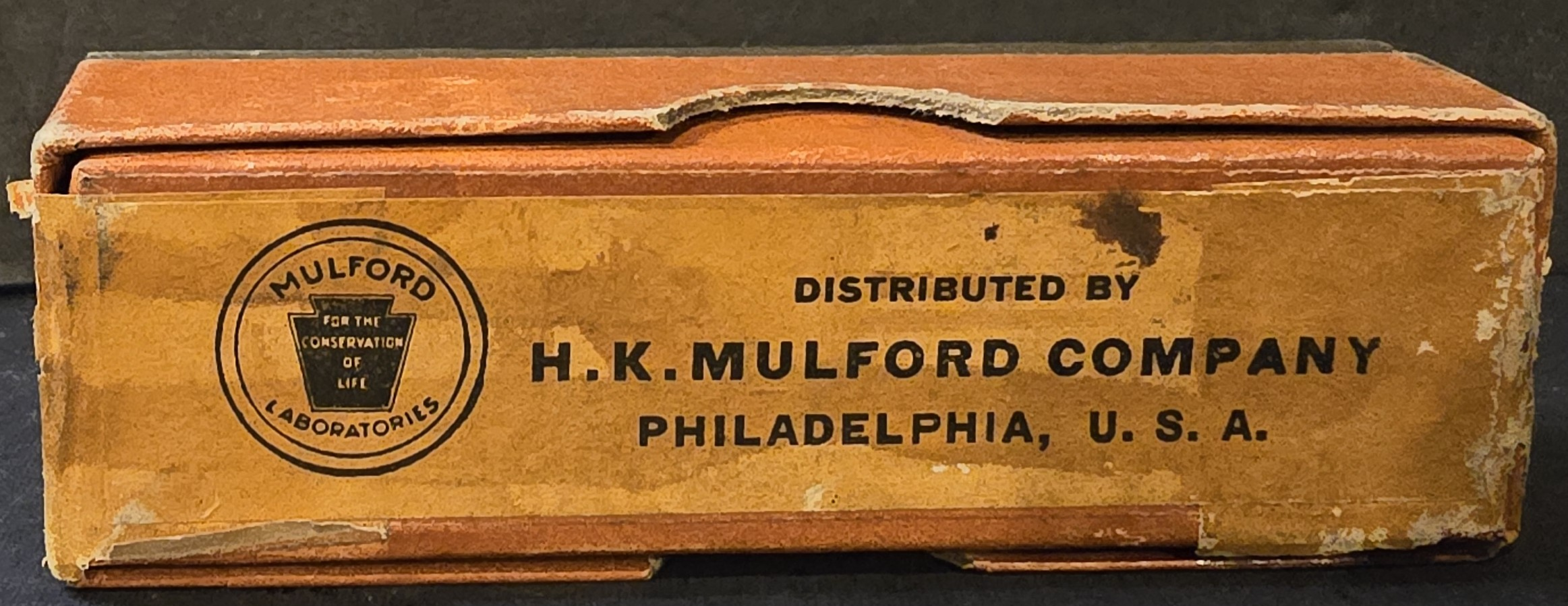
Distributor: H. K. Mulford Company, Philadelphia, U.S.A.
Licensed Process: Les Établissements Poulenc Frères, Paris
Image
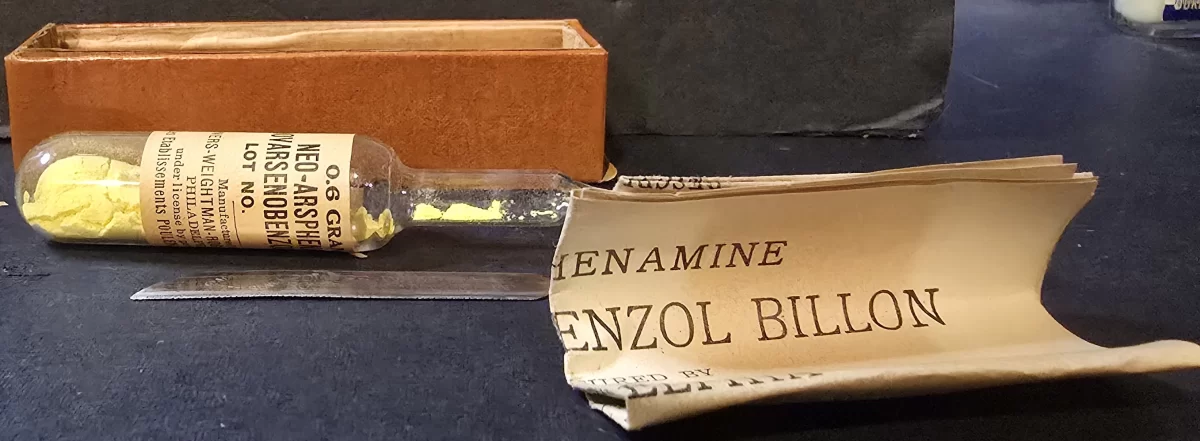
Description
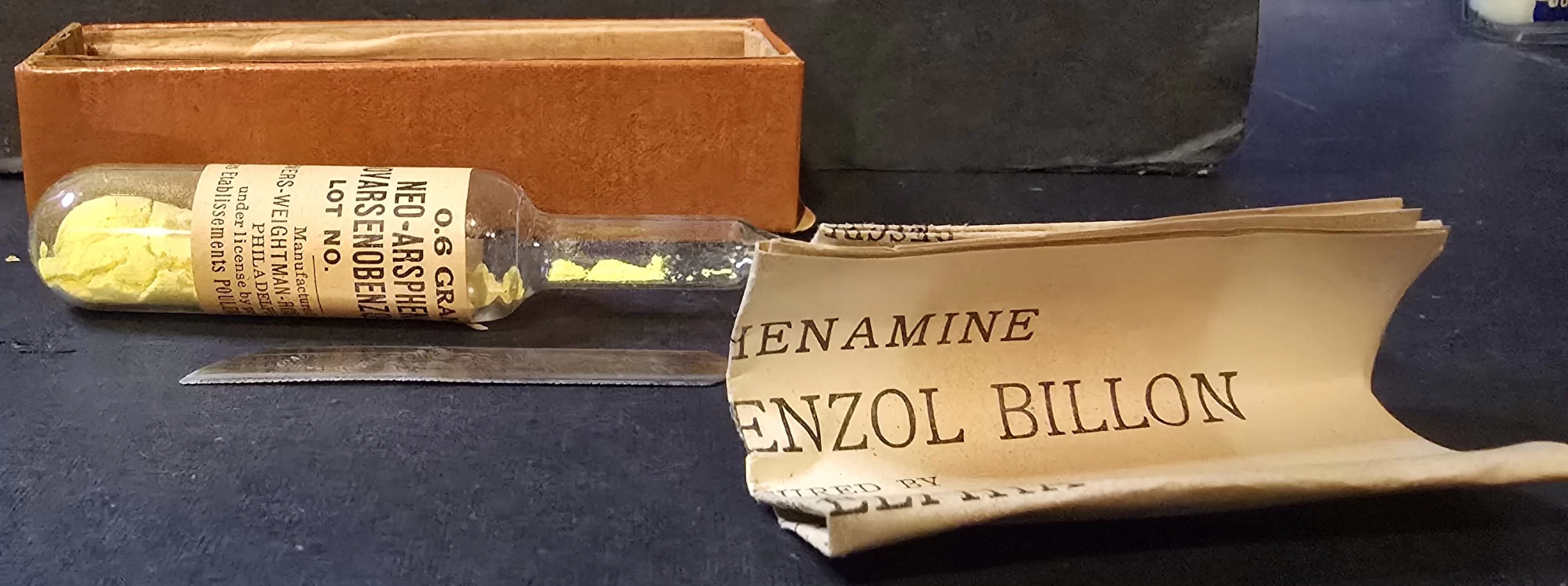
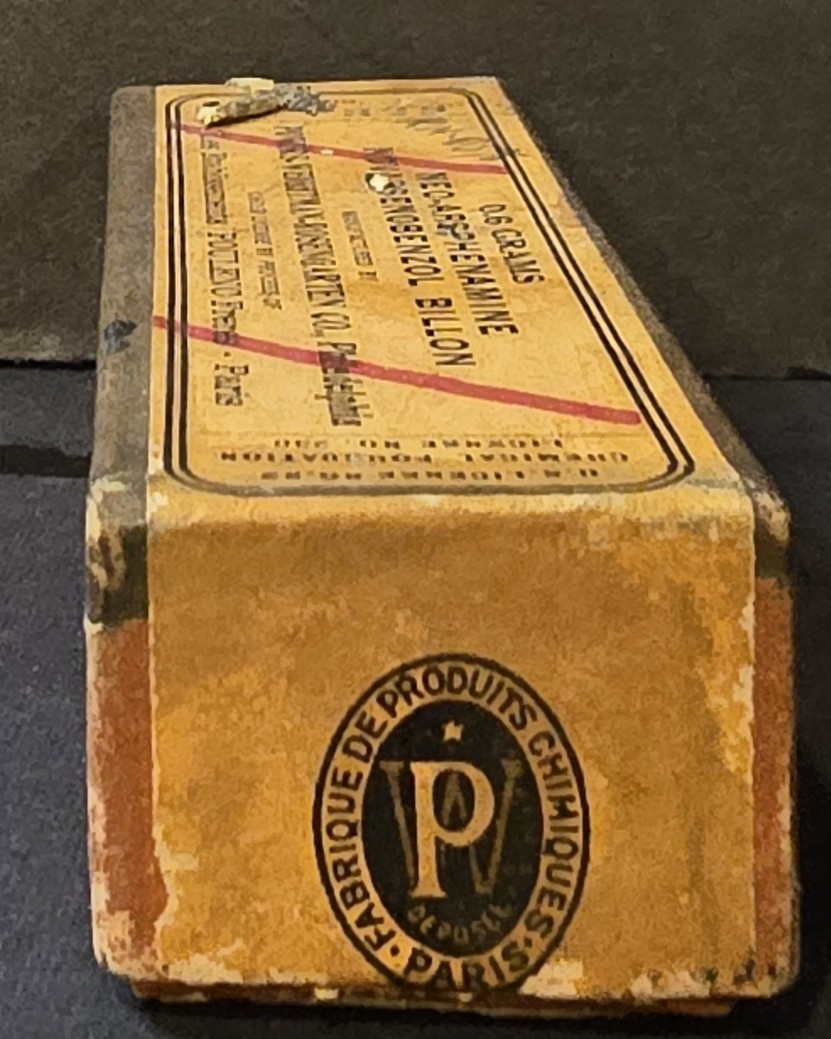
This is a complete early-20th-century pharmaceutical package containing neo-arsphenamine, marketed as Novarsenobenzol Billon, supplied as a 0.6-gram sealed glass ampule of yellow powdered drug with its original cardboard box and printed instruction insert.
Neo-arsphenamine was an organo-arsenic compound developed as a modification of Ehrlich’s original arsphenamine (Salvarsan) and used primarily in the treatment of syphilis prior to the introduction of penicillin. It was considered easier to dissolve and somewhat more predictable than its predecessor, though it remained chemically unstable and potentially toxic.
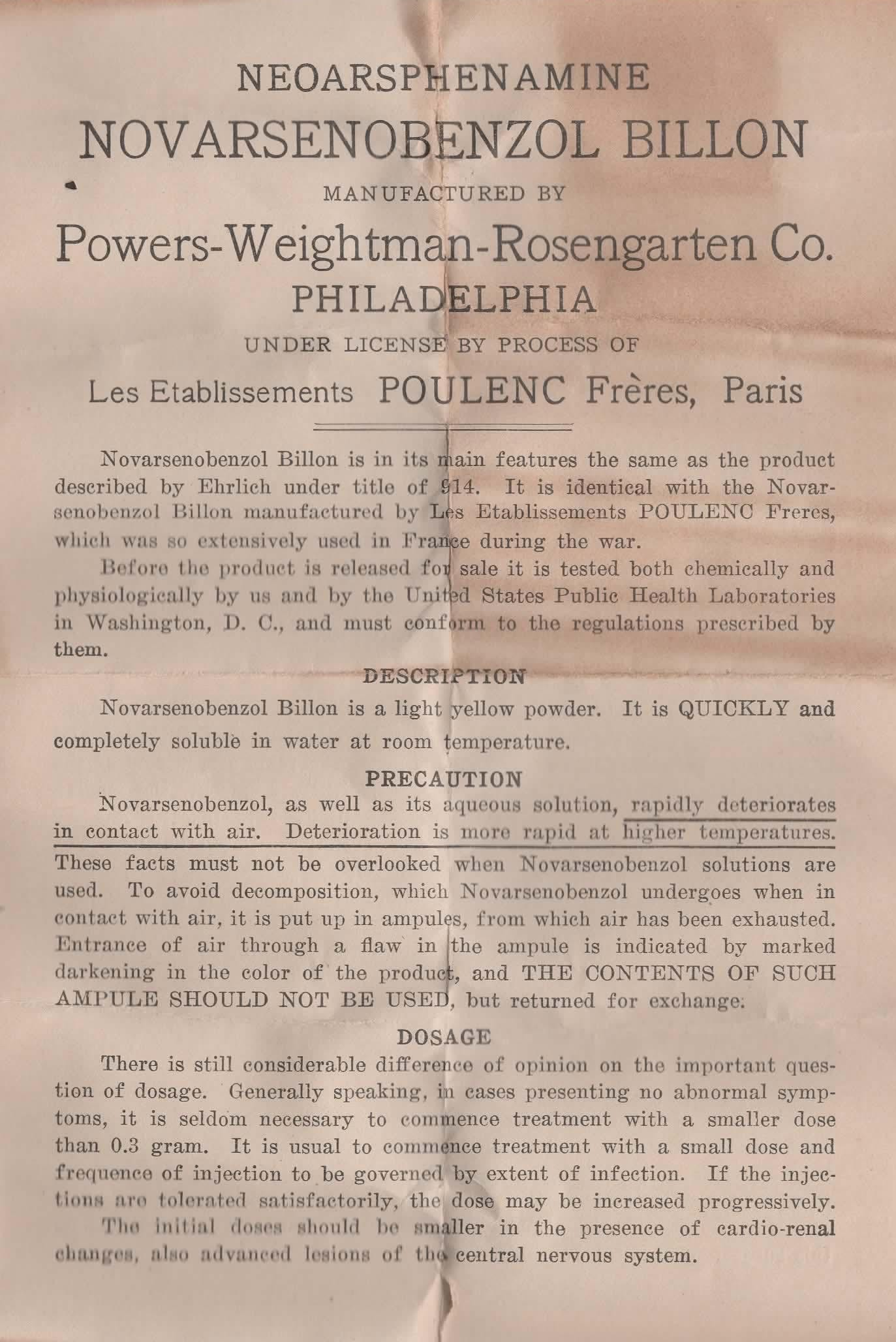
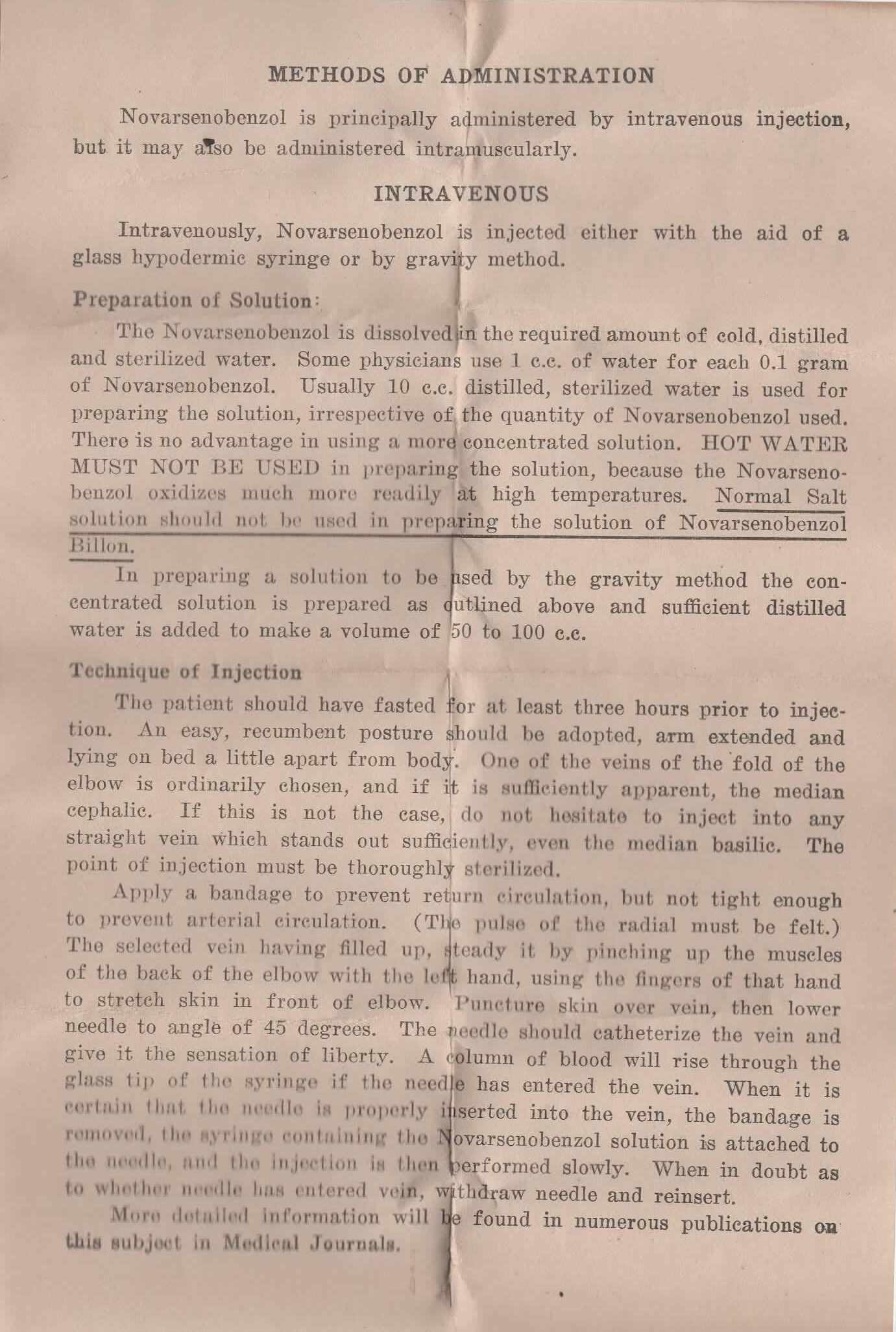
The included instruction sheet outlines preparation and intravenous administration, repeatedly warning against air exposure, oxidation, and improper technique. These cautions were not academic — degradation of the drug could render it ineffective or dangerously toxic. This set reflects the reality of early chemotherapy: precise, risky, and unforgiving.
Condition
The cardboard box and instruction insert show expected age-related wear, including edge wear, creasing, surface scuffs, and discoloration. The glass ampule appears intact and sealed with its original label present. Yellow powdered contents remain visible with minor clumping consistent with age. Overall condition is complete and well preserved for display, with no evidence of modern alteration.
Gallery

Historical context
Neo-arsphenamine was introduced in the 1910s and became a widely used treatment for syphilis during World War I and the interwar period. At a time when untreated infection led to devastating neurological and systemic disease, arsenic-based chemotherapy represented a genuine therapeutic advance despite its risks.
This example also illustrates early international pharmaceutical collaboration: chemical processes developed in France, manufactured in the United States, and distributed nationally by firms that would later become part of larger pharmaceutical conglomerates. Long before antibiotics simplified treatment, medicine relied on careful chemistry and disciplined technique.
Curious Facts, Ephemera, and Trivia
Neo-arsphenamine was notoriously sensitive to oxygen. If the solution darkened during preparation, it was to be discarded immediately. Many surviving ampules exist precisely because physicians were instructed not to use compromised doses — leaving unopened examples like this one intact more than a century later.
Excerpt
“Solutions showing discoloration or evidence of oxidation should not be employed.”
— Instruction insert, Novarsenobenzol Billon
Why it is in the Cabinet
This item captures medicine in a transitional moment — effective enough to matter, dangerous enough to demand respect. The survival of the ampule, box, and original instructions together preserves not just the drug itself, but the mindset of early 20th-century therapy: cautious, procedural, and keenly aware that progress often came with sharp edges.
Support Dr. Bebout’s Cabinet of Medical Curiosities
If you enjoy the history, the oddities, and the effort, help keep this cabinet open. Every little bit helps preserve and share the strange wonders of medicine's past.
Buy Me a Ko-fi ☕ Buy Me a Coffee ☕ Tip via PayPal 💵